Health Promotion
The World Health Organization defines health promotion as "the process of enabling people to increase control over, and to improve, their health. It moves beyond a focus on individual behaviour towards a wide range of social and environmental interventions." Health promotion is developing individual, group, institutional, community, and systemic strategies to improve health knowledge, attitudes, skills, and behavior. One purpose of health promotion is to positively influence the health behavior of individuals and communities. Another purpose of health promotion is to positively influence any living and working conditions that influence their health.
Health promotion is developing individual, group, institutional, community, and systemic strategies to improve health knowledge, attitudes, skills, and behavior.
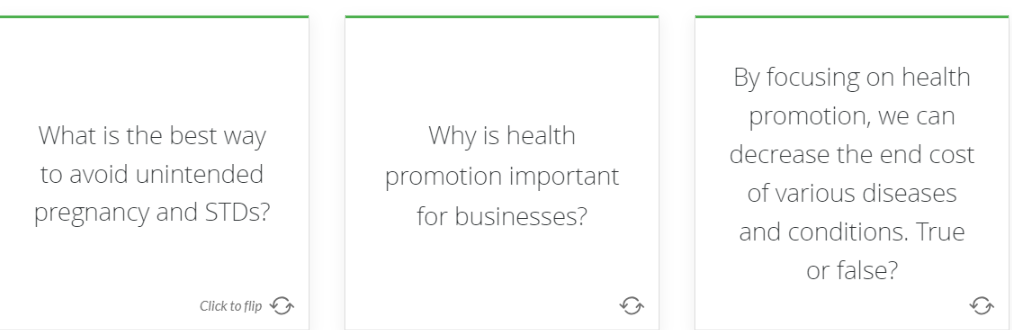
Health promotion is important for a number of reasons.
Health promotion focuses on making sure that people are healthy, and that impacts not only the individual but also everyone else in the individual's family as well as society in general.
Quality of life is improved through health promotion, and premature death rates are reduced.
When the focus is on preventing health problems and illnesses, medical costs are reduced.
Employers have lower costs (especially related to the costs of health insurance and costs related to employee compensation), and those lower costs are often passed on in the form of lower prices for consumers.

Cardiovascular disease, HIV/AIDS, lung diseases, nutritional deficiencies, infections, depression, drug and alcohol abuse, injuries, and other health issues are preventable problems that often result in disability, disease, and/or death. Chances of developing most of these problems can be reduced by stopping and/or preventing certain behaviors (many of which start during childhood or the teenage years). Some of the behaviors that increase the risk of developing diseases and chronic conditions include:
Tobacco use (smoking, chewing tobacco, etc.)
Alcohol and substance abuse (drinking beer and other beverages that contain alcohol, drug use, etc.)
Actions that result in injury and violence (taking unnecessary risks, gang involvement, etc.)
Poor dietary and hygienic practices (failing to wash one's hands regularly; not brushing one's teeth; eating too many foods that are high in sugar, fat, and empty calories; etc.)
Sedentary lifestyle (being inactive, not getting enough exercise, etc.)
Sexual behavior that causes unintended pregnancy and disease (abstinence is the best way to avoid these)
Health Promotion Essay
As part of this lesson, you will write a short essay (at least 400 words) about what it means to be healthy and how you can have an impact on your community in regard to health. The essay will be due tomorrow. Make sure to cover the following questions.
What does it mean to be healthy?
What is health promotion?
What are some of the major health issues in your community? (You will need to be specific. For example: living in an area where many people smoke, little access to fresh produce, many people are sedentary and/or overweight or obese, many fast-food restaurants do not offer healthy foods, litter problems, etc.)
What are some things you can change in your own life to be healthier?
What are some things you can do to increase awareness of preventable health issues and encourage people in your community to lead healthier lives? (You will need to be specific. For example: write an article for the local newspaper, organize a community garden, or anything else you feel might increase awareness. You will not have to do what you recommend, but you will need to think of at least one or two examples.)
Your essay must be written in a Microsoft Word document, use proper spelling and grammar, include cited references (this does not count toward your word count), be double spaced, and use 12-point Times New Roman font.