Photosynthesis
Introduction
- Photosynthesis uses sunlight and CO2 to produce sugar and O2.
- Transport brings needed minerals to sites of photosynthesis, and moves sugar to sites where it is used or stored.
Water Potential
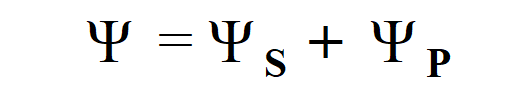
Water Potential: a measurement that combines the effects of solute concentration and pressure. It is measured in megapascals (Mpa). Pure water is 0 Mpa.
Water flows from areas of high water potential to areas of low water potential.
What a plant wants…
- Macroelements - Carbon, Hydrogen, Oxygen, Nitrogen, Potassium, Calcium, Magnesium, Sulfur, Phosphorus,
- Microelements - Chlorine, Iron, Manganese, Zinc, Boron, Copper, Molybdenum, Nickel, Sodium.
- Everything except Carbon, Hydrogen, and Oxygen comes from the soil and is transported by the xylem.
Transport
Root
- Symplastic transport - through the cytoplasm
- Apoptastic transport - around the cells, through the walls
Xylem
- Once in the xylem, the minerals and water are pulled up by the ^^negative pressure^^ created when the stoma opens.
- Transportation-Cohesion theory: water lost by evaporation from mesophyll cells is replaced by water from the nearest xylem, and water molecules “stick” together (cohesion), and form an unbroken column of water in vertical fills xylem vessels.
Phloem
Phloem Transport: dissolved sugars (mainly sucrose) are moved from “source” to “sink.”
- At a source, sucrose is actively (requires ATP made by companion cells) loaded into sieve tubes.
- Increased solute concentration causes water to enter the sieve tube (via osmosis) at the source.
- This causes a positive pressure and water is pushed to other parts of the plant.
- At the sink, the sucrose is actively unloaded and water follows (Pressure flow hypothesis).
Phloem transportation can be as fast as 1 meter/hour.
The way sugars move through a plant is important for determining the “yield” of the plant.
- Biomass accumulates at the sink.
- Most of what we harvest is the part of the plant where sucrose had been unloaded (the sink) (the seeds, fruits, tap roots, root tubers, stem tubers).
Sucrose can be converted to starch after it has been unloaded into the sink.
- Starch cannot be transported.
- Only 2 plants have the ability to store sucrose - ^^sugar cane and sugar beet^^.
About everything a plant does requires xylem and phloem -- photosynthesis, growth, development, responding to the environment, and protection from pathogens and predators.
Photosynthesis

- This is the sum of light and dark reactions
Light reactions
Light reactions take place in the thylakoid membranes of the chloroplast.
- This is where chlorophyll molecules are located, grouped with proteins into photosystems.
Photosystems - PSII (P700) and PSI (680)
Light reactions - make O2, ATP, NADPH
PSII - takes in light (photon), excites the electrons, and splits water into protons and O.
Electrons from PSII are transferred to the ETC which gives the protons to ATP synthase to make ATP.
- The free electron goes to PSI.
PSI - gives the electrons to NADPH to carry into the Calvin cycle
Dark Reactions
- The Calvin cycle takes place in the stroma.
- RUBISCO: is the enzyme that “fixes” carbon
- It is the most abundant protein on earth.
- 6 RUBP (5C) + 6CO2 →==RUBSICO==→ 12 PGA (3C) →==12ATP & NADPH==→ 12 PGAL (3C) → 2 PGAL (3C) + Glucose (6C) → (Regenerate)10PGAL →6RUBP(5C).
- Each turn of the cycle fixes 1 CO2 so six turns of the cycle make 1 glucose (6C) sugar.
- 2 PGALs leave the cycle as a result of 6 turns.
- The CO2 comes from the stoma (gas exchange) whereas the ATP and NADPH are made in the light reactions.
- PGAL must be used as it cannot be stored
- Some of these products are used to make sucrose, starch, or cellulose.
- The amount of photosynthesis and how the products are moved and stored determine the yield of the plant.