The Present Progressive
The Present Progressive is formed with the present tense of the verb “to be” and the present participle of another verb (“-ing” form in English)
form of estar + present participle
To form the present participle of the regular -ar, -ir, and -er verbs, drop the ending and add the present participle endings: -ando, -iendo
Examples:
hablar → hablando
comer → comiendo
escribir → escribiendo
When the stem (infinitive) of the -er or -ir verb ends in a vowel, the present participle is written with “y” instead of “i”
Examples:
leer → leyendo
oír → oyendo
traer → trayendo
The verbs ir, poder, and venir have irregular present participles
ir → yendo
poder → pudiendo
venir → viniendo
-ir stem changing verbs have a stem change in the present participle as well
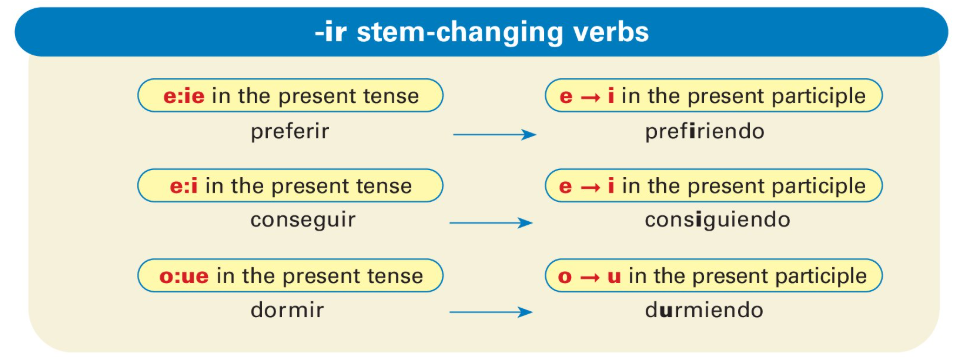
The Present Progressive is used to emphasize that an action is in progress
The examples below are often used with the present progressive
ahora mismo → right now
todavía → still