Esther: The Queen Who Saved the Jews
Ahasuerus was a Persian king. He is also known by the name Xerxes in some translations of the Bible. His capital city was Susa, which is located in modern-day Iran.
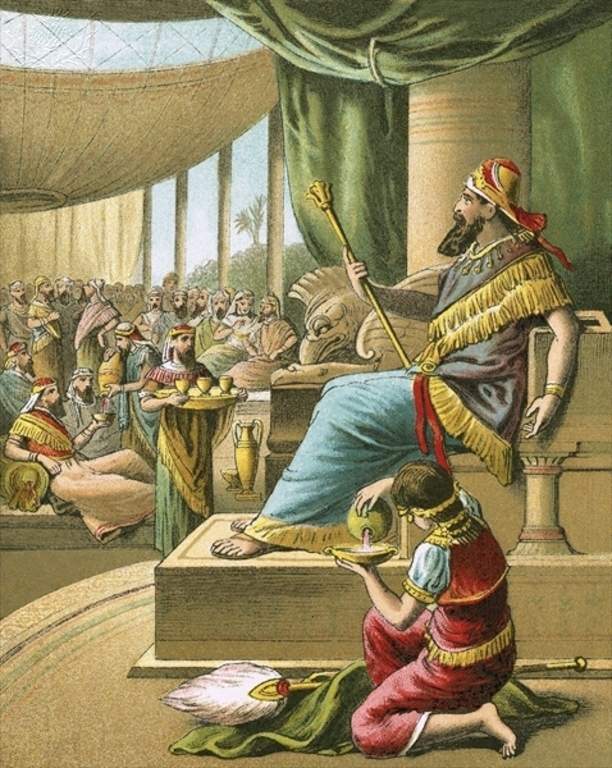
The Banquet
Ahasuerus was the king. His empire stretched from India to Ethiopia, with over 127 provinces. His throne was in Susa. In the third year of his rule, he held a large feast. The army of Persia and Media was there. The governors and nobles of the king's provinces were also there. The festivities lasted for 180 days, and the king held a feast lasting for seven days at the end of the banquet. The palace was adorned with white cotton curtains, and there were mosaics of gold and silver on the pavement. The drinks were served in golden vessels. People could drink as little or as much wine as they wanted. Queen Vashti gave a feast for the women of the palace.
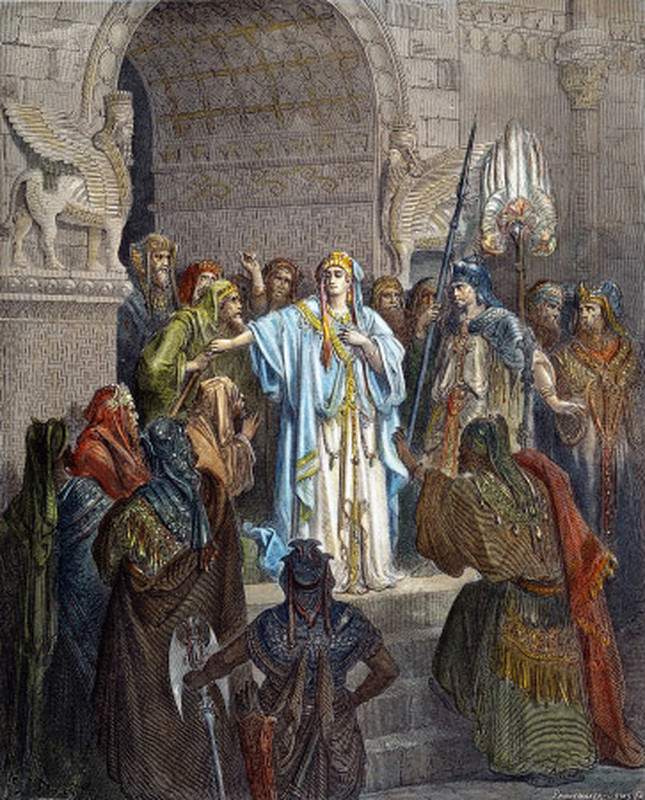
The Queen Refuses
At the end of the festivities, the king, who was intoxicated, ordered his servants to bring Queen Vashti before him, wearing her crown so that the other men could see how beautiful she was. She refused to go, and the king became furious. The king asked his advisors what should be done to Queen Vashti for not obeying the king, according to the law. Memucan, one of the advisors, said that she had wronged the king and the other officials who represented the empire's provinces. This news could spread to women throughout the empire and cause them to treat their husbands contemptuously. Memucan suggested that a royal decree should ban Vashti from ever again going before the king, and the king should give her position to another woman. The decree throughout the empire proclaimed that all women should honor their husbands.
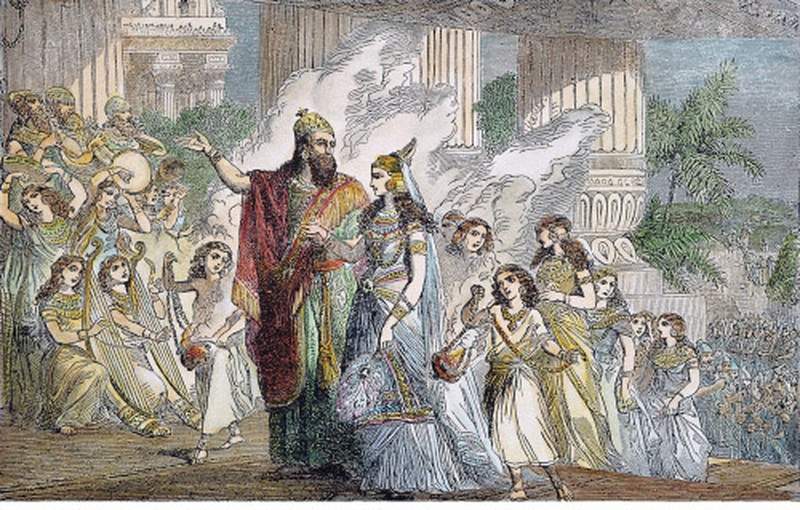
Esther
The king's attendants recommended that he pick a new queen from his harem. There was a Jew named Mordecai living in Susa. He had been one of the exiles from Jerusalem taken into captivity by King Nebuchadnezzar. He was raising his cousin, Hadassah. She was also known as Esther. Esther was brought into the king's harem when the king's decree was made. A man named Hegai was in charge of the king's harem. Hegai was pleased by Esther and provided her with cosmetics and food. She was one of seven young women that were advanced in the harem. She hid the fact that she was a Jew because Mordecai had told her not to let it be known. Mordecai passed by the harem every day to check on Esther.
After twelve months of beautification, when it was time for a young woman to go to King Ahasuerus, she would be brought to the king. She could take anything she wanted from the harem with her. In the evening, the young woman that was selected would go to the king, and in the morning, the woman would return to the second harem where Shaashgaz, the king's eunuch, would be in charge of her. She only returned to the king if the king summoned her by name.
When it was Esther's turn, she only took what Hegai advised her. When she was brought to the king, he loved her more than all the other women that had been shown to him. The king placed the crown on her head, and she became the queen instead of Vashti. The king hosted a great feast for all of his officials and servants in Esther's name. He gave gifts and granted a remission of the taxes to the provinces.
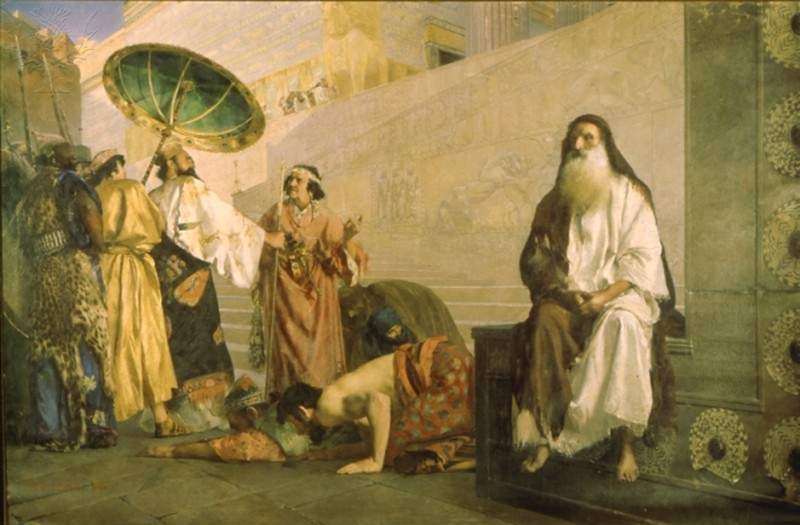
A Plot
Esther had kept her family a secret, just as Mordecai had instructed her. One day, Mordecai was sitting by the king's gate when Bigthan and Teresh, two of the king's eunuchs, grew angry and wanted to hurt the king. When Mordecai heard the plot, he informed Esther of it, and she told the king that it was Mordecai that had warned her. The plot was investigated, and Bigthan and Teresh were hanged.
After this, the king promoted a man named Haman over all of the other officials. The other servants bowed before Haman because the king had told them to do so. Mordecai, however, did not bow down before Haman. The other servants asked Mordecai why he had not bowed before Haman. They told him day after day to bow before Haman. When Haman saw that Mordecai did not bow down, he grew furious. In his rage, Haman sought to destroy the Jews throughout the kingdom.
Haman went to the king and told him that a group of people that was spread among the kingdom did not obey the king's laws. Haman said that they had different laws from everyone else in the kingdom. He asked the king to destroy these people, and he promised the king that he would put a vast amount of silver into the royal treasury if the king would do this. The king gave Haman his signet ring and the money and said to do with the people what seemed good to him.
Haman wrote letters to all of the leaders of the provinces and signed them with the king's name and signet ring, telling them to kill all of the Jews within their provinces and take all of their property. The decree was issued in all of the provinces as well as in Susa. The king and Haman sat down to drink. Susa, the capital city, was thrown into chaos.
Esther Intervenes
Mordecai heard about the decree, so he put on sackcloth and ashes and went to the middle of the city. There was mourning among the Jews in all of the provinces; they were fasting and weeping and lamenting. When Esther heard what her cousin Mordecai was doing, she sent him clothes, but he refused to wear them. Esther called for Hathach, her attendant, to go to Mordecai and find out why he was doing this. Hathach went to Mordecai in the city's center and asked him Esther's question. Mordecai gave Hathach a copy of the decree to give to Esther. He was hoping that Esther would go to the king and plead with him not to do this to her people. Esther answered that it was death to go to the king unless he had called for her. She explained that she had not been summoned by him for thirty days.
Mordecai replied to Esther that she would not escape this any more than any other Jew, even though she was the queen. Mordecai pointed out that if she kept silent, all of her father's house would die, and so would she. Esther told Mordecai to gather all of the Jews in Susa and hold a fast for three days in her name. She said that she and her young women would fast like the rest of the Jews. Mordecai went away and followed Esther's directions.
Esther's Banquet
On the third day, Esther wore her royal robes and stood in the king's inner court. When the king saw her, she won his favor, and he held out his scepter to her. Esther approached and touched the scepter. The king asked her what her request was and promised to grant her anything she wanted. She responded that she was giving a feast, and she wanted the king and Haman to come to it. The king called for Haman, and they went to the feast. After the feast, the king once again told Esther that he would grant her any request. Her request was that if it pleased him to return for another feast, she wanted to prepare one for him and Haman the following day.
Haman left and saw Mordecai by the gate, but Mordecai did not bow or act afraid. Haman grew angry, but he restrained himself and went home. Haman had been bragging to his friends and family, telling them about all of the promotions the king had given him, and even how he was the only other person invited by the queen to her feast (besides the king). He also boasted that he was going to another feast with the king and queen the next day. Haman complained to his wife and friends about Mordecai sitting at the gate, and they said that he should build a gallows and have Mordecai hanged—and then go to the feast. This idea greatly pleased him, and he ordered the gallows to be constructed.
Mordecai Honored
That night, the king could not sleep, so he ordered the chronicles of the king be brought to him and read before him. In the chronicles, there was an account of how Mordecai had saved the king by revealing the plot against him (made by Bigthan and Teresh). The king wanted to know what honor had been bestowed on Mordecai for this act. The king's attendants confirmed that nothing had been done for Mordecai. The king then inquired who was in the court. Haman had just entered to speak to the king about hanging Mordecai. The king's attendants said that it was Haman in the court. The king told them to let him in, and they did. The king asked Haman what should be done for a man the king would like to honor. Haman asked who the king would like to honor more than him, but he also suggested that the man be given robes the king had worn and a horse the king had ridden. The king's servants should dress the man and lead him around, proclaiming that this was a man that was honored by the king. The king then told Haman to take the robes and horse to Mordecai, and Haman had to lead the horse around the square with Mordecai on it and proclaim that this was a man that the king honored.
Haman's Plot Revealed
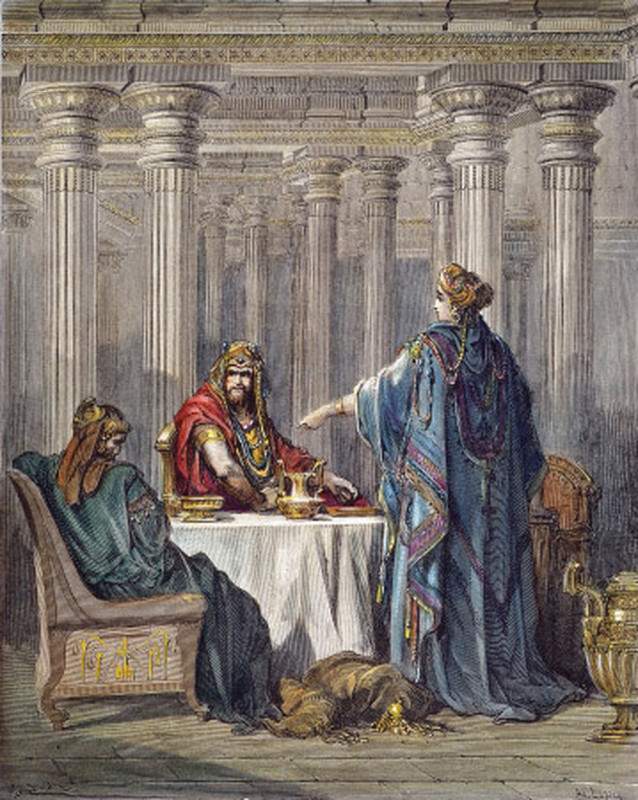
Haman went home and lamented to his wife and friends about everything that had happened. Haman's friends and wife cautioned that he would fall because of Mordecai. When they were talking, the king's servants arrived to escort Haman to Esther's feast. The king asked Esther again what her request was. She answered that she wanted her life and the lives of her people to be saved. She revealed that she and her people were to be killed. The king wanted to know who was threatening her and her people. She replied that it was Haman. Haman became terrified before the king and queen.
The king stood and went into the palace garden, but Haman stayed and begged for his life. When the king returned, he saw Haman falling on the couch where Esther was. The king demanded to know if Haman would go so far as to try to harm the queen right then and there, and the king's attendants covered Haman's face. One of the king's servants remarked that a gallows had been prepared for Mordecai, and it was standing at Haman's house. The king ordered that Haman be hanged on the gallows, and the king's anger went away.
Esther and Mordecai
King Ahasuerus gave Queen Esther the house of Haman. Mordecai came before the king, and the king gave Mordecai his signet ring. Esther put Mordecai over Haman's house. Esther then pleaded with the king to stop Haman's evil plan to kill all of the Jews. The king spoke to Esther and Mordecai. He stated that he had given Esther the house of Haman, and Haman had been hanged. The king then gave them permission to write whatever they liked about the Jews and seal the edict with the signet ring that Mordecai now had. This gave them the power to write an edict (in the name of the king) that could not be revoked.
The scribes were summoned, and an edict was written concerning the Jews. Mordecai wrote in the name of the king. The letter said that the king allowed the Jews in all of his lands to defend themselves against any that would harm them in one day. It would also enable them to plunder the belongings of those they defeated. That day was to be the thirteenth day of the twelfth month. The news went out to all of the provinces, and the Jews rejoiced and prepared to defend themselves. On that day, the Jews took vengeance on their enemies. The provincial officials helped the Jews out of fear of Mordecai. The ten sons of Haman were killed. There were also 75,000 enemies of the Jews killed when the Jews defended themselves throughout the provinces, with five hundred killed in Susa.
On the fourteenth day of the month, they killed three hundred men in Susa, but they did not plunder. Mordecai was promoted to second-in-command of the kingdom. The two days following this purge became the Feast of Purim.
Summary
Queen Vashti refused to go to King Ahasuerus's feast. As a result, she was replaced by Esther. Bigthan and Teresh plotted to hurt the king. Mordecai, the cousin that raised Esther, revealed the plot to her, and she told the king about the plot and that Mordecai had warned her. The plot was investigated, and Bigthan and Teresh were hanged. Haman was promoted to second-in-command of the kingdom. Mordecai refused to bow before Haman, and this made Haman hate Jews. Haman plotted to kill all of the Jews in the kingdom. Esther revealed his plan to the king, and Haman was hanged for his deeds. The decree that Haman had made against the Jews was turned around by Mordecai issuing a decree ordering the Jews to defend themselves. The Jews were able to kill 75,000 of their enemies across the kingdom.

Application and Reflection
Application
Mordecai refused to bow before another man. He risked his life when he did not bow down before Haman. Ultimately, his refusal to compromise his beliefs strengthened him and gave him a higher position to help his people.
Reflection
We should use the gifts that God has given us to help others. Esther was able to use her beauty and intelligence to protect her people. Do you use the gifts that God has given you for the purpose of helping others?