Animalia/Human systems
Animal Phyla: Digestive system
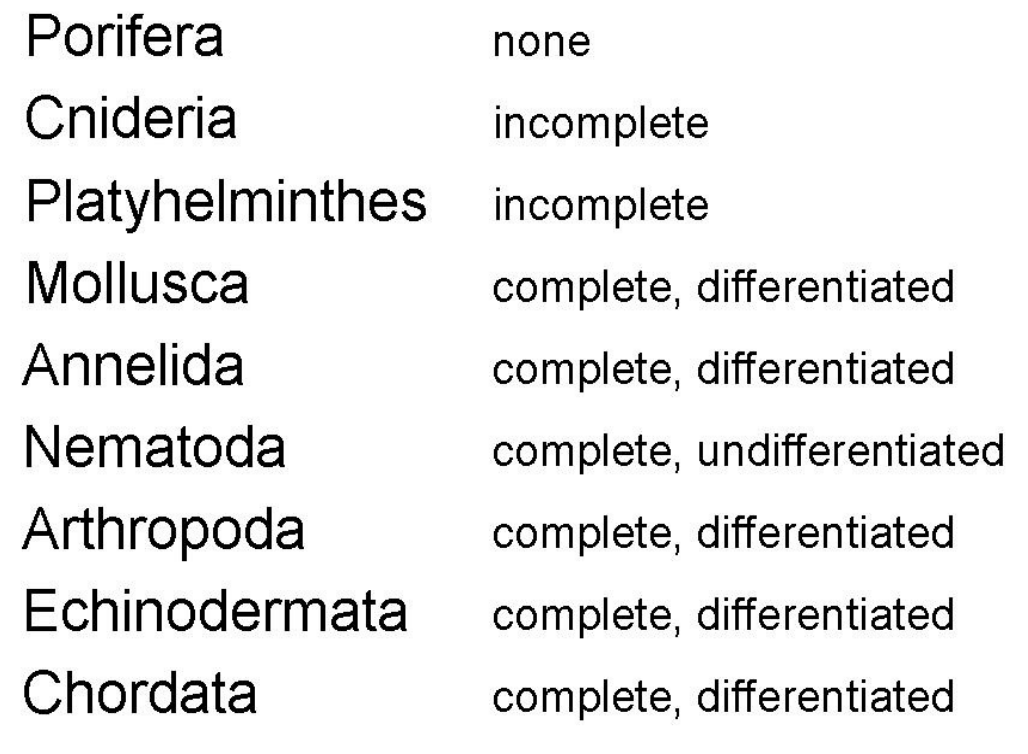
Platyhelminthes, incomplete digestive system
Intra and extracellular digestion
- Gastrovascular cavity
- Mouth/anus
Nemotoda, complete
Extracellular digestion
Mouth at one end
Food goes through the gut/alimentary canal
Waste is released from the anus
Mollusca, complete
Extracellular digestion
Mouth at one end
Food goes through the intestine
Stomach
Anus
Echinodermata, complete
Often use an incomplete digestive system
Extracellular digestion
Moth, Intestine, stomach, anus
Arthropoda, echinodermata, chordata, complete digestive system
Extracellular digestion
Chordata- human digestive system
Saliva
- hold lump of food together
- lubricate lump of food
- digestive enzymes → chemical digestion
Esophagus → Peristalsis
Stomach:
Sphincter → Ring of muscle
- Epithelium tissue surrounds the stomach, which contains gastric glands
- Gastric glands release enzymes, HCL and mucus which coats the stomach
- Mechanical and chemical digestion
It:
- Stores food
- Digest food
- Kill bacteria
Pancreas
Releases pancreatic juice which is released to the small intestine
Pancreatic juice → bicarbonate which neutralized the acidity of the chyme from the stomach, and enzymes to continue digestion
Liver
Produces bile which is released into the small intestine, bile help enzymes work by emulsifying fats. Allowing the fats to mix with water, and to digest effectively.
Gall-bladder
Stores bile
Small intestine
Produces some enzymes
Muscles in the small intestine carry out peristalsis
The intestinal wall is covered in villi (epithelial cells), in the villi there are microvilli to increase surface area
It:
- Digest food
- Absorb nutrients
Appendix
Stores gut bacteria
Large intestine
Absorb water and minerals
Rectum
Stores waste
Anus → has two sphincters

Animal Phylia: Respiratory system
Respiratory gases (O2 and CO2)
- Absorption of oxygen (O2)
- Elimination of carbon dioxide (CO2)
Porifera, Cnideria, Platyhelminthes, Nematoda, no respiratory system
Diffuse directly with the environment
Platyhelminthes, Nematoda, no respiratory system
Diffuse directly with their system, less active
Gills, thin wall extensions of the body which allow for gas exchange with the environment.
Echinodermata, tube feet, gills
Tube feet do exchange gas with their environment, and are very important for their respiratory system.
Annelidal, gills, none
A lot of annelids do not have gills.
Mollusca, gills, lung
Some terrestrial molluscs have lungs rather than gills
Arthropoda, gills, lung, trachea
Aquatic arthropods have gills
Terrestrial arthropods have lungs
Insects have several openings called spiracles which connect to a system of trachea tubes which deliver oxygen directly to different parts of the insect body.
Chordata vertebrate, gills, lungs
Chordata- human respiratory system
Bronchioles are surrounded by smooth muscle which allows them to contract
At the end of each bronchiole there is singular alveoli
Each lung is made of the bronchial tree
The nasal cavity and trachea is covered with mucus which filters, warms and humidifies the air
The alveoli carries out gas exchange
When the diaphragm contracts it expands the chest cavity, the ribs go out and down, bringing pressure up
and the air naturally goes into the body.

Distribution of materials in an organism
Unicellular organisms move materials through cyclosis and along the cytoskeleton.
In a closed system, pipes which moves around the system called blood which circulates around.
In an open circulatory system bodily fluids gets sucked up by the brain and pumped back out into another organ.
Circulatory system → in animals
Distribution of materials in the body
Porifera, none
Cnideria, none
The gastrovascular cavity does distributes stuff but doesn’t count with an actual circulatory system.
Platyhelminthes, none
Similarly, their digestive system does distributes stuff but doesn’t count with an actual circulatory system.
Arthropoda, open circulatory system
Annelida, closed circulatory system
Nematoda, none
Body fluids move around
Mollusca most open, some closed
Echinodermata open circulatory system and water vascular system (unique to enchinodermata)
Helps with locomotion, gas exchange and distribution of materials.
Chordata closed circulatory system (humans)
Chordata- fish circulatory system
Heart
Two chambers: atrium and ventricle

Chordata- amphibian circulatory system
Heart
2 atria, 1 ventricle

Chordata- reptile circulatory system
Heart
2 atria, but the ventricle is partially separated
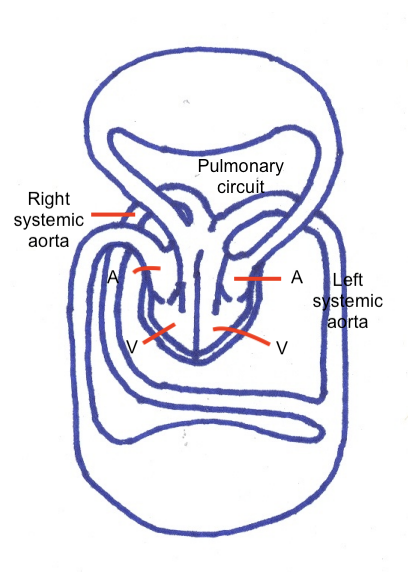
Chordata- mammal or bird circulatory system
Heart
2 atria, 2 ventricles

Chordata- human circulatory system
Heart
four chambers
Arteries
carry blood from the heart
Capillaries
exchange with other tissues
Veins
carry blood to the heart
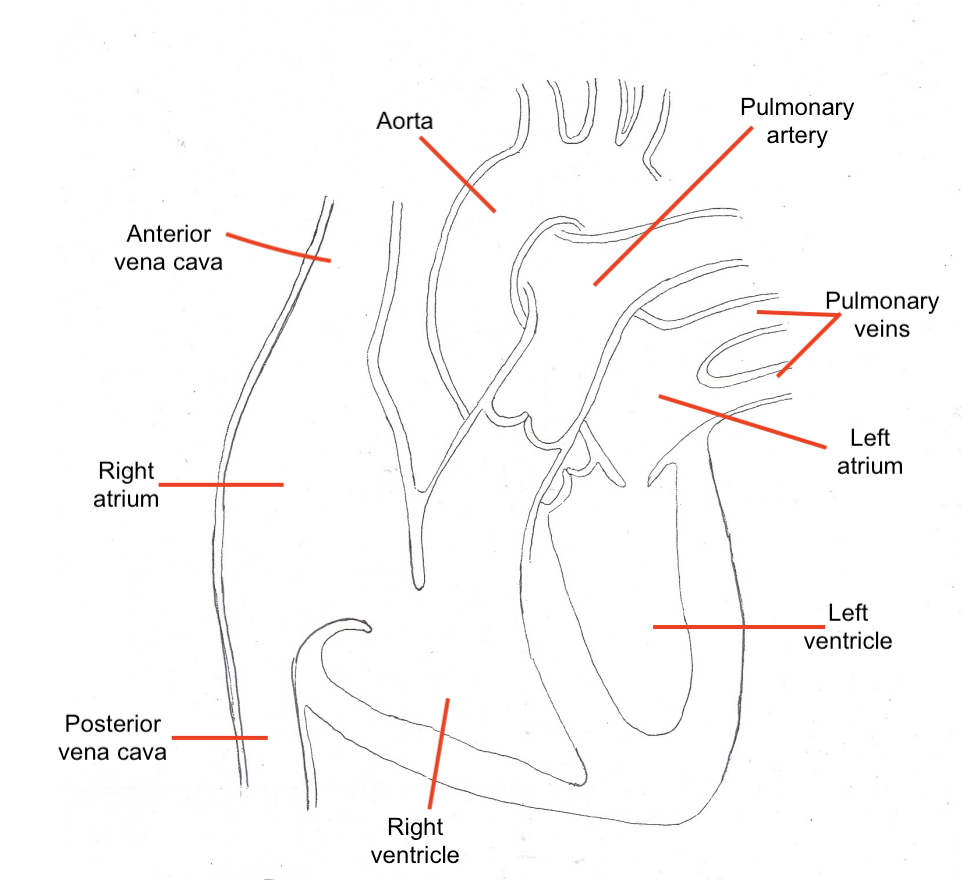
The human circulatory system: Veins, arteries and capillaries

The human circulatory system: Blood
Only found in an animal with a closed circulatory system
Composition:
Plasma → 55% (clear/yellow)
→ Mostly water
→ Ions (blood electrolytes), they maintain osmotic balance they contribute to the ions that make your blood isotonic to your cells
→ Plasma proteins, they also maintain osmotic balance, they are part of what makes the plasma isotonic to your cells
→ Substances transported by blood
Cellular elements → 45%
→ Erythrocytes (red blood cells), they are packed with haemoglobin which helps transport oxygen and help transport carbon dioxide
→ Leukocytes (white blood cells), they are all involved in immunity and helping your body protect itself against infections
→ Thrombocytes (platelets), much smaller, they iniciate blood clotting
Most cells are generated in the bone marrow.
Most blood proteins are generated by your liver
Human immune and lymphatic system
Defence against attack
Unicellular organisms may produce chemicals that are toxic to other organisms.
Immune System
defence against infection
Lymphatic System
returning fluid to blood
Only vertebrates have a lymphatic system.
Lymph, lymphatic capillary, lymphatic vessel, valves, lymph nodes, spleen
- Lymph, fluid that is being drained into the lymphatic capillary
- Lymphatic capillaries drain into the lymphatic vessel
- The lymphatic vessels will drain the lymph with the help of valves
- The lymphatic vessels will finally drain the lymph into the lymph nodes
- The lymph nodes will clean up the lymph until it makes its way along the other side and eventually get to the circulatory system
- The spleen is connected to the circulatory system but acts as a lymph nodes, packed with leukocytes and clean the fluid (blood) passing through it.
→ Mainly removes old erythrocytes from the blood
Innate immunity
all animals, immediate protection, nonspecific
Adaptive (acquired) immunity
vertebrates, delayed response, targeted
Pathogens: bacteria, viruses, fungi, parasites
Innate immunity
External defenses - Outer layer
Skin - Physical barrier which prevents bacteria to invade the body
Mucous membranes
Secretions - Prevents bacteria from growing (sweat)
Internal defenses - Inner layer
Inflammatory response
Macrophage - Kind of leukocyte which is found under the skin
Mast cell - Detects invaders and release signalling molecules including histamine
(also found under the skin)
Histamine - Increases blood flow into this area, increased permeability, leukocyte infiltration, phagocytosis.
→ redness, heat, swelling
Natural killer cells
Class I MHC
Antigen
Acquired immunity
Humoral response
B cell
Antigen receptor
Helper T cell
Plasma cells
Memory cells
Antibodies
Complement system
Cell mediated response
Macrophage
Class II MHC
Cytotoxic T cell
Natural Killer Cell
Leukocyte, in blood and other tissues
Targets any cell with missing or abnormal class I MHC on plasma membrane
- Virus infected
- Cancerous
- Weakened
« happens in the lymph nodes »
B cell/lymphocyte
100,000 antigen receptors on a B cell
→ Antigen binding site
B cells form from the bone marrow
As they mature they mutate (cut some of their DNA)
Each B cell does the same thing, having a different antigen binding site, have a different genotype
→ Light chain: 200 variations
→ Heavy chain: 10,530 variations
→ More than 2 mil different antigen binding sites
Each B cell has a unique, randomly-determined antigen binding site.
Some of these antigen binding sites will bind to antigens that are naturally present in the body’s own cells
All new B cells are exposed to antigens from the body, if they react then they are destroyed
Mature B cells can respond to foreign antigens (only)
« Antigen is a fragment of a protein »
→ taking some of that antigen and presenting to a class II MHC (in the ER)
Helper T cell
Cells that will only recognize antigens presented on a class II MHC
Will cause the B cell to start cytokinesis (start the cell cycle)
B cell will produce thousands of copies of itself
→ Many will become memory cells
→ The rest become plasma cells
- Plasma cells generate copies of the same receptive protein, the protein will get released from the cell and become antibodies
- Plasma cells produce antibodies
- Short lived because they are high energy consuming
- The antibodies will attach to antigens and directly interfere with it
- Enhances phagocytosis, macrophages will immediately eat anything with antibodies
- Activate the complement system of proteins, leads to cell lysis (holes in cells)
Cell-Mediated Immune resoponse
Macrophages
- As they destroy invaders they will take some of the antigens and present them to the plasma membrane on a class II MHC
- Helper T cell awakes from the macrophage presenting an antigen on a class II MHC
- Helper T cell will activate the B cell
- Cytotoxic T cells will also be activated from an antigen on a class II MHC, and the helper T cell
- Infected body cell, once infected it will continue to present the antigen in the class I MHC, the cytotoxic T cells will check the antigen on class I MHC, and if it matches it will destroy that cell, preventing from mutation
Cytotoxic T Cell
leukocyte, lymph nodes and spleen and other organs
activated by macrophage (class II MHC) with Helper T Cell
targets any cell with matching antigen
releases chemical that destroys cell
Allergy
Exaggerated response to a certain antigen
Tissue rejection
Normal immune response to transplanted tissue
Autoimmune disease
Immune response to the body’s own tissue
Vaccines
Expose immune system to antigen
Triggers the production of memory cells
New mRNA vaccines allow body cells to make antigen
Weakened immune system
Stress, fatigue
Poor nutrition
Certain infections (eg measles)
Leukemia
Certain medications/treatments
Immunodeficiency disorder
AIDS
Evading the immune system
Bacterial capsule (eg Strep)
Avoid lysosomes (eg Tuberculosis)
Evolution of antigens (eg seasonal flu)
Trypanosoma (African sleeping sickness)
→ unicellular parasite
→ covered by glycoproteins
terms and concepts
Innate immune system
external defences
internal defences
inflammatory response
natural killer cells
Acquired (adaptive) immune system
humoral response
antigen
antigen binding site
B cell, plasma cell, memory B cell
class II MHC
helper T cell
antibody
complement system
cell-mediated response
cytotoxic T cell
MHC: present antigen fragments on cell
Class I MHC: most cells
Class II MHC: certain immune cells
B cells: respond to free antigen
T cells: respond to antigen on MHC
plasma cell: makes antibodies
antibody: binds to antigen
cytotoxic T cell: attack infected cells
helper T cell: activates B and T cells
Disposal of ammonia
Excess amino acids in nitrogenous bases are converted into carbohydrates by the removal of the amino group, which produces ammonia (NH3).
Ammonia is highly toxic.
Unicellular organisms don’t have mechanisms to get rid of ammonia
Multicellular organisms often have an excretory system
- Disposal of ammonia and other metabolic wastes
- Also important in osmoregulation → regulation of solute concentrations and water balance
- Many unicellular organisms live in an environment that is isotonic to their cytosols.
→ those that do not, must osmoregulate
ammonia → flushed out in dilute solution
most aquatic animals
ammonia → urea → requires energy to produce tolerated at higher concentration
mammals and others
ammonia → uric acid → requires more energy to produce
insoluble in water
reptiles, birds, insects, and others
Porifera
→ does not need to osmoregulate, no excretory system
Cnidaria
→ no excretory system, ammonia diffuses into surroundings
Platyhelminthes
→ Tubules called protonephridia
Constantly taking in water, the protonephridia will pump body fluid out
Reclaim useful molecules through active transport
« Osmoregulation »
Annelida
→ Excretory system made up of matenephridia
Body fluids are picked up, useful molecules are reclaimed
Excretion and osmoregulation
Mollusca
→ Matanephridia
Arthropoda
→ Most groups have matanephridia
- Works a bit differrently
→ Malpighian tubules, extensions of the excretory system
Wastes pumped out
Lost with feces
Excretion and osmoregulation
Nematoda
→ Diffusion, glands (do have excretory system)
Echinodermata
→ Marine species so they do not worry about osmosis
Do not have an excretory system, rely on a water vascular system
Chordata
→ Nephrons
→ Glomerulus made up of very leaky capillaries that will leak body fluids
→ bowman’s capsule will ‘catch’ these fluids and transport them into the proximal tubule
→ Fluid goes to the loop of Henle and finally filtrate makes its way to the distal tubule
→ Collecting duct will eventually empty out into the renal pelvis (urine accumulates)
→ The pipe that drains the urine is called the ureter, which uses peristalsis to move this fluid
→ Ureters drain out to the urinary bladder
→ Bladder will old the urine until it is time to pee

Protonephridia | Metanephridia | Malphigian Tubules |
Pump body fluid out | ||
Reclaim useful molecules Osmoregulator | Excretion and osmoregulation |
Cell signalling
Chemical signals influence processes in a unicellular organism.
Ca2+ triggers movement in amoeba
Unicellular organism respond to chemical signals in their environment
→ Yeast cells exchange chemical signals to initiate reproduction.
Endocrine system
Coordination of body activities
They do this by using signal molecules called hormones
→ A chemical messenger produces by cells that influence the function of cells elsewhere in the body
ex) epinephrine
→ the receptors of epinephrine are the muscles surrounding the intestinal blood vessel, causing them to contract
→ on the contrary, receptors in the skeletal muscle blood vessel will relax when it receives epinephrine
→ increases the amount of sugar in your blood
All animals use chemical signals, and many have a dedicated endocrine system but we are only looking at a few aspects of the human endocrine system
→ Pituitary gland, thyroid gland, and pancreas (and more)
Pituitary gland:
"master" endocrine gland, interface with brain
releases many hormones, some influence other endocrine glands:
Growth Hormone (GH) → bone growth
Thyroid Stimulating Hormone (TSH) → stimulates the thyroid
Thyroid gland:
Releases thyroxine
Increases metabolic rate
Blood levels controlled by negative feedback
→ A form of regulation in which accumulation of an end product of a process slows the process
Thyroxine inhibits the pituitary from releasing TSH
Pancreas:
Releases insulin
Lowers blood sugar levels
Releases glucagon
Raises blood sugar levels
→ Liver cells under insulin the liver cells take up glucose and stores it as glycogen.
→ Insulin causes body cells to take up more glucose.
→ Liver cells under glucagon will break up glycogen into glucose and release it into the blood.
Reproduction
Sexual vs Asexual reproduction
Unicellular organisms often reproduce through cellular division → asexual reproduction
- May also reproduce sexually, through cell fusion followed by meiosis.
Reproductive system → Sexual reproduction
- May be present of absent
- Sexes separate or hermaphroditic (both sperm and eggs)
- Internal or external fertilization
Porifera
→ asexual or sexual
sexual → hermaphroditic, internal fertilization, no sex organs
Cnideria
→ asexual or sexual
sexual → hermaphroditic, external fertilization, sex organs
Platyhelminthes
→ sexual → hermaphroditic, internal fertilization, sex organs
Mollusca
→ sexual → sexes separate, external fertilization
exception: if they are living on land, will use internal fertilization and are hermaphrodites
Annelida
→ sexual → hermaphroditic, internal fertilization
Nematoda
→ sexual → sexes separate, internal fertilization
Arthropoda
→ sexual → sexes separate, internal fertilization
Echinodermata
→ asexual or sexual
sexual → sexes separate, external fertilization
Chordata
→ sexual → sexes separate, internal fertilization
Separate sexes
sexual evolution
→ primary sexual characteristics (ovaries, testis, etc.)
→ secondary sexual characteristics
differences between the sexes that are not directly involved in reproduction
ex. more facial hair, deeper voice
Human reproductive system
Female reproductive system
- Ovaries, where oogenesis starts
- Oviducts, fallopian tubes
- Uterus
- Endometrium
- Cervix
- Vagina, vaginal opening
- Pituitary will release FSH (follicle stimulating hormone)
- The primary oocyte has started prophase of meiosis 1 but has paused
- FSH stimulated the oocyte to start meiosis 1
- As follicle develops, it increases estrogen production
- When estrogen increases it causes the pituitary to release LH (luteinizing hormone)
- LH signals to release the follicle (a secondary oocyte), triggering ovulation
- The oocyte will change colour and become yellow, it becomes the corpus luteum
- Estrogen levels fall a bit and progesterone starts rising up
- The combination of both estrogen and progesterone inhibits the pituitary from releasing more hormones, preventing a now follicle from developing
- The combination of both hormones causes the endometrium to mature so it is ready for a zygote
- If there is no fertilization, the corpus luteum degenerates, the concentration of hormones will decline and the pituitary will release FSH again
- The endometrium will fall off and which causes menstruation
- Fertilization will happen in the oviducts
- Cleavage starts (first form of fertilization)
- Will implant in the endometrium, blastocysts
- Will digest the endometrium until it implants in the endometrium
- Eventually will form an embrio
- Umbilical cord connects the fetus to the placenta which connects the blood of the mom and the fetus
- Placenta will exchange with its environments to provide nutrients
Child birth
- Dilation of the cervix
- Contractions will cause the expulsion of the infant
- Placenta will start to come loose until contractions will cause the after birth (the placenta is expulsed)

Male reproductive system
- Testis
- Scrotum
- Epididymis
- Vas deferens
- Urethra
- Penis
Testis packed with seminiferous tubules, on these tubules is where spermatogenesis happens
→ This process is under hormonal control
- FSH is released by the pituitary, receptors in the testis will start spermatogenesis
- LH is released by the pituitary, receptors in the testes will release testosterone
- Testosterone also contributes to spermatogenesis
- Testosterone also contributes to primary and secondary sex characteristics
- Negative feedback → testosterone inhibits the pituitary from releasing LH
Membrane Potentials
Unicellular organisms maintain a membrane potential.
→ may change their behaviour in response to changes in membrane potential
Nervous system
→ Coordinating activities of body
→ Sensing environment
→ Respond to the environment
Can do this because of excitable tissue
Excitable tissue is made up of cells that may rapidly alter their membrane potential
→ muscle fibres
→ neurons
Neuron
Nerve cell that transmits signals
- Cell body
- Dendrites, extensions of the cell
- Axon
→ Not all neurons are the same
→ Have a membrane potential called resting potential
Resting potential
Electrochemical tension across the neuron plasma membrane
inside the neuron (relative to outside)
negative electric charge
high concentration of potassium ions (K+)
low concentration of sodium ions (Na+)
sodium-potassium pump
will pick 3 Na+ and ATP and will use it to expel Na+ outside the cell and will wait to pick up 2 K+ to pump inside the cell (one cycle)
will cause a charge difference across the membrane
Action potential
Sudden release of resting potential
sodium (Na+) gates open
sodium (Na+) diffuses into neuron, inside of neuron becomes (+)
potassium (K+) gates open sodium, (Na+) gates close and lock
potassium (K+) diffuses out of neuron, inside of neuron becomes (-) again
potassium (K+) gates close
sodium (Na+) gates unlock
Propagation of the action potential
Disturbing will cause an action potential at part of the axon
Sodium comes rushing in (has a positive charge)
Electric currents move inside and outside the membrane, causing a reaction to the adjacent membranes
“Domino effect”
Schwann cells
Wrapped around the axon of myelinated neurons.
If there are Schwann cells wrapped around the axon that is a myelinated neuron
The node of Ranvier is jus the space between each Schwann cell along the axon
No resting potential at the places where Schwann cells are wrapped around
Resting potential only in nodes of Ranvier
Same propagation of the action potential but will jump from node to node
Action potential will move much more quickly (about x100 faster)

Nervous System
CONNECTIONS
Neuromuscular Junction
« Synapse »
Connection between neurons.
electrical or chemical synapses
Presynaptic cell (neuron) → gives
Postsynaptic cell (neuron) → receives
They do not connect together, the space between them is the synaptic cleft
Action potential propagates along and will reach the end, triggering exocytosis
The presynaptic cell contains many synaptic vesicles containing neurotransmitters
Will trigger the release of these vesicles through exocytosis to the synaptic cleft
The postsynaptic neuron will have special ion channel pump that will open, triggered by the neurotransmitter
The chemicals are received at the postsynaptic neuron and could possibly start a new action potential
Some synapses:
Have a different neurotransmitter that will trigger different channels, which will let potassium escape making the inside more negative and will move away from an action potential
Nervous system
coordinating activities of body
sensing environment
responding to environment
Porifera
→ no nervous system
Cnideria
→ nerve net
network of neurons, can still process information
Platyhelminthes
→ net-like, with brain and nerve cords
network of neurons, and a kind of brain with nerve cords
Echinodermata
→ nerve ring and cords
nerve ring often functions like a brain but it is not exactly one
Mollusca
→ brain, cords, ganglia
Annelida
→ brain, cords, ganglion
Nematoda
→ brain, cords
Arthropoda
→ brain, cords, ganglia
Chordata
→ brain, cords, ganglia
Ganglion
Cluster of nerve cell bodies outside of the central nervous system
Human Nervous System
Brain sits at the top of the spinal cord
Connected to them, there is a lot of nerves
Pairs on ganglia found in the spinal cord
Brain and spinal cord are the central nervous system (CNS)
The rest is part of the peripheral nervous system (PNS)
CNS → Information processing
PNS → Signal transmitter
In the spinal cord:
Dorsal hollow nerve cord
White matter (myelinated axons)
Grey matter (cell bodies, dendrites, unmyelinated axons)
In the brain:
Made up of grey and white matter, mostly white matter on the inside
→ Brain stem - maintains basic homeostasis
alertness, appetite, breathing, heart beat
→ Cerebellum - muscular coordination
→ Diencephalon - connections between different part of the body, the pituitary and the brain
→ Cerebrum - higher functions of the brain
perception, language, volition (decision-making)
** Grey matter → processing information
Nerves
Pundles of myelinated axons
PNS
Internal and external stimuli - detected by sensory receptors - carried by afferent (sensory) neurons
Afferent neurons carry information towards the CNS
Efferent (motor neurons) carry information away from the CNS
Somatic nervous system - carries information to the skeletal muscle (voluntary nervous system)
Autonomic nervous system - carries information to smooth muscle, cardiac muscle, and glands (involuntary nervous system)
→ Enteric division takes care of digestive system
→ Parasympathetic division rest and digest response
→ Sympathetic division fight or flight response, shut down digestive system, increases heart rate
Senses
sensory receptor
specialized neurons or other cells
initiate action potentials in response to specific stimuli
→ Mechanoreceptors
respond to mechanical force - sense of touch
→ Chemoreceptors
respond to specific chemicals
→ Electromagnetic Receptors
respond to electromagnetic energy - initiate an action potential
→ Thermoreceptors
respond to temperature
→ Pain Receptors
respond to damaged tissue
All animal groups have sensory receptors in one way or another
Porifera and nematoda have no sensory organs
Cnidaria, platyhelminthes, annelida, echinodermata have some simple sensory organs
ex of sense organ) statocyst with ciliated receptor cells, statolith and cilia
→ the movement of the statolith (pebbles ish) will let the animal know when it is upright
Mollusca, arthropoda and chordates will have more advances sensory organs
lateral line, a channel that goes just under the skin
there are clusters of mechanoreceptors
when water push against them it lets them know about the movement of water
Human Hearing
- Mechanoreceptors
→ Three parts: Outer, middle and inner ear
Pinna - directs sound waves into the ear
Auditory canal
Tympanic membrane (ear drum) - as sounds come down, the membrane will vibrate if it has neutral air pressure
Eustachian tube - connects the middle ear to the pharynx, equalizes the pressure when it is open
Ossicles - series of bones that transmit the information to the inner ear
Cochlea - initiates action potentials that get carried to the brain
Vestibule
Semicircular canals
Cochlea
→ Basilar membrane
→ Hair cells (mechanoreceptors)
→ The fluid in the cochlea will move due to sounds
→ The basilar membrane will bounce up and down and will cause action potentials in the mechanoreceptors
Vestibule
→ the movement of the statolith (pebbles ish) will let the animal know when it is upright
Semicircular canals
→ cluster of mechanoreceptors at the membrane
→ the pressure of the water moving will tell the brain you are spinning
Chemoreceptors
→ Tongue, taste buds
sweet, sour, salty, bitter, umami
→ Nasal cavity
dozens of types
Electromagnetic receptors
magnetic fields - electromagnetic radiation (light)
→ human eyes
Vitreous humor - thick semifluid that fills the eyeball, it gives the eye ball shape by filling it up
Retina - photoreceptors, respond to light
Choroid - blocks light, feeds retina (nutrients)
Sclera - the white of your eye, protects the eye and gives it shape
Cornea - focus light
Aqueous humor - constantly being changed, feeds cornea and lens
Iris - extension of the choroid
Pupil - a hole in the iris, where the light will get in the eye (controls light)
Lens - right behind the pupil, will bend the light and adjust focus
→ 2 types of photoreceptors, rods and cones
membranes with lots of pigments which change the shape of neurons
rods → respond to a wide range of colours
black-and-white vision
very sensitive
125 million
cone → three kinds
respond to green. red or blue light
colour vision
relatively insensitive
6 million
Axons all gather and leave the eye as the optic nerve