PP: Destinations Part1
The Destination
The heart of the tourism experience. It is why people leave home (in most cases) for a tourism experience.
The question for us it, how do we define
A destination occurs a multiple levels and can be analyzed in a variety of ways
Spatial Analysis
At its simplest, destination is location with hard coordinates
Locale999
Sense of place
→"sense of place" is all about the vibe and feelings a spot gives off to both visitors and locals. It’s what makes a place special and unforgettable compared to other destinations.
Destination as Locale - Landscapes
The physical stuff that makes up a destination
Tourist in a sense exist outside of this, but…
Landscape play an important role in the tourism experience
Landscapes are not static, and their influence on destinations has cultural, political, and economic ties
landscape destination - what you look through window? (ex, lots of building in Tokyo)
landscape is a major driver for tourists
Destination as Locale - Servicescape
Initially seen as the scape where consumer and provider connect to exchange tangible stuff
Technology and growth has charged this
Must now consider the virtual servicescape
Some servicescapes are multilocational. How?
Also can consider the brandscape and social-service space
Service scape is often quite complex (ex, Disney→multi location)
→servicescape is all about the vibe and setting where services happen. It really affects how tourists and staff feel, act, and experience everything around them.
Destination as Locale - Experiencescape
Remember the difference between tourism product and tourism experience
Connecting servicescape with landscape to produce something that is strategically planned and staged for consumption
What are some in Tokyo that you can think off?
→Experiencescape in tourism is all about the vibe and setting where tourists connect with a place or service. It’s not just about what you see and feel; it also includes the emotional, social, and cultural stuff that shapes how people experience a destination. The idea is to create fun and unforgettable experiences by mixing in things that really grab travelers' senses, feelings, and minds.
Destination as a Sense of Place
Locals and tourists develop a sense of place (subjective, emotional attachment)
Can work in a negative way when locals feel there has been too much change
Has positive affect when attempting to attract tourists (Draw them back to a destination)
Tourism Resources
What is a tourism resource?
Something at a destination that either attracts the tourists to that destination or provides infrastructure
Source or free. what does this mean?
Tourism resources are based on motivations, wants, interests, use, etc
(snow is a tourism resource for Hokkaido. Beaches are tourism resource for Hawai. Weed is a tourism resource for Thailand.)
Tourism Attraction
A specific type of tourism resource. How?
A tourism resource may only have functional value
A tourism attraction is resource that people go to specifically experience
Is a hotel a tourism resource or tourism product?
Using Tourism Resources
Many destinations will look to utilize tourism resources in a direct active way
One way is through the use of film and TV
Great way to turn a resource into an attraction
The most famous approach is the New Zealand/Lord of the Rings connection
Governance
There are multiple aspects that come to governing a destination
With multiple stakeholders involved, destination governance is challenging
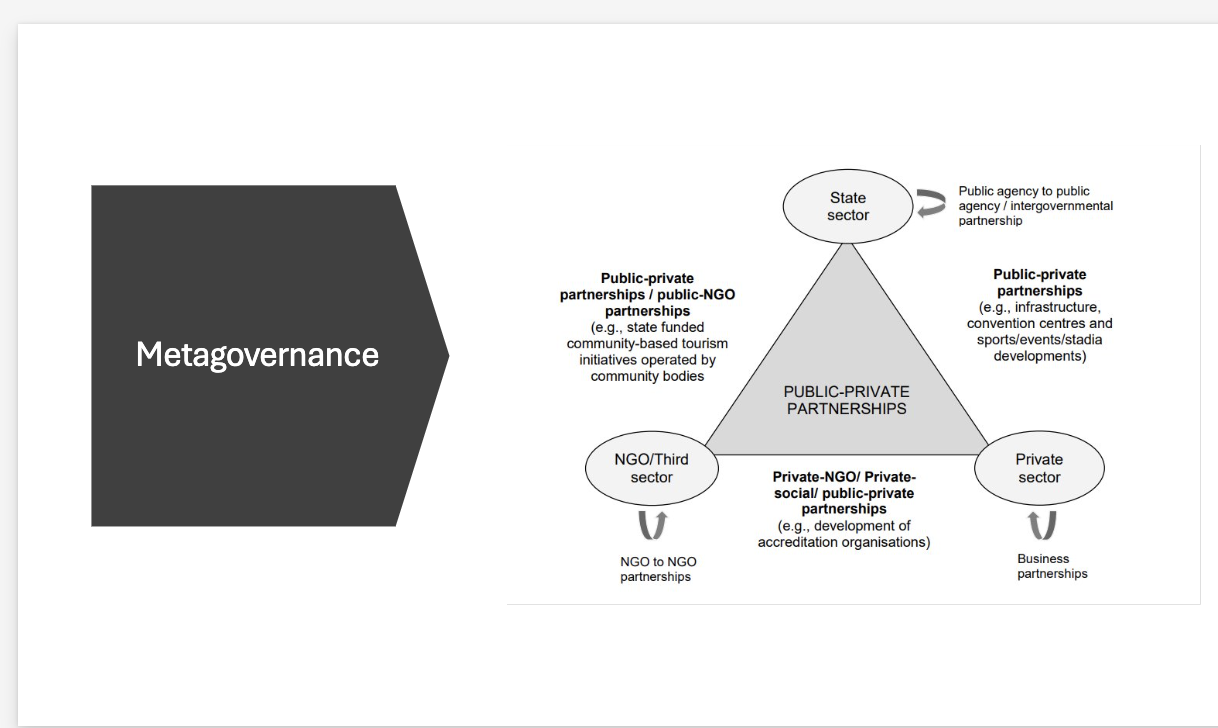
Government to Governance
what is meant by a move from government to governance?
Less reliance on direct action by the government
Instead, government works in partnership with state and partially owned government entitles, private sector non-governmental agenci
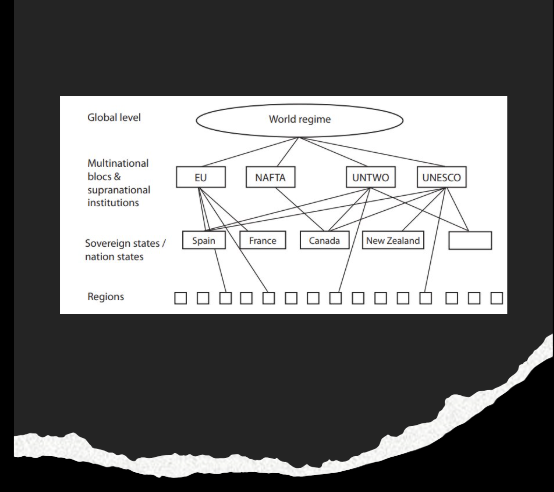
Tiered Governing
Some tourism issues dealt with at larger level
Some governance issues exist at more regional or local level
Government roles
Determining the exact the nature of government in tourism is hard
It varies based on country, jurisdiction, etc
Coordination
Planning
Regulation
Entrepreneur
Stimulation
Promotion
Social Tourism
Public interest
Governance Approach
Regulation
Self-regulation.
Distribution
Re-distribution
Destination
Destinations are highly complex
Combination of different scapes, tourism resources, attractions and other stuff
Complexity indicates that managing a destination is a challenging process as well
A move from government to governance
The use of partnerships across the spectrum is what has been found to be the best approach…
So far