problem solving and intelligence
INTRODUCTION
intelligence is the cognitive ability of an indiv to learn from experience, reason well, remember important info, and cope w the demands of daily living
PROBLEM SOLVING
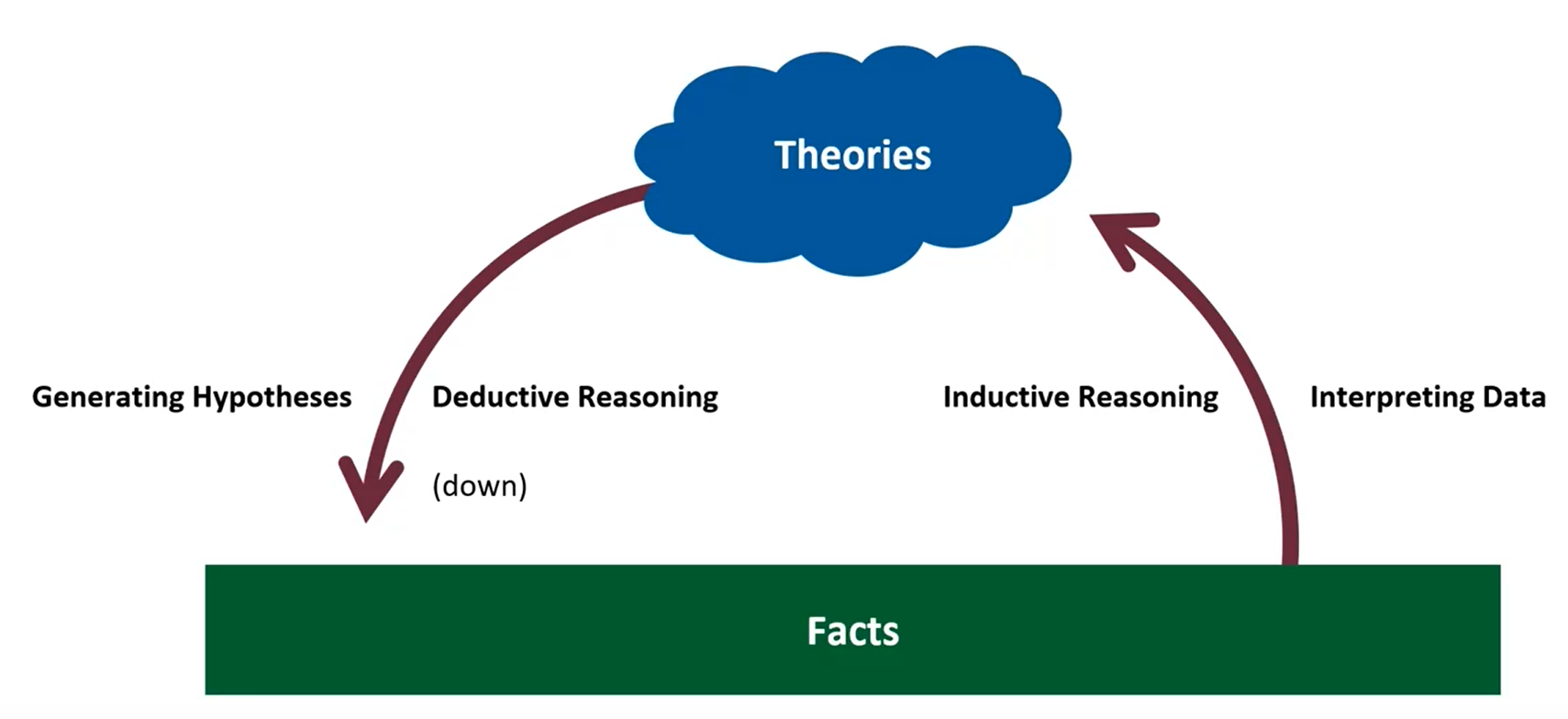
deductive reasoning is when a person starts w general ideas + info to arrive at a specific conclusion; generating hypotheses; down the arc of knowledge
inductive reasoning is when a person starts w specific facts + observations to arrive a broader generalization; interpreting data
think of it like creasing a fact
arc of knowledge - at the base there are facts about the world to then create a theory
 functional fixedness - difficulty seeing alternative uses for common objects
A HISTORY OF INTELLIGENCE TESTING
reliability - ability of a test to produce the same result if one person takes it multiple times. can be measured using the test-retest method + through interrater reliability
validity - ability of a test to actually measure the traits it is supposed to be measuring. can be measured using predictive validity
IQ scoring is based on the results of large samples of indivs who have taken the standardized test. your specific IQ is based on the performance of the gen pop
Gardner’s theory of diff types of intelligence - he believed there were 8 diff types of intelligence: verbal, mathematical, musical, spatial, kinesthetic, interpersonal, intrapersonal, naturalistic
FACTORS INFLUENCING HUMAN INTELLIGENCE
researchers have found that identical twins hv +0.8 correlation b/w IQs whereas fraternal twins hv +0.6
identical twins’ IQ scores correlate strongly
both genetics and environment play a role in intelligence development, and the relative influence of each is yet to be fully determined
Flynn effect - the raw scores of IQ have been on the rise at a rate of 9 to 15 points every 30 years
PIAGET AND INTELLIGENCE DEVELOPMENT
schema - a mental framework for interpreting the world around us; define how we interpret the world
assimilation - incorporating new info into existing schemas
accommodation - modifying existing schemas to fit incompatible info
stages of cognitive development - sensorimotor, preoperational, concrete operational, formal operational
sensorimotor - 0-2 y.o.; must master object permanence
preoperational - 2-7 y.o.; must master egocentrism, seriation (ability to order a series), reversible relationships, conservation
concrete operational stage - 7-12 y.o.; must master abstract thinking & reasoning
formal operational stage - 12+; can understand theoretical abstract things and such
decalage - development of skills out of order
flaw of this theory is that it relies on language skills
BIASES AND HEURISTICS
confirmation bias - tendency to seek out info that confirms existing theory
heuristic - a mental shortcut
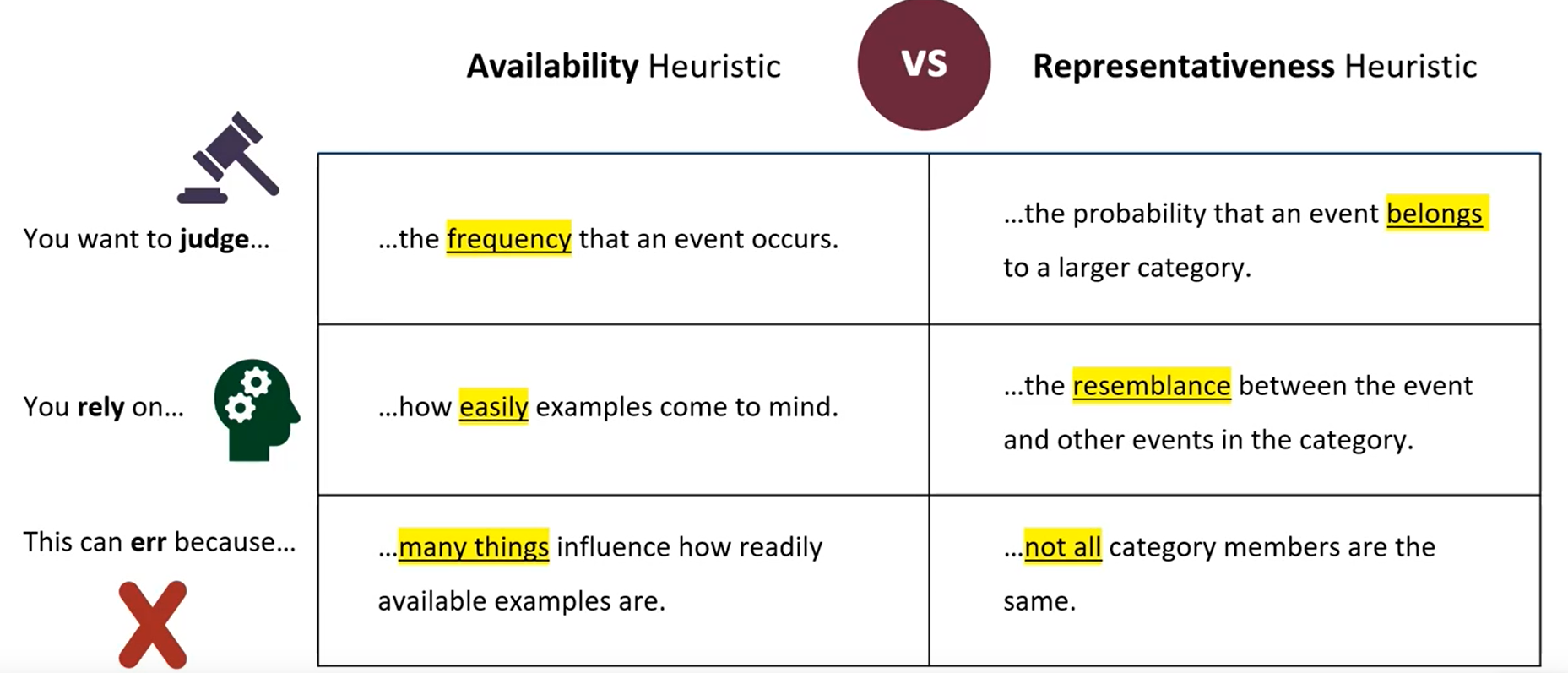
availability heuristic - tendency to make rapid decisions based on the info that is most quickly available to us
representativeness heuristic - tendency to assume that what we are seeing is representative of the larger category we have in our mind; allows you to come to a conclusion quickly but does not consider the baseline probability rates of the probability of events
CHAPTER 5: PROBLEM SOLVING AND INTELLIGENCE
sternbergs types of intelligence - be believed there were 3 diff types of intelligence: analytic, creative, and practical
analytic intelligence - consists of analyzing, evaluating, and judgement aka book smarts
creative intelligence - consists of new ways to approach problems
practical intelligence - consists of analyzing, evaluating and judgement aka street smarts
WISC & WAIS - modern ways of testing IQ
test-retest method - a measures of reliability that examines the consistency of scores on the same test taken at multiple different points in time; if consistent = considered reliable
interrater reliability - the degreee of agreement bw multiple observers witnessing the same event; if high = considered reliable
predictive validity - the extent to which a score on a etst can used to predic future behaivour