ch. 10 - stockholders' equity
accounting equation and components of stockholders’ equity
assets (resources) = liabilities (creditors’ claims) + stockholders’ equity (owners’ claims)
paid-in capital - the amount stockholders have invested in the company
retained earnings - the amount of earnings the company has kept or retained (earnings not distributed in dividends to stockholders over the life of the company)
treasury stock - a company’s own issued stock that it has repurchased
invested capital
paid-in capital - the amount of money paid into a company by its owners
corporation - an entity that is legally separate from its owners and even pays its own income taxes
most corporations are owned by stockholders, some owned entirely by one individuals
sole proprietorships are most common, but corporations are larger in sales, assets, earnings, employees
corporations
obj. 10.1 - identify the advantages and disadvantages of the corporate form of ownership
corporations are formed in accordance with the laws of individual states
state incorporation laws guide corporations as they write their articles of incorporation
articles of incorporation - describes the nature of the firm’s business activities, the shares to be issued, and the composition of the initial board of directors
the board of directors establishes corporate policies and appoints officers who manage the corporation
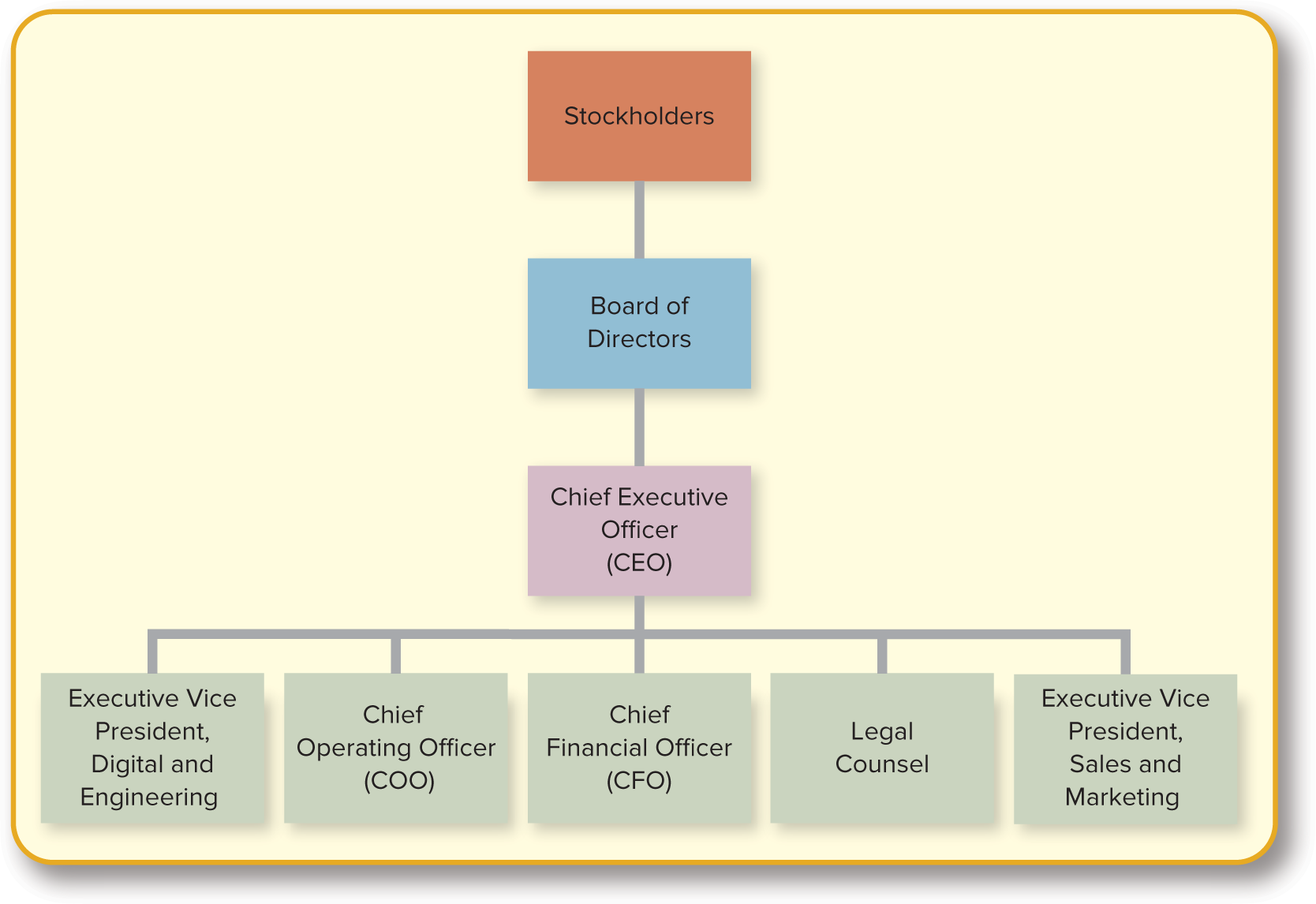
a corporation’s stockholders control the company
stockholders determine the makeup of the board of directors who appoint the management to run the company
stages of equity financing
most corporations that end up selling stock on a major stock exchange don’t begin that way—there’s a progression of equity financing stages leading to a public offering

most corporations start off by selling stock to the founders of the business and to their friends/family
as equity financing needs grow, companies prep a business plan and seek investment from “angel investors” and venture capital firms
angel investors - wealthy individuals in the business community willing to risk investment funds on a promising business venture
venture capital firms - provide additional financing, often in the millions, for a percentage ownership in the company
many look to invest in promising companies where they can add value through business contacts, financial expertise, or marketing channels
most corporations don’t consider issuing stock to the general public until their equity financing needs exceed $20M.
initial public offering (IPO) - the first time a corporation issues stock to the public
major event requiring the assistance of an investment banking firm (underwriter), lawyers, and public accountants
major investment bankers charge up to 6% of the issue proceeds for their services
public or private
corporations can be public or private
publicly held corporation - allows investment by the general public and is regulated by the securities and exchange commission
the stock of a publicly held corporation trades on the NYSE, NASDAQ, or OTC
NYSE - new york stock exchange
most large companies (walmart, exxonmobil, general electric) are traded on NYSE
NASDAQ - national association of securities dealers automated quotations
NASDAQ is home to many large high-tech companies (apple, microsoft, intel)
OTC - over the counter
takes place outside one of the major stock exchanges
all publicly held corporations are regulated by the SEC, resulting in significant additional reporting and filing requirements
privately held corporation - does not allow investment by the general public and normally has fewer stockholders
corporations whose stock is privately held do not need to file financial statements with the SEC
companies begin as small, privately held corporations, then as success broadens for expansion, the corporation goes public
stockholder rights
stockholders are the owners of the corporations and have certain rights
right to vote - stockholders vote on matters, including the election of corporate directors
right to receive dividends - stockholders share in profits when the company declares dividends. the percentage of shares a stockholder owns determines his or her share of the dividends distributed
right to share in the distribution of assets - stockholders share in the distribution of assets if the company is dissolved. the percentage of shares a stockholder owns determines their share of the assets, which are distributed after creditors and preferred stockholders are paid
advantages of a corporation
limited liability - stockholders in a corporation can lose no more than the amount they invested in the company
in contrast, owners in a sole proprietorship/partnership can be held personally liable for debts the company has incurred, above and beyond the investment they have made
ability to raise capital and transfer ownership - since corporations sell ownership interest in the form of shares of stock, ownership rights are easily transferred
investors can sell their ownership interest anytime without affecting the structure of the corporation of its operations, so attracting outside investment is easier for a corporation than for a sole proprietorship or a partnership
disadvantages of a corporation
additional taxes - corporate income is taxed once on earnings at the corporate level and again on the dividends at the individual level
double taxation - corporate income is taxed once earnings at the corporate level and again on dividends at the individual level
owners of sole proprietorships and partnerships are taxed once, when they include their share of earnings in their personal income tax returns
more paperwork - federal and state governments impose extensive reporting requirements on the company to protect the rights of those who buy a corp’s stock/who lend money to a corp
additional paperwork ensures adequate disclosure of the information investors and creditors need
limited liability and beneficial tax treatment
S corporation - allows a company to enjoy limited as a corporation, but tax treatment as a partnership (best of both worlds)
major restriction - corporation cannot have more than 100 stockholders, so S corps appeal more to smaller, less widely held businesses
two additional business forms evolved in response to liability issues and tax treatment—LLCs and LLPs
most accounting firms in the US adopt these b/c they offer limited liability and avoid double taxation, but with no limits on the # of owners as in an S corporation
the primary advantes of the corporate form of business are lmited liabilty and the ability to raise capital. the primary disadvantrages are additonal taxes and more paperwork
common stock
obj. 10.2 - record the issuance of common stock
authorized, issued, outstanding, and treasury stock
authorized stock - the total number of shares available to sell, stated in the company’s articles of incorporation
shares available to sell ( = issued + unissued )
issued stock - the number of shares that have been sold to investors. a company usually does not issue all of its authorized stock
shares actually sold ( = outstanding + treasury )
issued shares
outstanding stock - the number of issued shares held by investors. only these shares receive dividends
shared issued and held by investors
treasury stock - the number of issued shares repurchased by the company
shares issued and repurchased by the company
par value
par value - the legal capital per share of stock that’s assigned when the corporation is first established
originally indicated the real value of a company’s shares of stock
today, par value has no relationship to the market value of the common stock
no-par value stock - common stock that has not been assigned a par value
laws in states permit corporations to issue no-par stock
in some cases, a corporation assigns a stated value to the shares
stated value - the legal capital assigned per share to no-par stock
treated and recorded in the same manner as par value shares
accounting for common stock issues
when a company issues no-par value stock, the corporation records the equity account entitled common stock
example
example
assume Canadian falcon issues 1000 shares of no-par value common stock at $30 per share:
debit | credit | |
cash ( = 1000 shares x $30 ) | 30,000 | |
| 30,000 |
income statement
R - E = NI (no effect)
balance sheet
A (30,000 cash) = L + SE (30,000 common stock)
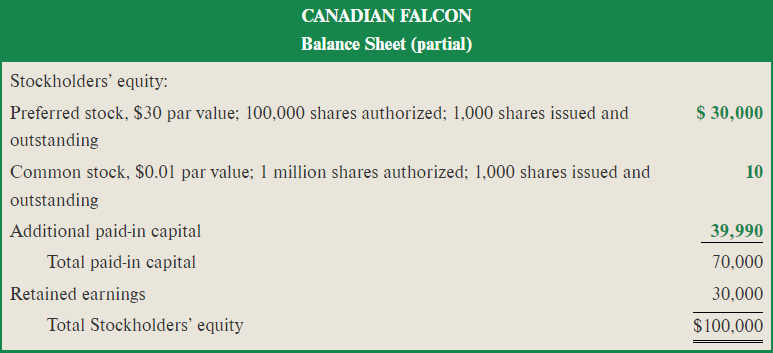
if the company issues par value stock rather than no-par value stock, we credit two equity accounts
credit common stock account for the number of shares issued times the par value per share and we credit additional paid-in capital for the portion of cash proceeds above par value
preferred stock
obj. 10.3 - understand unique features and recording of preferred stock
some corporations issue preferred stock in addition to common stock to attract wider investment
preferred stock - stock with preference over common stock in the payment of dividends and the distribution of assets
preferred stockholders have first rights to a specified amount of dividends. if the board of directors declared dividends, preferred shareholders will receive the designated dividend before common stockholders receive any
preferred stockholders receive preference over common stockholders in the distribution of assets in the event the corporation is dissolved
about 20% of the largest US companies have preferred stock outstanding, but unlike common stock, most preferred stock does not have voting rights—control of the company remains with common stockholders
accounting for preferred stock issues
we record issuance of preferred stock similar to how common stock is issued
debit | credit | |
cash ( = 1,000 shares x $40 ) | 40,000 | |
| 30,000 | |
additional paid-in capital (difference)
| 10,000 |
income statement
R - E = NI (no effect)
balance sheet
A (+40,000) = L + SE (+30,000 pref. stk, +10,000 addl. PIC)
features of preferred stock
convertible - a bond feature that allows the lender (or investor) to convert each bond into a specified number of shares of common stock
shares can be converted into common stock
redeemable - shares can be returned to (or redeemed by) the corporation at a fixed price
redemption privilege might allow preferred stockholders the option, under specified conditions, to return their shares for a predetermined redemption price—shares may be redeemable at the option of the issuing corporation
cumulative - preferred stock shares receive priority for future dividends, if dividends are not declared in a given year
shares receive priority for future dividends, if dividends are not declared in a given year
dividends in arrears - unpaid dividends on cumulative preferred stock
if specified dividends are not declared in a given year, they become dividends in arrears, and accumulate until the company ny does declare dividends
debt or equity
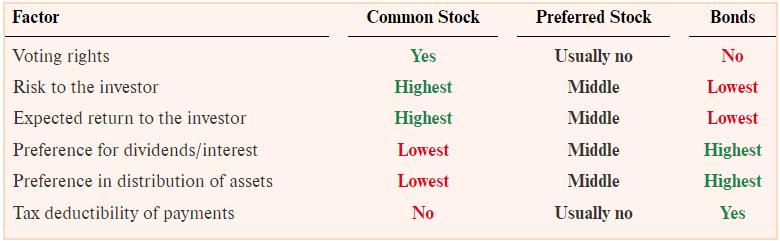
these features of preferred stock give it attributes somewhere between common stock (equity) and long-term debt (liabilities). investors in commons
investors in common stock are owners of the corp b/c they have voting rights, and some preferred stock may be convertible to common stock.
investors in long-term debt, such as bonds, are creditors who have loaned money to the corp.
these investors have the right to interest payments each year and then the face amount of the bond at maturity. this financing ar arrangement is similar to preferred stock that pays cumulative dividends and is redeemable by stockholders
dividends for preferred stock
preferred stock is usually cumulative, but if dividends are not declared in a given year, they accumulate until the company does declare dividends