Week 13: Renal Disorders
Glomerular Diseases
Acute Glomerulonephritis
Inflammation of the glomerular capillaries.
Manifestations include:
Hematuria: Presence of blood in urine.
Edema: Swelling due to excess fluid.
Azotemia: Excessive nitrogenous wastes in the blood.
Proteinuria: Presence of excess protein in urine.
Risks:
Treatment:
Involves protein and sodium restriction.
Antibiotic administration is essential.
Complications:
Hypertensive encephalopathy.
Heart failure.
Pulmonary edema.
Chronic Glomerulonephritis
Characterized by:
Proteinuria is typically due to repeated episodes of glomerular injury.
Leads to renal destruction and broad clinical manifestations.
Major Complication: Chronic renal failure or end-stage renal disease (ESRD).
Assessment Priorities:
Fluid and electrolyte status.
Cardiac status.
Neurologic status.
Nephrotic Syndrome
A cluster of clinical findings associated with various intrinsic renal diseases or systemic conditions affecting the glomerulus.
Major Cause: Diabetic nephropathy, which leads to proteinuria.
Treatment: Medication and dietary modifications.
Kidney Failure
Acute Renal Failure (ARF)
Definition: A typically reversible syndrome characterized by abrupt loss of kidney function and GFR over hours to days.
Types of ARF:
Prerenal ARF: Caused by reduced blood flow to the kidney.
Intrarenal ARF: Resulting from parenchymal damage to glomeruli or kidney tubules.
Postrenal ARF: Resulting from obstruction.
Clinical Phases of ARF:
Initiation or onset phase.
Oliguric phase.
Diuretic phase.
Recovery phase.
Question 1
Scenario: A nurse cares for a patient with acute glomerulonephritis.
Prioritize Assessments:
Daily weights (Identified as the most critical measure).
Ankle-brachial index.
Pain assessment.
Blood glucose levels.
Answer to Question 1
Correct Answer: A. Daily weights
Rationale:
Patients with acute glomerulonephritis are susceptible to fluid volume excess.
The most accurate indicator of fluid loss or gain in acutely ill patients is weight, as accurate intake and output and assessment of insensible losses may be difficult.
Blood sugars, ABI, and pain assessment do not address the core manifestations and complications of the disease.
Chronic Renal Failure (CRF) and ESRD
A progressive and irreversible deterioration of renal function over months to years.
Accumulation of end products of protein metabolism in the blood.
Major Risk Factors:
Diabetes.
Hypertension.
Proteinuria.
Family history.
Increasing age.
Impaction on Body Systems: Virtually every body system is affected by chronic renal failure.
Complications and Treatment in Failure
Clinical Manifestations:
Sodium and water retention.
Acidosis.
Hyperkalemia.
Calcium and phosphorus imbalances.
Medications:
Phosphate-binding agents.
Calcium supplements.
Antihypertensive and cardiac medications.
Antiseizure medications.
Erythropoietin.
Patient Needs:
Nutritional support.
Dialysis as necessary.
Renal Replacement Therapies
Hemodialysis:
Involves vascular access to circulation via:
Arteriovenous fistula.
Arteriovenous graft.
Essential components include:
Blood pressure monitoring.
Blood pump.
Clot and bubble traps.
Semipermeable membrane for filtration.
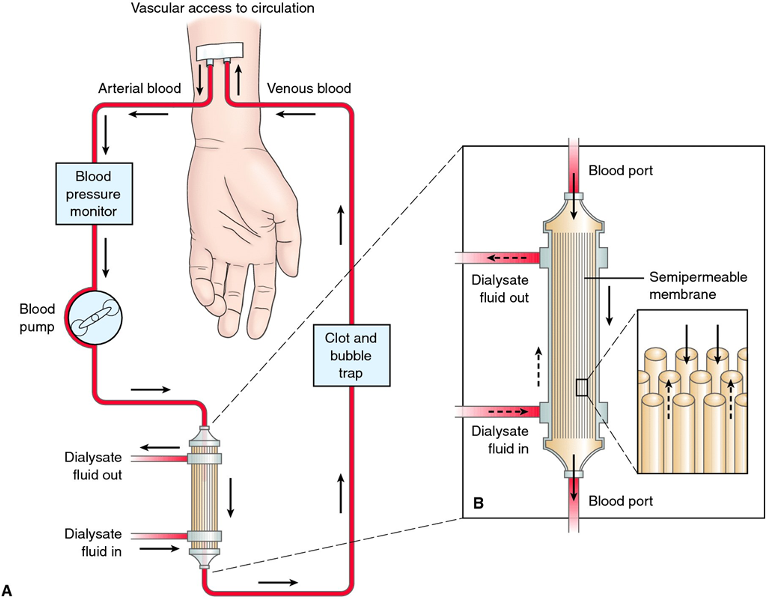
Monitoring Requirements:
Patient, dialyzer, and dialysate bath need constant monitoring for complications.
Considerations for medications, fluid balance, and nutritional needs.
Awareness of potential complications (hypotension).
Clotting risk, therefore, the client will most likely be on anticoagulants (heparin).
Question 2
True/False Statement: An older adult with benign prostatic hyperplasia (BPH) is at risk for postrenal ARF.
Answer: True
Rationale:
Postrenal ARF results from obstruction that can occur from the collecting ducts in the kidney to the urethra, with potential blockage from BPH.
Question 3
Scenario: A patient with ESRD is scheduled for hemodialysis treatment.
Considerations:
Vulnerable to hypotension.
Other options: Urosepsis, abdominal pain, and metabolic alkalosis are not common.
Answer to Question 3
Correct Answer: C. Hypotension
Rationale:
Hypotension occurs due to sudden alterations in blood flow and fluid balance during hemodialysis.
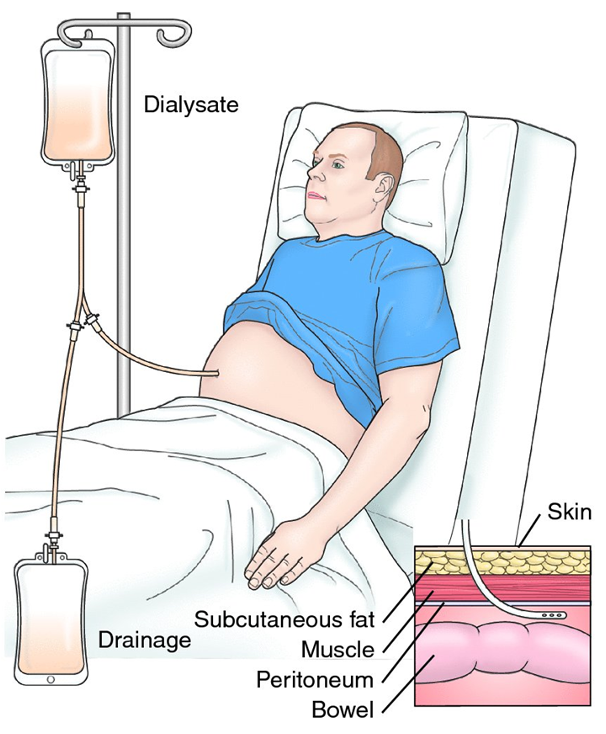
Peritoneal Dialysis:
Types include continuous ambulatory peritoneal dialysis.
Kidney Transplantation
Procedure of Choice: For most patients with ESRD.
Preoperative Management Goals:
Stabilizing metabolic state.
Ensuring freedom from infection.
Initiating immunosuppressants.
The body will see the kidney as foreign and attack it; therefore, immunosuppression is necessary.
Postoperative Care Priorities:
Administer medications.
Address psychological issues.
Assess for rejection symptoms.
Manage potential complications.
Prevent infection.
Educate the patient.
Monitor urinary function.
Provide continuing care.
Question 4
Patient Query: Signs of transplantation rejection.
Best Response: “Low urine output can be a sign of rejection.”
Rationale:
Signs include: Oliguria, edema, fevers, increased blood pressure, weight gain, and tenderness around the transplanted kidney.
The kidney is not doing its job.
Renal Trauma
Common Renal Injuries:
Contusions, lacerations, ruptures, and renal pedicle injuries.
Even minor lacerations can lead to severe bleeding.
Management Goals:
Control hemorrhage and pain.
Prevent infection.
Preserve and restore renal function.
Considerations for geriatric patients.