National vs. State Power
In the previous module, we identified federalism as one of the six fundamental principles of the Constitution. Remember that federalism means "dual government." The federal government is sovereign and supreme within its sphere, but that sphere is defined and limited by the Constitution. Any powers not given to the federal government belong to the states or the people. This creates a balance of power between the federal and state governments.
The principle of federalism is enshrined in the Tenth Amendment:
The powers not delegated to the United States by the Constitution, nor prohibited by it to the States, are reserved to the States respectively, or to the people.
Tenth Amendment
The powers not delegated to the United States by the Constitution, nor prohibited by it to the States, are reserved to the States respectively, or to the people.
Tenth Amendment
But what powers are given to the federal government, and what powers are given to the state governments? There are powers that are unique to each as well as powers that are shared between the two.
There are three different types of powers that are held by the federal (national) government that we will discuss in this lesson: expressed powers, implied powers, and inherent powers.
First, let's define each of these powers.
Expressed Powers: Powers that are enumerated (listed) in the Constitution.
Implied Powers: Powers that are not enumerated in the Constitution but are usually derived from or based on expressed powers.
Inherent Powers: Powers that are not enumerated in the Constitution but are used by Congress and the president to accomplish their jobs.
Expressed Powers
We discussed many of the expressed powers in our study of Article I, Sections 8, 9, and 10. We are going to briefly review some of these powers and learn who is responsible for each. View the different tabs below to learn which powers belong to the federal government, which belong to the state governments, and which are shared by both.
FEDERAL POWERS
Establishing and maintaining the military
Declaring war—only Congress can do this
Establishing and maintaining the postal system
Establishing weights and measures
Coining money
Issuing copyrights and patents
Making treaties
 STATE POWERS
Establishing systems of local government
Establishing schools (including building and maintenance)
Regulating state commerce
Regulating licenses (marriage, divorce, driver's)
Building road systems
 SHARED POWERS
Collecting taxes
Establishing courts (including punishments for criminals)
Regulating interstate commerce
Regulating banks
Borrowing money
Providing education
Providing for the general welfare of the citizens

Powers Denied to the Government:
Sections 9 and 10 of Article I establish the powers that are denied to the federal government and the states.
According to Section 9, Congress is subject to these limitations:
Could not abolish the slave trade until after 1808 (which it did in the first days of 1808). The Thirteenth Amendment abolished slavery; therefore, this clause is null and void.
Cannot suspend habeas corpus. A writ of habeas corpus gives an accused person the right to appear before a judge to see if his or her detainment is legal. This is also known as arraignment. The only time it can be suspended is during wartime.
Cannot pass an ex post facto law. All laws passed can only apply to future acts. In other words, Congress cannot pass a law to make an act criminal after the act has been committed.
Cannot order a direct tax unless it is proportional to the census of the state.
Cannot set up export duties for goods sent from one state to another or goods sent to foreign countries.
Cannot give preferential treatment to one port over another. Cannot force the states to pay duties on goods that are shipped by water or air from one state to another.
Cannot withdraw money from the treasury except for laws that it passes. There should be a statement that is published periodically to show what money was received and how money was spent.
Cannot give titles of nobility. Congress must give permission to officials who receive gifts or titles of rank (such as from any monarch or foreign state).
Section 10 discusses the powers that are denied to the states:
Cannot exercise powers that are given explicitly to the federal government. This includes establishing treaties, alliances, and confederations; granting warrants against someone for piracy; coining money; passing bills of attainder, ex post facto laws, or laws impairing obligations to contracts; or granting titles of nobility.
Cannot impose import or export duties, though they can collect inspection fees that will be sent to the Treasury. Congress can change the inspection laws of the states.
Cannot charge a tax on ships entering their ports, raise an army or navy, make treaties with other states or nations, or declare war.
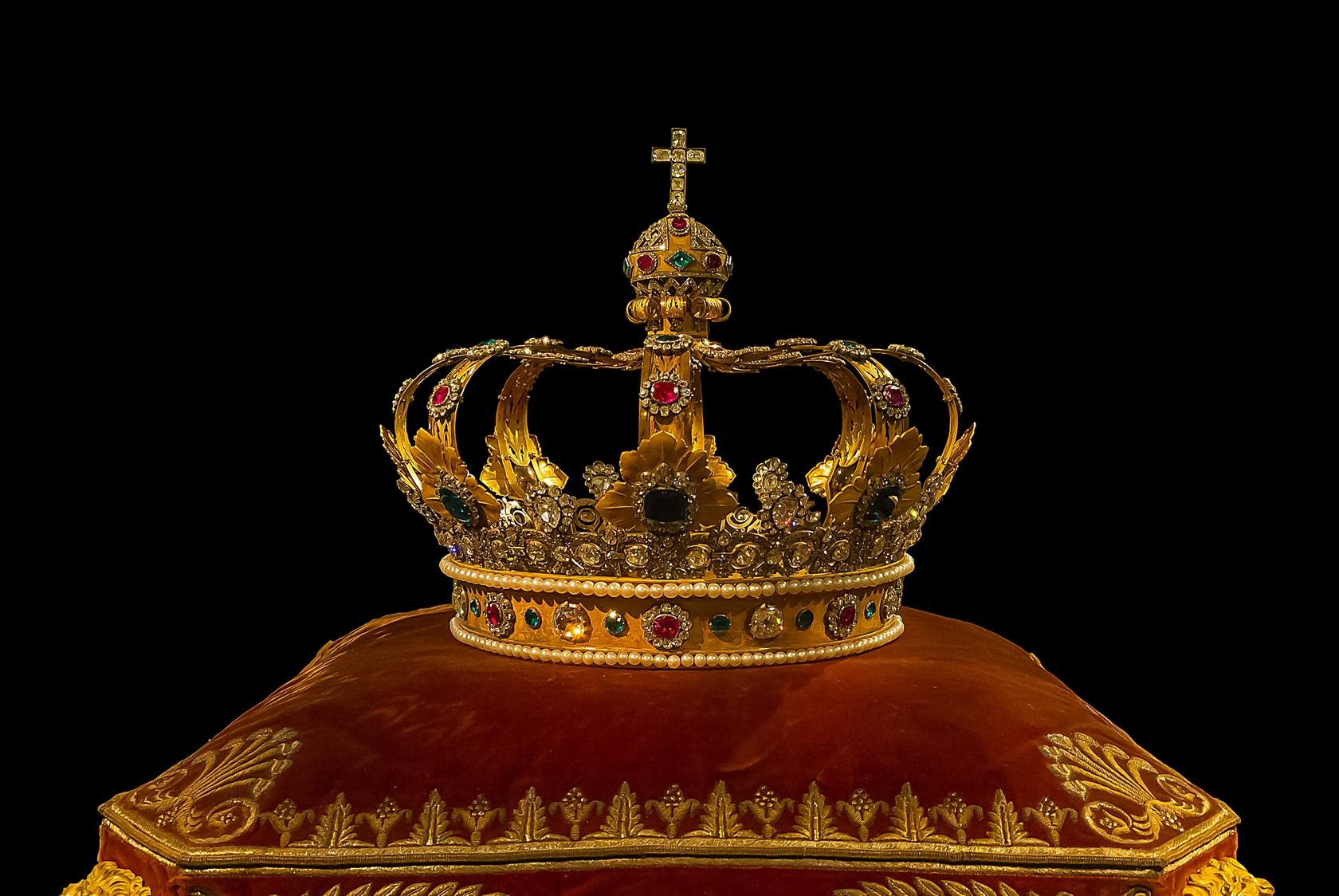
Granting titles of nobility is a power denied to both Congress and the state governments.
Implied Powers
Implied powers are derived from the expressed powers listed above. One example of an implied power is creating a national bank. This comes from the expressed powers to collect taxes, mint money, and borrow money. Because the Constitution expressly gives these powers to the government, it's implied that the government can also create a national bank because it needs one to carry out the expressed powers of collecting taxes, minting money, and borrowing money. Similarly, law enforcement funding, education funding, and Social Security are all based on the provision that the federal government should provide for the general welfare of the people.
Inherent Powers
Inherent powers are used by Congress and the president to help them accomplish their jobs. Inherent powers are primarily used to get something done quickly, such as in a time of national emergency. The president's use of executive orders is a perfect example of inherent powers. An executive order is an order issued by the president that has the force of law. Executive orders have been used throughout the presidency of the United States and have included some of the following issues: minimum wage increases, monetary sanctions against countries that will not communicate or cooperate with the US, and immigration.
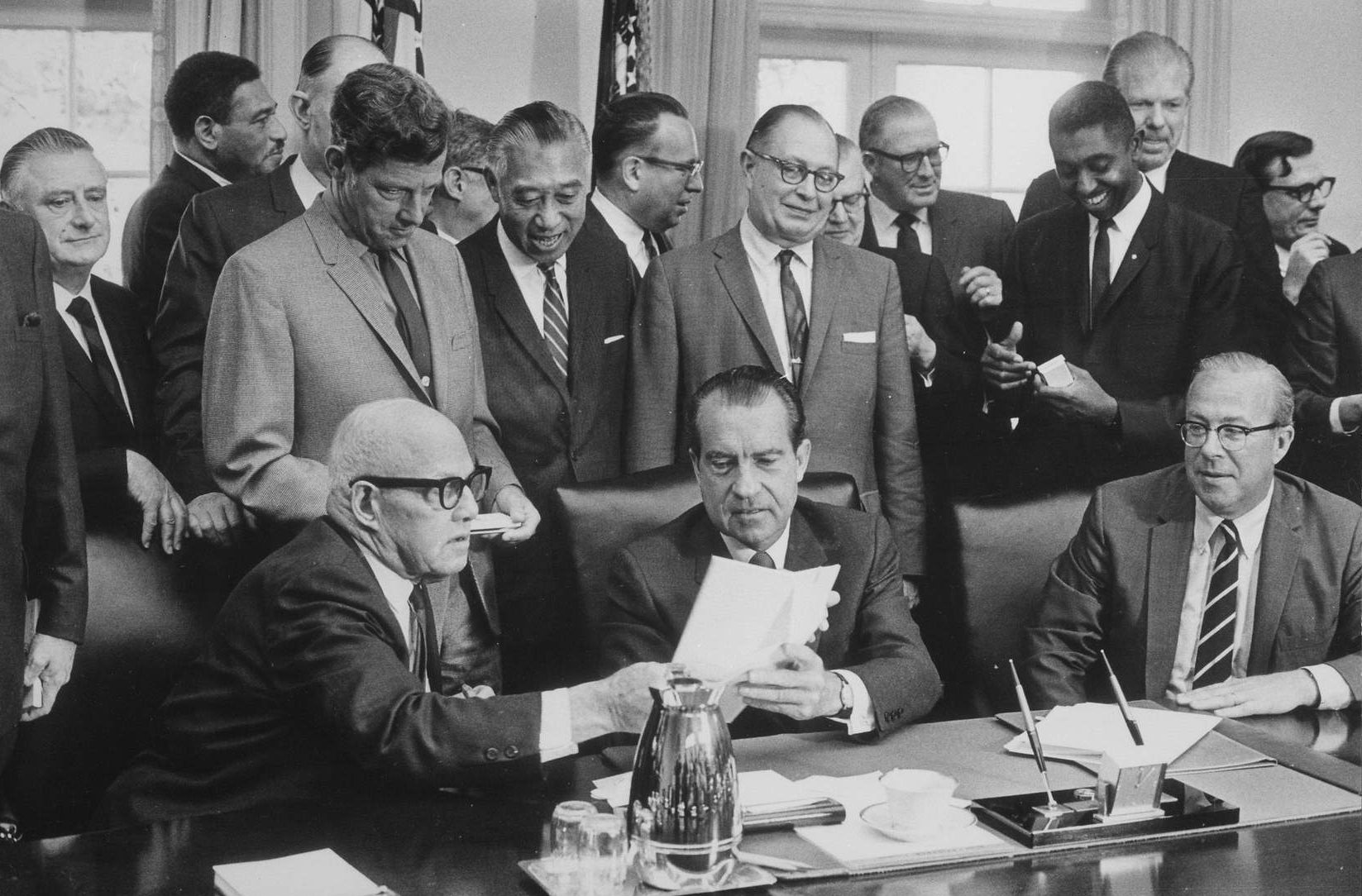
President Nixon signs an executive order (1969).
Federalism
Federalism is a distribution of power that requires a balancing act. The Founding Fathers were not in favor of an overzealous federal government; rather, they intended that the state governments would be equally strong. Both the federal and state governments needed to be supreme within their own jurisdictions. You can see federalism in practice throughout your daily life. You receive mail regulated by the federal government, you pay for items with money minted by the federal government, and you are protected by a military that is maintained by the federal government. You receive goods that are shipped from different states and are regulated by state governments, you drive on roads that are maintained by state governments, and you can obtain a driver's license regulated by a state government. These are just a few examples of our system of federalism. Can you think of any other examples of federalism in your everyday life?