Recycling within ecosystems
Decomposers - essential for nutrient recycling - convert complex organic compounds into simpler organic compounds.
Organism dies = break down tissues, releasing nutrients into soil
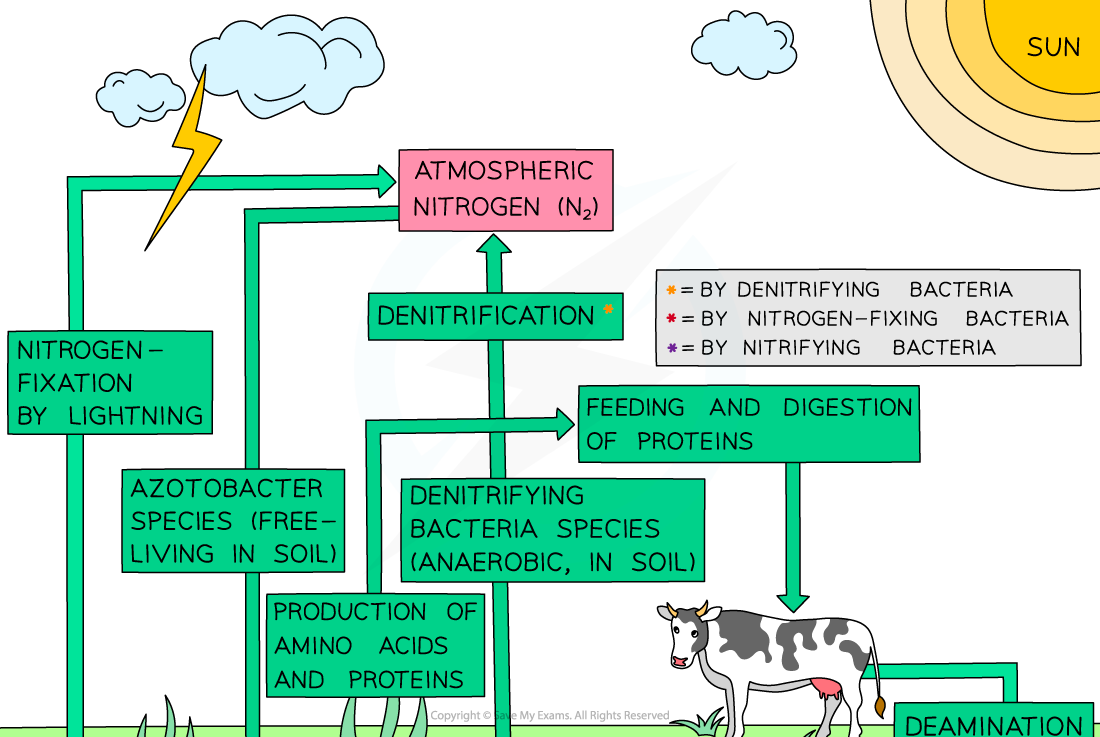
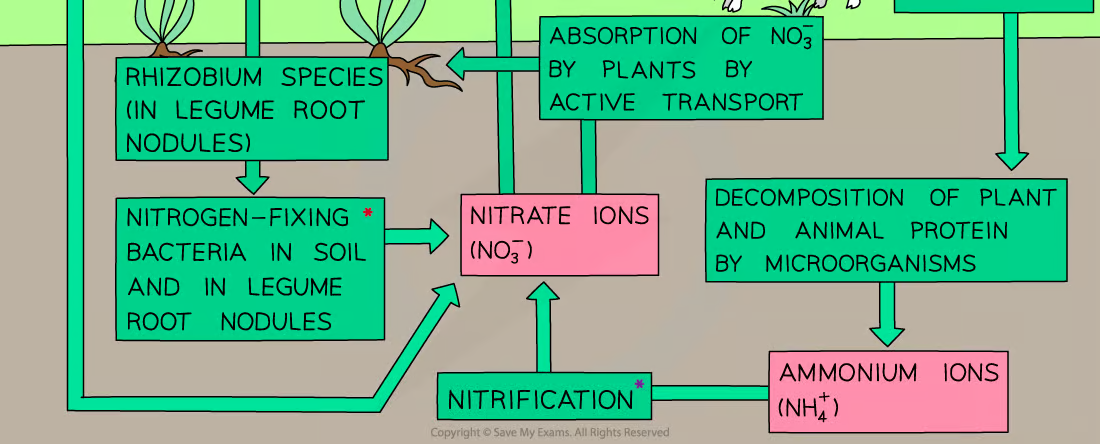
Nitrogen fixation
Nitrogen gas → nitrogen containing compounds
Azotobacter and Rhizobium bacteria contain nitrogenase enzyme to convert nitrogen and oxygen into ammonia
Azotobacter (free living bacteria)
Produce ammonia from nitrogen gas.
Make amino acids
Release them when they die
Rhizobium (mutualistic bacteria)
Live in root nodules in peas and beans - mutualistic (both benefit from each other) symbiotic (involving interaction between two different organisms living in close physical association) relationship
Obtain carbohydrates from plant and plant gets amino acids from bacteria
Ammonification
Production of ammonia from organic compounds e.g. urea, proteins, nucleic acids
Saprobiotic (organisms that digest their food externally and then absorb the products) microorganisms (bacteria and fungi) feed on these to release ammonia into the soil
Nitrification 1
Some microorganisms get energy from reactions involving inorganic ions (e.g. nitrosomonas bacteria)
Ammonium ions → nitrite ions (NO2-)
Nitrification 2
Nitrite ions → nitrate ions (NO3-)
This requires oxygen - occurs in soil with air pockets
e.g. aerated, well drained soil
Nitrobacter bacteria do this
Denitrification
Occurs when soils become waterlogged - short of O2
Anaerobic bacteria (Pseudomonas denitrificans) carry out denitrification
Soil nitrates → nitrogen in the atmosphere
Reduced nitrogen compounds available to plants - for land to be productive it must be kept well aerated