Parallel Slide
Parallel Slide (Class C)
A bilateral sliding technique with synchronized edge control demands identical weight distribution and simultaneous friction management. Critical for high-speed stability in deceleration scenarios.
Classification & Prerequisites

Non-Negotiable Prerequisites
1. Power Slide (D) Mastery:
- 5 consecutive slides @ 10km/h with <0.5m variance
- Recovery time <0.4s
2. Bilateral Symmetry Certification:
- Single-leg balance difference <2s (L vs R)
- Force plate: Weight distribution asymmetry <5%
Technical Execution
1. Entry & Setup
- Approach: 12-15 km/h in Eagle stance (toes angled 30°)
- Weight Distribution: 50/50 split between feet
- Edge Initiation: Simultaneous inside edge engagement
2. Slide Sustainment
- Body Position:
- Knees bent 110°
- Torso upright, hips low
- Pressure Control:
- Progressive weight increase (50% → 70% per foot)
- Micro-adjustments to counter yaw drift
3. Controlled Stop
- Deceleration Technique: Gradual edge release → flat wheel transition
- Recovery: Instant transition to Eagle or forward stride
Gear Optimization
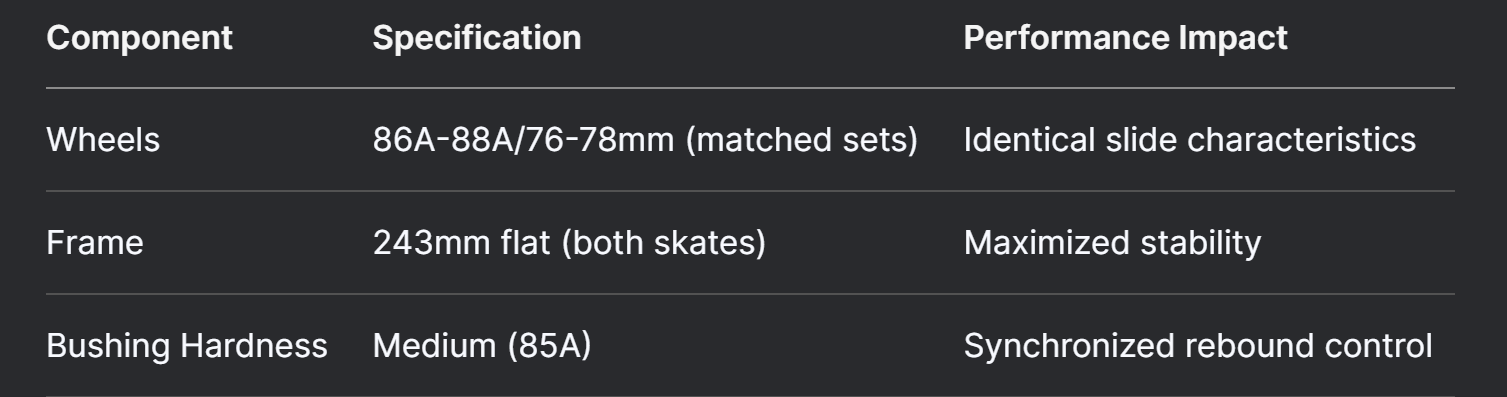
Physics & Safety
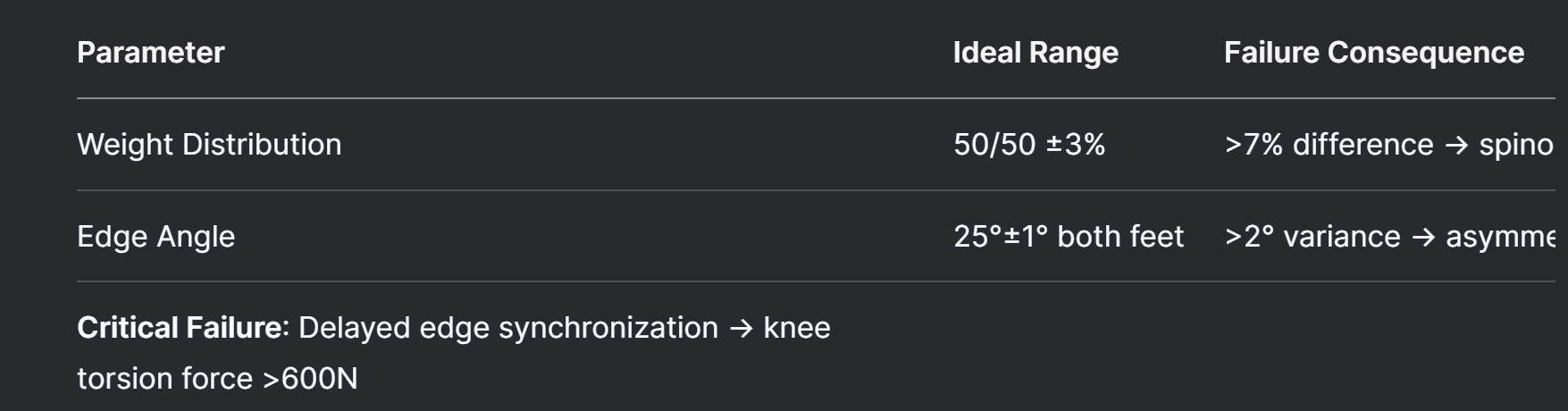
>7% difference → spinout
>2° variance → asymmetric slide
Mastery Metrics
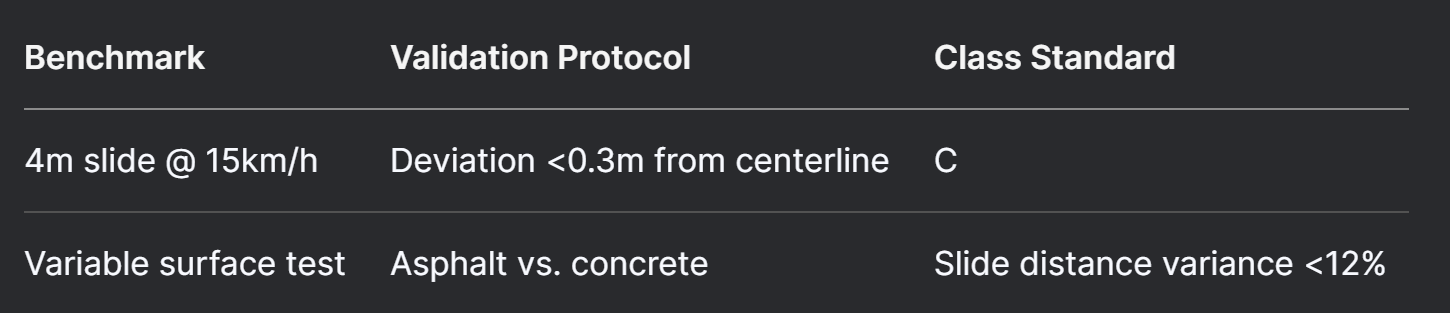
Coaching Progressions
1. Wall-Assisted Symmetry Drills:
- Maintain a 50/50 weight while sliding along the barrier
2. Low-Speed Precision Slides:
- 8 km/h → focus on identical edge angles (laser level verification)
3. Asymmetric Resistance Training:
- Slide with weighted vest (offset load) → correct drift
Competition Utility (WSSF)
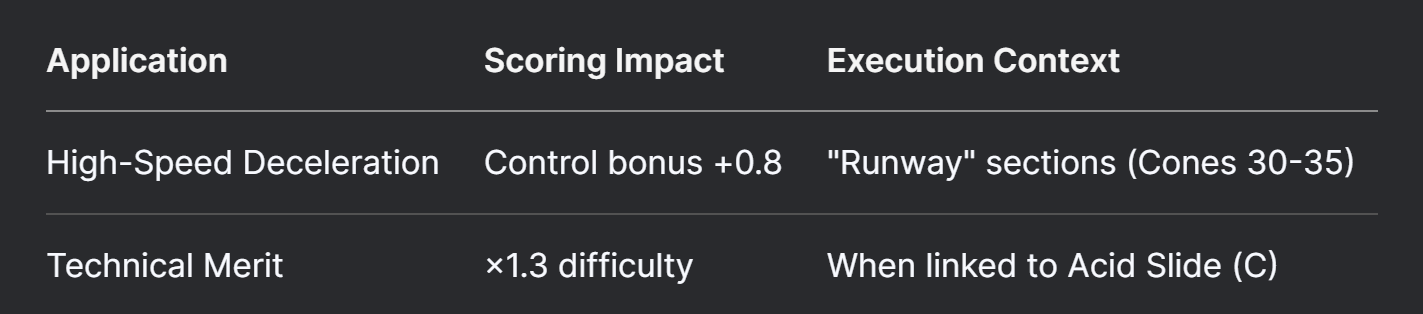
Pro Tip
Initiate the slide by mentally "gluing" your knees together - this triggers symmetrical muscle recruitment. Elite skaters reduce drift by 40% through peroneus longus co-contraction at 20Hz frequency.
Safety Protocol
- Mandatory Gear: Symmetrical ankle braces
- Surface Restrictions: Avoid μ<0.8 until bilateral slide symmetry >90%
- Biomechanical Screening: Knee varus/valgus asymmetry <3°