HW: Reproductive Isolation
Key Terms
Reproductive Isolation
a group/collection of mechanisms, behaviors, physiological processes that prevent that prevent two different species that mate from producing offspring OR it ensures that the offspring that is produced is not fertile
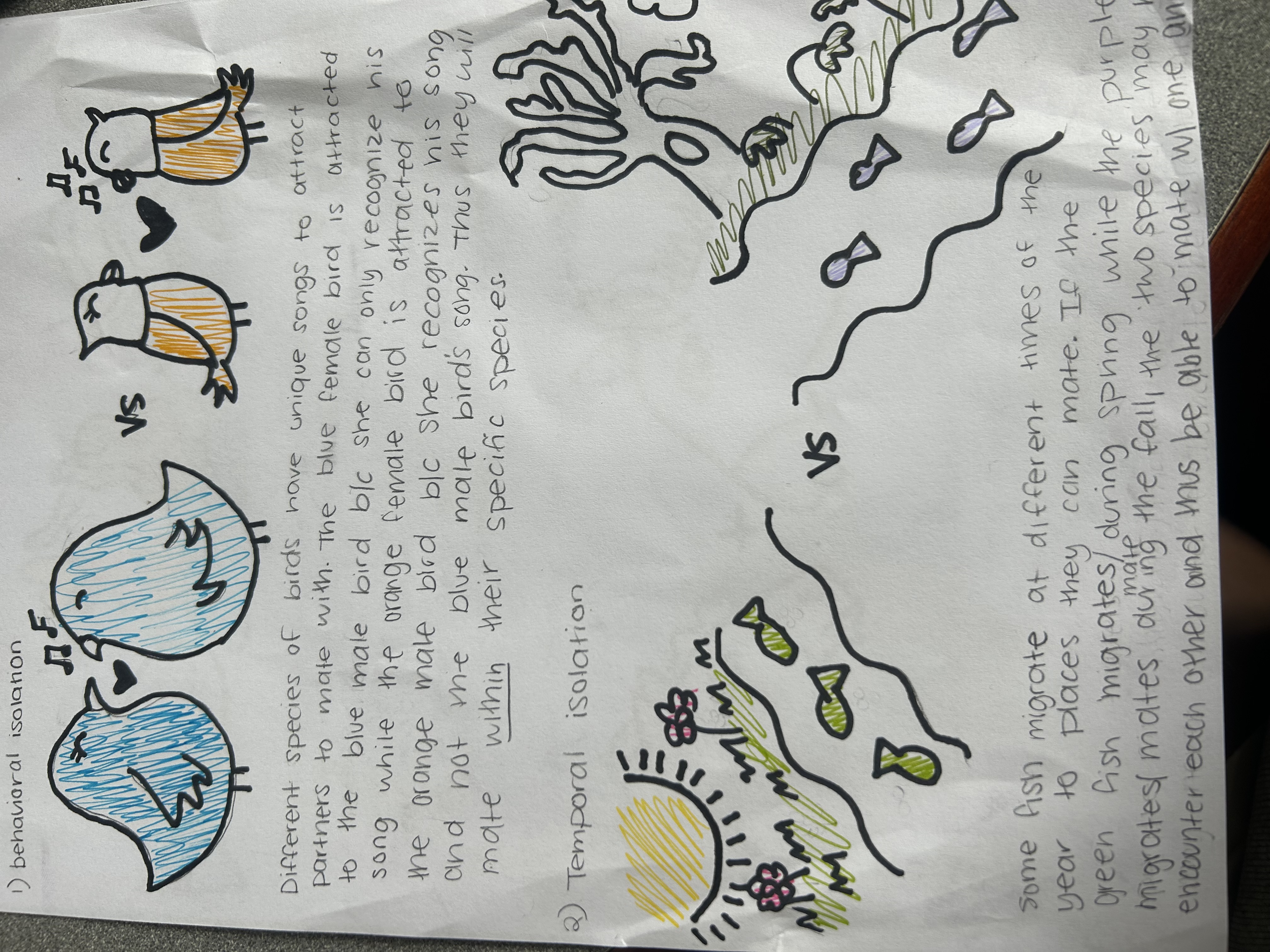
temporal isolation
factors that prevent potentially fertile individuals from meeting. This reproductively isolates the members of distinct species
behavioral isolation
the presence or absence of a specific behavior that prevents twos species from reproducing with each other
pre-zygotic barrier
a mechanism that blocks reproduction from taking place by preventing fertilization
post-zygotic barrier
a mechanism that blocks reproduction AFTER fertilization and zygote formation
hybrid inviability
a situation in which a mating between two individuals creates a hybrid that does not survive past the embryonic stages
hybrid sterility
a situation in which a mating between two individuals creates a hybrid that is sterile (cannot reproduce)
Reproductive isolation
In enough time, the genetic and phenotypic divergence between populations will affect characters that influence reproduction
if individuals from the two populations were brought together, it is unlikely that they will mate.
If they do mate, their offspring will be sterile/infertile
Many types of diverging characters may affect reproductive isolation, the ability to interbreed, of the two populations
Scientists classify Reproductive isolation into two parts: prezygotic barriers and postzygotic barriers
Remember: Zygote is a fertilized egg (the first cell of the development of an organism that reproduces sexually)
pre-zygotic barrier
a mechanism that blocks reproduction from taking place by preventing fertilization
this includes barriers that prevent fertilization when organisms attempts to reproduce
postzygotic barriers occur after zygote formation
it includes organisms that don’t survive the embryonic stage and those that are born sterile.
Some prezygotic barriers prevent reproduction from occurring entirely
Temporal Isolation can act as a form of reproductive isolation
for example, two species of frogs inhabit the same area but one reproduces from January to March while the other reproduces from March to May
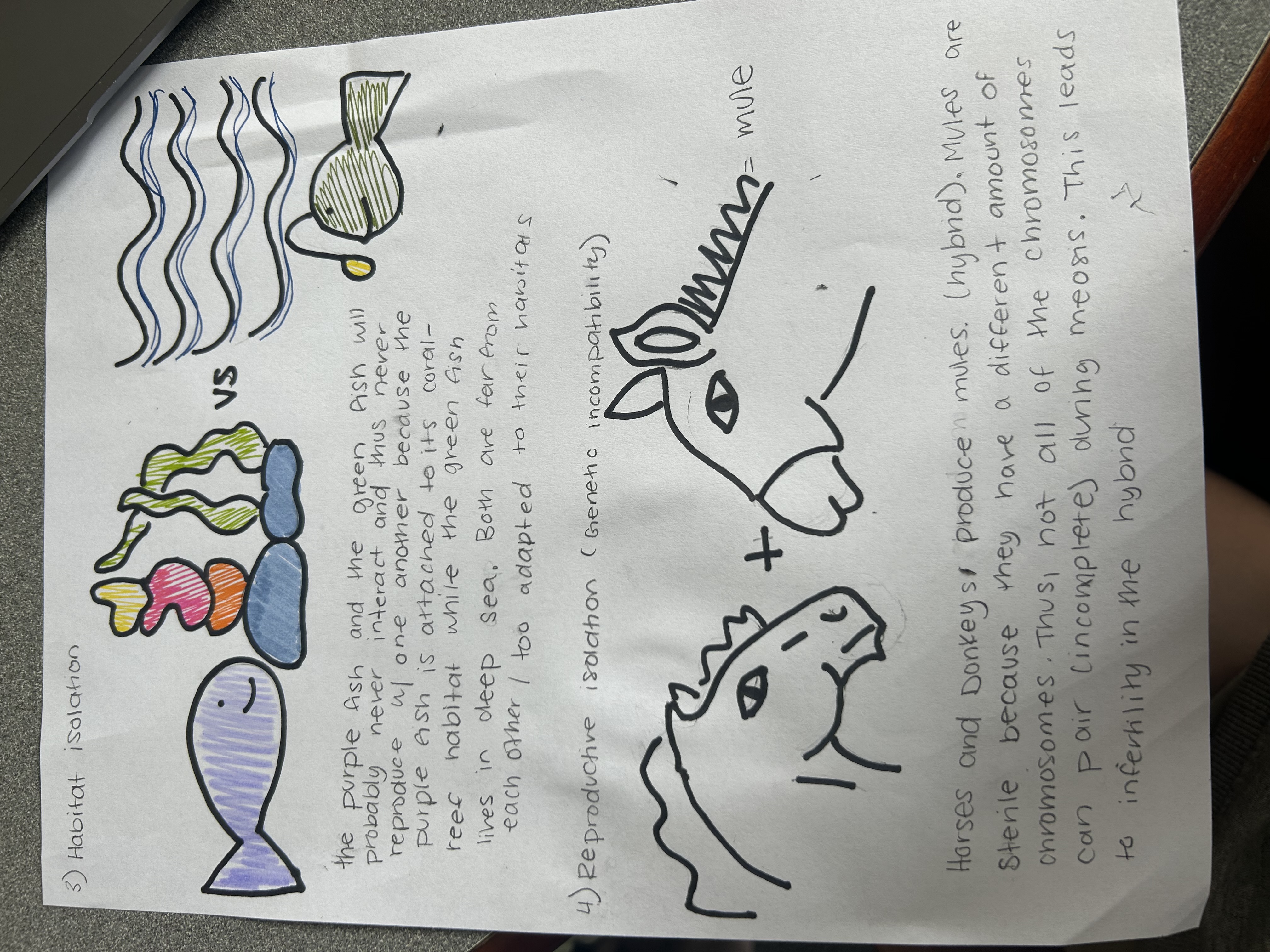
Habitat Isolation
populations of a species move to a new habitat and take up residence in a place that no longer overlaps with other populations of the same species
Reproduction with the parent species ceases and a new group exists that is now reproductively and genetically independent
for example, if a cricket population was divided after a flood, they could non longer interact with each other. Over time, natural selection, mutation, and genetic drift with lead to the divergence of the two groups
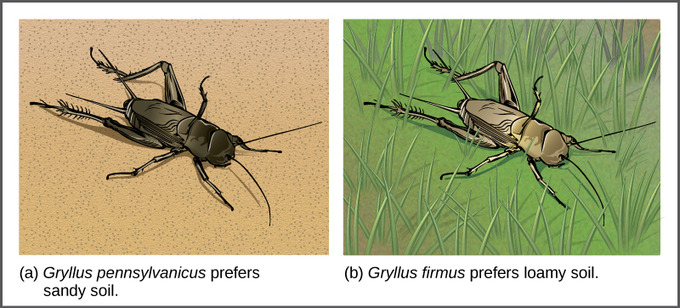
The cricket (a) Gryllus pennsylvanicus prefers sandy soil, while the cricket (b) Gryllus firmus prefers loamy soil. The two species can live in close proximity, but because of their different soil preferences, they became genetically isolated.
Behavioral Isolation
this occurs when the presence or absence of a specific behavior prevents reproduction from taking place
for example, male fireflies use specific light patterns to attract females. Various species display their lights differently, so, if a male of one species tried to attract the female of another species, she would not recognize the light pattern. Thus, she would not mate with the male
Reproductive organ incompatibility can also keep species reproductively isolated
male firefly reproductive organs
Behavioral isolation can also occur in plants.
Plants have certain structures aimed to attract one type of pollinator simultaneously preventing a different pollinator from accessing the pollen. The tunnel through which an animal must access nectar can vary in length and diameter, which prevents the plant from being cross-pollinated with a different species

Reproductive isolation in plants: Some flowers have evolved to attract certain pollinators. The (a) wide foxglove flower is adapted for pollination by bees, while the (b) long, tube-shaped trumpet creeper flower is adapted for pollination by humming birds.
Postzygotic Barrier
When fertilization takes place and a zygote forms, postzygotic barriers can prevent reproduction
Hybrid Inviability is when, many times, hybrid individuals cannot form normally in the womb and simply do not survive past the embryonic stages this is called hybrid inviability.
Hybrid Sterility is another postzygotic situation where reproduction leads to the birth and growth of a hybrid that is sterile and unable to reproduce offspring of their own