Finance
Why do businesses need Finance
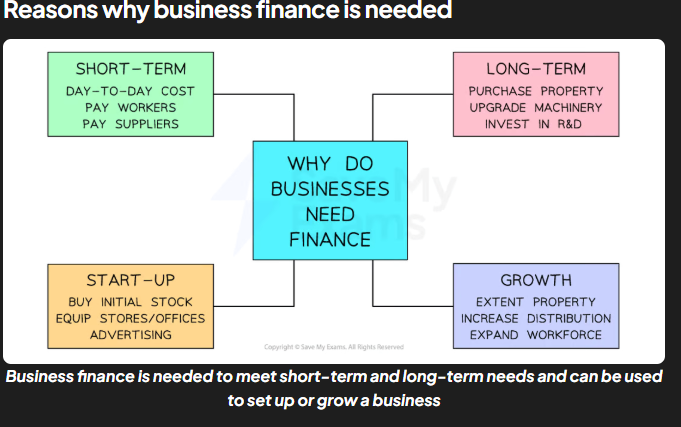
Short term finance needs- to pay day to day costs such as employee wages and customer bills. Overdraft and trade credit may be used
Long term finance needs- needed to fund the purchase of non current assets. Loans and mortgages are used.
Start-up finance- are needed by the business to pay for fixed assets and current assets
Business expansion- finance is used to help the business grow by investing into developing new products (research development).
Internal sources of finance
Personal savings - when a business is funded by using an individual’s personal savings
Retained profit- is the surplus of revenue over costs generated over the past few years and not distributed to owners
Selling assets- selling non current assets like land and machinery that are no longer required. cons- may show the business is in trouble
Pros- no interest rates, quicker as no paperwork,
Cons- finance may not be sufficient , owner dissatisfaction
External sources of finance
Overdraft- is when business can spend more money than they have in their account. pros-flexible, interest is only paid on account overdrawn cons-high interest chargers and not suitable long term
Trade credit- is when a business has an agreement to delay paying customers. pros- no interest to be paid, sell goods before paying for stock. cons-not all stock can be bought using trade credit
Loans- money borrowed from the bank or other financial provider with a fixed interest rate. pros- getting a loan is straightforward and banks will not ask for percentage of the business. cons- not flexible, interest will be charged
Selling shares- private limited company can sell a percentage of the business to family and friends in exchange for money. pros- no repayment , reduced risk and more credible as trusted by investors. cons- profit is shared, conflict and loss of control.
Venture capital- is when a private investor invests money into the business. pros- no repayment, powerful network and expert knowledge. cons- loss of control,dilution distraction.
Crowd funding- is used raise money from small investors online. pros-free marketing and does require repayment. cons- funding is not guaranteed and time consuming
Factors affecting choice of finance
Timescale- short or long term source of finance
Legal structure- sole traders, partnerships and private limited companies have more lending risk compared to public limited companies
Cost- interest rates add to the costs eg loans and selling share in public limited company.
Control-selling shares or venture capital can lead to loss of control for business owners
Purpose of finance- some options are only suitable for certain uses like mortgage for property and overdraft for daily bills
Level of existing debt- depending the amount of money in debt
Cash inflow- money coming into the business eg.sales revenue,sale of assets and interests received
Cash outflow- money leaving the business eg. wages, loan repayments
Net cash flow

Purpose of cash
Cover operating costs
Unexpected expenses
Pay for supplies
Cash Flow forecast- is a prediction of the anticipated cash inflows and cash outflows for 12 to 6 month period.
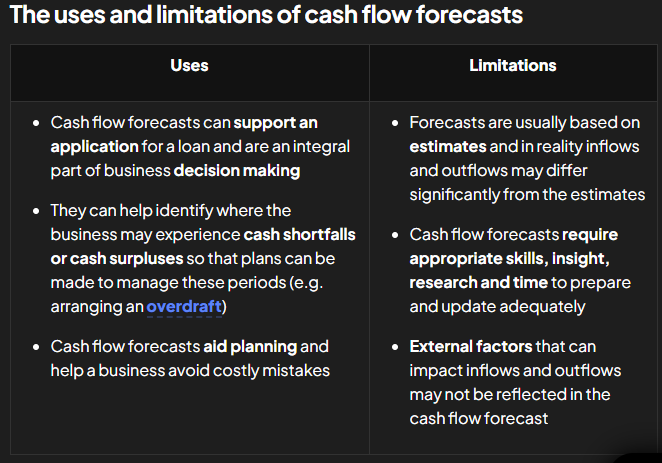
Closing balance formula- Opening balance- Cash outflow+cash inflow
Strategies to improve cash flow
Reduce credit period offered to customers
Ask suppliers for extended repayment period
Sell of excess stock
Sell fixed assets
Revenue- is the value of the goods sold by a business over a period of time.

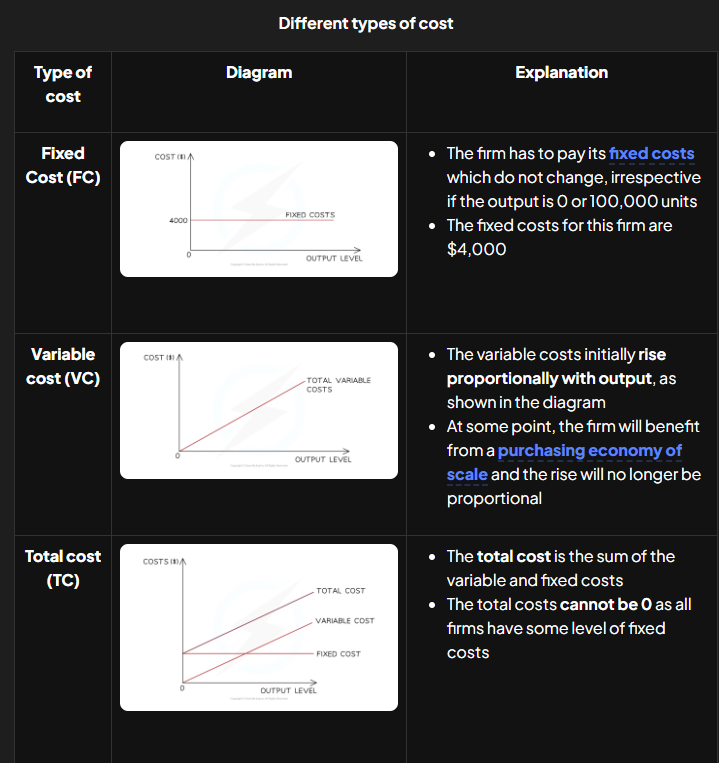
Fixed Costs- are the costs of a business that do not change with output. eg- employee salaries
Variable Costs- costs that vary with output. eg raw materials
Total costs- sum of fixed and variable costs
Profit- is total revenue- total costs
Profit can be increased by
Reducing costs
Increasing revenue
Loss- is when the costs are greater than revenue
Break even point- is the number of units a business must sell to reach the point where revenue is equal to total costs. Neither profit or loss is made
Factors that impact break even
Revenue increase
Revenue decrease
Cost increase
Cost decrease
Limitation of Break even graph
Assumes business sells everything it produces
All products are sold at the same price
It is unrealistic

Tip- Always round up if given in decimals
Contribution- Selling price - variable cost per unit
Break even point in money = break even point in units*selling price
Margin of safety- is amount sales can fall before a business reaches its break even point
A statement of comprehensive income records the income and costs of a business incurred over a period of time (usually one year) (Income statement)
Gross profit= Revenue- Costs of sales
Net profit = Gross profit - expenses
Operating profit is the same as Net profit
Operating profit = gross profit - expenses
Statement of financial position- also known as a balance sheet is the financial statement which shows the assets, liabilities and capital of a business on a particular date.
Assets- are items that are owned by the business
Current assets - include cash and other items that can turned to cash quickly eg inventory and trade receivables
Non Current assets - items owned by the business in the long term eg vehicles, machinery and land.
Net Current Assets = Current Assets - Current Liabilities
Liabilities- are items that are owed by a business.
Current liabilities- short term financial obligations that must be paid within one year eg trade payables and overdrafts
Non Current liabilities- money owed by a business that are due to be rapid in over 12 months. eg- loans and mortgages
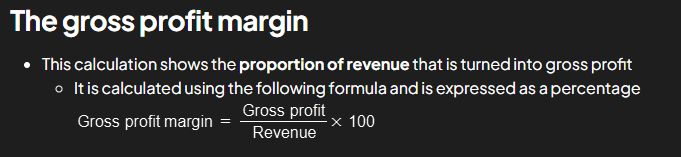
How to increase gross profit
Reduce costs
Increase revenue
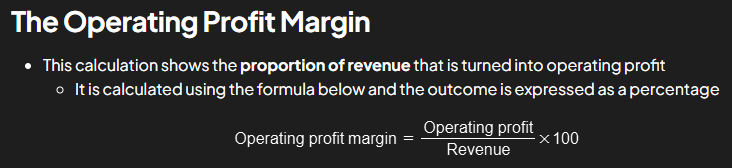
How to increase operating profit
Reduce expenses
Increase profit margin
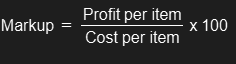
Mark-up- profit made on each item sold
RoCE- measures how effectively a business uses the capital invested to generate a profit


How to increase RoCE
Increase level of profit without introducing new capital
Maintain the level of profit