11/19/24 - Tosa and Rinpa

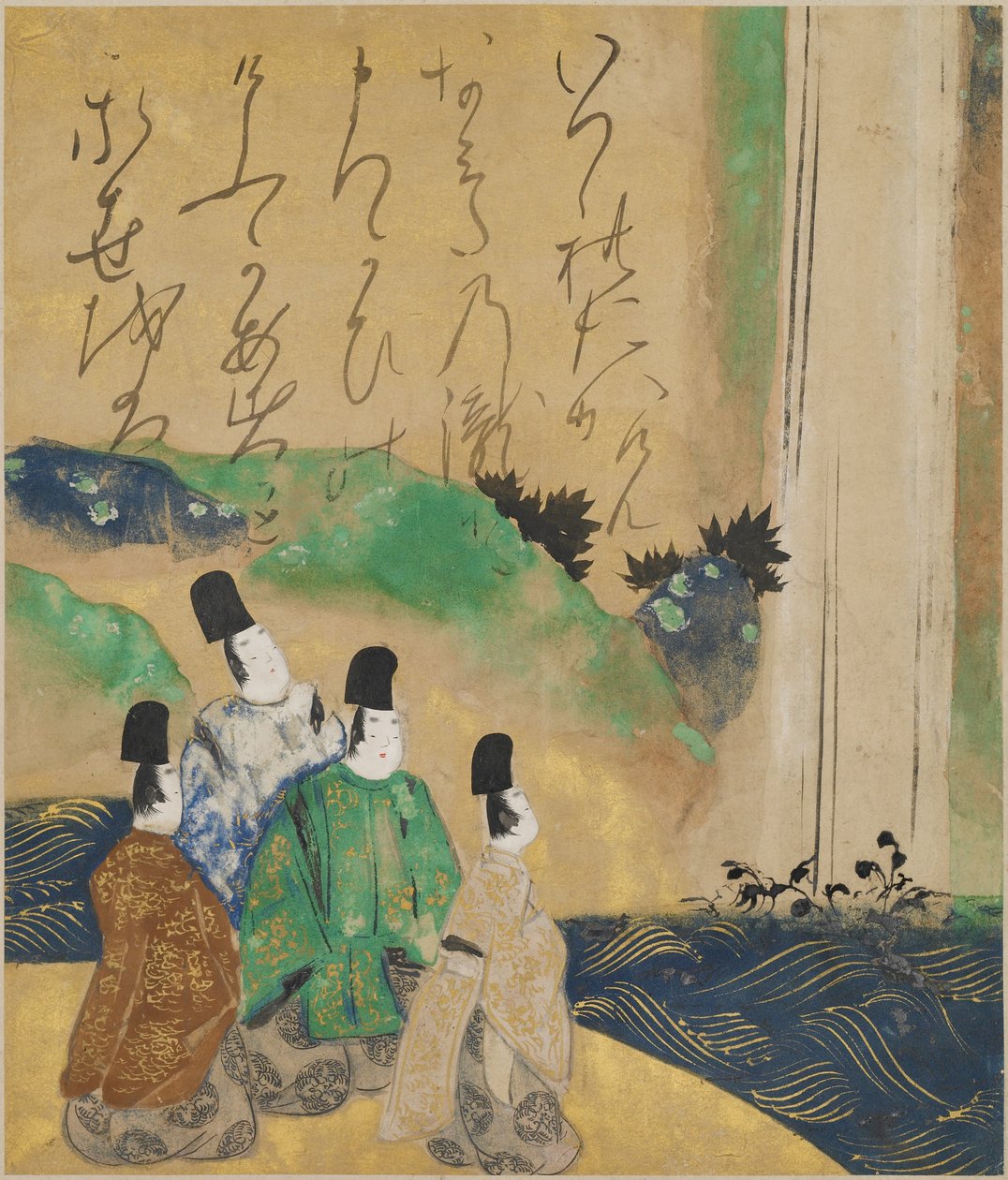
Court aristocrats (men) indicated by non muscular build (not warriors), pale faces, and fancy garments
There is color in this painting rather than just monochrome
Yamato-e (Japanese paintings depicting Japanese themes)
Landscape is integral to the painting (takes up half the composition)
Rock is textured with color, not brushstrokes
Natural elements of river, rocks, flowers, but no sense of towering peaks or mist
Proportion of figures to natural elements is to scale, nature doesn’t overwhelm
Multi-planked bridge over a river
Tosa school image
Depicts scenes from the Tales of Ise
Stories composed in 10th century during Heian period
Main character is on an outing with his attendants in the country side. they stop at this sight and see the irises which prompts him to compose a love poem. “Familiar as the comfort of a well-worn robe Is my beloved [in the capital] Oh! How this distant journey fills my heart with regret”
This is not about virtue an morality unlike warrior paintings
Brushstroke and color
Commissioned to wealthy merchants (nobles pictured in the painting though)
No ink outlines emphasizing shapes like 1st painting
Splotchy/watercolor look unlike 1st painting
Similarities to last one: courtly subjects, landscape elements, Yamato-e, format (album leaf) Album leaf is an unbound book
Artist: Tawaraya Sotatsu (1570-1643)
Which, I wonder, is higher-This water or the fall of my tears As I wait in vain, Hoping today or tomorrow To rise in the world
Rinpa painting
Kano school
Project Confucian and moral values through Chinese themes
No need for emotions that distract from Confucian morality
Needed to project an aura of authority and benevolence
Tosa/Rinpa
Depictions of court custom, ritual, and pageantry
Captures emotions found in Heian period literature and poetry
Caters to a new gen of aristocrats (Tosa) and wealthy merchants (Rinpa) who wished to participate in the high culture of the court
Think about differences between Kano, Tosa and Rinpa and discuss them in presentation