25- conservation bio
Conservation biogeography
The global biodiversity crisis
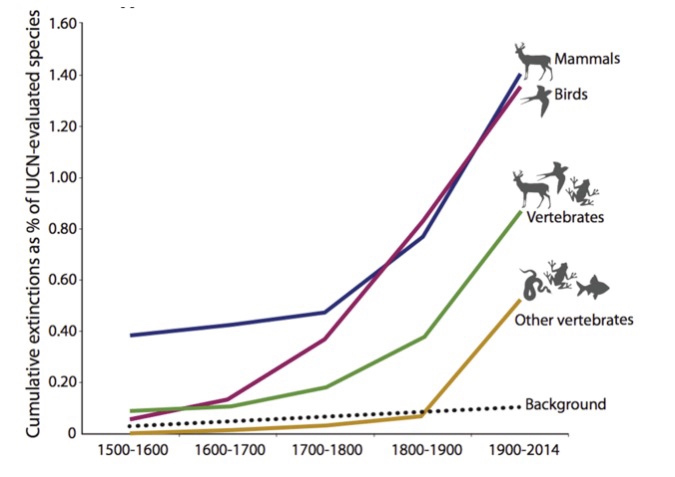
link to industrial revolution
natural extinction rate, however now anplified in comparison to what it is meant to be
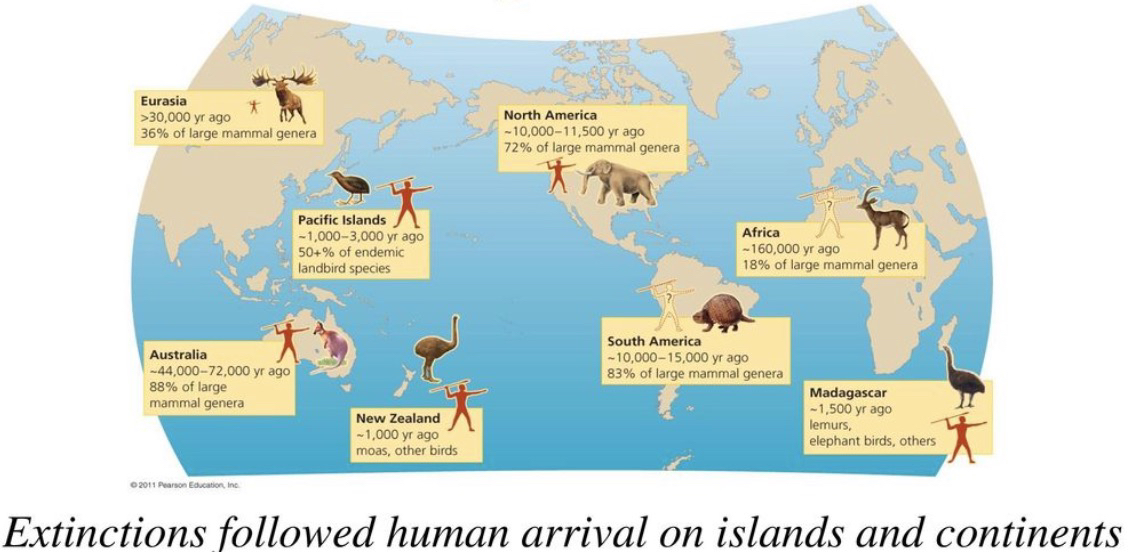
human colonisation patterns can show the wipe out of species
more prominent recently due to human activities
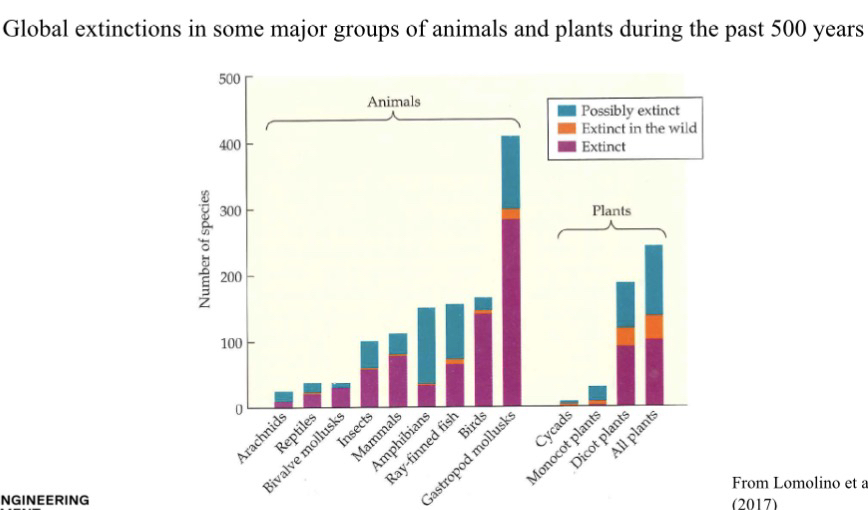
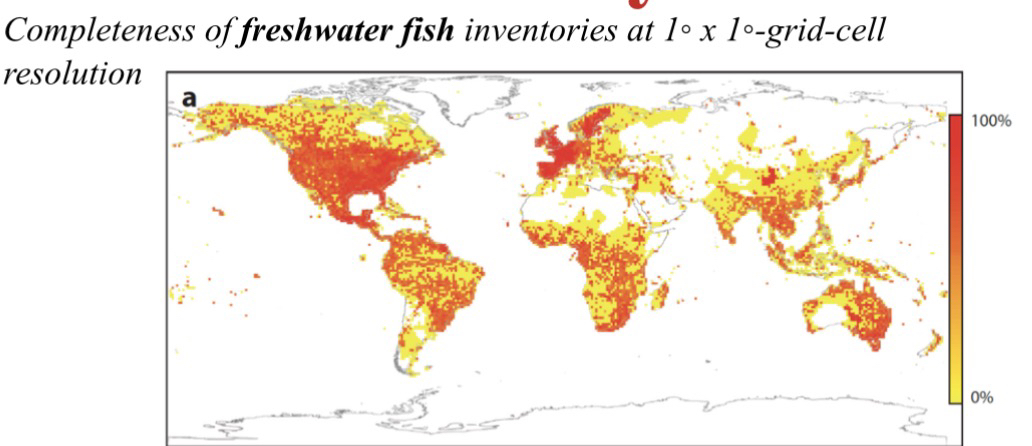
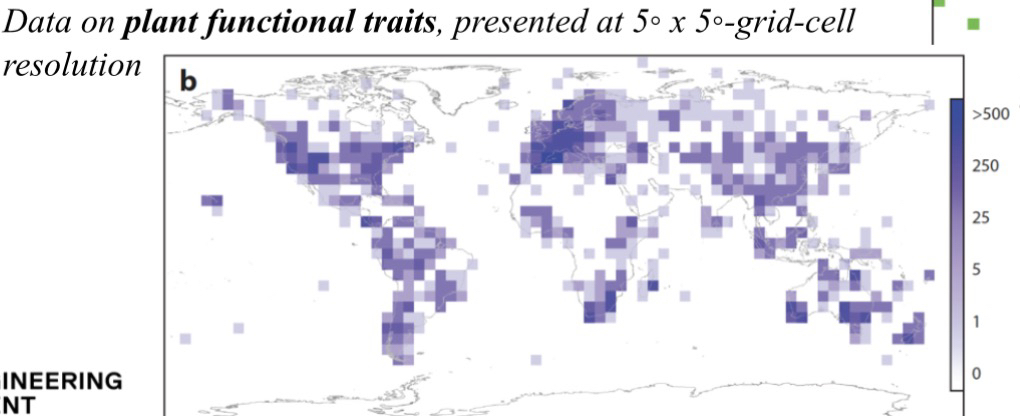
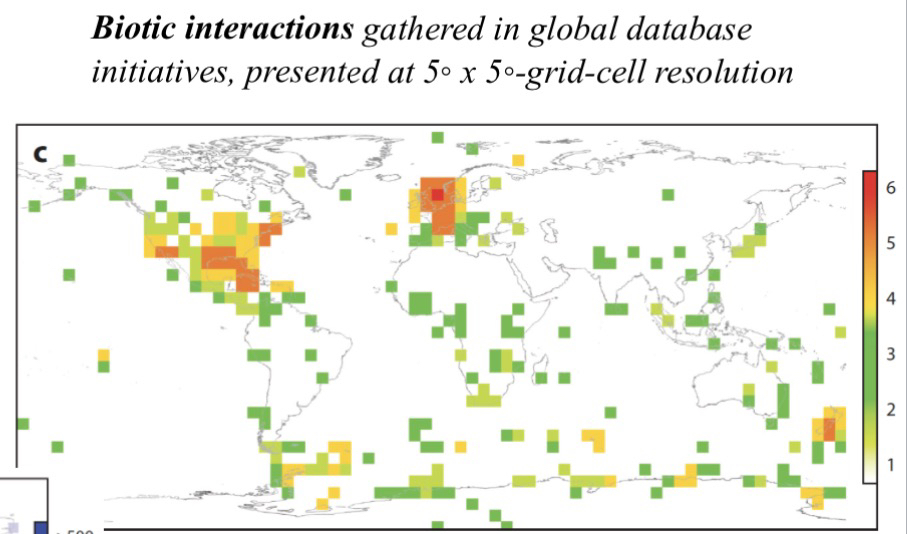
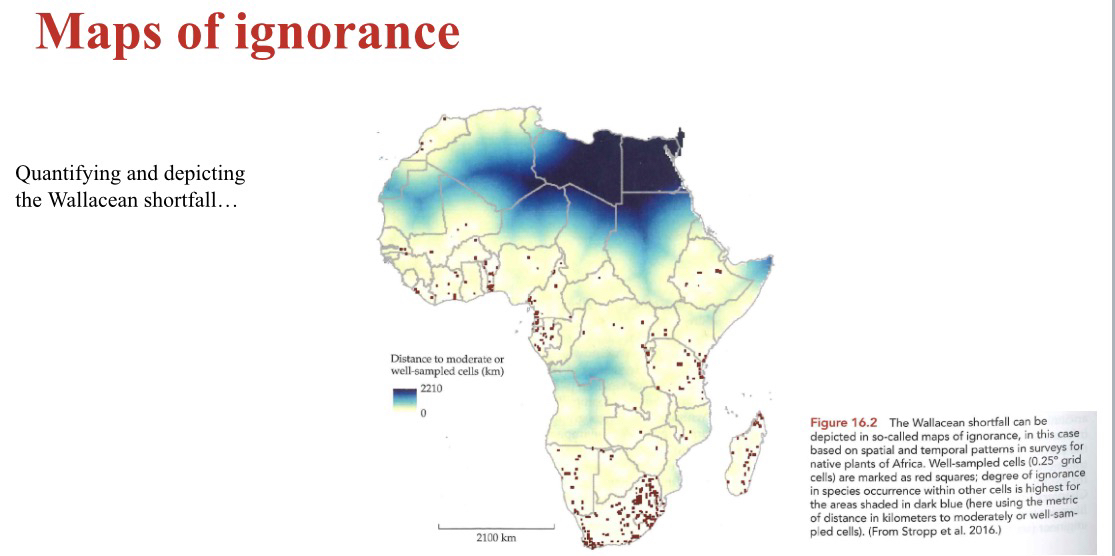
very limited knowledge for certain groups
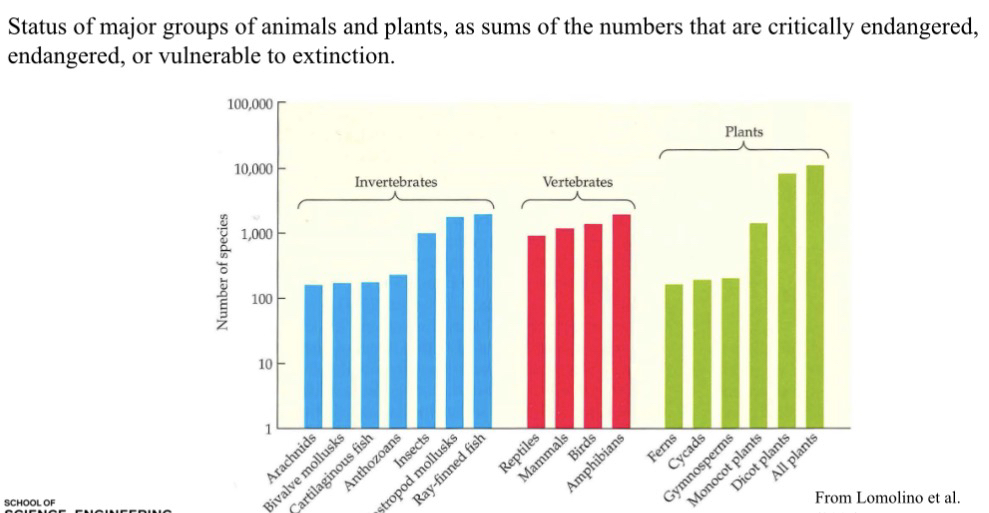
major groups of animals and plants
focused on species which are threatened
log scale 1,000 jump to 10,000
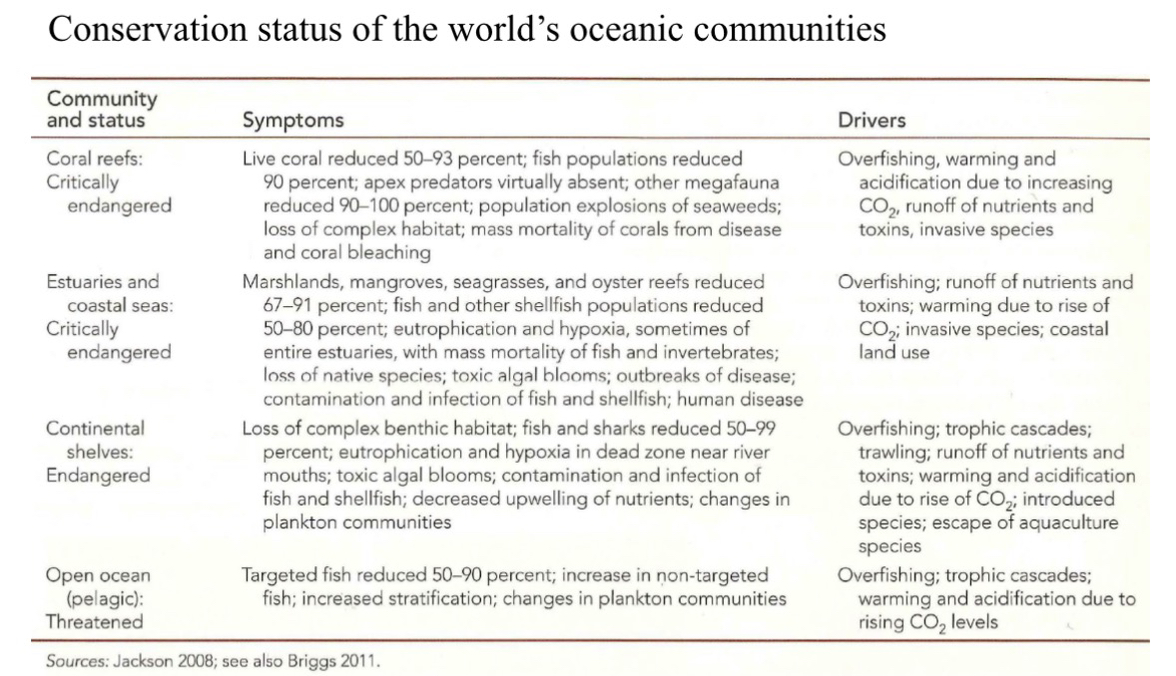
-
The global biodiversity crisis
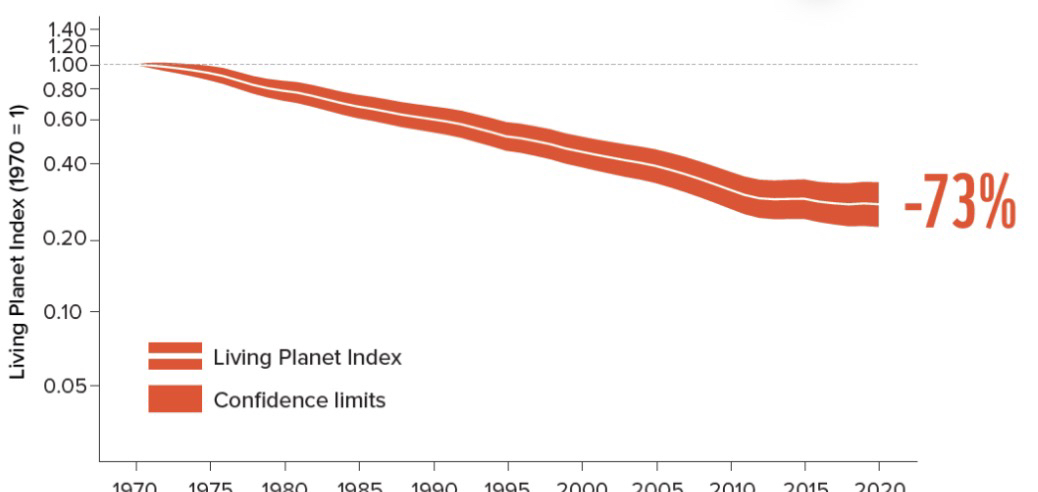
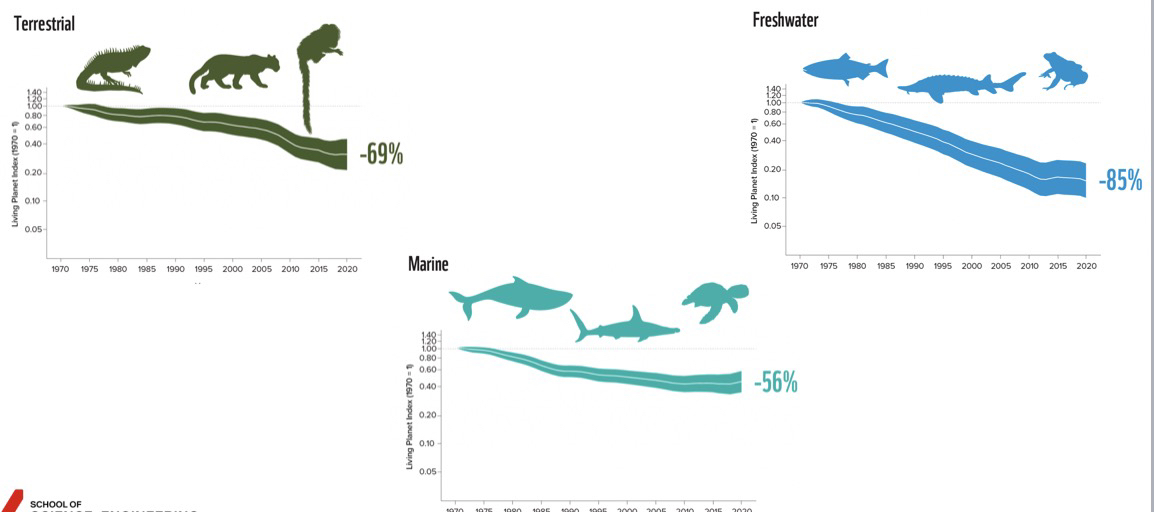
The 2024 global Living Planet Index shows an average 73% decrease in relative abundance of 34,836 populations of 5,495 species between 1970 and 2020!
The Living Planet Index (LPI) is a measure of the state of the world's biological diversity based on population trends of vertebrate species from terrestrial, freshwater and marine habitats
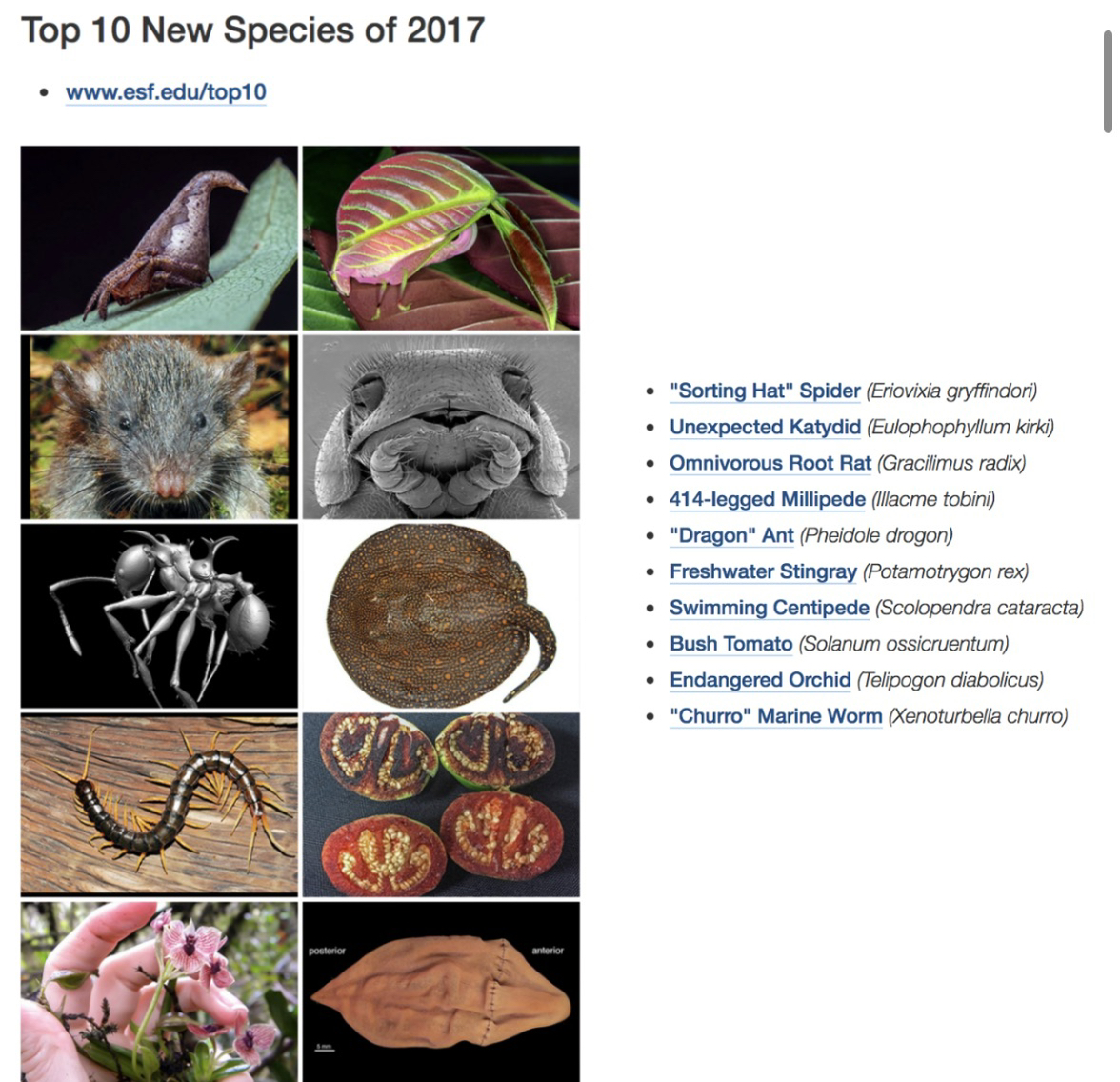
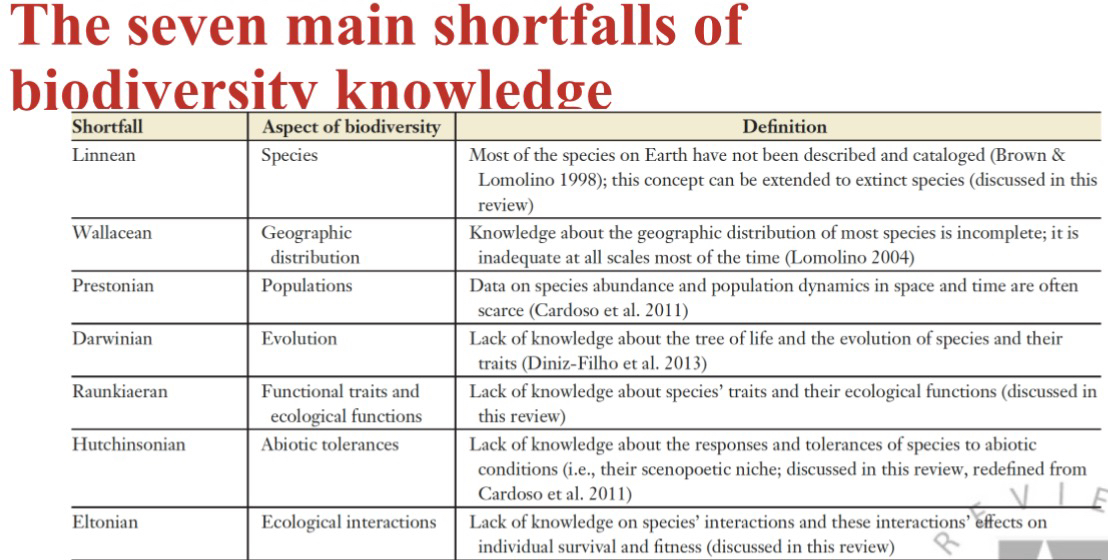
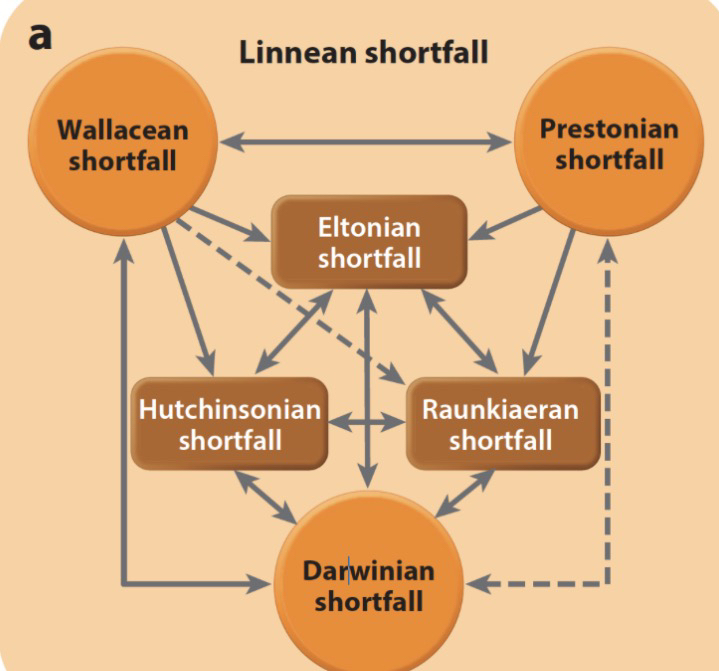
The Linnean shortfall
most of earths species have not been described ans catalogued
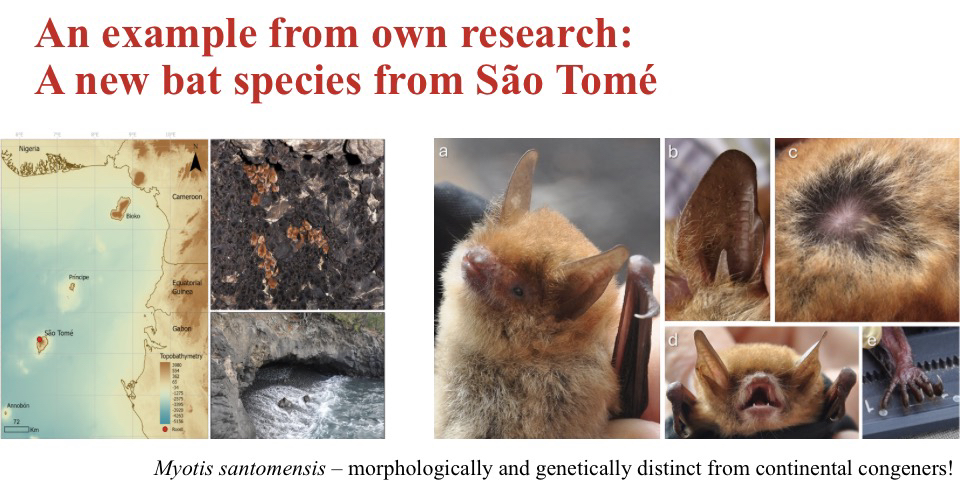
bats on costal cave, new species
Geographic bias in extinction rates
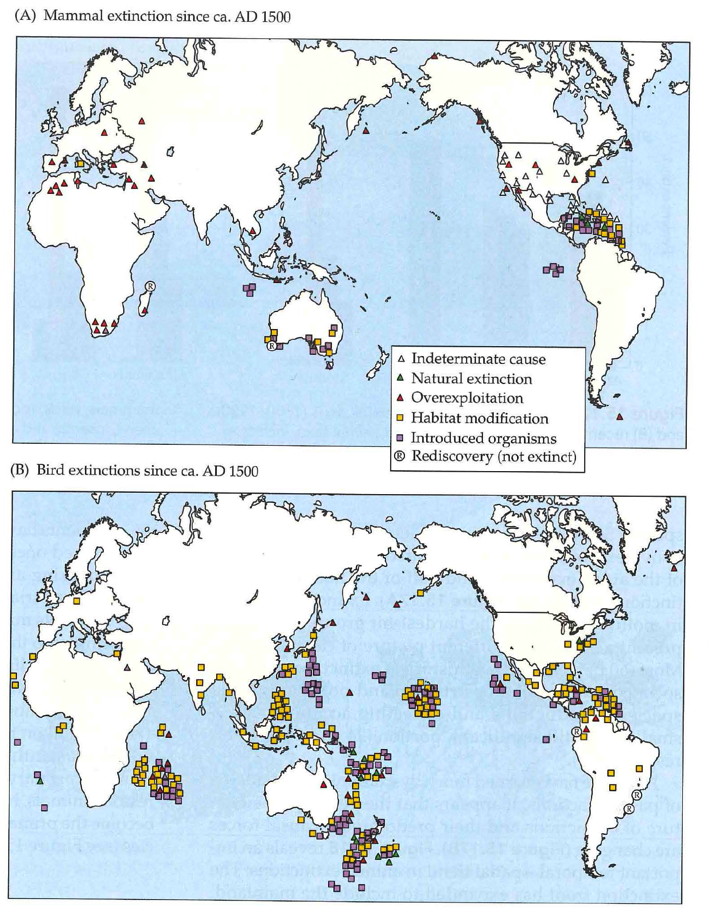
COLONIZATION PATTERN
bringing invasive species to native islands
High susceptibility of insular fauna! – Disproportionate number of animal extinctions occurred on islands
Extinction waves on islands mainly triggered by introductions of exotic species
Geographic bias in extinction rates
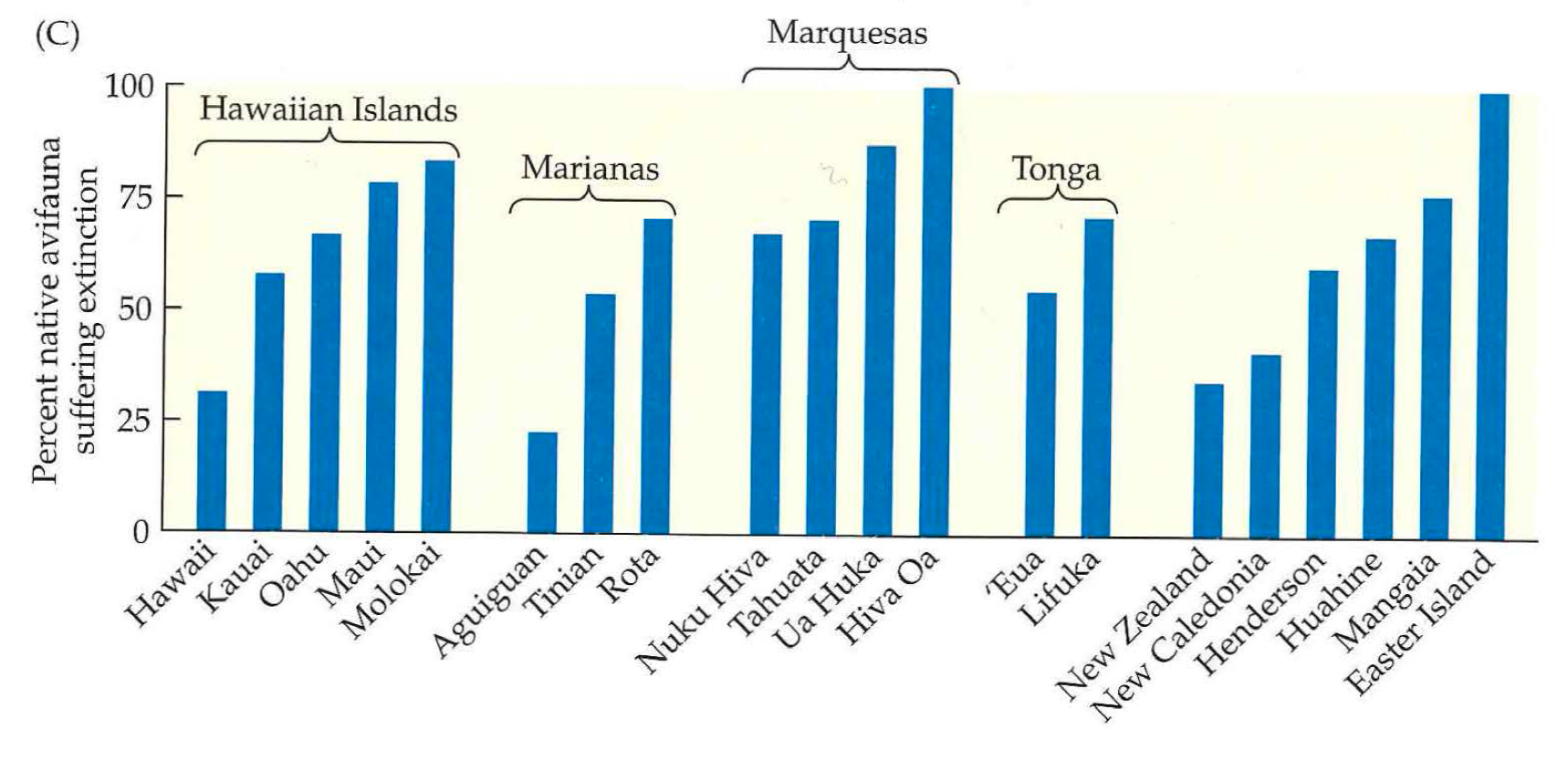
Birds on islands have been especially susceptible to extinctions following the colonization of the Pacific islands by humans during the late Quaternary.
Causes underlying historical extinctions and recent endangerment
The geographic signature of extinctions and their main underlying causes are changing!
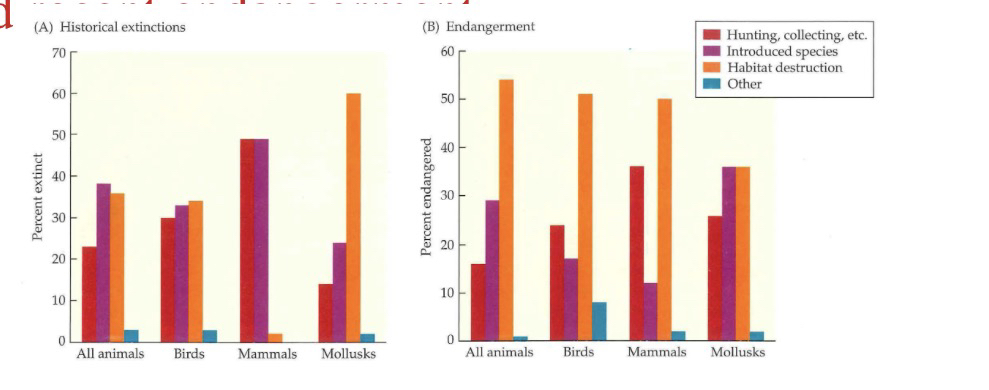
Habitat destruction & fragmentation have changed the geographic template
From Lomolino et al. (2017)
-global distribution of gobal and remaining forests
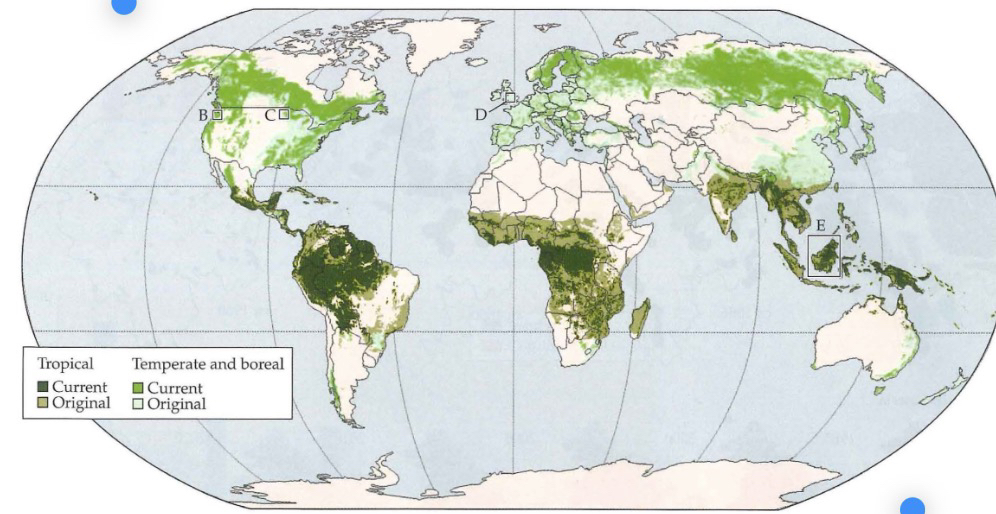
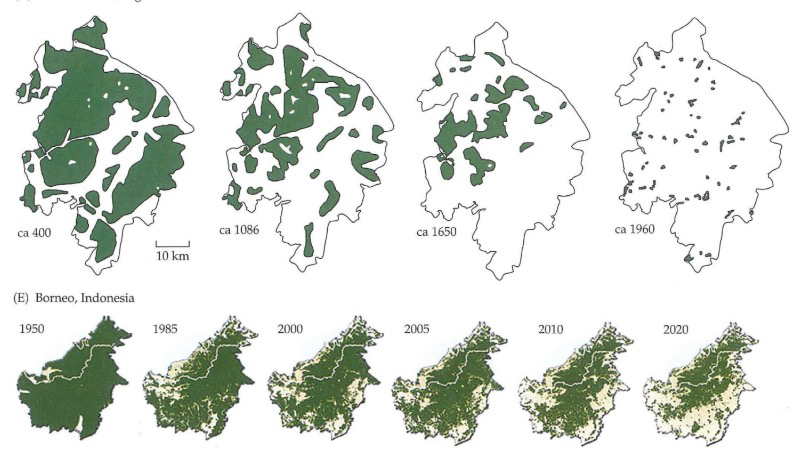
-species have to persist in ever-shrinking archipelagoes of habitat islands
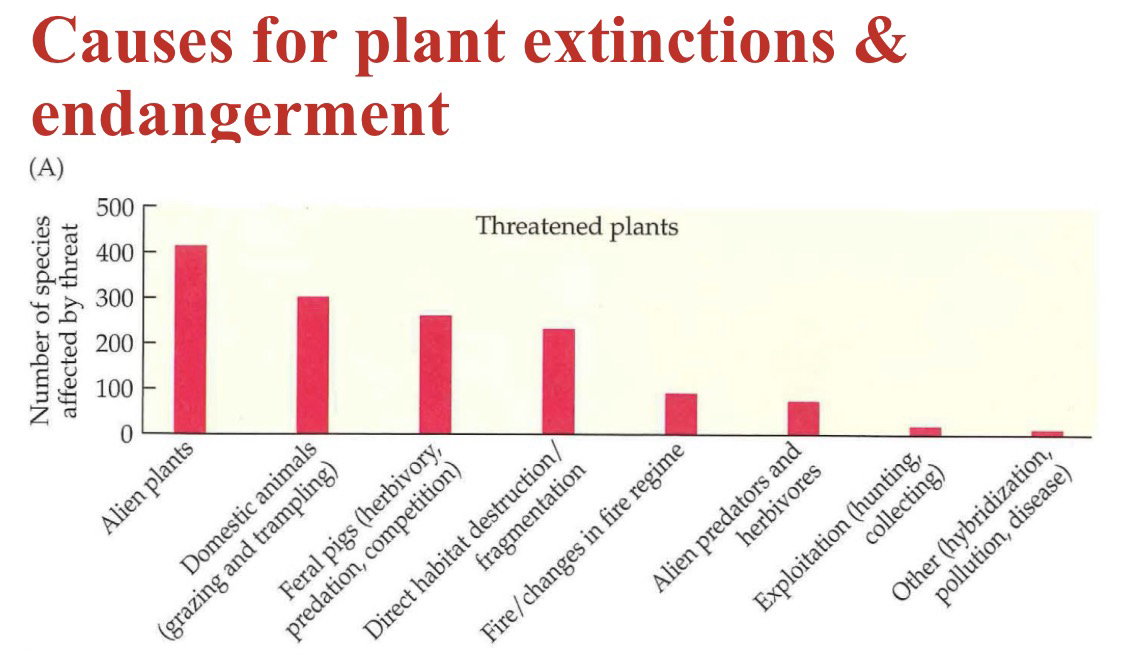
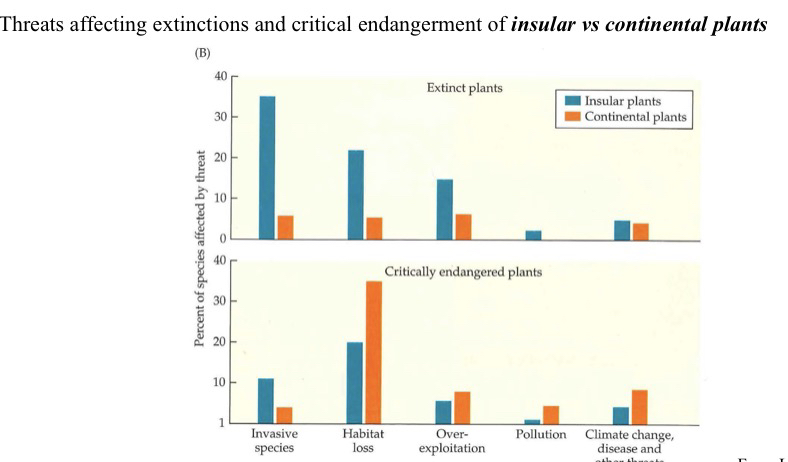
Causes for plant extinctions & endangerment
Principal factors contributing to extinctions and endangerment in vertebrates, based on population trends of more than 3000 species (including mammals, reptiles, amphibians, birds, and fish)
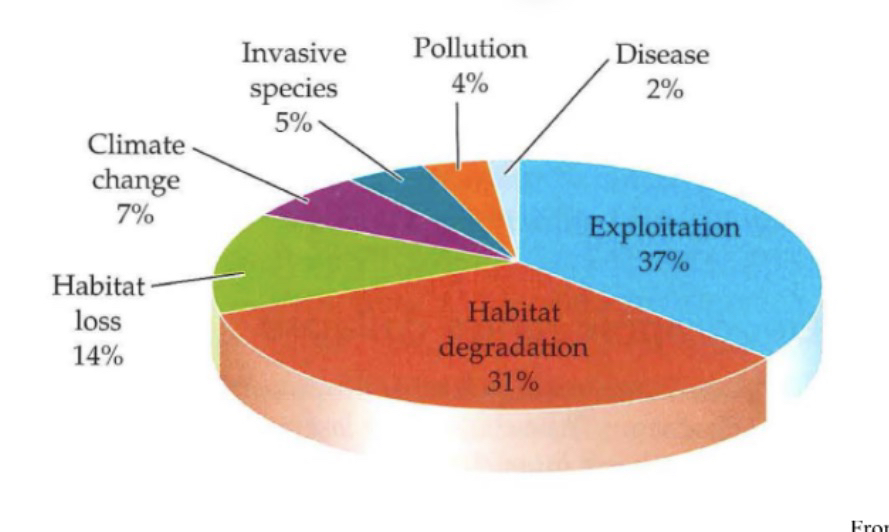
habitat loss
accidental mortality
harvesting
pollution
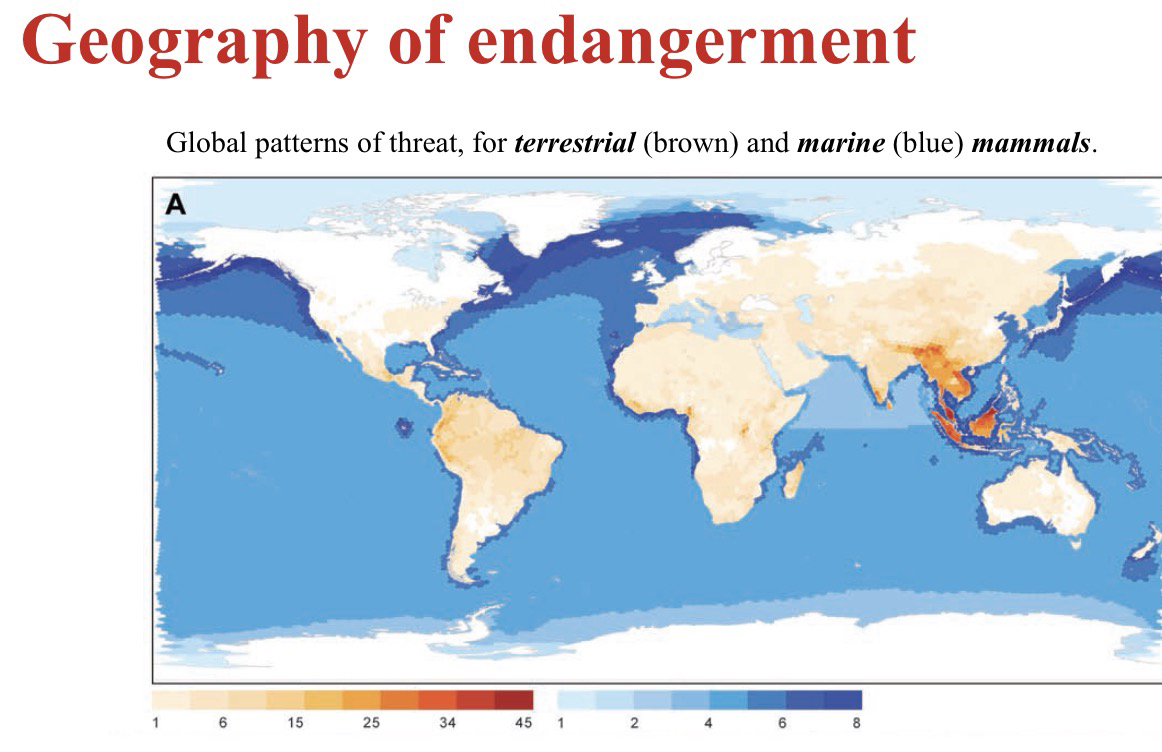
Geography of endangerment
Hotspots of imminent species loss occur where anthropogenic threats overlap those of geographically restricted, and often ecologically naïve, species
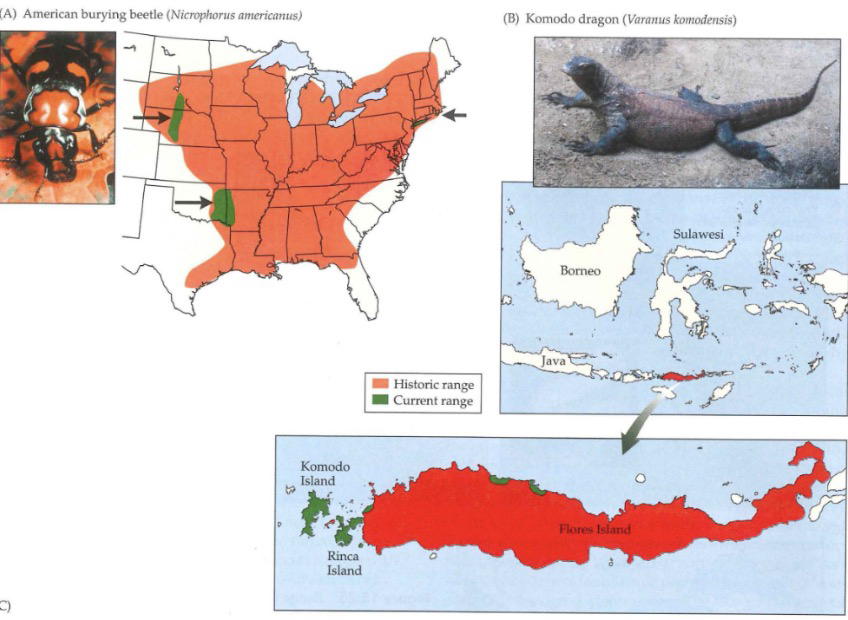
Geographic range collapse
All extinctions are preceded by declines in geographic ranges
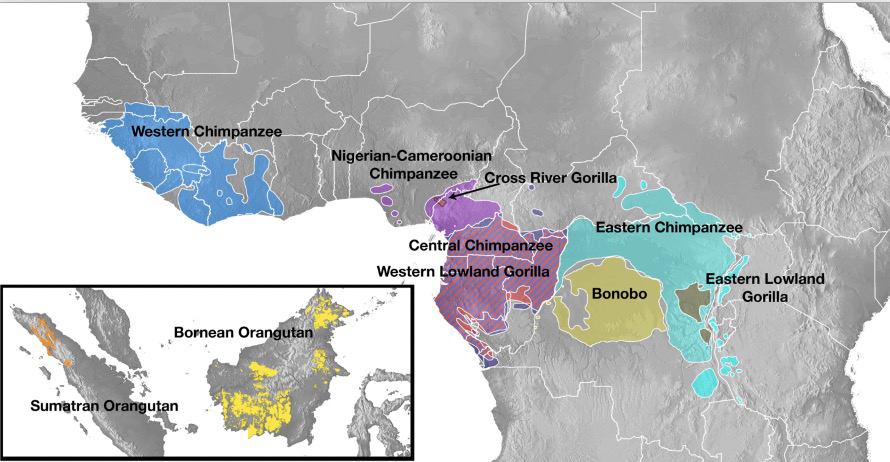
Melting range hypothesis”
ranges recede at the periphery and final populations persist near the centre of the species’ historic range
“On a continent, the process of extinction will generally take effect on the circumference of the area of distribution, because it is there that the species comes into contact with such adverse conditions or competing form
- melting range does not explain patterns actually observed ^^^
“Contagion hypothesis”: range collapse starting along one of the peripheries of the historic range, but then spreading to include central populations, the final, persisting populations being those at the periphery most distant from the initial onset of range collapse
—————————-
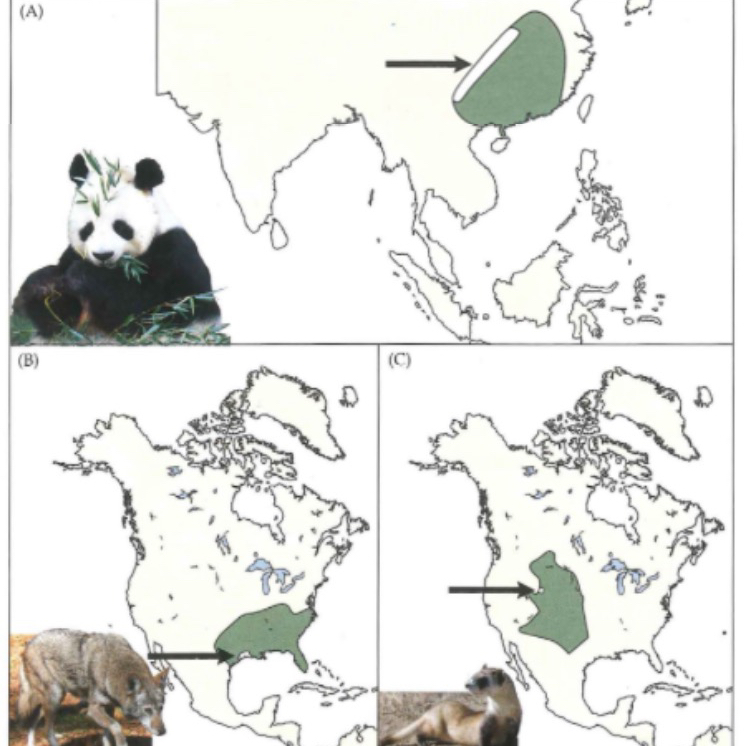
Patterns of range collapse in three species of terrestrial mammals:
giant panda (Ailuropodamelanoleuca)
red wolf (Canis rufus), and
black-footed ferret (Mustela nigripes)
White: remnant populations
Green: historical ranges