SCIENCE YA ૮ ․ ․ ྀིა
Earth’s Atmosphere
The envelope that surrounds the surface of the earth keeps our gases inside and protects us from harmful rays like UV rays from the sun.
Composed of 78% nitrogen, 21% oxygen, and other gases.
Layers Of Earth's Atmosphere
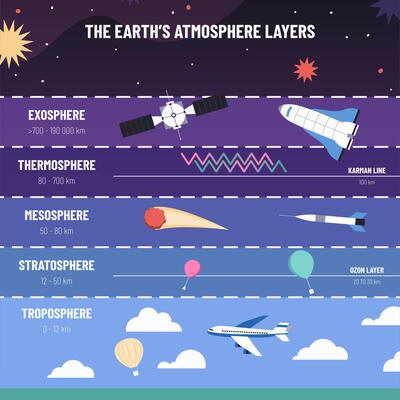
Troposphere
Lowest layer containing 75% of total gases.
Weather patterns like rain clouds are found here.
Stratosphere
Layer above the Troposphere where planes glide due to fewer weather problems.
Contains the ozone layer which blocks harmful UV rays.
Mesosphere
Contains tiny particles of water vapor and noctilucent clouds.
Slows down Meteors before they hit the earth.
Thermosphere
Fourth layer, 440 miles from earth.
Where the aurora borealis and some satellites (like the International Space Station) are found.
Exosphere
Final layer, 6200 miles from earth; often referred to as outer space.
Contains many satellites.
Weather System
Low Pressure Area
Rising warm air leading to stormy/cloudy weather:
Sun heats surface, heating the air.
Hot air rises= low pressure area.
The gap is filled with air from higher pressure areas.
High Pressure Area
Sinking cold air resulting in clear/calm weather:
Air cools during night or in cold regions.
Cold air sinks due to higher density.
Areas of tightly packed air lead to clearer skies.
Weather vs. Climate
Weather: Specific atmospheric conditions at a given time.
Climate: Long-term weather patterns and changes in a specific region.
Breezes
Breezes: Winds that blow toward shores during the day and opposite at night.
Sea Breeze (Daytime): Warm air rises from land; cool air from sea replaces it.
Land Breeze (Nighttime): Cool air from land moves toward warmer sea, causing air to rise.
Monsoon
Larger scale breezes affecting wide areas:
Northeast Monsoon (Amihan): October to February; carries cool air with little rain.
Southeast Monsoon (Habagat): May to September; brings hot moist air causing storms.
Intertropical Convergence Zone (ITCZ)
A zone where clouds gather, resulting in moderate rains and thunderstorms.
Formed when southern hemisphere winds collide with hemisphere winds.
El Niño: Warmer Pacific temperatures causing droughts.
La Niña: Normal heating in the Pacific with more rain due to strong winds