Week 3 | Day 2 | BIOA02
Week 3 | Day 2 | BIOA02
Generalized Flower Structure
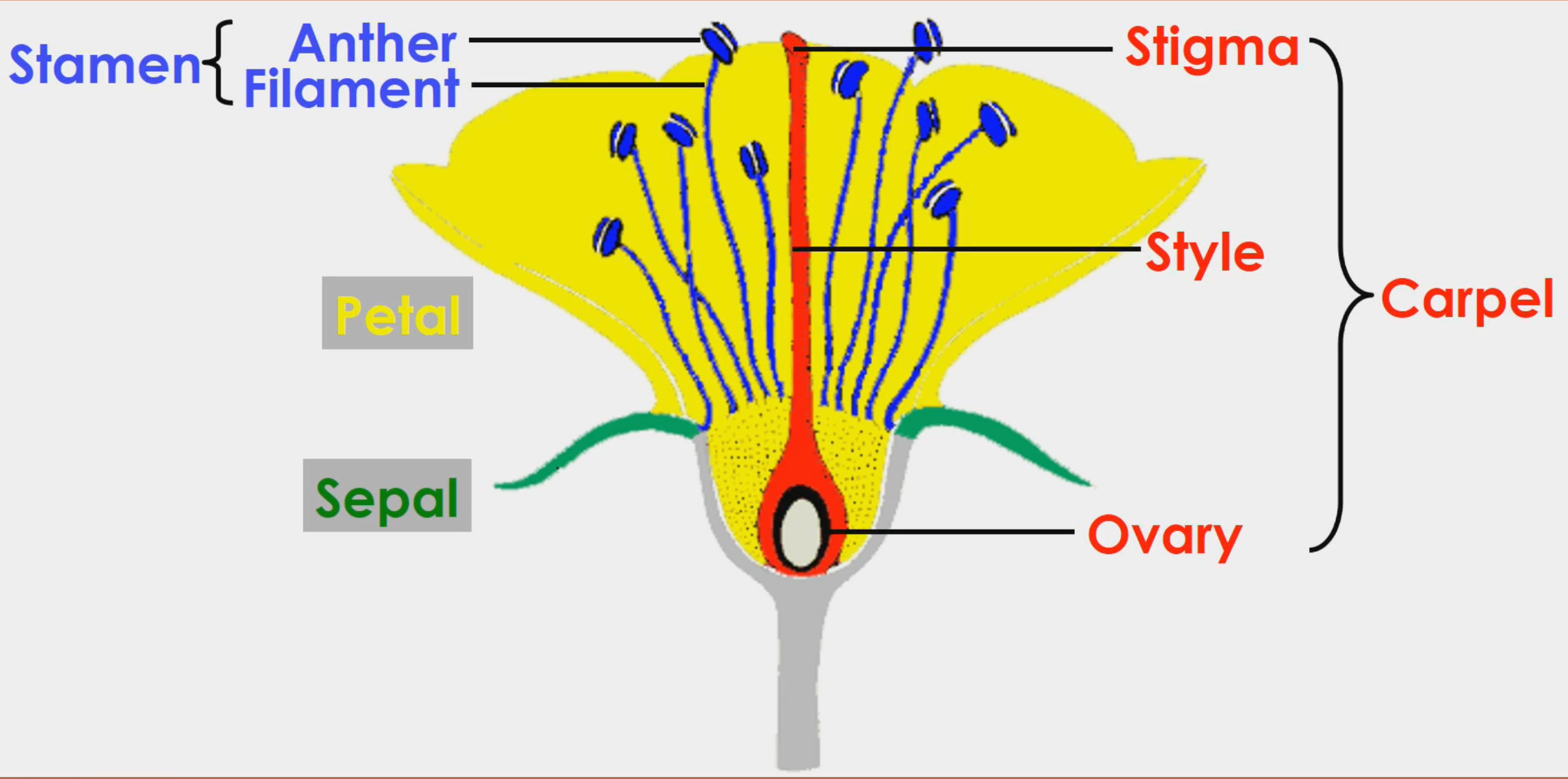
Male parts:
- Stamen (anther + filament)
Female parts:
- Carpel (stigma + style + ovary)
- Pistil (multiple carpels)
What Are Flowers?
- Evolutionary, flowers are just modified leaves
Flower parts
Sepals
- Commonly used to protect flower before the bud opens
- Usually green
- Can be free or fused to form tube
Petals
- Typical colours to attract pollinators
- Can be free or fused to form tube (as well)
Stamen (male)
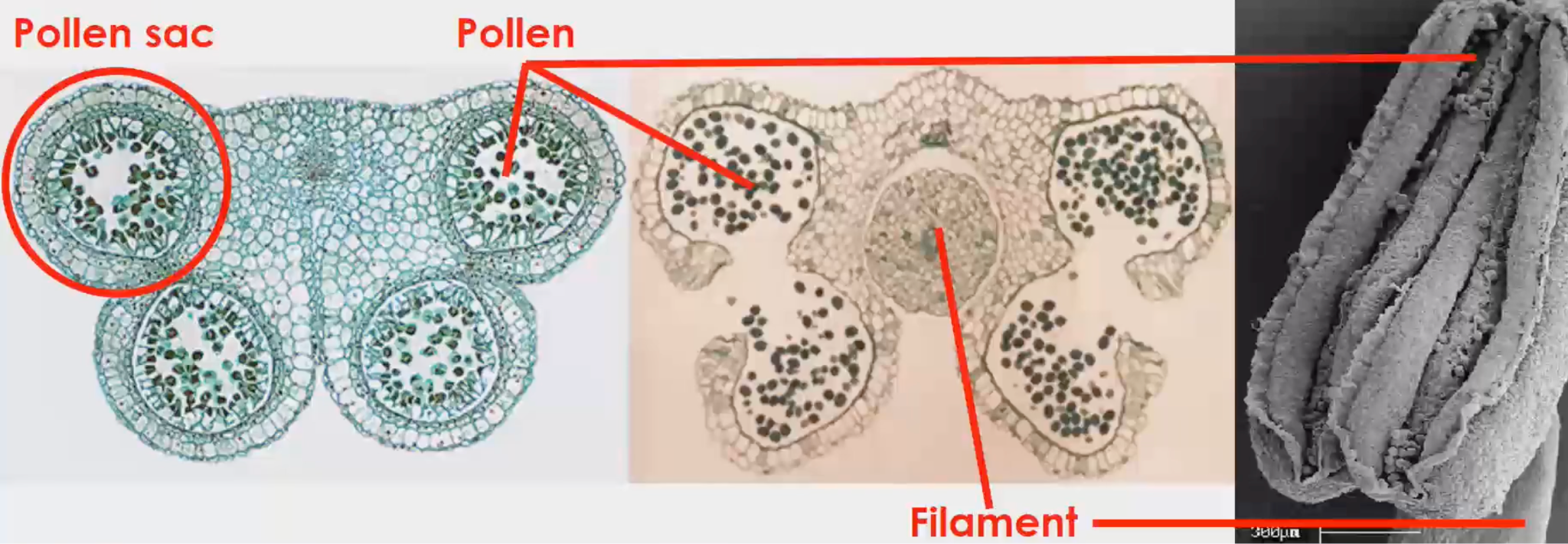
- Pollen producing
- Anther: commonly 4 pollen sacs
Carpel
- Stigma
- Sticky landing platform for pollen
- Has many shapes + sizes
- Style
- Connects stigma with ovary (basically a tube)
- Style epidermis produces mucus for the pollen to go down (like a throat kind of)
Number of Parts in the Female Reproductive System
- Flowers can have many carpels

- Ovary can have many ovules
- Ovule only has one egg cell
- One ovary with one ovule
- Eg. cherry, peach, olive
- One ovary with many ovules
- Eg. cucumber, tomato, melon
- Flower with many carpels
- Eg. blackberry, raspberry
Generalized Flower Structure
Four whorls:
- Sepals (0-3-4-5-many)
- Petals (0-3-4-5-many)
- Stamen (0-many)
- Carpel (0-many)
- Basically, plants may not even produce stamen or carpel at all, and that helps diversity (I assume to prevent self-incest)
Partially Missing Reproductive Organs
- Complete female: both male and female reproductive organisms (hermaphroditism)
- 75% of angiosperms are this (eg. trillium, raspberry, evening primrose)
- One individual: either male or female for each flower (not both on one flower) (monoecy)
- 17% (eg. corn, hazelnut)
- Individual: One individual either makes all female or all male (dioecy)
- 6% (eg. hemp, asparagus)
More Varied Plant Reproduction
Dioecy
- Outcrossing (one plant to another)
Monoecy
- Selfing (to another flower)
- Outcrossing
Hermaphroditism
- Selfing (to the same flower)
- Selfing (to another flower)
- Outcrossing
Inbreeding Avoidance
- Temporal separation (time)
- Spatial separation (physical)
- Self-incompatibility (carpel can recognize if pollen that falls on it is its own)
- Temporal separation
- Female phase develops first when young then turns into male
- Stigma grows, then withers + makes way for anthers to develop
- This method is good for selfing within a flower, but not for the whole plant (since it’s not always synchronous)
- Spatial separation
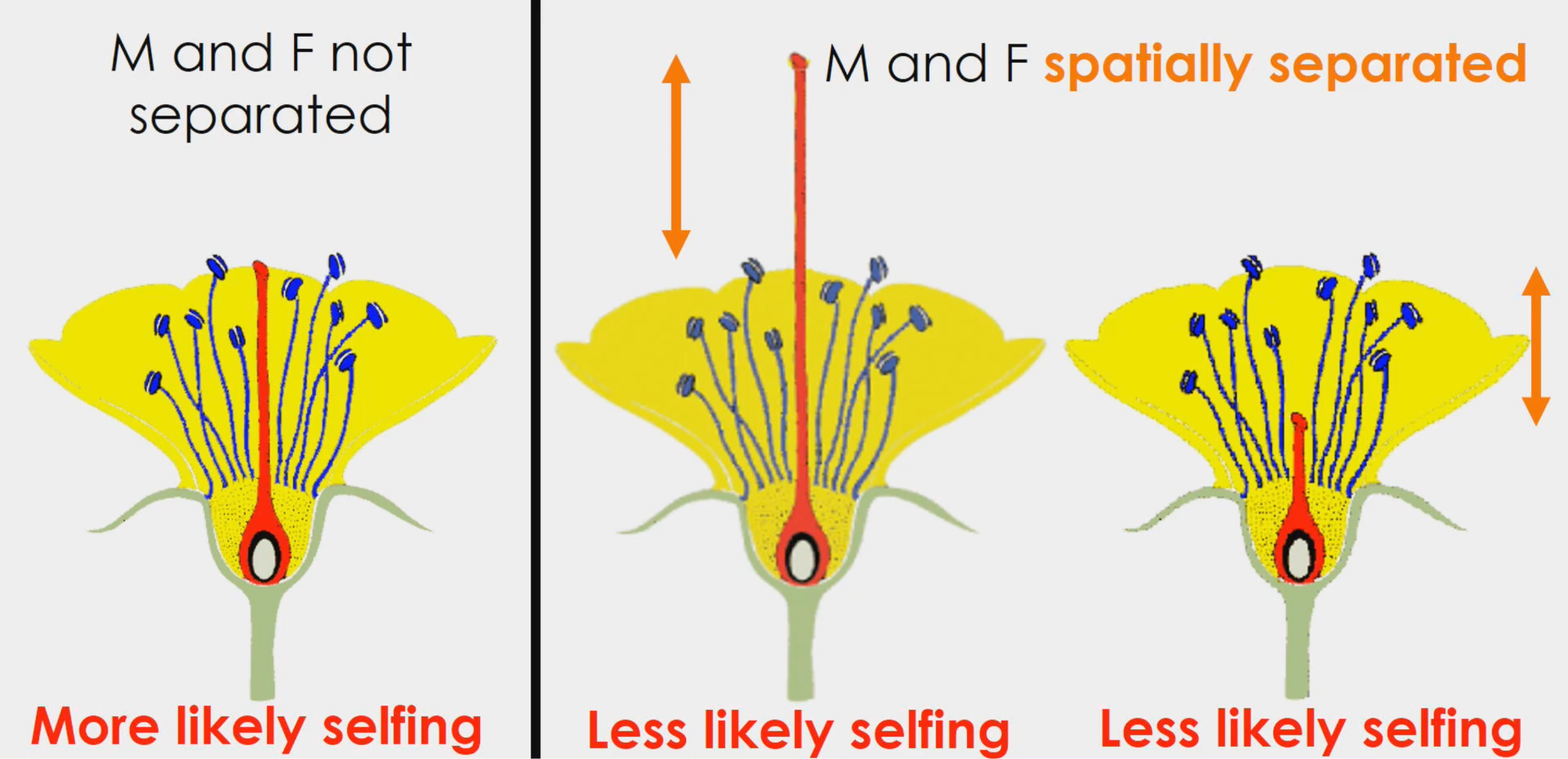
- This method is not perfect but effective to some degree
Special Type of Spatial Separation
- Spatial reciprocity
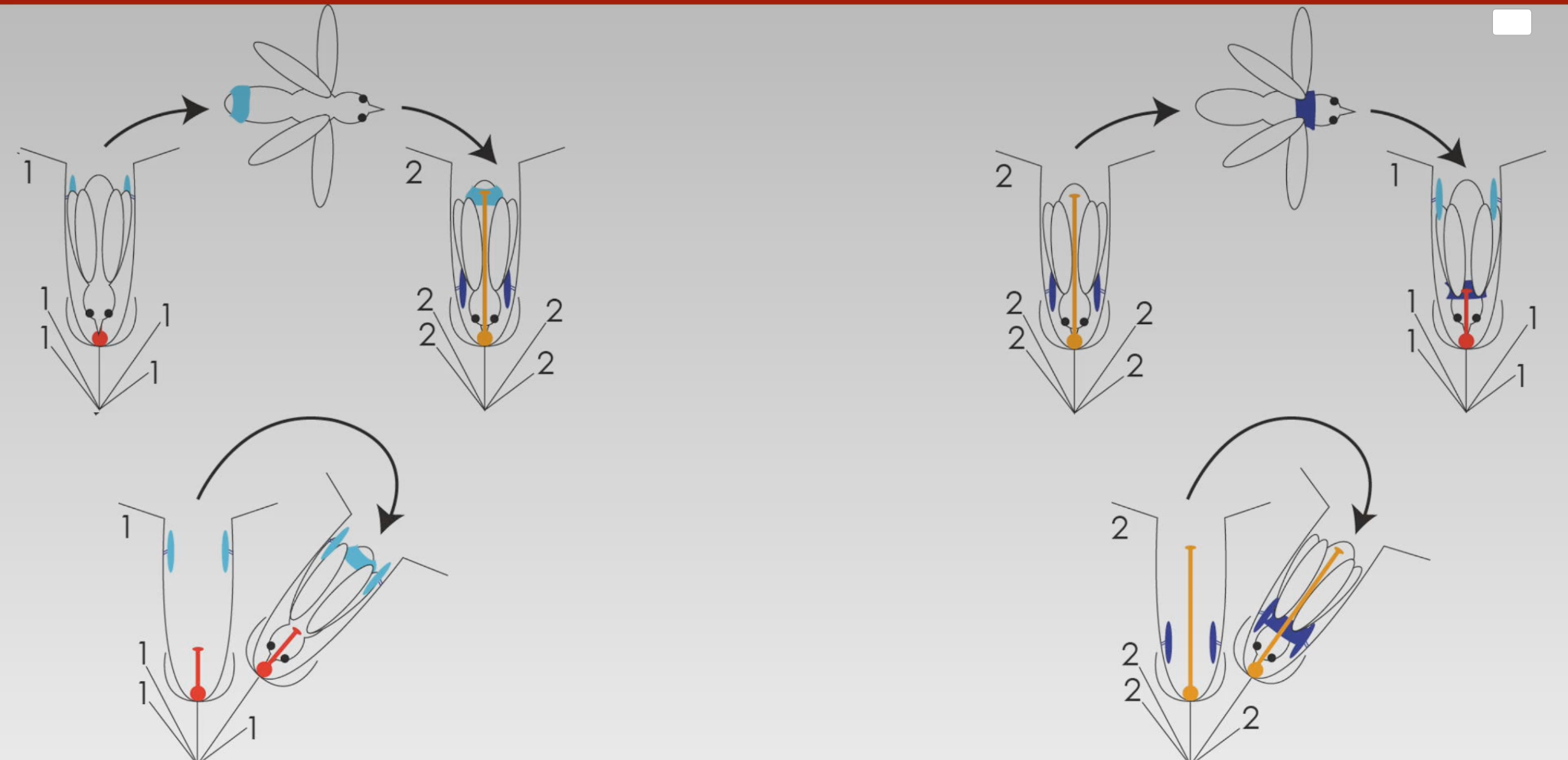
- Main example primrose production