Gene flow
What is a gene?
Genotype ———> Phenotype
Genome ———> Function
DNA ———> Proteins (+ RNA)
Flow of information through the
cell
•Biological definition of gene: “a hereditary unit of function”
•There are two components to this definition
1. Function – producing some kind of phenotype
2. Heredity – passed from parents to offspring
Types of genes?
1. Structural genes ⭐️
•Produce proteins involved in the structure and
architecture of cells and organisms, including
humans and animals
•Produce proteins involved in the structure and
architecture of cells and organisms, including
humans and animals
•e.g. protein collagen, is a component of hair
and skin
•Produce proteins involved in the structure and
architecture of cells and organisms, including
humans and animals
•e.g. protein collagen, is a component of hair
and skin
•e.g. protein tubulin, an important part of the
cytoskeleton that maintains cell shape and
structure
2. Housekeeping genes⭐️
•Encode proteins that function as enzymes and
catalyse metabolic reactions in the cell
•Encode proteins that function as enzymes and
catalyse metabolic reactions in the cell
•e.g. Enzymes – that breakdown food or
produce energy
Proteins produced by these genes are crucial to
the function of cells and overall organism
3. Regulatory Genes⭐️
•Encode proteins that have a control function
•Responsible for the overall architecture of an
organism
•Encode proteins that have a control function
•Responsible for the overall architecture of an
organism
e.g. the gene responsible for polydactyly or the
Hox genes
ALL PRODUCE PROTEINS
What is a Gene?
•For example: haemoglobin
•The function of haemoglobin is to transport oxygen around
the human and animal body – a vital function
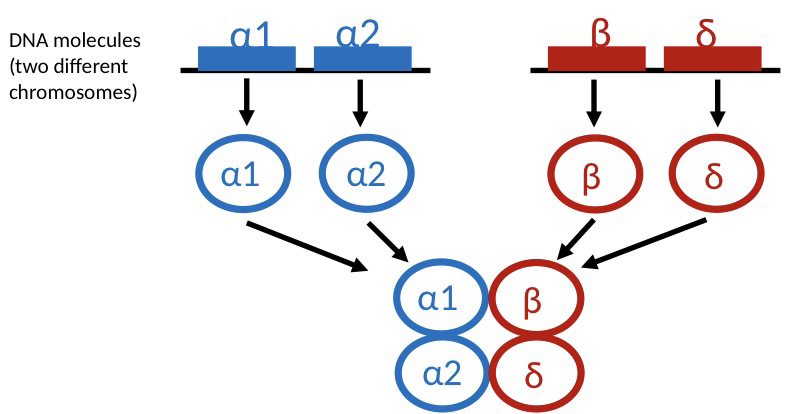
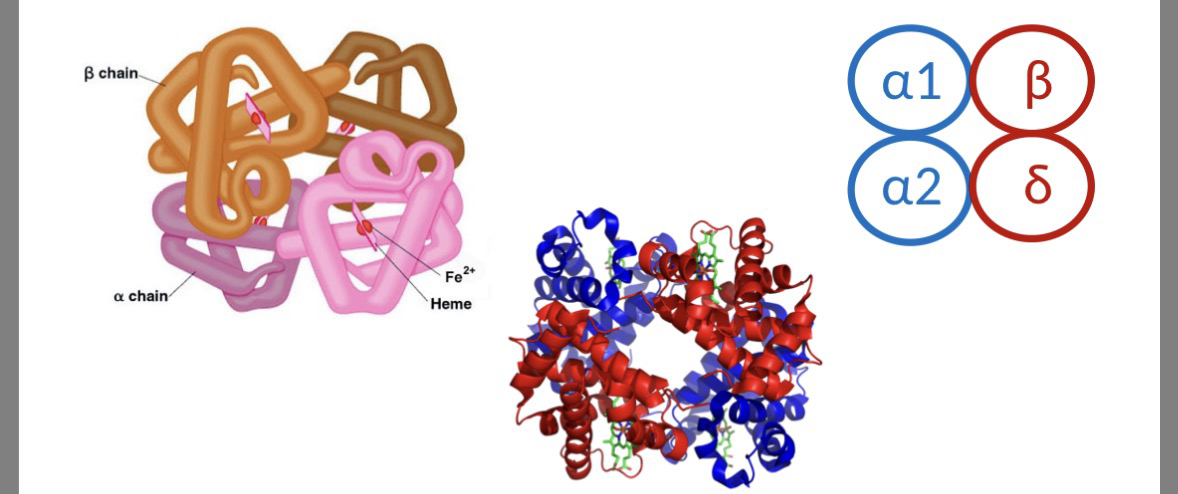
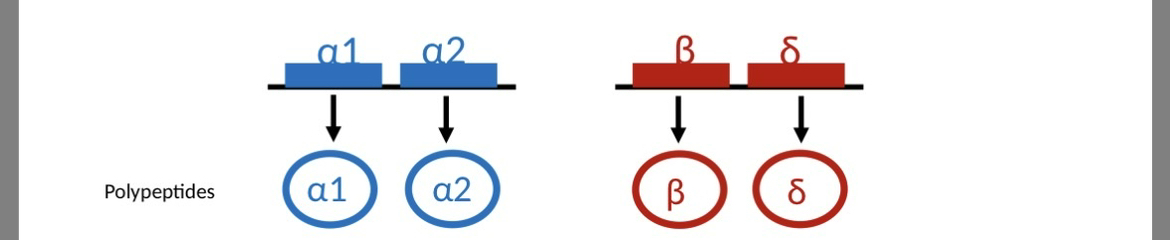
The protein haemoglobin is formed of four sub-units – each of these is a small protein known as a polypeptide.
But some genes do not produce proteins or polypeptides, instead they
make RNA, so the definition needs revising:
ONE gene produces ONE polypeptide or ONE RNA molecule☀
What is the structure of a Gene?
•Genes are made of DNA arranged along a single strand wrapped up in a protein package as a chromosome
•Genes are arranged along the DNA strand
•Each gene has a start and an end
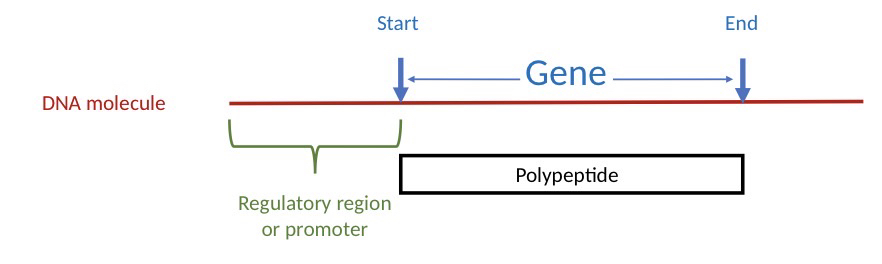
-The genetic information is stored as DNA Proteins are responsible for function
DNA structure
-X-ray crystallography first uncovered the
basic structure – a double helix
DNA structure was discovered by James Watson and Francis Crick, published in 1953☀
-Their discovery involved collaboration with Maurice Wilkins and Rosalind Franklin at King’s college London Watson, Crick and Wilkins received the Nobel prize for their achievements, but Franklin died before this honour was bestowed.
DNA = Deoxyribonucleic acid (it belongs to a group of molecules known as nucleic acids)
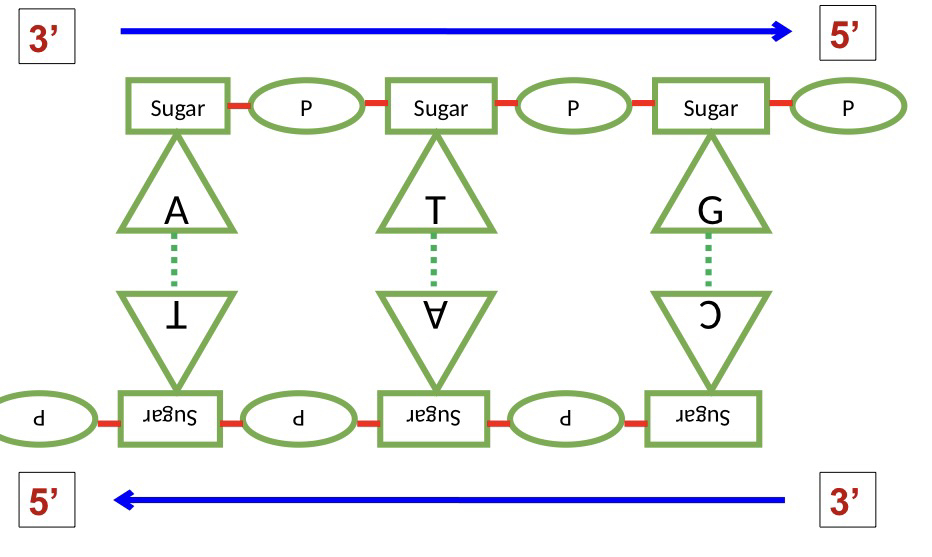
There are two strands:
Each strand made of a “sugar – phosphate backbone
The sugar is called Deoxyribose
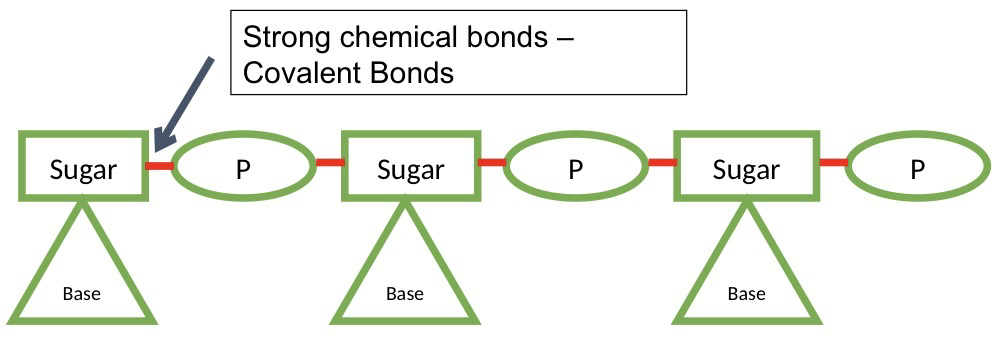
This is a single strand in Dna-from left to right
Sugar -phosphate backbone, base underneath
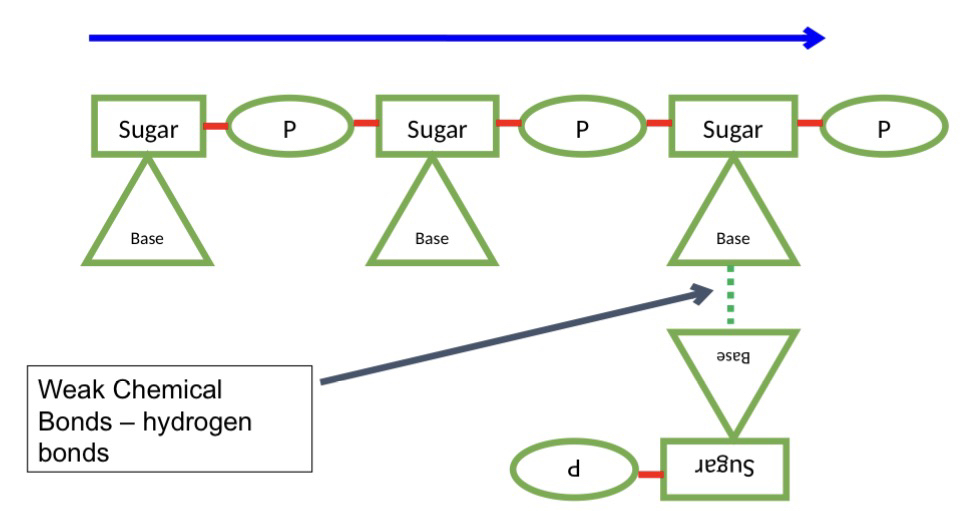
There are weak hydrogen bonds between the two strands
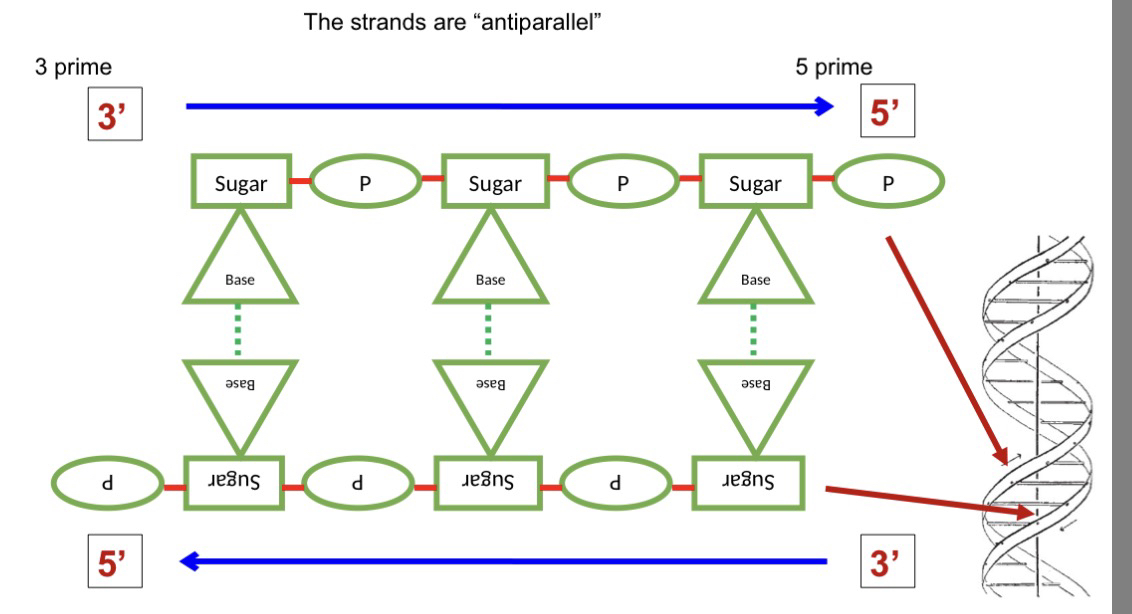
The two strands linked together, anti parallel
(Double Helix)
DNA Structure
There are 4 possible bases:
Adenine (A) Thymine (T)
Cytosine (C) Guanine (G)
-The order of the bases is the “DNA sequence” and that is how the information is carried:
In the double helix, A always pairs with T and C with G
The order of different bases is what makes a gene unique:
• In the context of the whole genome –
it provides the information that makes an individual different from another, but maintains overall similarity within a species
-In the human genome there are 109 or 1,000,000,000 base pairs arranged on 23 pairs of chromosomes
Chromosomes: are long strings of DNA wrapped around proteins to make them compact. They're a way for cells to organize and store your DNA.
Properties of DNA
Denaturation-
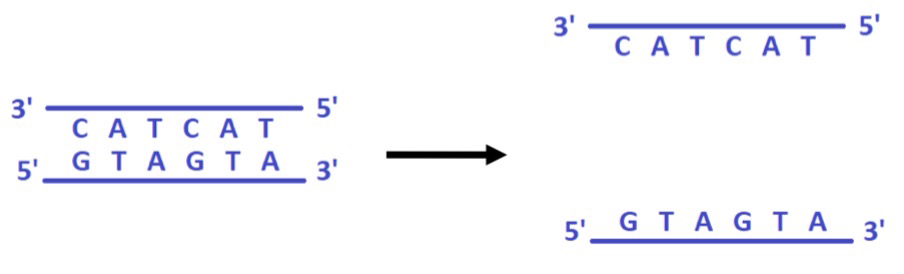
DNA can become single stranded:
• When heated (greater than 68oC)
• In extremes of pH (acidic or basic/alkaline)
• Using enzymes
• This is because the weak hydrogen bonds between bases are easily broken
-(The two Strands Seperate)🧬
Renaturation-
Single stranded DNA can reform the double helix
• When cooled (less than 68oC)
• In neutral pH
• Using enzymes
• But only if the two single strands of DNA have a complementary
sequence (i.e. A -T and G – C)
-(The two stands come together)
DNA Replication
• DNA replication occurs through several phases:
—
1. A complex of enzymes unwind the DNA and separate the two strands of the double helix such that two single strands of DNA are exposed
—
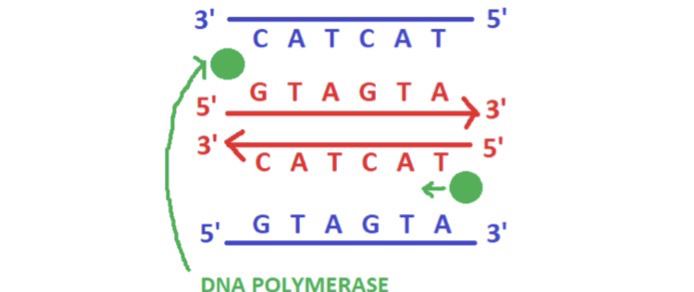
2. Enzyme DNA polymerase then copies each strand running in the direction of 3’ to 5’ on each strand
DNA to Proteins
•How is the information in DNA converted into proteins that are responsible for function?
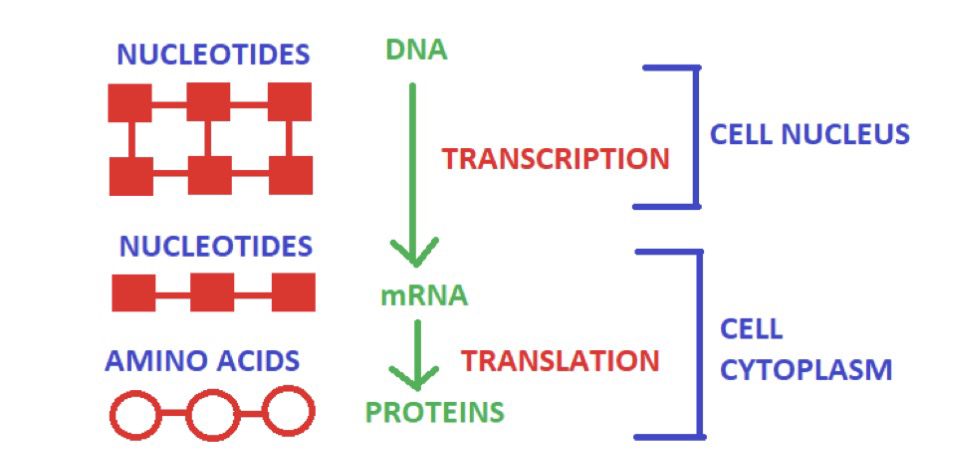
DNA is transcribed into messenger RNA (mRNA) – this process is transcription and occurs in the cell nucleus
• Once the mRNA is produced, it crosses the nuclear membrane into the cytoplasm where it is translated into protein, this process is known as translation.⭐️
RNA, like DNA, is a polymer of nucleotides consisting of a sugar Ribose), a phosphate group and a base
• But there are some important differences:
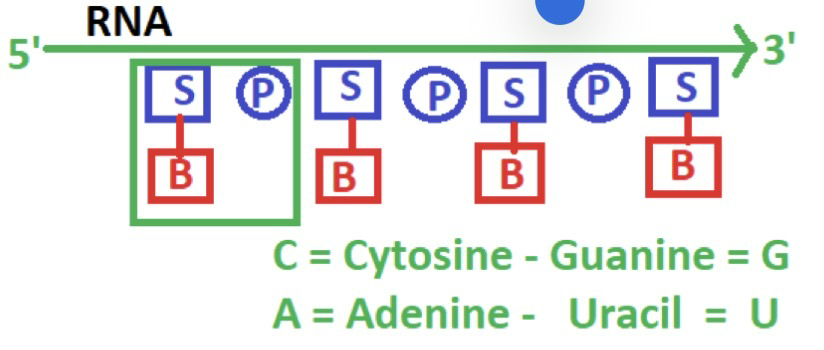
Structure part of mRNA
• mRNA has a single sugar phosphate backbone with bases
adenine, guanine, cytosine and uracil
• The direction of the sugar phosphate backbone in mRNA runs 5’
to 3’ – the opposite direction to the DNA strand
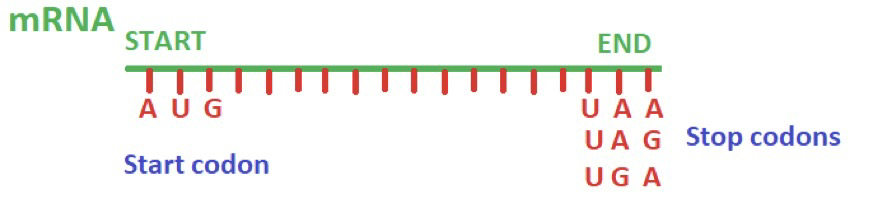
—
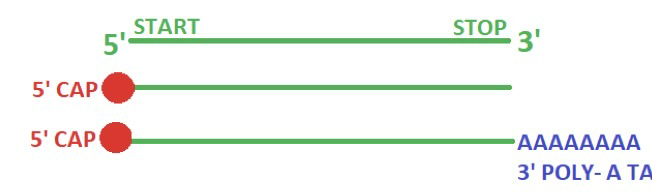
• mRNA is a fairly unstable molecule that can be easily
broken down in the cell it needs maturation
1. 2. A 5’ cap is added to the 5’ end of the mRNA
A string of ‘A’ residues is added to 3’ end: the poly A Tail
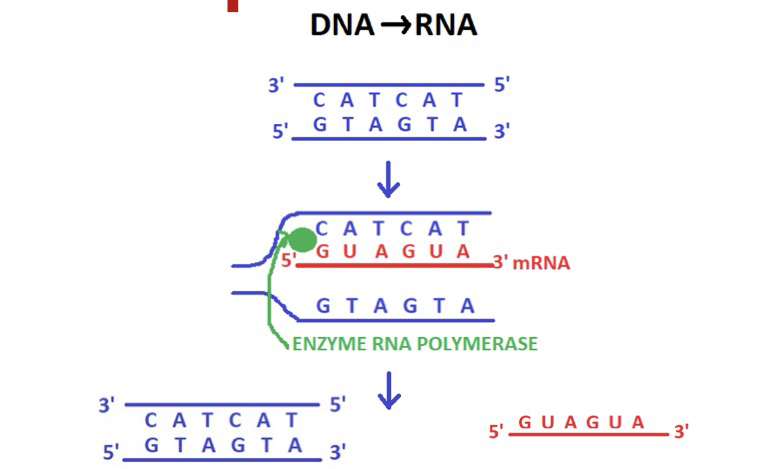
Transcription
•Transcription occurs in several phases
1. Proteins unwinds the DNA to make single stranded DNA.
2. The enzyme RNA polymerase then makes copies of the 3” – 5” strand of the DNA producing a 5” – 3” RNA molecule that has a complimentary base sequence to the DNA strand
3. The enzyme RNA polymerase then makes copies of the 3” – 5” strand of the DNA producing a 5” – 3” RNA molecule that has a complimentary base sequence to the DNA strand
This mRNA molecule is released and the DNA double helix reforms
Dna to Proteins
•How is the information in DNA converted
into proteins that are responsible for
function?
•Translation of messenger RNA into protein
Translation
Four components required:
1. mRNA
2. Pool of amino acids
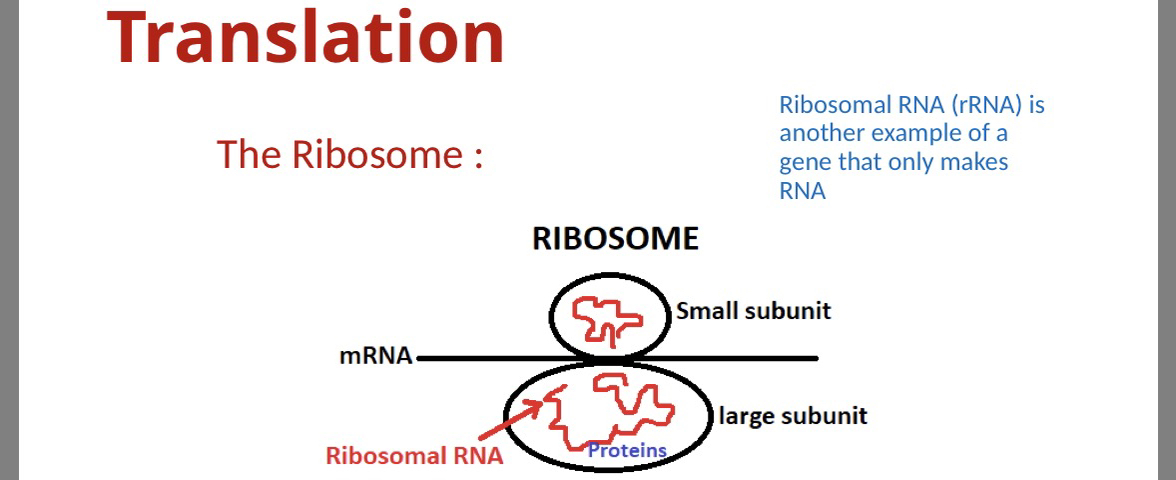
3. Ribosome (assembly machinery)
4. Transfer RNA – tRNA (interpreter)
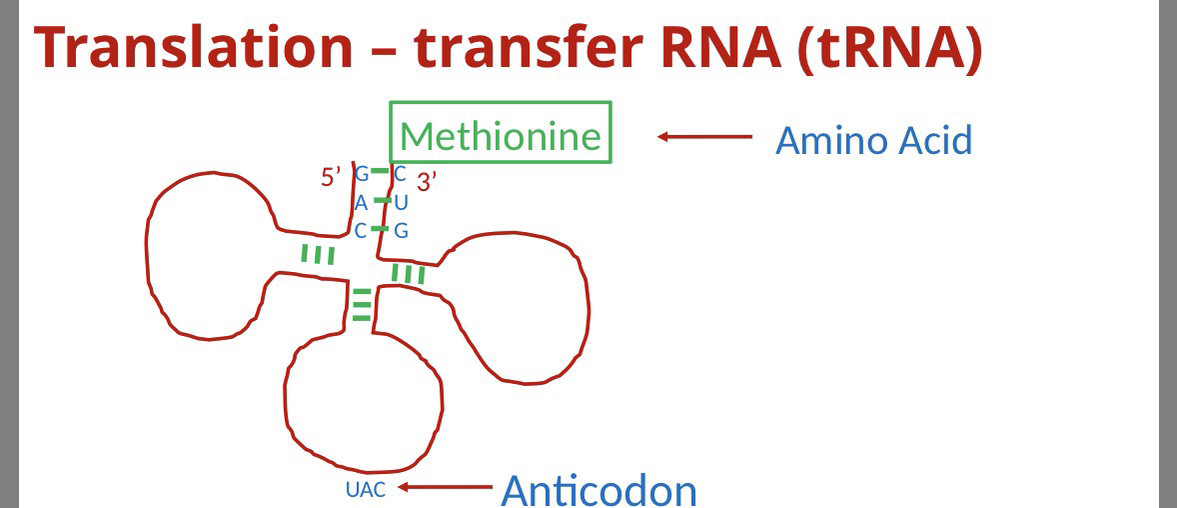
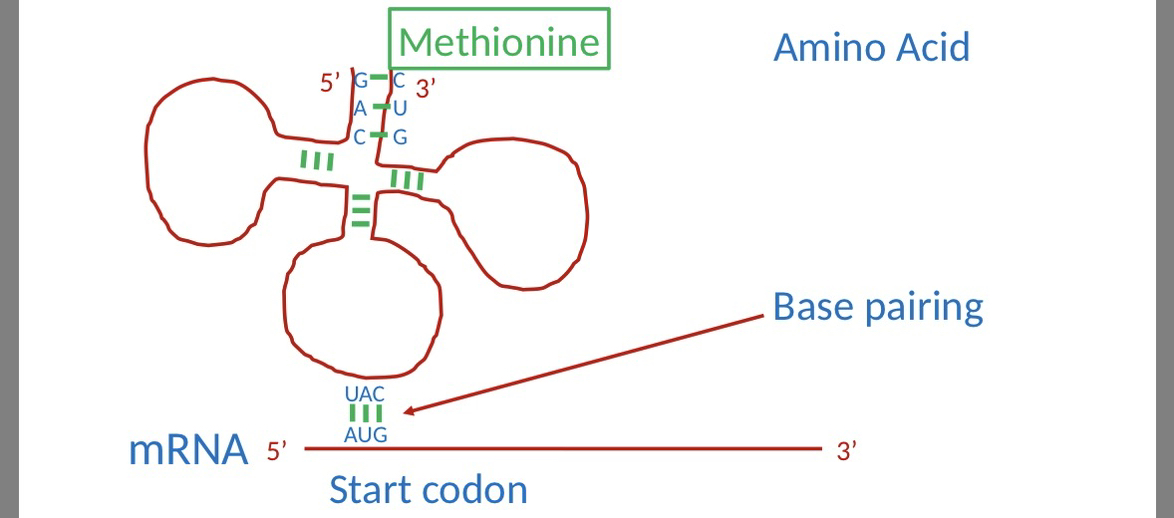
tRNA is an example of a gene that only makes RNA
The Genetic Code
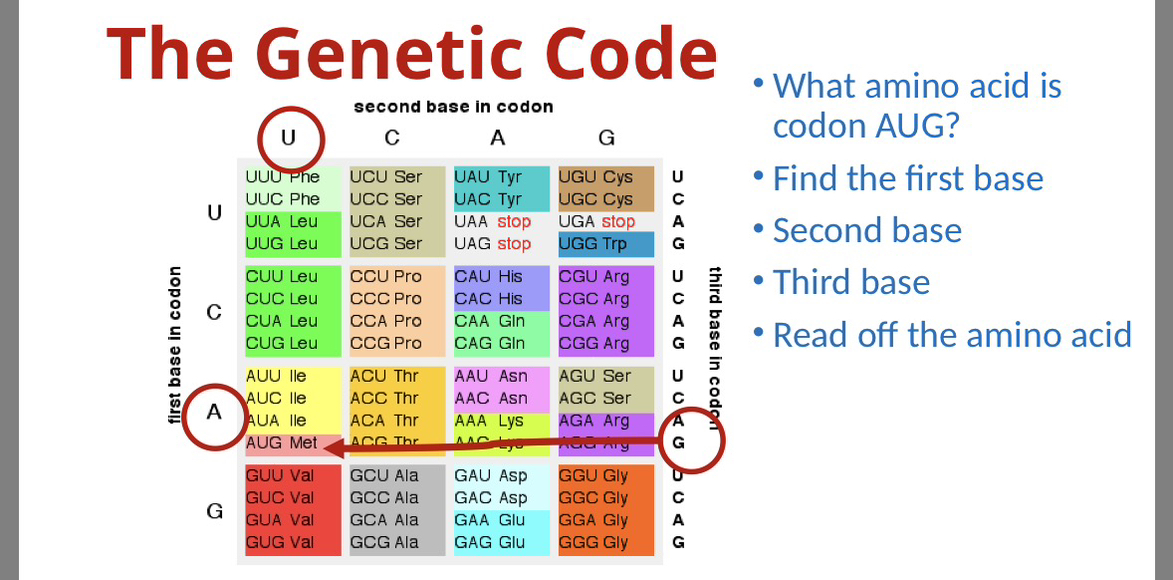
• mRNA is translated in groups of 3 bases – “triplet codon”
• The start codon is always AUG – this codon specifies the amino acid methionine

•The genetic code is a triplet code = 64 possible combinations of the four bases
•But there are only 21 amino acids – this means that several codons may represent a single amino acid
•This is known as redundancy in the genetic code
Translation
•Four components required:
1. mRNA
2. Pool of amino acids
3. Ribosome (assembly machinery)
4. Transfer RNA – tRNA (interpreter)
Ribosome
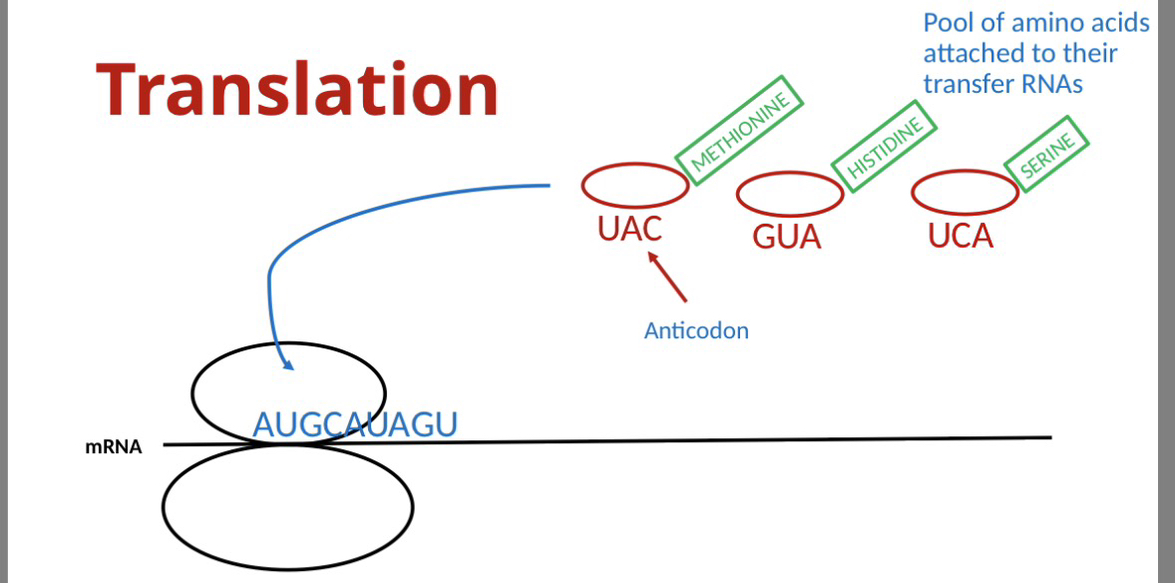
WATCH YOUTUBE VID SO IT MAKES MORE SENSE
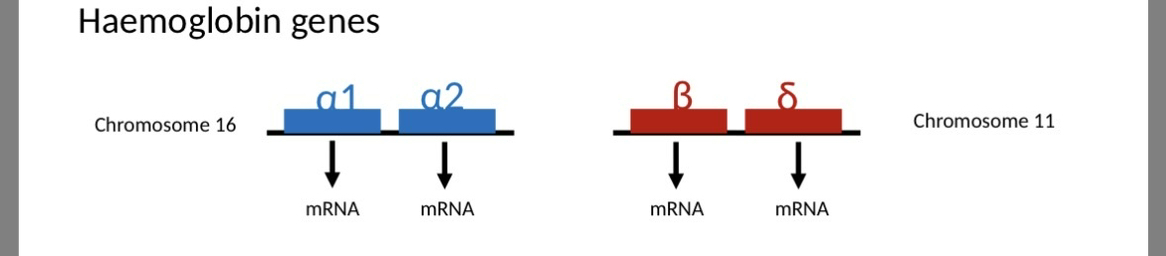
proteins as a unit of function
•Haemoglobin in our blood is produced by four
genes
•These four genes are responsible for providing
instructions to make proteins: β1 globin, δ
globin, α1 globin and α2 globin
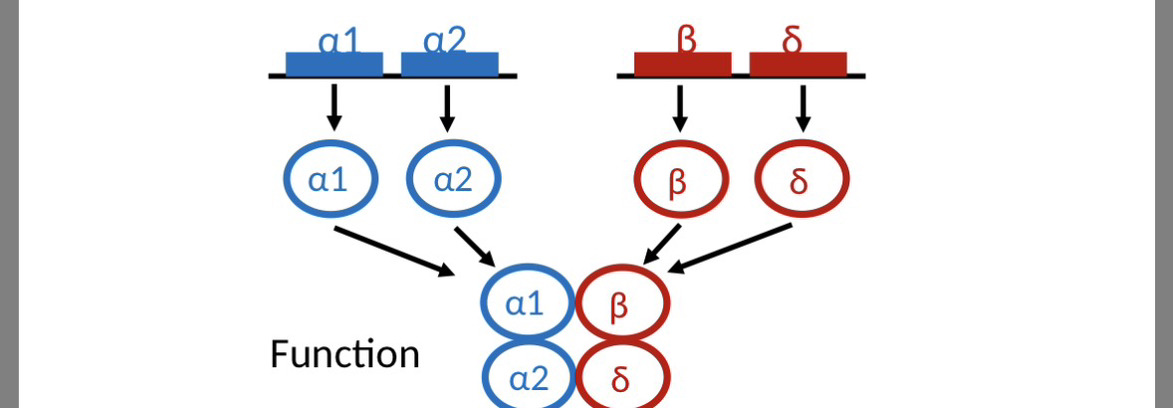
Proteins as a unit of function
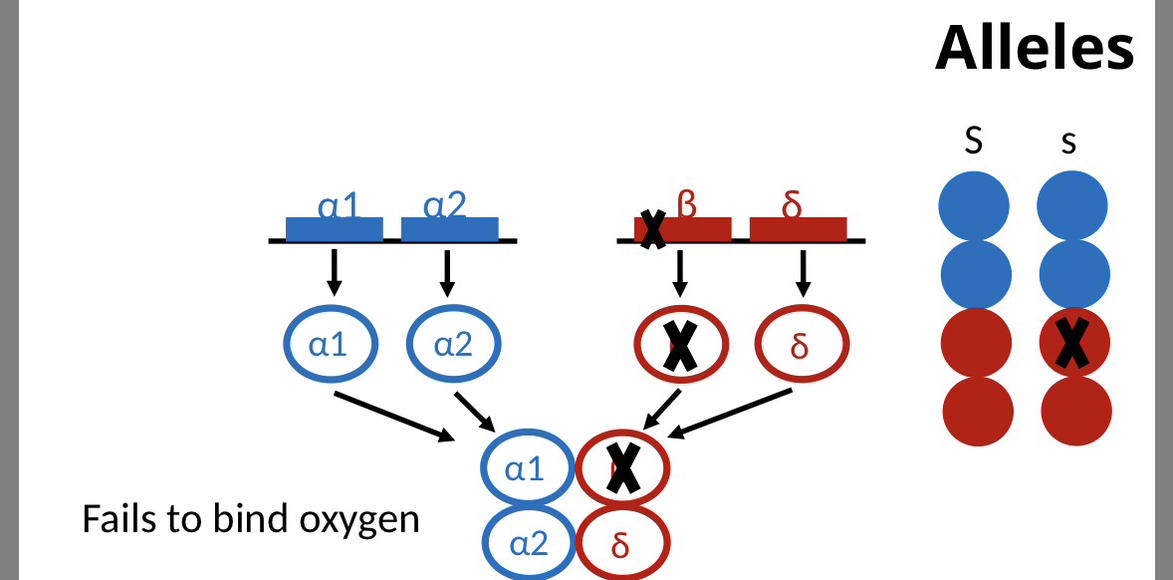
•Haemoglobin transports oxygen around the
human/animal body, but with sickle cell anemia,
the hemoglobin fails to function correctly.
-sickle cell anemia
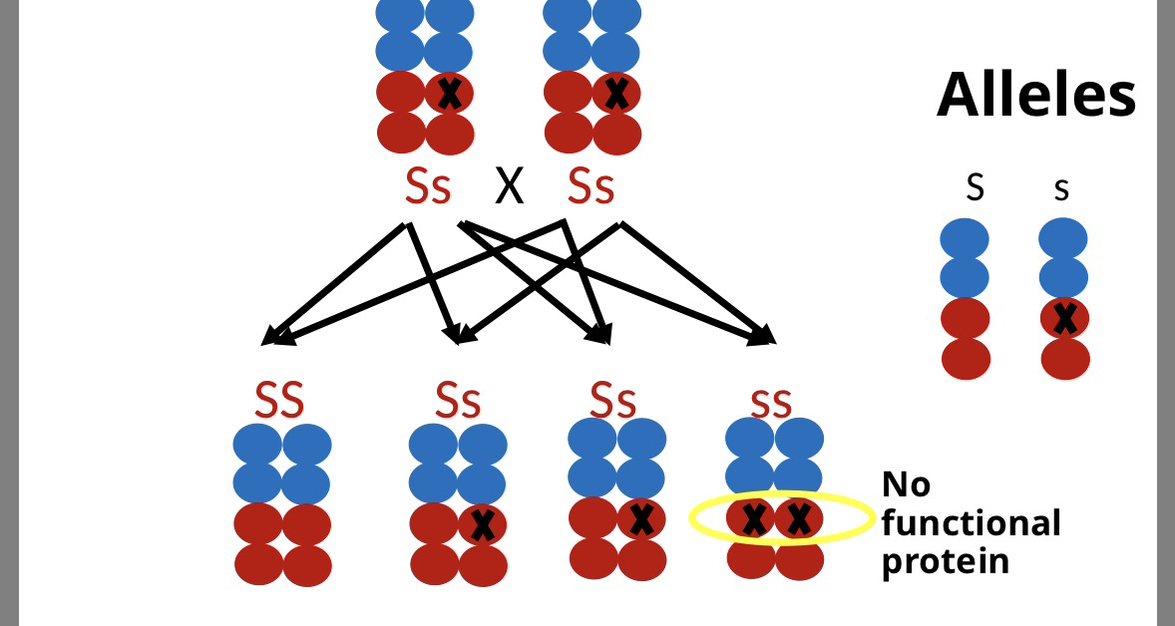
Single gene
• SS and Ss = Wild type
• ss = Sickle Cell Anaemia
-A fault in one codon in one of the sub units – the β globin subunit
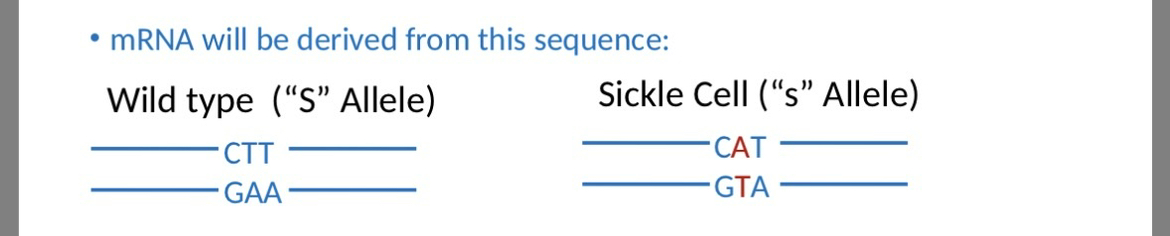
-So for mRNA we will get:
• GAA GLU (Glutamic acid)
• GTA VAL (Valine – sickle cell!)