Agricultural prelim
topics
Overview (15%)
• Agricultural systems
• Agricultural history
• Social aspects surrounding agriculture
boundaries
The farm case study (25%)
• The farm as a unit of production
• Farm management
• Marketing
• Farm technology
• The agricultural workplace
Plant production (30%)
• Plants and their commercial production
• Animals, climate and resource interaction
• Microbes, invertebrates and pests
• Technology
• Experimental design and research
Farming plants - wheat, lucerne, canola, etc
Animal production (30%)
• Animals and their commercial production
• Plants, climate and resource interaction
• Microbes, invertebrates and pests
• Technology
• Experimental design and research
Animal reproduction and production
Dairy cow production
overview
1. Agricultural Systems
⭐ What is an agricultural system?
An agricultural system is the way agricultural activities are organised to produce food, fibre and other products.
Think:
INPUTS → PROCESSES → OUTPUTS
🔄 Agricultural system model
Stage | Meaning | Examples |
|---|---|---|
Inputs | Things needed to run the enterprise | Land, water, labour, machinery, fertiliser, seed, animals |
Processes | Activities carried out | Planting, feeding, irrigation, harvesting, breeding |
Outputs | Products produced | Milk, eggs, meat, grain, wool, fruit |
Waste | Materials left over | Manure, chemical containers, crop waste, wastewater |
🧠 Easy memory trick
I → P → O
Inputs → Processes → Outputs
🌱 Types of agricultural systems
1. Cropping systems
Growing plants/crops for food, fibre or other products.
Examples:
Wheat
Cotton
Rice
Canola
Vegetables
Important factors:
Soil fertility
Rainfall/water
Temperature
Pests and diseases
Fertilisers
Machinery
2. Livestock systems
Raising animals for agricultural products.
Examples:
Cattle → beef/milk
Sheep → meat/wool
Chickens → meat/eggs
Pigs → pork
Important factors:
Feed
Water
Housing
Animal health
Breeding
Disease management
Welfare
3. Mixed farming
A combination of crop production + livestock production.
Example:
A farm grows wheat and raises sheep.
Advantages
Spreads financial risk
Animal manure can improve soil
Crop residues can feed livestock
Different enterprises can support each other
Disadvantages
More management required
More equipment may be needed
Farmers need knowledge of multiple enterprises
4. Intensive agriculture
Production is concentrated on a small area, with high levels of inputs.
Examples:
Intensive poultry
Dairy farming
Greenhouse production
Characteristics:
High labour
High capital investment
High inputs
High production per area
🧠 INTENSIVE = lots going IN
5. Extensive agriculture
Production occurs over a large area, generally with fewer inputs per hectare.
Examples:
Cattle grazing
Sheep grazing
Large-scale cropping
Characteristics:
Large areas of land
Lower inputs per hectare
Often relies more heavily on natural rainfall
Lower production per hectare compared with intensive systems
🧠 EXTENSIVE = lots of land
⚙️ Factors affecting agricultural systems
Agricultural systems are affected by physical, economic, social and technological factors.
🌦️ Physical factors
Climate
Rainfall
Temperature
Soil type
Water availability
Topography
Pests and diseases
💰 Economic factors
Production costs
Product prices
Labour costs
Market demand
Availability of finance
Transport costs
👥 Social factors
Population
Consumer preferences
Lifestyle
Labour availability
Community expectations
💻 Technological factors
Machinery
Automation
GPS
Drones
Artificial intelligence
Genetic technologies
Precision agriculture
🧠 Memory trick:
P-E-S-T
Physical
Economic
Social
Technological
2. 🌾 Agricultural History
Agriculture has changed significantly over time due to technology, population growth, scientific discoveries and changing consumer demands.
🏕️ Hunter-gatherer societies
Before agriculture, humans mainly survived by:
Hunting animals
Fishing
Gathering plants
Moving between locations
They were generally nomadic.
🌱 Agricultural Revolution
The Agricultural Revolution occurred when humans began deliberately growing crops and domesticating animals.
This resulted in:
Permanent settlements
Increased food production
Population growth
Development of villages and towns
Development of specialised jobs
🧠 Remember:
HUNT → FARM → SETTLE
🚜 Mechanisation
Agriculture gradually moved from relying heavily on human and animal labour to using machinery.
Examples:
Ploughs
Tractors
Harvesters
Irrigation equipment
Milking machines
Effects of mechanisation
✅ Increased productivity
✅ Reduced manual labour
✅ Faster production
✅ Larger farms became possible
❌ Expensive machinery
❌ Greater fuel/energy use
❌ Can contribute to soil compaction
❌ Some agricultural jobs were reduced
🧪 Scientific Revolution in agriculture
Scientific discoveries improved agricultural production.
Developments included:
Fertilisers
Pesticides
Improved animal nutrition
Selective breeding
Plant breeding
Disease control
Irrigation
These technologies helped farmers produce more food from available land.
🌾 Green Revolution
The Green Revolution involved major increases in agricultural production through improved:
Crop varieties
Fertilisers
Irrigation
Pest control
Machinery
Farming practices
Main goal:
Increase food production and improve food security.
Benefits
Higher crop yields
Increased food supply
Improved food security
More efficient production
Problems
Increased chemical use
Water use
Soil degradation
Loss of biodiversity in some systems
Environmental impacts
💻 Modern agriculture
Modern agriculture increasingly uses technology to make production more efficient, productive and sustainable.
Examples:
Precision agriculture
GPS
Sensors
Drones
Satellite imagery
Variable-rate technology
Smart livestock technology
Electronic identification
Sensors
Smart collars
Rumen boluses
Automated monitoring
Biotechnology
Genetic selection
Genomic technologies
Biotechnology applications
Main aim:
Produce more efficiently while reducing unnecessary inputs and environmental impacts.
🕰️ Agricultural history — easy timeline
Hunter-gatherers
↓
Domestication of plants & animals
↓
Permanent settlements
↓
Animal-powered farming
↓
Mechanisation
↓
Scientific agriculture
↓
Green Revolution
↓
Precision / digital agriculture
🧠 Memorise this as:
H-D-S-M-S-G-P
3. 👥 Social Aspects Surrounding Agriculture
Agriculture isn't just about producing food. It affects people, communities and society.
👨👩👧 Rural communities
Agriculture provides:
Employment
Income
Food
Community connections
Regional economic activity
Agricultural industries support other businesses such as:
Transport
Machinery suppliers
Veterinary services
Feed suppliers
Processing facilities
🧠 Key idea:
FARM → JOBS → BUSINESSES → COMMUNITY
👷 Employment
Agriculture creates employment in areas such as:
Farming
Animal production
Horticulture
Agricultural science
Agribusiness
Machinery
Transport
Processing
Marketing
Veterinary services
However, mechanisation and automation can reduce the need for some manual labour.
🛒 Consumer expectations
Consumers influence agriculture through what they buy and value.
Consumers may demand:
Affordable food
High-quality food
Safe food
Locally produced food
Organic products
Ethically produced products
Environmentally sustainable products
Animal welfare
Example:
If consumers become more concerned about animal welfare, producers may change:
Production methods → animal welfare practices → marketing
🐄 Animal welfare
Animal welfare is concerned with the health, wellbeing and appropriate treatment of animals.
Farmers need to consider:
Food
Water
Shelter
Health
Handling
Transport
Disease prevention
Appropriate living conditions
Why does it matter?
Because it affects:
Ethical expectations
Productivity
Product quality
Consumer confidence
Industry reputation
🌏 Environmental expectations
Society increasingly expects agriculture to protect natural resources.
Agriculture can affect:
Soil
Water
Air
Biodiversity
Ecosystems
Farmers can respond through:
Sustainable farming
Water conservation
Soil conservation
Integrated pest management
Recycling
Waste management
Biodiversity protection
🧑🌾 Aboriginal and Torres Strait Islander connections to agriculture
Aboriginal and Torres Strait Islander peoples have deep and diverse knowledge of Country, plants, animals and environmental management.
Traditional knowledge can involve:
Understanding seasonal changes
Knowledge of native plants and animals
Sustainable harvesting
Fire management
Water management
Caring for Country
Important concept:
Caring for Country = managing the environment while maintaining cultural, ecological and community connections.
🏙️ Urbanisation
Urbanisation is the movement of people from rural areas into towns and cities and the growth of urban areas.
Effects on agriculture:
Positive:
Larger nearby markets
Increased demand for food
Opportunities for urban agriculture
Negative:
Loss of agricultural land
Increased competition for water
Higher land prices
Less agricultural labour in some areas
🌍 Globalisation
Globalisation means countries and economies becoming increasingly connected.
Agriculture is affected through:
International trade
Imports and exports
Global prices
International competition
New technologies
Consumer trends
Example:
Australian farmers may produce products for overseas markets such as:
Beef
Wool
Wheat
Dairy
Cotton
💰 Food security
Food security means people have reliable access to enough safe and nutritious food.
Agriculture contributes to food security by:
Producing food
Improving productivity
Maintaining reliable production
Managing resources sustainably
Threats to food security:
Drought
Floods
Climate change
Pests and diseases
War/conflict
Population growth
Water shortages
🧠 THE WHOLE TOPIC IN ONE PAGE
🌾 AGRICULTURAL SYSTEMS
Inputs → Processes → Outputs
Types:
Cropping
Livestock
Mixed
Intensive
Extensive
Factors: PEST
Physical
Economic
Social
Technological
🕰️ AGRICULTURAL HISTORY
Hunter-gatherer
↓
Domestication
↓
Settlements
↓
Mechanisation
↓
Scientific agriculture
↓
Green Revolution
↓
Precision agriculture
👥 SOCIAL ASPECTS
Think "PEACE":
P — Population & communities
E — Employment & economy
A — Animal welfare
C — Consumers & culture
E — Environment & ethics
farm case study
I’d use Sapphire Coast Dairy-Homestead in Bega, NSW, because there is reliable information available from Dairy Australia. It is a 376-hectare family dairy farm, has been in the family since 1908, milks about 280 Holstein cows twice a day, and uses technologies such as heat sensors and milk metres.
🐄 FARM CASE STUDY — SAPPHIRE COAST DAIRY-HOMESTEAD
📍 Case Study Snapshot
Feature | Sapphire Coast Dairy-Homestead |
|---|---|
Location | Bega, NSW |
Area | 376 hectares |
Enterprise | Dairy |
Animals | ~280 Holstein cows |
Production | Milk |
Milking | Twice daily |
Ownership | Fourth-generation family farm |
Established | Family property since 1908 |
Technology | Heat sensors, milk metres |
Future technology | Plans for robotics |
1. 🌱 THE FARM AS A UNIT OF PRODUCTION
What does this mean?
A farm as a unit of production means looking at the farm as a system where different resources are combined to produce an agricultural product.
🧠 Remember:
LAND + LABOUR + CAPITAL + MANAGEMENT → PRODUCTION
Inputs
Natural resources
376 hectares of land
Pasture
Water
Climate
Animals
Approximately 280 Holstein cows
Capital
Milking equipment
Sheds
Fencing
Machinery
Sensors
Milk metres
Labour
Family members
Farm workers
Management
Planning feeding
Monitoring animal health
Managing pasture
Managing finances
Making production decisions
Processes
The farm uses its inputs to:
Maintain pasture
Feed and care for cows
Monitor animal health
Milk cows twice a day
Monitor milk production
Manage the land and herd
Outputs
The main output is:
🥛 Milk
There may also be secondary outputs such as:
Calves
Breeding animals
Manure
🧠 Exam sentence
Sapphire Coast Dairy-Homestead operates as a unit of production by combining land, livestock, labour, capital and management to produce milk efficiently.
2. 👨🌾 FARM MANAGEMENT
What is farm management?
Farm management is the process of making decisions about how farm resources should be used to achieve the farm's goals.
🧠 Easy definition:
Farm management = PLAN → DO → MONITOR → CHANGE
Management decisions on Sapphire Coast Dairy
🐄 Livestock management
Farmers need to manage:
Cow health
Nutrition
Breeding
Milk production
Animal welfare
Disease prevention
The farm uses heat sensors and milk metres to collect information about individual cows and production.
🌱 Pasture management
Farmers need to make decisions about:
Pasture growth
Grazing
Water
Feed availability
Soil condition
Good pasture management helps provide cows with suitable feed.
💰 Financial management
The farmer needs to consider:
Feed costs
Labour
Machinery
Animal health
Infrastructure
Milk income
Technology costs
The aim is to keep the farm financially sustainable.
🌦️ Risk management
Farmers cannot control everything.
Risks include:
Drought
Floods
Disease
Changing milk prices
Feed costs
Labour availability
The farmer must plan for these risks.
3. 📢 MARKETING
What is marketing?
Marketing is how agricultural products are promoted and sold to consumers or businesses.
For a dairy farm:
COW → MILK → PROCESSING → CONSUMER
The farm produces milk, which enters the wider dairy supply chain.
Marketing factors
🥛 Product
The product is milk.
The quality of the milk is important because poor-quality milk can affect:
Price
Consumer confidence
Processing
Farm reputation
💰 Price
Farm income depends partly on the price received for milk.
Farmers need to consider:
Production costs
Market conditions
Milk prices
Quality
Demand
📍 Place
Milk needs to move efficiently from the farm into the processing and distribution system.
📢 Promotion
Australian dairy farms and the wider dairy industry can promote:
Australian-produced food
Quality
Animal welfare
Sustainability
Local production
The Sapphire Coast Dairy-Homestead also allows visitors to experience a working dairy farm, helping consumers understand where dairy products come from.
4. 🤖 FARM TECHNOLOGY
This is one of the strongest parts of this case study.
Sapphire Coast Dairy uses:
🌡️ Heat sensors
Sensors can help identify when cows are showing signs associated with being on heat.
This can help with:
Breeding management → reproductive efficiency
🥛 Milk metres
Milk metres measure milk production.
This provides information that farmers can use to:
Monitor individual cows
Identify changes in production
Make management decisions
Improve efficiency
The farm currently uses heat sensors and milk metres and has plans to introduce robotics for feeding and milking.
🤖 Robotic technology
Automatic milking systems are already being used on Australian dairy farms.
The cow enters the robotic milking system and an electronic transponder identifies the animal. A robotic arm attaches the milking equipment, while sensors determine when milking should finish.
Benefits
✅ Reduces labour requirements
✅ Saves time
✅ Collects data
✅ Allows individual cow monitoring
✅ Can improve efficiency
✅ Can help detect health problems
Disadvantages
❌ High initial cost
❌ Requires technical knowledge
❌ Technology can break down
❌ Requires reliable infrastructure and power
💻 Technology + farm management
This is an important connection for exam answers.
Technology doesn't just make the farm "more modern".
It provides information that helps farmers make better management decisions.
For example:
Milk metre → production data → farmer identifies changes → management decision → improved efficiency
Australian research also shows that electronic identification and herd-management technologies are commonly used in dairy farming, while cost, skills and internet access can limit technology adoption.
5. 👷 THE AGRICULTURAL WORKPLACE
The agricultural workplace includes the people, conditions, responsibilities, safety requirements and skills involved in farming.
👨🌾 Workers may be responsible for:
Milking
Feeding
Animal health
Cleaning
Machinery
Pasture management
Maintenance
Record keeping
Monitoring technology
General farm duties
Dairy Australia identifies animal care, milking, land management and business management as important parts of dairy farming.
🦺 Workplace safety
Agriculture can involve hazards such as:
Animals
Machinery
Chemicals
Electricity
Slippery surfaces
Heavy equipment
Vehicles
Manual handling
Safety management includes:
IDENTIFY → ASSESS → CONTROL → MONITOR
For example:
Hazard: Large machinery
↓
Risk: Worker injury
↓
Control: Training, guards, safe operating procedures and PPE
↓
Monitor: Regular inspections and review
👥 Skills required
Modern agricultural workers need both practical and technological skills.
Practical skills
Animal handling
Machinery operation
Milking
Feeding
Maintenance
Management skills
Planning
Financial management
Record keeping
Decision-making
Technology skills
Using sensors
Reading data
Computer systems
Farm management software
This shows that agriculture is increasingly a high-skill industry, not just physical labour. ABARES data shows dairy farms employ managers, skilled workers and machine operators, among others.
🧠 THE 5 AREAS — SUPER EASY VERSION
Memorise P-M-M-T-W:
🌱 P — Production
What does the farm produce?
→ Milk from ~280 Holstein cows.
👨🌾 M — Management
How does the farmer run it?
→ Animals + pasture + money + labour + risk.
📢 M — Marketing
How does the product reach the market?
→ Milk → processing → distribution → consumer.
🤖 T — Technology
What technology helps?
→ Heat sensors + milk metres + future robotics.
👷 W — Workplace
Who works there and how do they stay safe?
→ Farmers/workers + animal care + machinery + WHS.
⭐ EXAM-READY CASE STUDY PARAGRAPH
Sapphire Coast Dairy-Homestead in Bega, NSW, is a 376-hectare family-owned dairy farm that demonstrates the five components of a farm as a unit of production. The farm combines natural resources, approximately 280 Holstein cows, labour, capital and management to produce milk. Farm management involves monitoring animal health, pasture, production and finances, while technology such as heat sensors and milk metres provides information to support management decisions. The farm's milk enters the wider dairy marketing and processing system, where product quality and market conditions influence profitability. Modern technology such as automated milking systems can improve efficiency, reduce labour requirements and provide data about individual cows. Finally, the agricultural workplace requires workers to have skills in animal handling, machinery, technology and farm management while following workplace health and safety procedures.
🔥 One sentence for each syllabus dot point:
Farm as a unit of production:
Inputs are combined through farm processes to produce outputs.
Farm management:
Farmers plan, organise and monitor resources to achieve production and financial goals.
Marketing:
Marketing connects agricultural products with buyers and consumers.
Farm technology:
Technology improves efficiency, monitoring, decision-making and productivity.
Agricultural workplace:
Agriculture requires skilled workers who manage animals, machinery, technology and workplace safety.
find names of the famers and operastors in the farm and put what there input is
Yep. I checked the farm's current information, and there are three named family members publicly identified as running Sapphire Coast Dairy-Homestead: Norm Pearce, Narelle Pearce and their son Thomas Pearce. Dairy Australia specifically describes Norm as the fourth-generation farmer and says he runs the farm with Narelle and Thomas.
🐄 Sapphire Coast Dairy — People and their inputs
Person | Role / input to the farm | What they contribute |
|---|---|---|
Norm Pearce | Fourth-generation farmer / farm operator | Management + labour + knowledge — makes farm decisions, manages the dairy operation, oversees cattle and production, and also manages the farm-stay side of the business. |
Narelle Pearce | Family farm operator | Labour + management — contributes to running the family farm and farm-stay business. Public sources don't give a detailed individual job description, so don't claim specific duties that aren't documented. |
Thomas Pearce | Son / family farm worker | Labour + agricultural knowledge — contributes to the operation of the family dairy farm. The source identifies him as working with Norm and Narelle, but doesn't specify his exact daily responsibilities. |
plant production
1. 🌾 Plants and Their Commercial Production
What is plant production?
Plant production is the growing and harvesting of plants for a commercial purpose.
Plants can be produced for:
🍞 Food — wheat, rice, vegetables
🥤 Beverages — coffee, tea, grapes
👕 Fibre — cotton
🛢️ Oil — canola, sunflower
🌱 Animal feed — pasture, lucerne
🌳 Timber — pine, eucalyptus
🌸 Ornamentals — flowers and nursery plants
🌱 Factors affecting plant growth
Plants need several basic requirements to grow.
🧠 Remember: L-W-A-N-T-S
L — Light
W — Water
A — Air
N — Nutrients
T — Temperature
S — Soil/support
☀️ Light
Plants need light for photosynthesis.
More suitable light → generally more photosynthesis → greater potential growth.
💧 Water
Water is needed for:
Photosynthesis
Transporting nutrients
Cell growth
Maintaining plant structure
Too little → water stress/wilting
Too much → waterlogging/root problems
🌬️ Air
Plants require:
Carbon dioxide for photosynthesis
Oxygen for respiration
🧪 Nutrients
Important nutrients include:
Macronutrients
Nitrogen (N)
Phosphorus (P)
Potassium (K)
Micronutrients
Iron
Zinc
Boron
Copper
🌡️ Temperature
Every plant has a suitable temperature range.
Too cold → slow growth/frost damage
Too hot → heat stress/water loss
🌱 Soil
Soil provides:
Physical support
Water
Nutrients
Root environment
Important soil properties include:
pH
Structure
Texture
Fertility
Drainage
🌿 Photosynthesis
This is VERY important.
Plants use light energy to convert:
Carbon dioxide + water → glucose + oxygen
Why is photosynthesis important?
Glucose provides energy/material for:
Growth
Respiration
Reproduction
Storage
Production of plant tissues
🧠 Easy memory:
CO₂ + H₂O + LIGHT → FOOD + O₂
🌱 Plant growth vs development
Growth
An increase in size, mass or number of cells.
Examples:
Taller plant
Larger leaves
Increased root mass
Development
Changes in the plant's structure and function as it matures.
Examples:
Seed → seedling
Vegetative growth → flowering
Flower → fruit
🌾 Commercial plant production
Commercial production involves producing plants in a way that is:
Productive
Profitable
Efficient
Sustainable
Suitable for the market
Basic production sequence:
Select crop
↓
Prepare soil
↓
Plant
↓
Manage crop
↓
Monitor pests/diseases
↓
Harvest
↓
Process/store
↓
Market
2. 🌦️ Animals, Climate and Resource Interaction
This section is about how plants interact with animals, climate and available resources.
Think of agriculture as a system, not separate parts.
🌱 PLANT ↔ ANIMAL ↔ CLIMATE ↔ RESOURCES
🐄 Plants and animals
Animals can affect plant production by:
Grazing
Animals eat pasture/crops.
Benefits:
Provides animals with feed
Can control pasture growth
Can recycle nutrients through manure
Problems if poorly managed:
Overgrazing
Soil compaction
Erosion
Loss of vegetation
Manure
Animal manure returns nutrients to soil.
For example:
Animal eats plant → animal produces manure → nutrients return to soil → plants use nutrients
This is a nutrient cycle.
🌧️ Climate
Climate includes long-term patterns of:
Temperature
Rainfall
Wind
Humidity
Solar radiation
Climate affects:
🌱 Plant growth
💧 Water availability
🐛 Pest populations
🦠 Disease
🌾 Crop yield
🐄 Livestock production
🌡️ Temperature
Temperature affects:
Germination
Photosynthesis
Respiration
Flowering
Fruit development
Extreme temperatures can cause stress.
💧 Rainfall
Rainfall provides water for plant growth.
Too little:
Drought → water stress → reduced growth → lower yield
Too much:
Flooding → waterlogging → root damage → reduced growth
🌬️ Wind
Strong winds can:
Damage plants
Increase water loss
Cause soil erosion
Spread some pests/diseases
Windbreaks can help reduce these effects.
💧 Agricultural resources
Important resources include:
Land
Water
Soil
Sunlight
Nutrients
Labour
Energy
Capital
Sustainable resource management means:
Using resources today without reducing their ability to support future production.
🧠 Easy chain
Climate → Resources → Plant growth → Production
For example:
Low rainfall → reduced water availability → reduced plant growth → lower yield.
3. 🦠 Microbes, Invertebrates and Pests
This is about organisms that can be either beneficial or harmful to plant production.
🦠 Microbes
Microbes/microorganisms are very small organisms.
Examples:
Bacteria
Fungi
Some microscopic algae
Protozoa
✅ Beneficial microbes
Microbes can help agriculture.
Decomposers
Break down dead organic matter.
Dead material → decomposition → nutrients released → plants use nutrients
Nitrogen-fixing bacteria
Some bacteria form relationships with plants such as legumes.
They help convert atmospheric nitrogen into forms plants can use.
Mycorrhizal fungi
Some fungi form relationships with plant roots and can help plants obtain:
Water
Nutrients, especially phosphorus
❌ Harmful microbes
Some microbes cause plant diseases.
Examples include:
Fungal diseases
Bacterial diseases
Viral diseases
Disease can cause:
Reduced growth
Reduced yield
Poor-quality produce
Plant death
🐛 Invertebrates
Invertebrates = animals without a backbone.
Examples:
Insects
Mites
Snails
Slugs
Worms
Not all invertebrates are pests.
🐝 Beneficial invertebrates
Examples:
Bees
Pollinate flowers.
Predatory insects
Some insects eat pest species.
Example:
Ladybirds → eat aphids
Earthworms
Can help:
Break down organic matter
Improve soil structure
Cycle nutrients
🐛 Pests
A pest is an organism that causes an unwanted effect on agricultural production.
Examples:
Pest | Effect |
|---|---|
Aphids | Suck plant sap |
Caterpillars | Eat leaves |
Fruit flies | Damage fruit |
Snails/slugs | Eat seedlings/leaves |
Weeds | Compete for resources |
🌿 Integrated Pest Management — IPM
Integrated Pest Management (IPM) uses a combination of methods to manage pests.
🧠 Remember:
MONITOR → IDENTIFY → CONTROL → REVIEW
Methods include:
Biological
Use natural predators
Chemical
Use pesticides when appropriate
Cultural
Crop rotation
Hygiene
Remove infected material
Physical
Barriers
Traps
Hand removal
The aim is to control pests while minimising unnecessary environmental impacts.
4. 🤖 Technology
Technology is used throughout plant production to improve:
Productivity
Efficiency
Accuracy
Quality
Resource management
Sustainability
🚜 Examples of agricultural technology
GPS
Used for:
Tractor guidance
Mapping
Precision application
🚁 Drones
Can monitor:
Crop health
Water stress
Pest problems
Weed distribution
🛰️ Satellite imagery
Can identify differences in:
Crop growth
Vegetation
Moisture
💧 Irrigation technology
Examples:
Drip irrigation
Sprinklers
Centre pivots
Drip irrigation
Delivers water directly around the plant root zone.
Benefits:
Efficient water use
Reduces evaporation
Can deliver water accurately
🧪 Sensors
Sensors can monitor:
Soil moisture
Temperature
Humidity
Nutrients
Plant conditions
The information can help farmers make decisions.
🧠 Example:
Soil moisture sensor
↓
Measures soil moisture
↓
Farmer receives data
↓
Irrigation decision
↓
Water applied when needed
🎯 Precision agriculture
Precision agriculture uses technology and data to manage different parts of a farm according to their specific needs.
Instead of:
"Treat the whole paddock the same."
Farmers can:
Apply the right input, in the right place, at the right rate, at the right time.
Benefits
✅ Reduced input waste
✅ Improved productivity
✅ Better resource management
✅ Lower environmental impact
✅ Better decision-making
5. 🔬 Experimental Design and Research
This is one of the areas you should really know well, because you can be asked to design or evaluate an experiment.
🧪 What is an experiment?
An experiment is a controlled investigation designed to test a hypothesis.
Example:
Does increasing nitrogen fertiliser increase wheat growth?
🧠 Variables
Independent variable
The variable you deliberately change.
Example:
Amount of nitrogen fertiliser.
🧠 Independent = I change it.
Dependent variable
The variable you measure.
Example:
Plant height.
🧠 Dependent = Data depends on what I change.
Controlled variables
Things that are kept the same.
Examples:
Plant species
Pot size
Soil type
Amount of water
Temperature
Light
Experiment duration
🧠 Easy:
I change ONE thing and measure ONE thing while keeping everything else the SAME.
⭐ The 4 BIG experimental design principles
These are extremely important.
1. Control
A control provides a comparison.
Example:
Group A = no fertiliser
Group B = fertiliser
The no-fertiliser group is the control.
2. Replication
Replication = repeating the experiment or using multiple experimental units.
Example:
Instead of testing one plant:
Test 10 plants per treatment.
Why?
It increases reliability and reduces the effect of random variation.
3. Randomisation
Randomisation = assigning experimental units randomly.
Example:
Randomly decide which plants receive Treatment A or B.
Why?
Reduces bias.
4. Standardisation
Keep conditions the same wherever possible.
Example:
All plants receive:
Same soil
Same pot size
Same amount of water
Same light
Same temperature
Why?
So differences are more likely to be caused by the independent variable.
📊 Reliability vs Validity
Reliability
Would I get similar results if I repeated the experiment?
Improved by:
Replication
Consistent methods
Larger sample size
Validity
Did the experiment actually test what I intended to test?
Improved by:
Controlling variables
Appropriate experimental design
Accurate measurements
🧠 Easy:
RELIABLE = REPEATABLE
VALID = ACTUALLY TESTS THE QUESTION
📈 Data collection
Data can be:
Quantitative
Numbers that can be measured.
Examples:
Plant height = 25 cm
Mass = 40 g
Yield = 5 kg
Qualitative
Descriptions/observations.
Examples:
Leaves are yellow
Plant appears wilted
Pest damage is visible
🧮 Mean
The mean is the average.
Formula:
Mean = total of all values ÷ number of values
Example:
Plant heights:
10, 12, 14, 16, 18 cm
Mean:
70 ÷ 5 = 14 cm
📊 Standard deviation
Standard deviation (SD) shows how spread out data is around the mean.
Low SD
Data is close together.
More consistent results.
High SD
Data is more spread out.
More variation.
🧠 Remember:
LOW SD = LOW SPREAD
🔬 Example experiment
Research question:
Does fertiliser concentration affect plant growth?
Hypothesis:
Increasing fertiliser concentration will increase plant growth up to an optimum level.
Independent variable:
Fertiliser concentration
Dependent variable:
Plant height
Controlled variables:
Plant species
Soil
Pot size
Water
Light
Temperature
Time
Control:
Plants receiving no additional fertiliser.
Replication:
Use multiple plants in each treatment.
Randomisation:
Randomly allocate plants to treatments.
Standardisation:
Keep growing conditions identical.
Data:
Measure plant height every week.
Analysis:
Calculate:
Mean
Standard deviation
Graph results
Conclusion:
Determine whether the results support or reject the hypothesis.
🧠 PLANT PRODUCTION — ONE-PAGE MEMORY SHEET
🌱 1. PLANTS
L-W-A-N-T-S
Light
Water
Air
Nutrients
Temperature
Soil
🌦️ 2. INTERACTIONS
PLANTS ↔ ANIMALS ↔ CLIMATE ↔ RESOURCES
Climate affects resources → resources affect plants → plants support animals → animals can affect soil and plants.
🦠 3. ORGANISMS
Good:
Microbes → nutrient cycling
Bees → pollination
Predators → pest control
Earthworms → soil improvement
Bad:
Pests → crop damage
Pathogens → disease
🤖 4. TECHNOLOGY
Think:
GPS + DRONES + SENSORS + IRRIGATION + DATA
Used to improve:
EFFICIENCY + PRODUCTIVITY + SUSTAINABILITY
🔬 5. EXPERIMENTS
C-R-R-S
Control
Randomisation
Replication
Standardisation
And:
Independent = CHANGE
Dependent = MEASURE
Controlled = SAME
Reliable = REPEATABLE
Valid = ACTUALLY TESTS THE QUESTION
These experimental-design principles are specifically reflected in the NSW Agriculture syllabus, which expects students to recognise control, randomisation, replication and standardisation and to collect and analyse data.
⭐ The entire 30% in one sentence:
Plant production depends on understanding plant growth, interactions with animals and the environment, beneficial and harmful organisms, modern technology, and scientifically designed experiments to improve agricultural productivity and sustainability.
animal production
1. 🐄 Animals and Their Commercial Production
What is animal production?
Animal production is the management of animals to produce a commercial product.
Examples
Animal | Commercial products |
|---|---|
🐄 Cattle | Beef, milk |
🐑 Sheep | Wool, meat |
🐖 Pigs | Pork |
🐔 Chickens | Eggs, meat |
🐐 Goats | Meat, milk, fibre |
🦙 Alpacas | Fibre |
Main aim
Farmers aim to produce animals that are:
Healthy
Productive
Efficient
Profitable
Well managed
Appropriate for the environment
🌱 Inputs → Processes → Outputs
Remember the farm as a production system.
INPUTS
Animals
Land
Water
Feed
Labour
Capital
Technology
Knowledge
↓
PROCESSES
Feeding
Breeding
Health management
Growing
Handling
Housing
Monitoring
↓
OUTPUTS
Meat
Milk
Eggs
Wool
Fibre
Breeding animals
🧠 Memory:
INPUTS → ANIMAL MANAGEMENT → PRODUCTS
🐄 Factors affecting animal production
Genetics
Animals inherit characteristics from their parents.
Examples:
Growth rate
Milk production
Wool production
Disease resistance
Fertility
Nutrition
Animals need nutrients for:
Growth
Maintenance
Reproduction
Production
Environment
Includes:
Temperature
Rainfall
Housing
Water
Pasture
Health
Disease and parasites can reduce:
Growth
Production
Reproduction
Profitability
2. 🌱 Plants, Climate and Resource Interaction
Animals don't exist separately from the environment.
Think:
PLANTS → ANIMALS → CLIMATE → RESOURCES
🌾 Plants → Animals
Plants provide animals with:
Energy
Protein
Fibre
Vitamins
Minerals
Example:
Pasture → eaten by sheep → nutrients used for growth → wool/meat produced
🐄 Animals → Plants
Animals can also affect plants.
Grazing
Animals remove plant material by eating it.
Good grazing:
Controls pasture growth
Provides animal feed
Can maintain productive pasture
Overgrazing:
Removes too much vegetation
Can expose soil
Can cause erosion
Reduces pasture productivity
💩 Manure
Animal waste returns nutrients to the soil.
PLANT → ANIMAL → MANURE → SOIL → PLANT
This is part of nutrient cycling.
🌦️ Climate → Animals
Climate affects:
Temperature
Too hot:
Heat stress → reduced feed intake → lower production
Too cold:
Animals use more energy to maintain body temperature.
Rainfall
Rainfall affects:
Pasture growth
Water availability
Feed availability
Drought
Low rainfall → less pasture → less feed → reduced animal production
Extreme weather
Can cause:
Heat stress
Cold stress
Flooding
Injury
Death
Reduced production
💧 Resources
Important resources include:
Land
Water
Feed
Pasture
Energy
Labour
Capital
Sustainable management
The goal is:
Use resources efficiently without reducing future production.
3. 🦠 Microbes, Invertebrates and Pests
Animals interact with many microorganisms and invertebrates.
Some are beneficial, while others cause disease or production losses.
🦠 Microbes
Microbes include:
Bacteria
Viruses
Fungi
Protozoa
Beneficial microbes
Some microbes help animals digest food.
This is particularly important in ruminants.
For example:
🐄 Cow eats grass
↓
Microbes in rumen break down plant material
↓
Nutrients become available to the animal
❌ Pathogens
A pathogen is an organism that can cause disease.
Examples include:
Bacteria
Viruses
Fungi
Protozoa
Disease can cause:
Poor health → reduced production → financial loss
🪱 Invertebrates
Invertebrates are animals without a backbone.
Examples affecting livestock include:
Ticks
Lice
Mites
Flies
Worms
These can be parasites or pests.
🪰 Parasites
A parasite lives on or inside another organism and obtains resources from it.
External parasites
Live on the outside of the animal.
Examples:
Ticks
Lice
Mites
Internal parasites
Live inside the animal.
Examples:
Gastrointestinal worms
Some protozoa
🐑 Effects of parasites
Parasites can cause:
Weight loss
Reduced growth
Anaemia
Poor reproduction
Reduced wool production
Reduced meat production
Death in severe cases
🧠 Easy chain:
PARASITE → ANIMAL STRESS → LOWER PRODUCTION
🛡️ Managing pests and disease
Farmers can use:
Biological control
Using living organisms to control pests.
Chemical control
Using appropriate chemicals.
Cultural/management control
Good hygiene
Quarantine
Rotation
Pasture management
Good nutrition
Genetic control
Selecting animals with desirable resistance or tolerance.
🧠 Best overall approach:
PREVENT → MONITOR → IDENTIFY → CONTROL → REVIEW
4. 🤖 Technology in Animal Production
Technology helps farmers improve:
Productivity
Animal health
Reproduction
Welfare
Efficiency
Record keeping
Decision-making
🐄 Electronic identification — EID
Animals can be identified using electronic tags.
The tag allows farmers to record information about an individual animal.
Information can include:
Identification number
Weight
Treatments
Movement
Production
Breeding history
Benefit:
Individual animal → individual data → better management
⚖️ Automatic weighing
Weighing systems can monitor animal growth.
Farmers can identify:
Fast-growing animals
Poor performers
Changes in health
Appropriate sale time
🌡️ Sensors
Sensors can monitor:
Body temperature
Movement
Activity
Feeding
Rumination
This can help identify animals that may require attention.
🐄 Smart rumen boluses
A rumen bolus is a device given orally to a ruminant.
Smart boluses can contain sensors that monitor things such as:
Temperature
Activity
Rumination
Other internal conditions depending on the device
The information can help farmers identify changes in animal health.
🧠 Easy:
SENSOR → DATA → EARLY WARNING → MANAGEMENT ACTION
🧬 Genetic technology
Genetic technologies can help farmers select animals with desirable characteristics.
Examples:
High growth rate
High milk production
Better wool
Disease resistance
Improved fertility
🤖 Automation
Examples:
Automatic feeders
Robotic milking
Automatic weighing
Climate-controlled housing
Benefits
✅ Saves labour
✅ Improves efficiency
✅ Collects data
✅ Can improve consistency
Disadvantages
❌ Expensive
❌ Requires technical knowledge
❌ Maintenance required
❌ Technology can fail
5. 🧪 Experimental Design and Research
This is basically the same experimental design knowledge as plant production, but the experiments use animals.
🔬 Example animal experiment
Research question:
Does increasing protein in chicken feed affect growth rate?
Independent variable
Protein percentage in feed
🧠 I CHANGE IT
Dependent variable
Chicken weight/growth
🧠 I MEASURE IT
Controlled variables
Keep the same:
Chicken breed
Age
Number of chickens
Housing
Temperature
Water
Feeding schedule
Measurement method
🧠 Control
A control group provides a comparison.
Example:
Group A: standard feed
Group B: higher-protein feed
Group A could act as the control depending on the experimental design.
🔁 Replication
Use multiple animals rather than relying on one.
Example:
10 chickens per treatment rather than 1 chicken.
Why?
Animals naturally vary.
Replication makes results more reliable.
🎲 Randomisation
Animals are randomly assigned to treatments.
Why?
Reduces selection bias.
📏 Standardisation
Keep conditions the same.
Example:
All chickens receive:
Same breed + same age + same housing + same water + same temperature.
📊 Reliability vs Validity
Reliability
Can I repeat the experiment and get similar results?
Improved by:
Replication
Consistent procedures
Accurate measurements
Validity
Did my experiment actually test what I wanted to test?
Improved by:
Controlling variables
Appropriate experimental design
Accurate measurements
🐄 ANIMAL REPRODUCTION SYSTEMS
This is an important area to know.
Animal reproduction can be:
🐄 Sexual reproduction
Requires:
Male gamete + female gamete → fertilisation → offspring
The offspring receives genetic material from both parents.
Most livestock production uses sexual reproduction.
♀️ Female reproductive system
Main structures:
Ovaries
Produce:
Eggs/ova
Female reproductive hormones
Oviduct/Fallopian tube
Where fertilisation normally occurs.
Uterus
Where the embryo/fetus develops.
Cervix
Opening between the uterus and vagina.
Vagina
Birth canal and reproductive tract.
🧠 Memory:
OVARY → OVIDUCT → UTERUS → CERVIX → VAGINA
♂️ Male reproductive system
Main structures:
Testes
Produce:
Sperm
Testosterone
Epididymis
Stores and allows sperm to mature.
Vas deferens
Transports sperm.
Accessory glands
Add fluids to sperm to form semen.
Penis
Transfers semen to the female reproductive tract.
🧠 Easy:
TESTES → EPIDIDYMIS → VAS DEFERENS → PENIS
🐄 Reproductive process
1. Puberty
Animal becomes sexually mature.
2. Oestrous cycle
Females go through reproductive cycles.
3. Oestrus / "heat"
Female is receptive to mating and can become pregnant.
4. Mating or artificial insemination
Sperm is introduced into the female reproductive tract.
5. Fertilisation
Sperm joins with an egg.
6. Pregnancy/gestation
Embryo/fetus develops.
7. Birth
Offspring is born.
🧬 Artificial insemination — AI
Artificial insemination involves placing semen into the female reproductive tract without natural mating.
Benefits
✅ Allows use of desirable genetics
✅ Can reduce need to keep many males
✅ Can improve breeding management
✅ Allows semen from high-performing males to be used widely
Disadvantages
❌ Requires skilled labour
❌ Timing is important
❌ Requires appropriate semen handling
❌ Not always successful
🧬 Selective breeding
Farmers choose animals with desirable characteristics to become parents.
Example:
High-milk-producing cow + high-performing bull
↓
offspring may inherit desirable traits
🧠 Goal:
Increase desirable characteristics in future generations.
🐄 ANIMAL DIGESTIVE SYSTEMS
This is another major exam area.
There are two main types you should know:
🐄 Ruminant
Cattle, sheep, goats
🐖 Monogastric
Pigs, humans
🐄 RUMINANT DIGESTIVE SYSTEM
Ruminants have a specialised stomach with four compartments.
🧠 Memorise:
R-O-O-A
Rumen
Omasum
Omasum? Wait — that's two O's because the correct order is:
Rumen → Reticulum → Omasum → Abomasum
So use:
🧠 R-R-O-A
1. Rumen
The largest compartment.
Its main job is microbial fermentation.
Microbes break down plant material, especially fibre.
The rumen microbes help the animal use nutrients from forage that animals cannot digest efficiently on their own.
2. Reticulum
Works closely with the rumen.
Functions include:
Mixing digesta
Sorting particles
Helping form cud for rumination
Rumination
The animal:
eats → regurgitates → rechews → swallows
This helps break down feed into smaller particles.
3. Omasum
Functions include:
Absorbing water
Absorbing some nutrients
Reducing particle size
🧠 Remember:
OMASUM = absorbs
4. Abomasum
The "true stomach."
It uses:
Hydrochloric acid
Digestive enzymes
to digest feed and microbes.
🧠 Remember:
ABOMASUM = ACID
➡️ Full ruminant pathway
MOUTH → RUMEN → RETICULUM → OMASUM → ABOMASUM → SMALL INTESTINE → LARGE INTESTINE → RECTUM → ANUS
🐄 Ruminant digestion — super simple
🌱 Grass
↓
🐄 Mouth
Chewed and swallowed
↓
🦠 Rumen
Microbes ferment plant material
↓
🔄 Reticulum
Helps with rumination
↓
💧 Omasum
Water/nutrients absorbed
↓
🧪 Abomasum
Acid + enzymes digest
↓
🧬 Small intestine
Most nutrient absorption
↓
💩 Large intestine
Water absorption + faeces formation
🐖 MONOGASTRIC DIGESTIVE SYSTEM
A monogastric animal has one main stomach.
Examples:
Pigs
Chickens have a specialised digestive system but are not ruminants
Humans
For a pig:
MOUTH → OESOPHAGUS → STOMACH → SMALL INTESTINE → LARGE INTESTINE → RECTUM → ANUS
🐖 Stomach
The stomach:
Stores food
Mixes food
Uses acid
Begins significant protein digestion
🧬 Small intestine
This is where most nutrient absorption occurs.
Nutrients pass through the intestinal wall into the body.
💩 Large intestine
Main functions:
Absorbs water
Forms faeces
Contains microbes
🐄 RUMINANT VS MONOGASTRIC
Feature | Ruminant | Monogastric |
|---|---|---|
Example | Cow, sheep | Pig |
Stomach | 4 compartments | 1 main stomach |
Major fibre digestion | Microbial fermentation | More limited |
Rumen | Yes | No |
Can digest high-fibre forage efficiently | Yes | Generally less efficiently |
Rumination | Yes | No |
🧠 Easiest way:
RUMINANT = 4 stomach compartments + microbes + fibre
MONOGASTRIC = 1 main stomach
🔥 ANIMAL PRODUCTION — ONE-PAGE MEMORY SHEET
🐄 1. COMMERCIAL PRODUCTION
INPUTS → MANAGEMENT → OUTPUTS
Animals → feed → management → products.
🌱 2. INTERACTIONS
PLANTS → ANIMALS → RESOURCES → CLIMATE
Plants provide feed.
Animals graze and produce manure.
Climate affects feed and water.
🦠 3. MICROBES & PESTS
GOOD:
Rumen microbes → digestion
Beneficial microbes → nutrient cycling
BAD:
Pathogens → disease
Parasites → production losses
🤖 4. TECHNOLOGY
Remember:
EID + SENSORS + BOLUSES + AI + AUTOMATION
Used for:
MONITORING + REPRODUCTION + HEALTH + PRODUCTIVITY
🧪 5. EXPERIMENTS
C-R-R-S
Control
Randomisation
Replication
Standardisation
Independent = CHANGE
Dependent = MEASURE
Reliability = REPEATABLE
Validity = ACCURATE TEST
🧬 REPRODUCTION
Female:
OVARY → OVIDUCT → UTERUS → CERVIX → VAGINA
Male:
TESTES → EPIDIDYMIS → VAS DEFERENS → PENIS
Process:
PUBERTY → OESTRUS → MATING/AI → FERTILISATION → GESTATION → BIRTH
🐄 DIGESTION
Ruminant:
RUMEN → RETICULUM → OMASUM → ABOMASUM
🧠 R-R-O-A
Rumen = fermentation
Reticulum = rumination
Omasum = absorption
Abomasum = acid
Monogastric:
MOUTH → STOMACH → SMALL INTESTINE → LARGE INTESTINE
🔥 One sentence to memorise the whole topic:
Animal production combines animal biology, nutrition, reproduction, environmental resources, pest and disease management, technology and scientific research to produce healthy and profitable livestock.
fertiliser
What is a fertiliser?
A fertiliser is a substance added to soil or plants to supply essential nutrients needed for plant growth.
🧠 Remember:
Fertiliser = nutrients → plant growth → production
The three main nutrients you need to know are:
N = Nitrogen
P = Phosphorus
K = Potassium
These are called the primary macronutrients.
🌿 1. Nitrogen (N) fertilisers
Main function
Nitrogen is important for:
🌱 Leaf and stem growth
🌿 Green colour/chlorophyll
🌾 Vegetative growth
Protein production
Signs of nitrogen deficiency
Plants may have:
Yellowing of older leaves
Slow growth
Small plants
Reduced yield
Common nitrogen fertilisers
Fertiliser | Form | Main use |
|---|---|---|
Urea | Granular/solid | General nitrogen fertilisation |
Ammonium nitrate | Granular/solid | Rapid nitrogen supply |
Ammonium sulfate | Granular/solid | Nitrogen + sulfur |
Anhydrous ammonia | Gas/liquid under pressure | Large-scale agricultural nitrogen application |
⚠️ Important
Nitrogen fertilisers can be easily lost through:
Leaching
Volatilisation
Runoff
Therefore, application needs to be managed carefully.
🌱 2. Phosphorus (P) fertilisers
Main function
Phosphorus is important for:
🌱 Root development
🌼 Flowering
🌾 Seed formation
Energy transfer
Early plant establishment
Signs of phosphorus deficiency
Plants may show:
Poor root development
Slow growth
Poor establishment
Sometimes dark green/purplish leaves
Common phosphorus fertilisers
Fertiliser | Form | Main use |
|---|---|---|
Single superphosphate | Granular | Phosphorus + sulfur |
Triple superphosphate | Granular | High phosphorus |
MAP | Granular | Nitrogen + phosphorus |
DAP | Granular | Nitrogen + phosphorus |
🧠 Remember:
P = PLANT ROOTS
🌿 3. Potassium (K) fertilisers
Main function
Potassium helps with:
Water regulation
Disease resistance
Plant strength
Enzyme activity
Fruit and crop quality
Stress tolerance
Signs of potassium deficiency
Often include:
Yellow/brown edges of older leaves
Weak stems
Poor growth
Reduced crop quality
Common potassium fertilisers
Fertiliser | Form | Main use |
|---|---|---|
Potassium chloride (MOP) | Granular | General potassium supply |
Potassium sulfate (SOP) | Granular | Potassium + sulfur |
Potassium nitrate | Granular/soluble | Potassium + nitrogen |
🧠 Remember:
K = QUALITY + STRENGTH
🧪 Compound / blended fertilisers
Some fertilisers provide more than one nutrient.
MAP — Monoammonium phosphate
Provides:
N + P
Used where crops require nitrogen and phosphorus.
DAP — Diammonium phosphate
Provides:
N + P
Commonly used as a starter fertiliser for crops.
NPK fertilisers
Provide:
N + P + K
For example:
15:15:15
Means approximately:
15% nitrogen
15% phosphorus
15% potassium
🧠 Remember:
NPK = all three major nutrients
🪨 4. Lime
Lime isn't usually thought of as a conventional NPK fertiliser. It is primarily a soil amendment.
Main use:
Raises soil pH
It can also supply calcium depending on the type of lime.
Used when:
Soil is too acidic.
🧠 Remember:
LIME = LESS ACID
🌱 5. Organic fertilisers
Organic fertilisers come from plant or animal materials.
Examples:
Animal manure
Compost
Blood and bone
Poultry manure
Benefits
✅ Adds nutrients
✅ Adds organic matter
✅ Can improve soil structure
✅ Supports soil biological activity
Disadvantages
❌ Nutrient concentrations can be variable
❌ Nutrients may be released slowly
❌ Can contain weed seeds/pathogens if poorly managed
❌ Bulky to transport and apply
💧 Forms of fertiliser
This is important when your teacher says "form".
1. Granular
Small solid particles.
Examples:
Urea
DAP
MAP
Superphosphate
Advantages
Easy to store
Easy to spread
Controlled application rates
2. Powder
Fine solid particles.
Example:
Some forms of lime
Advantages
Can react relatively quickly with soil
Disadvantages
Can be dusty
Wind can cause application problems
3. Liquid
Dissolved or suspended nutrients applied as a liquid.
Examples:
Liquid nitrogen
Liquid fertiliser solutions
Advantages
Can be applied accurately
Can be used through irrigation in some systems
4. Gas
Example:
Anhydrous ammonia
It is used mainly in large-scale agriculture and requires specialised equipment and strict safety procedures.
🚜 Methods of fertiliser application
Broadcasting
Fertiliser is spread across the soil surface.
Good for:
Pastures
Large cropping areas
Banding
Fertiliser is placed in a band near the seed or plant.
Benefits:
Places nutrients close to roots
Can improve nutrient-use efficiency
Side dressing
Fertiliser is applied beside an established crop.
Useful when:
Crops need additional nutrients during growth.
Fertigation
Fertiliser + irrigation
Nutrients are dissolved in irrigation water and delivered to crops.
Foliar application
Fertiliser is sprayed onto plant leaves.
Useful for:
Correcting some nutrient deficiencies
Supplying certain micronutrients relatively quickly
🧠 Fertiliser → Nutrient → Main function
Fertiliser/nutrient | Main function |
|---|---|
Urea (N) | Leaf/stem growth |
Ammonium nitrate (N) | Rapid N supply |
DAP (N + P) | Growth + roots |
MAP (N + P) | Growth + roots |
Superphosphate (P) | Roots + flowering |
Potassium chloride (K) | Water regulation + strength |
Potassium sulfate (K) | Quality + strength + sulfur |
Lime | Raises soil pH |
Manure/compost | Nutrients + organic matter |
🔥 Super easy memory trick
N = NEEDLE/NEW GROWTH
Think new leaves and shoots
P = PLANT ROOTS
Think roots and reproduction
K = KEEP STRONG
Think water regulation, strength and stress tolerance
So:
N = GROW 🌿
P = ROOT 🌱
K = STRONG 💪
⚠️ Fertiliser overuse
Too much fertiliser can cause:
Nutrient toxicity
Salt damage
Nutrient imbalance
Water pollution
Algal blooms
Eutrophication
🧠 Exam chain:
Too much fertiliser → runoff → nutrients enter waterways → algal growth → oxygen decreases → aquatic organisms affected
Plant types
Plant types:
Plants can be divided into two main types: monocotyledonous and dicotyledonous plants
Differences
Monocotyledonous (monocot) | Dicotyledonous (dicot) |
|---|---|
Have only one cotyledon in their seeds Have fibrous root system Have narrow leaves with longitudinal parallel veins Leaves form a parallel pattern In flowers for monocot flower parts in threes and multiples of three | Have two cotyledons in their seeds Have root tap system Have broad leaves with transverse veins Leaf veins form a net pattern Flowers in dicot flower parts in four or fives and their multiples Cotton, eucalyptus, maple, broad beans, spinach |
Monocotyledonous Plants:

Dicotyledonous Plants:

Monocotyledonous Flowers:

Dicotyledonous Flowers:

Soil
Soil
Soil texture
Soil texture is a description of the amount of each of the main particles. For example clay loam contains 30-35% clay particles
Soil texture influences packing density, aeration, drainage, cultivation and fertility
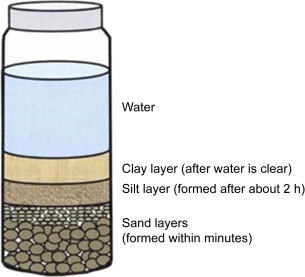
Sand (course) - 0.02 - 2.0 mm
Silt (medium) - 0.02 - 0.002 mm
Clay(fine) - Less than 0.002
Sand settles in 1 minutes
Silt layer settles in 2 hours
Clay layer settles when the water clears
ribbon
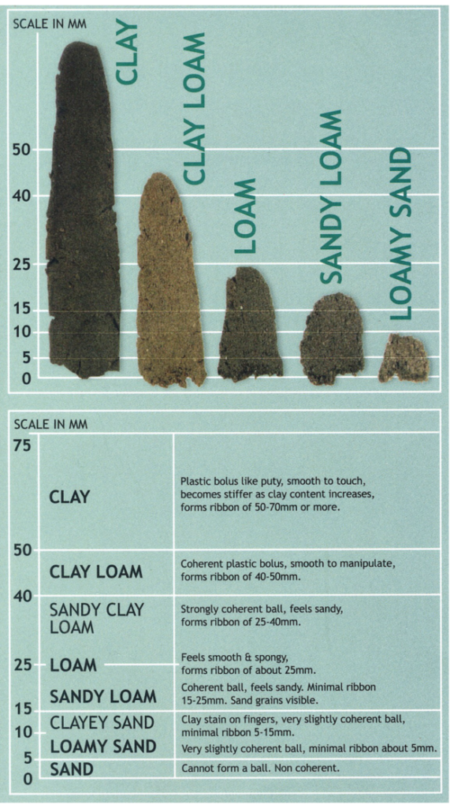
test
The assessment will include testing different soils using ribbon testing and the triangle graph below to determine what soil they are
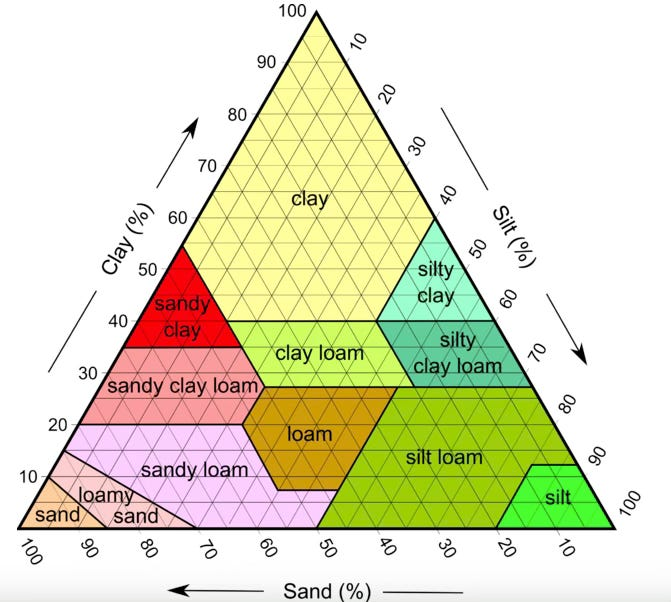
Example
60% sand - if you don't have all
20% silt figures as long as it
20% clay equals to 100%
Match all the percentages in the triangle and it will show what type of soil it is
boundaries
Legal boundaries
Definition
Lists of laws, regulations and limitations that protect and restrict how land is used for farming. It can be physical boundaries or environmental regulations, zoning laws or water rights
Examples
Property ownership titles
Government zoning
Property lines
Purpose
Clearly define the extent of farming property
Establish legal ownership of land
Prevent arguments of disputes with neighbours
Physical boundaries
Definition
Tangible structures or features that mark edges of farms or places where restricted areas end or start. It can include natural boundaries and artificial boundaries
Examples
Natural - rivers, hills, forests
Artificial - barbed wire fences, walls, shed, markings
Purpose
Contain livestock
Prevent unauthorised access
Limit what land is owned by the farmer
Functional boundaries
Definition
Boundaries in a farm to separate different operational areas or separate resources
Examples
Paddock fencing through farm
Rotational grazing
Irrigation ditches
Purpose
Optimize resources and farm operations
Separate grazing areas, cropping fields or conservation zones
Environmental boundaries
Definition
Areas set aside to protect natural ecosystems and ensure sustainable farming practices
Examples
Purpose
Contain livestock
Prevent unauthorised access
Limit what land is owned by the farmer
Zone | Main features | Common agriculture |
|---|---|---|
🌧️ Coastal Zone | High rainfall, mild temperatures, fertile areas | Dairy, vegetables, fruit, sugarcane |
🌱 Tablelands | Cooler temperatures, higher elevation, reliable rainfall | Sheep, cattle, potatoes, oats |
🌾 Slopes & Plains | Moderate rainfall, good farming soils | Wheat, canola, sheep, cattle |
☀️ Western Plains | Low rainfall, hot/dry conditions | Sheep, cattle, wheat in suitable areas |
🏜️ Far West | Very low rainfall, dry climate | Sheep and cattle; grazing requires large areas |
dairy cows
Different breeds have been selected for different production characteristics, such as milk volume, milk components, heat tolerance and adaptability.
Breed | Main characteristics | Main production |
|---|---|---|
🐄 Holstein | Large breed, very high milk volume | Milk |
🐄 Jersey | Smaller breed, high milk-fat and protein concentration | Milk, especially for butter/cheese |
🐄 Brown Swiss | Large, hardy, good milk production and milk solids | Milk, cheese |
🐄 Guernsey | Good-quality milk with relatively high milk solids | Milk |
🐄 Ayrshire | Good milk production, adaptable and hardy | Milk |
🐄 Australian Illawarra Shorthorn (AIS) | Developed in Australia; good milk production and adaptable | Milk |
🧠 The BIG 3 to remember
For a Year 11 exam, know these particularly well:
🥛 Holstein
High volume of milk
🧈 Jersey
High milk fat and protein
🐄 Brown Swiss
Milk + high milk solids + hardiness
🥛 3. What does a dairy cow produce?
The main commercial product is:
MILK
Milk can then be processed into:
🥛 Drinking milk
🧈 Butter
🧀 Cheese
🍦 Ice cream
🥣 Yoghurt
🥛 Milk powder
🥛 Cream
🐮 4. Other products from dairy cattle
Dairy farms can also produce calves.
Female calves
May be:
Raised as replacement dairy cows
Used for future milk production
Male calves
Depending on the production system, they may be:
Raised for beef
Sold to other producers
Managed according to the farm's calf-rearing system
Cows at the end of their productive life
May be sold as cull cows, contributing to the beef supply.
🧠 Remember:
MAIN OUTPUT = MILK
SECONDARY OUTPUTS = CALVES + CULL COWS
🔄 5. Dairy cow production cycle
This is very important.
1. 🐄 Heifer
A heifer is a young female cow that has not yet had a calf.
↓
2. 🧬 Breeding
The heifer is bred when she reaches appropriate reproductive maturity and management targets.
Breeding can occur through:
Natural mating
Artificial insemination (AI)
↓
3. 🤰 Pregnancy
The cow carries the developing calf during gestation.
↓
4. 🐮 Calving
The cow gives birth to a calf.
↓
5. 🥛 Lactation
The cow produces milk.
↓
6. 🥛 Milking
The cow is milked regularly, often twice a day in conventional dairy systems, although systems vary.
↓
7. 🧬 Rebreeding
The cow is bred again during the production cycle.
↓
8. 🔄 Next lactation
After another calving, the cow begins another lactation.
🧠 Easy cycle:
HEIFER → BREED → PREGNANT → CALF → MILK → REBREED → REPEAT
🥛 6. Lactation
Lactation is the period when a female animal produces milk after giving birth.
Milk production generally changes throughout the lactation.
Typical pattern:
Calving
↓
Milk production rises
↓
Peak milk production
↓
Milk production gradually decreases
↓
Dry period
↓
Next calving
↓
New lactation
🛑 7. Dry period
The dry period is when a dairy cow is not being milked before the next calving.
It allows the cow to:
Rest the udder
Prepare for the next lactation
Support the developing calf
Recover body reserves
🧠 Remember:
DRY = REST BEFORE THE NEXT LACTATION
🐄 8. Dairy cow nutrition
A dairy cow needs nutrients for:
🥛 Milk production
Milk contains:
Water
Fat
Protein
Lactose
Minerals
🐄 Maintenance
The cow needs nutrients simply to maintain normal body functions.
🤰 Pregnancy
Nutrients are required for fetal development.
🐮 Growth
Young animals require nutrients to grow.
🌱 What do dairy cows eat?
Depending on the farm, diets can include:
Forages
Pasture
Hay
Silage
Concentrates
Grains
Protein meals
Other formulated feeds
Minerals
Calcium
Phosphorus
Salt and other minerals as required
🧠 Easy:
FORAGE + CONCENTRATES + MINERALS + WATER
💧 9. Water
Water is extremely important in dairy production because milk contains a high proportion of water.
Dairy cows need access to clean, good-quality water.
Water requirements can increase with:
Hot weather
Higher milk production
Dry feed
Increased activity
🌡️ 10. Climate and dairy cows
Climate has a major impact on dairy production.
☀️ Heat stress
Hot conditions can cause cows to:
Reduce feed intake
Increase water intake
Reduce milk production
Alter behaviour
Experience reduced reproductive performance
Management strategies
Farmers can provide:
Shade
Plenty of water
Ventilation
Cooling systems
Appropriate feeding management
🧠 Exam chain:
HOT WEATHER → HEAT STRESS → LESS FEED → LOWER MILK → LOWER PRODUCTION
🦠 11. Dairy cow health
Common health issues that farmers monitor include:
Mastitis
Inflammation/infection of the mammary gland.
Can cause:
Reduced milk production
Changes in milk quality
Treatment costs
Lameness
Problems affecting the feet/legs.
Can cause:
Reduced movement
Reduced feed intake
Poor welfare
Reduced production
Metabolic problems
Can occur around calving and early lactation.
Good nutrition and monitoring are important for prevention and management.
🤖 12. Technology in dairy production
Modern dairy farms can use technology to monitor individual cows.
🏷️ Electronic identification
Identifies individual animals.
Can connect a cow with:
Production records
Health records
Breeding information
Treatment records
🥛 Milk metres
Measure milk production from individual cows.
Farmers can use this information to:
Monitor production
Identify changes
Make breeding decisions
Manage feeding
🌡️ Heat/activity sensors
Sensors can monitor cow activity and help identify when a cow may be in oestrus (heat).
This can help with:
Breeding → pregnancy → future milk production
🤖 Robotic milking
Robotic systems can:
Identify individual cows
Monitor milking
Record milk production
Allow cows to be milked according to the system's management schedule
Benefits
✅ Labour efficiency
✅ Individual animal data
✅ Monitoring
✅ Consistent milking
Disadvantages
❌ High initial cost
❌ Maintenance required
❌ Technical skills required
🧬 13. Breeding dairy cows
Farmers select animals based on desirable characteristics.
Desirable traits can include:
High milk production
High milk-fat percentage
High milk-protein percentage
Good fertility
Disease resistance
Good udder health
Good temperament
Longevity
🧬 Artificial insemination — AI
Artificial insemination involves placing semen into the female reproductive tract without natural mating.
Why use AI?
It allows farmers to use genetics from desirable bulls.
Benefits:
Access to superior genetics
Controlled breeding
Can reduce the need to keep breeding bulls
Allows selection for specific traits
🥛 14. Milk composition
Milk contains several major components:
Component | Importance |
|---|---|
Water | Main component |
Fat | Energy; important for butter and dairy products |
Protein | Nutrition; important for cheese |
Lactose | Milk sugar |
Minerals | Nutritional value |
Vitamins | Nutritional value |
🧠 Important breed comparison:
Holstein → high milk VOLUME
Jersey → higher FAT + PROTEIN concentration
So farmers may select breeds depending on their market and production goals.
💰 15. Factors affecting dairy profitability
A dairy farm needs to produce milk efficiently while controlling costs.
Income
Mainly comes from:
Milk sales
Other income can include:
Calves
Cull cows
Breeding stock
Costs
Include:
Feed
Labour
Animal health
Electricity
Water
Machinery
Repairs
Fertiliser
Infrastructure
🧠 Exam formula:
PROFIT = INCOME − COSTS
⭐ DAIRY COW PRODUCTION — EXAM MEMORY SHEET
🐄 Breeds
Holstein → 🥛 HIGH MILK VOLUME
Jersey → 🧈 HIGH FAT + PROTEIN
Brown Swiss → 🥛 MILK + MILK SOLIDS
🔄 Production cycle
HEIFER → BREED → PREGNANCY → CALF → LACTATION → MILKING → DRY PERIOD → REBREED
🌱 Nutrition
PASTURE/FORAGE + CONCENTRATES + MINERALS + WATER
🤖 Technology
EID + MILK METRES + ACTIVITY SENSORS + AI + ROBOTICS
🥛 Main outputs
MILK → MILK PRODUCTS
Secondary:
CALVES + CULL COWS
☀️ Climate
HEAT → HEAT STRESS → LOWER FEED INTAKE → LOWER MILK PRODUCTION
🔥 One exam-ready sentence
Dairy cow production involves selecting suitable breeds, managing nutrition, reproduction, health and climate, and using technology to maximise milk production, animal welfare, efficiency and profitability.
farming plants
🌾 What is wheat?
Wheat is a major cereal grain crop grown commercially for food, animal feed and industrial products.
Main products
WHEAT GRAIN → FLOUR → BREAD / PASTA / BISCUITS
It can also be used for:
Animal feed
Starch
Some industrial products
🌱 Types of wheat
There are many wheat varieties, selected for different environments and end uses.
Common categories
Type | Main use |
|---|---|
Hard wheat | Bread/flour |
Soft wheat | Biscuits, cakes and other products |
Durum wheat | Pasta |
Spring wheat | Grown where conditions suit a spring-growing season |
Winter wheat | Requires a period of cooler conditions |
🧠 Remember:
DURUM = PASTA
🌱 Wheat growth cycle
SEED → GERMINATION → SEEDLING → TILLERING → STEM ELONGATION → FLOWERING → GRAIN FILL → MATURITY → HARVEST
🌾 Tillering
The plant produces additional shoots.
🌼 Flowering
The plant flowers and fertilisation occurs.
🌾 Grain filling
The developing grain accumulates stored materials, including starch.
🚜 Harvest
The mature grain is harvested using a combine harvester.
🌦️ Climate requirements
Wheat generally performs best with:
Suitable temperatures
Adequate soil moisture
Good sunlight
Suitable growing conditions
Too little water:
Drought → reduced growth → poor grain filling → lower yield
Too much water:
Waterlogging → poor root function → reduced growth
Frost
Frost at sensitive growth stages can damage reproductive structures and reduce yield.
🌱 Soil requirements
Wheat performs best in suitable, fertile soils with:
Good structure
Adequate nutrients
Appropriate pH
Good drainage
Adequate moisture
Important nutrients
Nitrogen (N) → leaf growth + grain protein
Phosphorus (P) → root development
Potassium (K) → plant strength + water regulation
🧪 Fertiliser
Nitrogen is particularly important in wheat production.
Example:
Urea → nitrogen → vegetative growth + grain production
But excessive nitrogen can cause problems, including increased lodging risk and environmental losses.
🐛 Wheat pests
Examples include:
Aphids
Armyworms
Cutworms
Wheat curl mite
Pests can reduce:
Plant growth
Grain yield
Grain quality
🦠 Wheat diseases
Examples:
Rust diseases
Septoria
Fusarium diseases
Management can include:
Resistant varieties
Crop rotation
Seed treatment
Fungicides where appropriate
Monitoring
🌱 Weeds
Weeds compete with wheat for:
Water
Light
Nutrients
Space
Management:
Herbicides
Crop rotation
Cultivation where appropriate
Competitive crop establishment
🚜 Technology
Modern wheat production can use:
GPS
Autosteer
Drones
Satellite imagery
Yield monitors
Variable-rate fertiliser
Soil sensors
🧠 Example:
GPS → accurate sowing → less overlap → reduced seed/input waste
🚜 Harvesting
A combine harvester performs several operations.
It:
Cuts the crop
Separates grain
Removes much of the chaff/straw
Collects the grain
🌾 WHEAT — MEMORY
PRODUCT = GRAIN
DURUM = PASTA
N = GROWTH + PROTEIN
P = ROOTS
WEEDS = COMPETITION
COMBINE = HARVEST
🌿 LUCERNE PRODUCTION
🌿 What is lucerne?
Lucerne, also known as alfalfa, is a perennial legume forage crop.
It is mainly grown as high-quality animal feed.
Main products:
LUCERNE → HAY / SILAGE / PASTURE → ANIMAL FEED
It is particularly valuable because it is relatively high in:
Protein
Digestible nutrients
Minerals
🌱 Why is lucerne important?
Lucerne is a legume.
Legumes have a relationship with Rhizobium bacteria in root nodules.
These bacteria help with nitrogen fixation.
🧠 Easy:
LUCERNE + RHIZOBIUM → NITROGEN FIXATION
This can contribute to nitrogen availability within the farming system.
🌱 Lucerne growth
SEED → GERMINATION → SEEDLING → VEGETATIVE GROWTH → FLOWERING → CUTTING → REGROWTH
Unlike wheat, lucerne can be harvested multiple times because it is a perennial crop.
🌦️ Climate
Lucerne generally performs best with:
Warm conditions
Adequate water
Good sunlight
Well-drained soil
It does not tolerate waterlogging well.
Waterlogging:
Poor drainage → root problems → reduced growth
🌱 Soil
Lucerne generally prefers:
Well-drained soil
Suitable pH
Good fertility
Adequate phosphorus
Adequate potassium
Appropriate micronutrients
Soil pH is particularly important because lucerne generally performs best in near-neutral soils.
🐄 Uses
Lucerne can be:
🌱 Grazed
Animals eat it directly in the paddock.
🌾 Hay
Lucerne is cut, dried and stored.
🥬 Silage
Lucerne is harvested and preserved by fermentation under controlled conditions.
🐄 Animal feed
It is commonly used for livestock such as:
Dairy cattle
Beef cattle
Sheep
Horses
🐛 Lucerne pests
Examples include:
Aphids
Lucerne flea
Sitona weevil
Various caterpillars
Pests can reduce:
Leaf area
Plant growth
Feed quality
Yield
🦠 Lucerne diseases
Examples include various:
Root diseases
Leaf diseases
Fungal diseases
Management includes:
Resistant varieties
Good drainage
Crop management
Monitoring
🌿 Lucerne — MEMORY
LUCERNE = LEGUME
RHIZOBIUM = NITROGEN FIXATION
MAIN PRODUCT = ANIMAL FEED
CAN BE CUT MULTIPLE TIMES
GOOD DRAINAGE = IMPORTANT
🌻 CANOLA PRODUCTION
🌻 What is canola?
Canola is an oilseed crop.
Main product:
CANOLA SEED → CANOLA OIL
The remaining meal can also be used as a protein-rich animal feed ingredient.
🌻 Canola uses
Human food
Cooking oil
Food products
Animal production
Canola meal can be used as a protein source in animal feeds.
🌱 Growth cycle
SEED → GERMINATION → ROSETTE → STEM ELONGATION → FLOWERING → POD DEVELOPMENT → SEED FILL → MATURITY → HARVEST
🌼 Flowering
Canola produces its characteristic yellow flowers.
🌱 Pods
Seeds develop inside pods.
🌦️ Climate
Canola is generally a cool-season crop.
It requires suitable:
Temperature
Rainfall
Soil moisture
Extreme heat during flowering and grain/seed filling can reduce yield.
🐛 Pests
Examples:
Aphids
Diamondback moth
Rutherglen bug
Helicoverpa
Management:
MONITOR → IDENTIFY → CONTROL
🦠 Diseases
Examples:
Blackleg
Sclerotinia
Management may include:
Crop rotation
Resistant varieties
Seed treatments
Fungicides where appropriate
🌻 Canola — MEMORY
CANOLA = OIL
SEED → OIL
MEAL → ANIMAL FEED
YELLOW FLOWERS = CANOLA
🌱 COTTON PRODUCTION
What is cotton?
Cotton is a fibre crop.
Main product:
COTTON FIBRE → TEXTILES / CLOTHING
Cotton seed is also a useful co-product and can be processed for oil and feed products.
🌱 Cotton growth
SEED → SEEDLING → VEGETATIVE GROWTH → FLOWERING → BOLL DEVELOPMENT → MATURITY → HARVEST
Boll
The boll is the fruit structure containing the cotton fibres and seeds.
💧 Water
Cotton generally requires significant water, particularly in commercial irrigated production.
Irrigation can be managed using:
Soil moisture monitoring
Weather information
Irrigation scheduling
🐛 Cotton pests
Examples include:
Helicoverpa
Aphids
Whiteflies
Australian cotton production uses integrated pest management (IPM) to manage pests.
🤖 Technology
Cotton production can use:
GPS
Precision irrigation
Sensors
Drones
Remote sensing
Mechanical harvesting
👕 Cotton — MEMORY
COTTON = FIBRE
BOLL = FIBRE + SEED
MAIN USE = TEXTILES
🌾 BARLEY PRODUCTION
Main products
Barley is grown for:
Animal feed
Malt
Food products
🧠 Remember:
BARLEY = FEED + MALT
🌱 Barley growth
Similar to wheat:
SEED → GERMINATION → TILLERING → FLOWERING → GRAIN FILL → MATURITY → HARVEST
🐛 Problems
Can be affected by:
Weeds
Aphids
Armyworms
Fungal diseases
Nutrient deficiencies
Drought
🚜 Technology
Uses similar technology to wheat:
GPS
Yield monitors
Variable-rate application
Drones
Precision seeding
🧠 QUICK COMPARISON
Crop | Main product | Main use | Key thing to remember |
|---|---|---|---|
🌾 Wheat | Grain | Flour, food, feed | Durum = pasta |
🌿 Lucerne | Forage/hay | Animal feed | Legume + nitrogen fixation |
🌻 Canola | Seed | Oil | Oilseed |
👕 Cotton | Fibre | Textiles | Boll = fibre |
🌾 Barley | Grain | Feed + malt | Malt |
🔥 THE 5 TO MEMORISE
🌾 WHEAT
Grain → flour/food
🌿 LUCERNE
Legume → animal feed → nitrogen fixation
🌻 CANOLA
Seed → oil
👕 COTTON
Fibre → textiles
🌾 BARLEY
Grain → animal feed + malt
🧠 Overall plant production cycle:
SELECT VARIETY → PREPARE SOIL → SOW → GERMINATE → GROW → MONITOR → MANAGE PESTS/DISEASE → HARVEST → PROCESS → MARKET