Organisms and their Environment (4.1-4.9)
**^^Ecosystem: ^^**a unit containing all of the organisms and their environment, interacting together, in a given area
- Food Chain - shows the transfer of energy from one organism to the next, beginning with a producer
- Food Web - A network of interconnected food chains
- Producer - An organism that makes its own organic nutrients, usually from sunlight via photosynthesis
- Consumer - An organism that gains energy by feeding on other organisms. They can be further classified into primary, secondary, tertiary consumers
- Herbivores - Animals that gain energy by eating plants
- Carnivores - Animals that gain energy by eating other consumers
- Decomposers - Organisms that gain energy by breaking down dead, or organic waste material
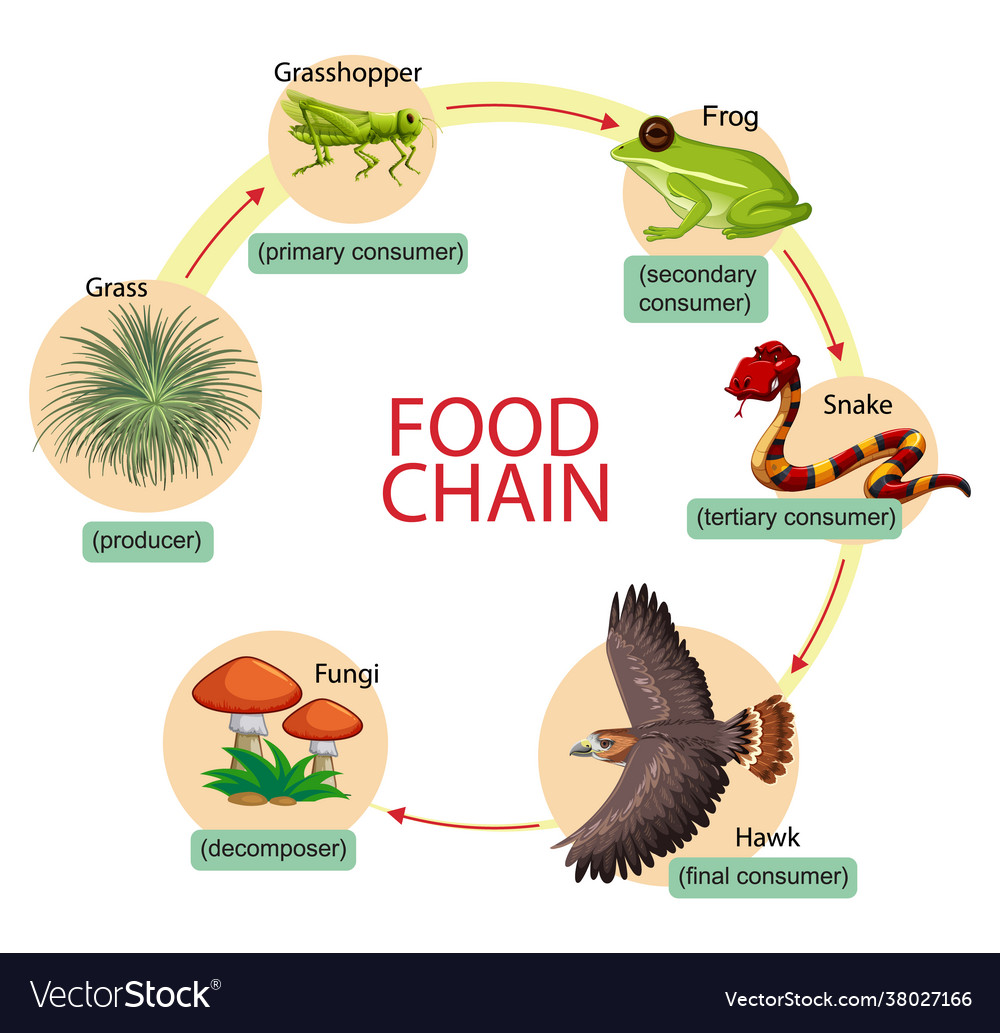
- Light energy from the sun is the source of all energy
- The arrows in a food chain show the transfer of energy from one trophic level to the next
- Energy is transferred from one organism to another by ingestion (eating)
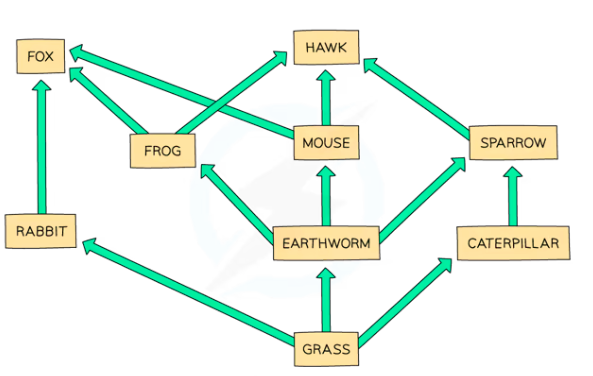
Shows interdependence - how the change in one population can affect others within the food web \n
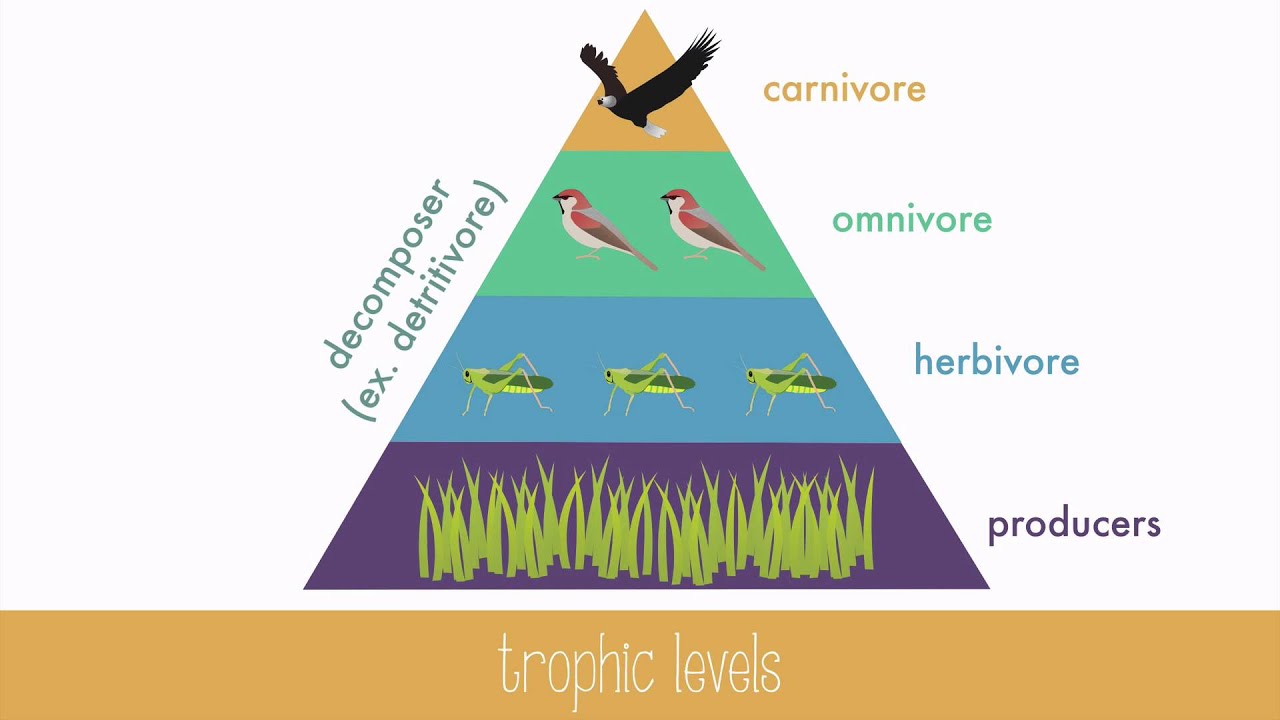
^^Trophic Levels^^
Trophic Level: the position of an organism in a food chain, food web, pyramid of numbers, or the pyramid of biomass
^^Primary producers → Primary consumers → Secondary consumers → Tertiary consumers^^
Energy transfer
^^At each level, 90% of the original energy is lost^^
- Respiration – Energy is used to respire
- Movement – Energy is used for movement
- Maintenance of body temperature – Energy is used in homeostasis
- Indigestable material within an organism – Some parts of eaten marterial cannot be digested or used by the consumer
^^→The higher the trophic level, the smaller the amount of energy transferred^^
Pyrimads
^^Food Pyramids^^: graphical representations that show feeding relationships of organisms at each trophic level
Pyramid of Number - A pyramid of numbers shows ^^how many organisms^^ we are talking about at each level of a food chain.
→The width of the box shows the number of organisms at that trophic level
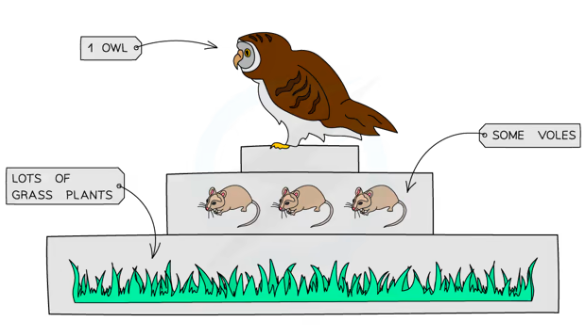
Could also be irregulary shaped
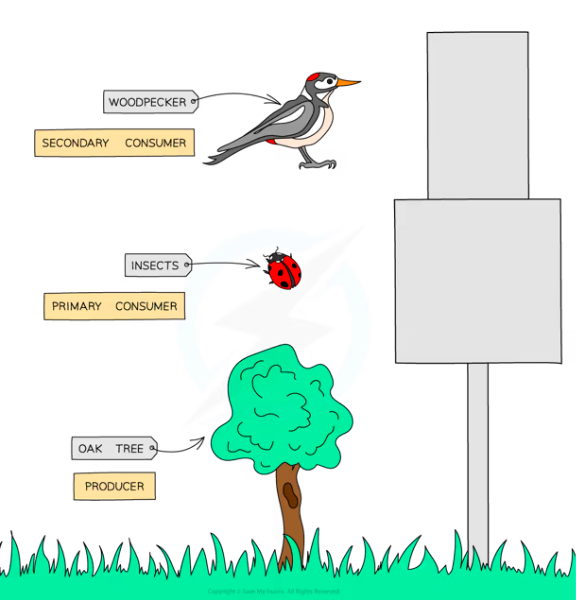
Pyramid of Biomass - shows how much dry mass the organisms have at each trophic level
→Always pyramid shaped
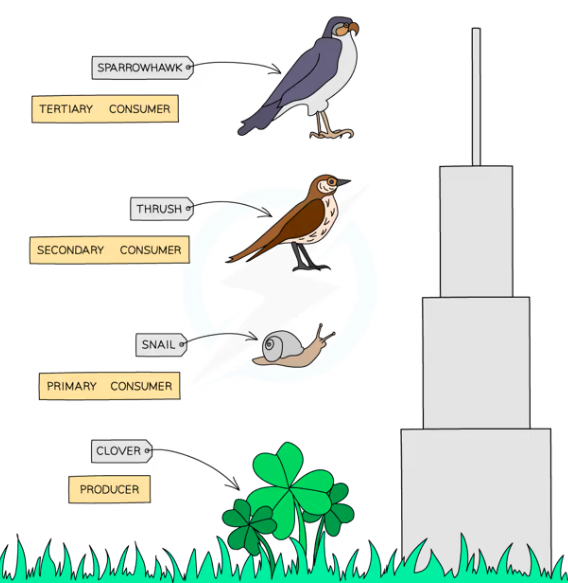
Nutrient Cycles
^^Nitrogen Cycle^^
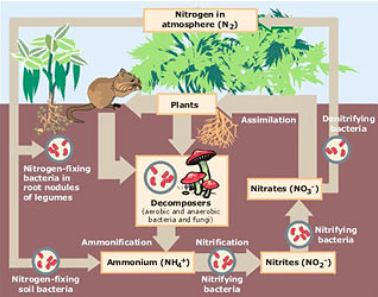
- Nitrogen-fixation: Legume plants contain nitrogen-fixing bacteria. These bacteria live in swellings in the plant roots called nodules. Nitrogen-fixing bacteria convert nitrogen gas from air into a form that plants can use to make proteins
- Production of nitrogenous waste products: Animals cannot store excess protein in their bodies. They break it down and turn it into waste products and excrete them from their bodies.
- Decomposition: Decomposers break down animal and plant proteins and nitrogenous waste products to into ammonium
- Nitrification: nitrifying bacteria convert ammonium into nitrates in order to obtain energy.
- Uptake of nitrates: Plants absorb nitrates from the soil into their roots and use the nitrates to produce their proteins.
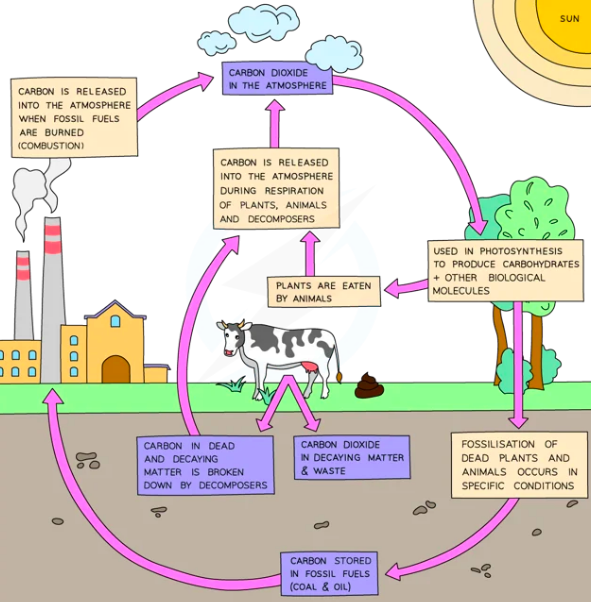
^^Carbon Cycle^^
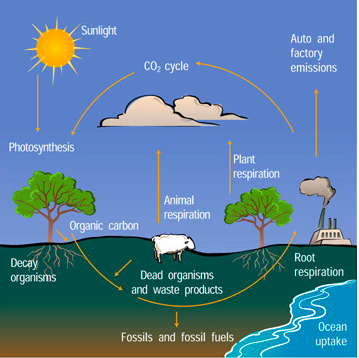
^^Water Cycle:^^
Population
Population: All the members of a single species that live in a habitat
Community: A combination of all populations of different species in an ecosystem
Ecosystem: A unit containing the community of organisms and their environment, interacting together
^^Factors Affection population size:^^
- Food supply
- Predation
- Disease
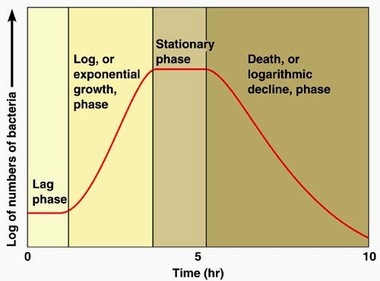
- Lag phase
The population growth begins slowly from a few individuals
- Log phase
Exponential growth due to ideal conditions and maximum growth rate is achieved
- Stationary phase
The carrying capacity of the environment is reached
Limitation of resources such as food
- Death phase
Sudden environmental change causes an inability of the environment to support the population