IB biology
Unit 1: A: Unity and diversity
Molecules
A.1.1 Water
A1.1.1 Water as the medium for life
Life needs chemical reactions to take place to gain energy, grow, and get rid of waste.
Water is a liquid medium that allows the chemistry of life to take place.
The first cells on the planet probably originated in water (hydrothermal vents)
A1.1.2 Hydrogen bonds as a consequence of the polar covalent bonds within water molecules.
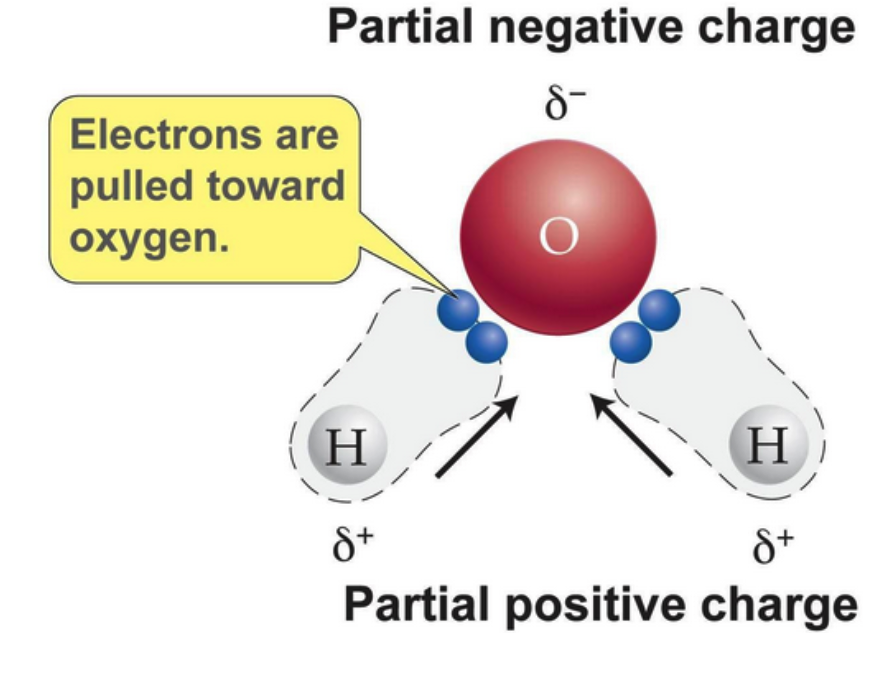
Water (H2O) is made up of two hydrogen atoms covalently bound to an oxygen atom
While this bonding involves the sharing of electrons, they are not shared equally
The number of protons in each atom is different; oxygen atoms have 8, whilst hydrogen atoms have just 1
Having more protons, the oxygen atoms attract the electrons more strongly
Thus, the oxygen atom becomes slightly negative and the hydrogen atoms become slightly positive (i.e., the oxygen has a higher electronegativity)
Covalently bonded molecules that have a slight potential charge are said to be polar
A1.1.3 Cohesion of water molecules due to hydrogen bonding and consequences for organisms.
Cohesion:
This property occurs as a result of the polarity of a water molecule and its ability to form hydrogen bonds
Although hydrogen bonds are weak, the large number of bonds present (each water molecule bonds to four others in a tetrahedral arrangement) gives cohesive forces great strength
Water molecules are strongly cohesive (they tend to stick to one another)
Water droplets form because the cohesive forces are trying to pull the water into the smallest possible volume, a sphere
A1.1.4 Adhesion of water to materials that are polar or charged and impacts for organisms
Result of the polarity of a water molecule and its ability to form hydrogen bonds
Water molecules tend to stick to other water molecules that are charged or polar for similar reasons that they stick to each other
Single hydrogen bonds are weak but a large number of bonds give adhesive forces a lot of strength
Capillary action
combination of adhesive forces that cause water to bond to a surface
Helpful in the movement of water during transpiration and when you drink using a straw
A1.1.5 Solvent properties of water linked to its role as a medium for metabolism and for transport in plants and animals
Properties of water molecules
Solvent
Water can dissolve many organic and inorganic substances that have charged or polar regions
Water is often wrongly referred to as being the universal solvent, it is good for many substances though
Metabolic reactions
Happen most readily in solutions of water - water in cells dissolves the reactants/substrates
Cells are mostly water so diffusion into and out of them happens most easily if the substance is in solution
Soluble substances such as sucrose can easily be transported around the plant in the phloem. Once dissolved in the water of the phloem, the sucrose can be moved to where it is needed by mass flow
Hydrophilic
Substances that are chemically attracted to water
All substances that dissolve in water are hydrophilic, including polar molecules like glucose, and particles with positive or negative charges like sodium and chloride ions
Substances that water adheres to are also hydrophilic
Hydrophobic
Substances that are insoluble in water
Molecules are hydrophobic if they DON’T have negative or positive charges and are nonpolar
All lipids are hydrophobic
Hydrophobic molecules dissolve in other solvents like propanone
Transport of molecules in the blood
Blood plasma consists of mainly of water, plus dissolved substances which it transports
Glucose
Polar molecule=freely soluble
Carried by the blood plasma
Amino acids
Positive and negative charges = soluble in water
Carried by the blood plasma
Oxygen
Non-polar molecule
Barely soluble
Water becomes saturated with oxygen at relatively low concentrations
As temperature increases, the solubility decreases
Hemoglobin in red blood cells carry the majority of oxygen
Fats
Insoluble
Non-polar
Carried in blood inside lipoprotein complexes
Cholesterol
Insoluble
Lipoprotein complex
Fats also need to travel in the blood but they’re nonpolar
Sodium chloride
Freely soluble in water
carried in the blood plasma
A1.1.6 Physical properties of water and the consequences for animals in aquatic habitat
Thermal
Water has a high specific heat capacity
Water needs a lot of heat to warm up and cools down slowly because it can store a lot of energy.
Water has a high boiling point and latent heat of vaporization
It takes a lot of heat to boil and turn into steam
Latent heat is the extra energy needed to change from a liquid to a gas without changing its temperature
Water has a high heat of fusion
It takes a lot of heat to melt ice into water
Water as a coolant
High temperatures damage tissues and denature proteins
enzymes don’t work
It takes a lot of energy for water to change temperature
Heats and cools more slowly than air or land
Useful for animals in hot climates who can use water to cool off
When water evaporates it removes a lot of energy from the system
Cooling sensation
Helps aquatic animals remain at fairly constant temperatures in hot weather
Physical states of water
Water is less dense as a solid because of hydrogen bonding
Seals
Buoyancy helps them stay afloat without using too much energy
Water has a greater thermal conductivity than air so the seal needs to insulate itself with blubber
A.1.2 Nucleic acids
A.1.2.1 DNA as the genetic material of all living organisms
Universal code
Every living thing uses DNA as the way of storing information
Some viruses use RNA or DNA but never both as their genetic material but they are not considered to be living
Acellular
Can’t do any of the life stuff without invading a cell
A.1.2.2 Components of a nucleotide
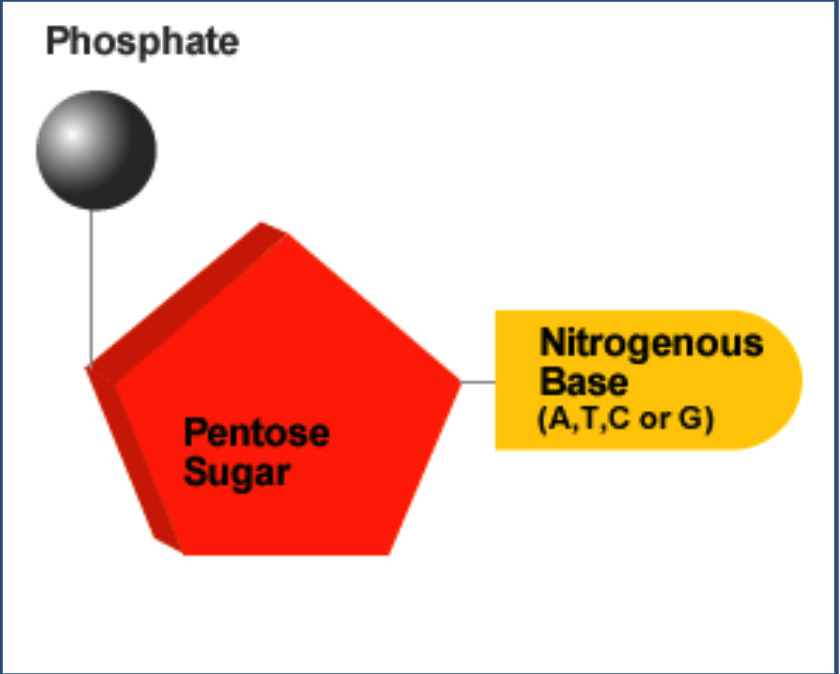
A.1.2.3 Sugar- phosphate bonding and the sugar phosphate “backbone” of DNA and RNA
DNA nucleotides are linked together by covalent bonds formed in condensation reactions into a single strand
A.1.2.4 Bases in each nucleic acid that forms the basis of a code
State the names of the four bases in DNA
Purines
Adenine
Always bonds with the T
Guanine
Pyrimidines
Thymine
Cytosine
Always bonds with G
Purines need to go with pyrimidines because they need to balance out the lengths
A.1.2.5 RNA as a polymer formed by condensation of nucleotide monomers
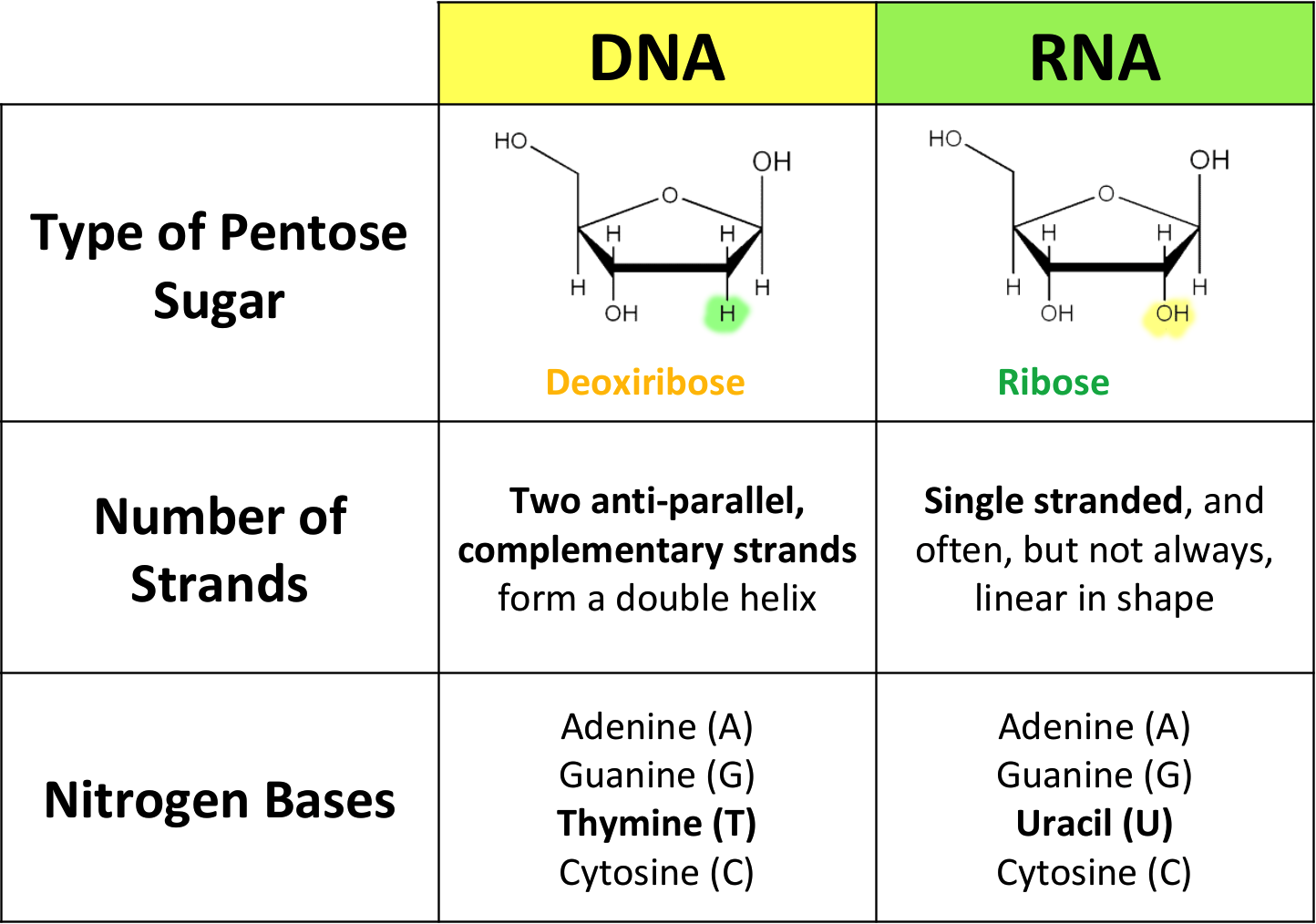
Has Uracil instead of Thymine
Function of RNA
Protein synthesis
Making a gene into a trait
It takes a copy of DNA out of the nucleus because DNA is too big to leave the nuclear pores and functions as a working copy of DNA
Working copy of the DNA
Made through transcription
RNA can go to a ribosome and create a protein
A.1.2.6 DNA as a double helix made of two antiparallel strands of nucleotides with two strands linked by hydrogen bonding between complementary base pairs
Secondary structure of DNA is the double helix
Two strands of DNA
How is the double helix structure maintained?
Hydrogen bonds hold sections together
Hydrogen bonds hold complementary base pairs together
Complementary base pairing ensures that mistakes are not made when copying or transcribing DNA
Covalent bonds
Sugar to phosphate
Sugar to nitrogenous base
Hydrogen bonds
Base pair to base pair
Each line to each line
Sections of the backbone to each other that makes it twirly
Nucleotides to nucleotides
DNA double helix is formed using complementary base pairing and hydrogen bonds
C and G have 3 hydrogen bonds
A and T have 2 hydrogen bonds
Sequence of bases on DNA make up genes
Genes are heritable factors that control specific characteristics
Nuclear DNA contains single-copy genes and regions of highly repetitive sequences
Coding DNA and non-coding DNA
A.1.2.7 Differences between DNA and RNA
A.1.2.9 Diversity of possible DNA base sequences and the limitless capacity of DNA for storing information
The human genome project which has decoded the case sequence for the whole 6 feet of the human genome requires a data warehouse to store the information electronically
Entirety of all the genes inside a living organism
Divided up the mapping of the human information code between many different universities
About 500,000 dvds worth of data in 1 gram of DNA
A.1.2.10 Conservation of the genetic code across all life forms as evidence of universal common ancestry
Strongest evidence in the theory of evolution is in the sharing of DNA across all life forms
All life shares descent from a Last Universal Common Ancestor (LUCA)
First origin of life
Evidence that life has a common originCells
Cells
Cells
A2.2 Cell structure
A2.2.1 Cells as the basic structural unit of all living organisms
Cell theory:
All living organisms are made of cells
Multi or unicellular
Basic unit of life
Come from pre-existing cells
History of Cell Theory
Robert Hooke:
Colleague of Antoine
Physics, chemistry and biology
Named the cell
Tense relationship between Hooke and Newton
Hooke accused Newton of stealing his work
Matthias Schleiden
The Cell Theory
Botanist
Discovered every plant is made of cells
Theodor Schwann
Schwann cells
Studied animal cells
Discovered all animals were made of cells
The Cell theory
Zac Jensen:
First microscope
Antoine
discovered bacteria (animalcules)
Virchow
figured out that cells came from cells
Louis Pasteur
Did an experiment to prove that cells came from cells
A2.2.3 Microscope
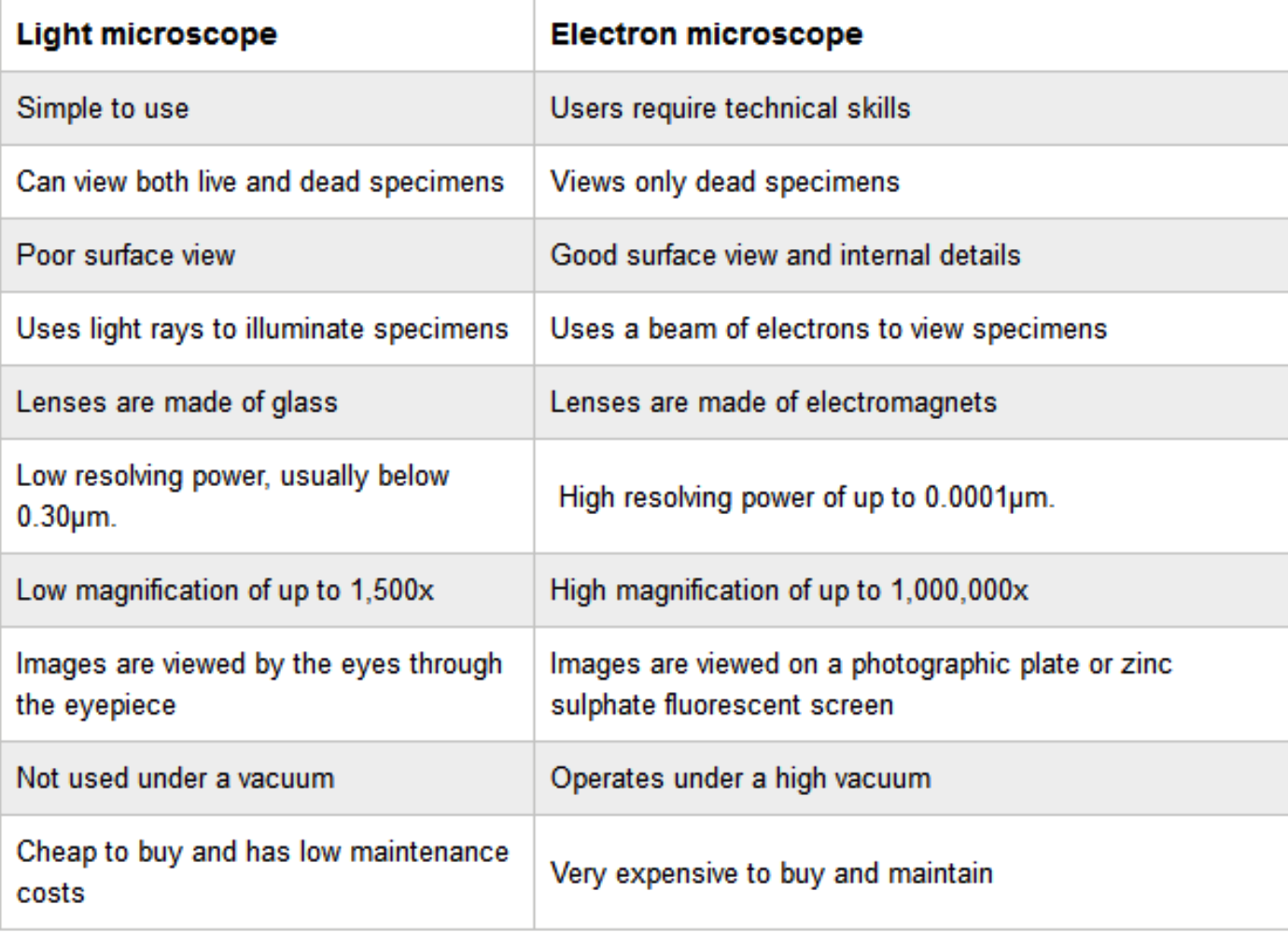
Developments in microscopy
Staining
Improve visibility
Uses dye or iodine
Immunofluorescence
made antibodies that bind to target areas and make them more visible
Freeze fracturing
Freeze the specimen using liquid nitrogen, causing it to crack, exposing the insides of the specimen. Able to reform it.
Cryogenic electron microscopy
Able to see the 3D structure of proteins
electron gun shoots electrons through the sample
high-tech camera catches the image and projects it
Specimen can be moving
Calculating magnification
Scale bar=μm, so convert ruler to μm
1mm = 1000 μm so 20mm = 20,000 μm
To calculate magnification
scale bar measurement/scale bar label = 20,000 μm/ 10μm
magnification = 2,000 times
Calculating actual size
measure the part of the image you are instructed to and divide it by the magnification
convert to the most appropriate units
measured length/magnification
ex: 80mm/90,000 = 8.9 × 10^-4mm OR 0.00089mm
converts to 0.89μm
Examples
A sperm cell has a tail 50μm long. A student draws it 75mm long. What is the magnification?
1. Convert to μm
75mm = 75,000 μm
2. Drawing length/scale bar label
= 75,000/50
= 1500x magnification
A2.2.4 Structures common to cells in all living organisms
Prokaryotes
Simplest type of cell
The oldest type of cell appeared about four billion years ago
The largest group of organisms
Unicellular organisms that are found in all environments
No nucleus
Eubacteria and Archaea
Simple cell structure without compartments
Instead of a nucleus, they have a nucleoid
Shapes
Cocci = Spherical
Bacillus = Rod shaped
Spirilla = Spiral
A2.2.5 Prokaryotic cell structure
1. Draw and Label (know at least 5)
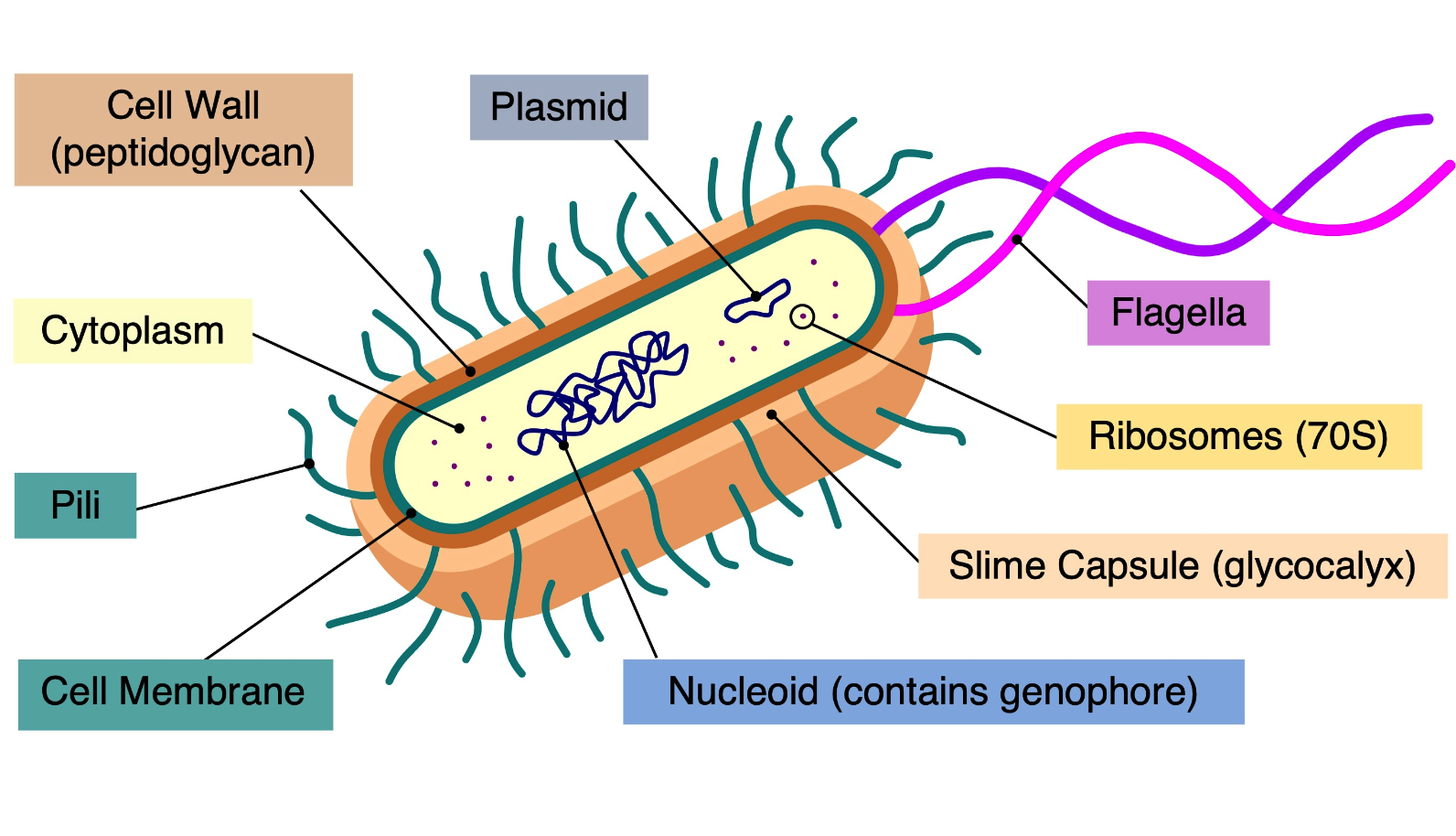
2. annotate (explain their functions)
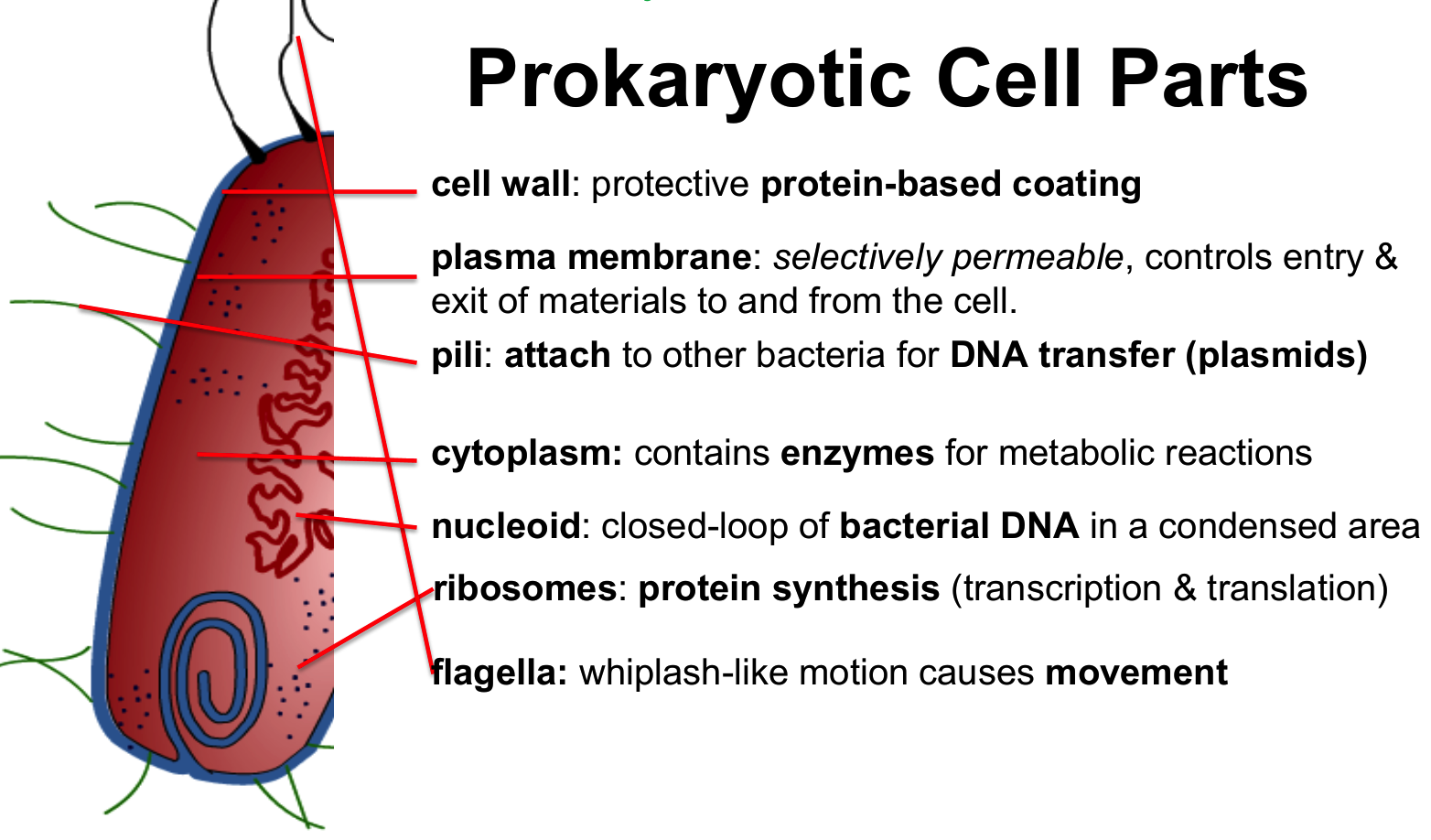
Peptidoglycan: The protein that makes up the cell wall of a prokaryotic cell
Pili: useful for conjugation (exchange of genetic material)
Plasmids: what is being exchanged through pilids
A2.2.6 Eukaryotic cells
Organisms whose cells have a nucleus
All animals, plants, fungi and many unicellular organisms are eukaryotes
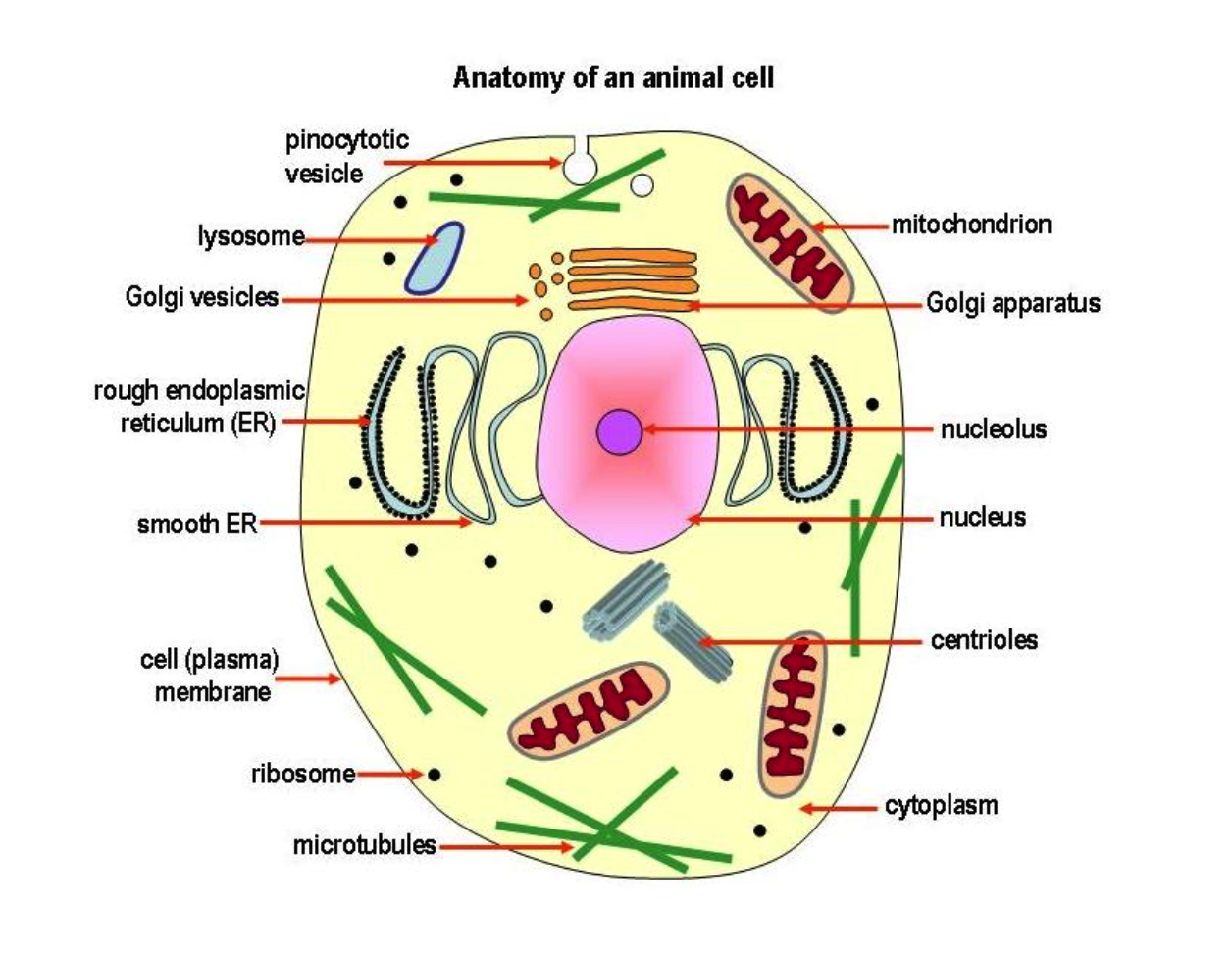
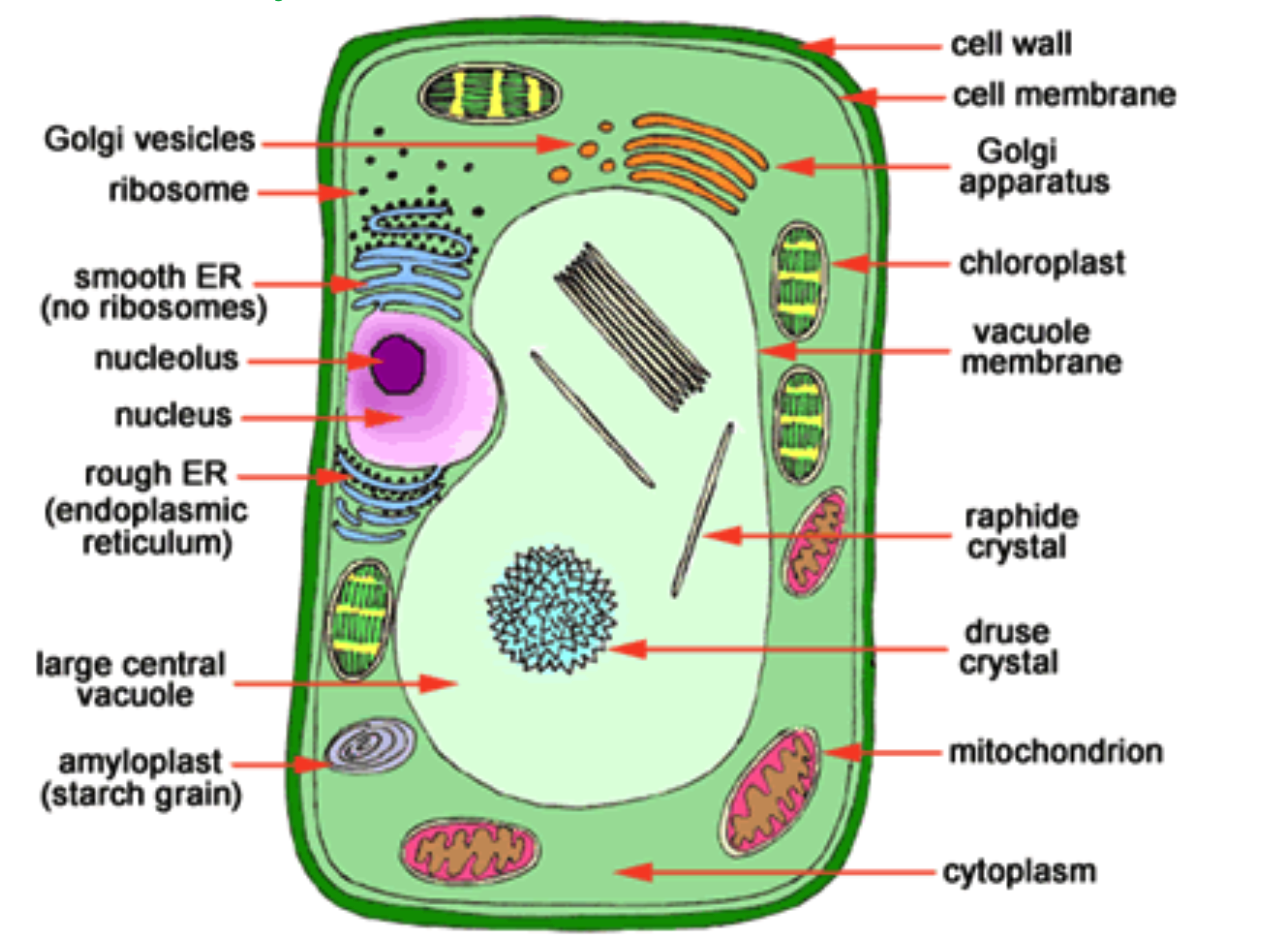
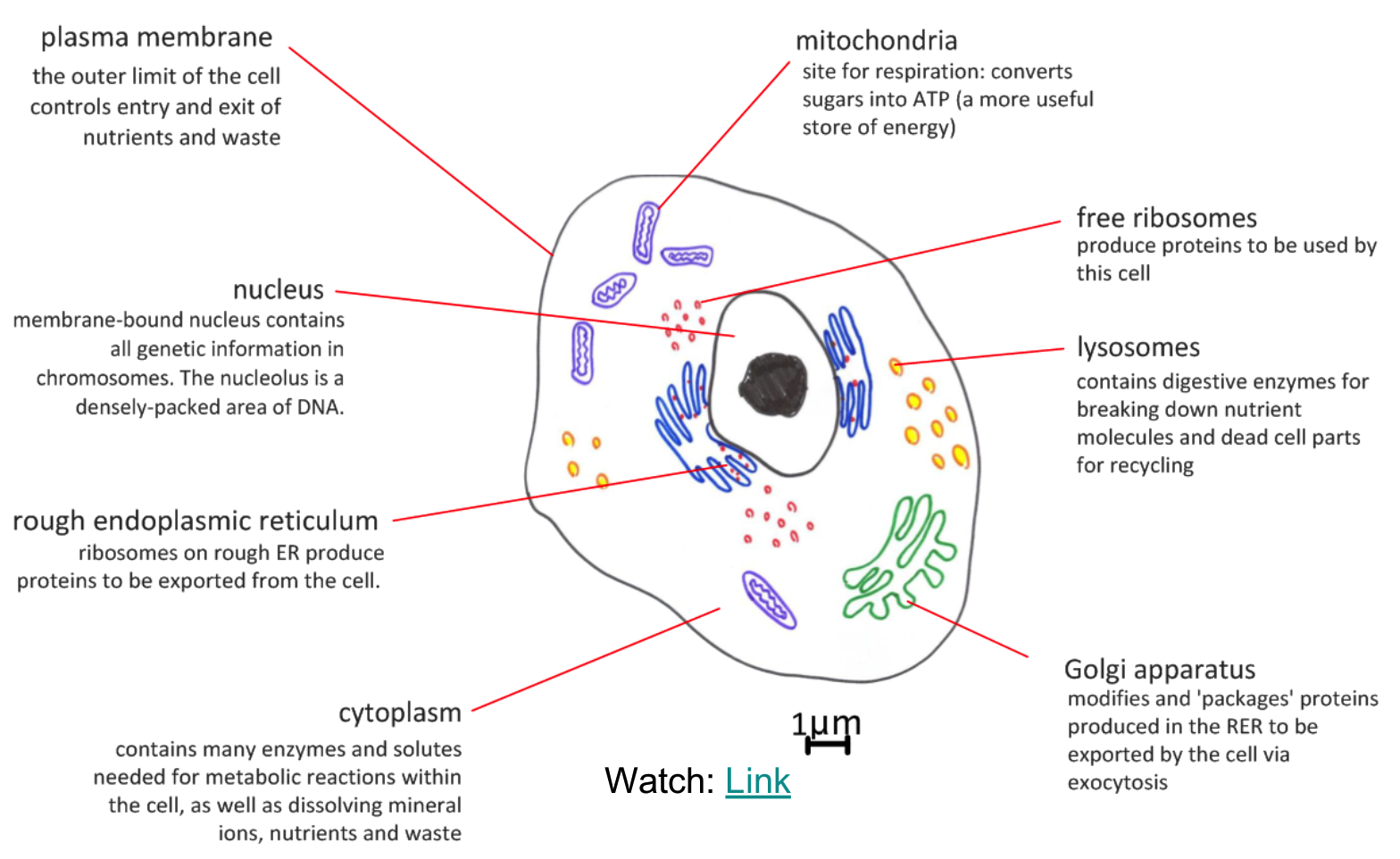
Cell Membrane
boundary of cell
gatekeeper
prevents entry or exit of molecules
phospholipid bilayer
permeable to oxygen and co2
impermeable to water and charged particle, must enter through special proteins embedded in the membrane
Nucleus
has chromosomes which make up most of the DNA in a cell
largest organelle
double layer membrane
mRNA, transcribed from DNA in nucleus exits through pores
can be multiple nuclei
Golgi apparatus
packaging and delivery of proteins
Lysosomes
simple, membrane bound organelles full of enzymes that digest engulfed bacteria and viruses and large molecules for recycling
Breaks down things that shouldn’t be in the cell
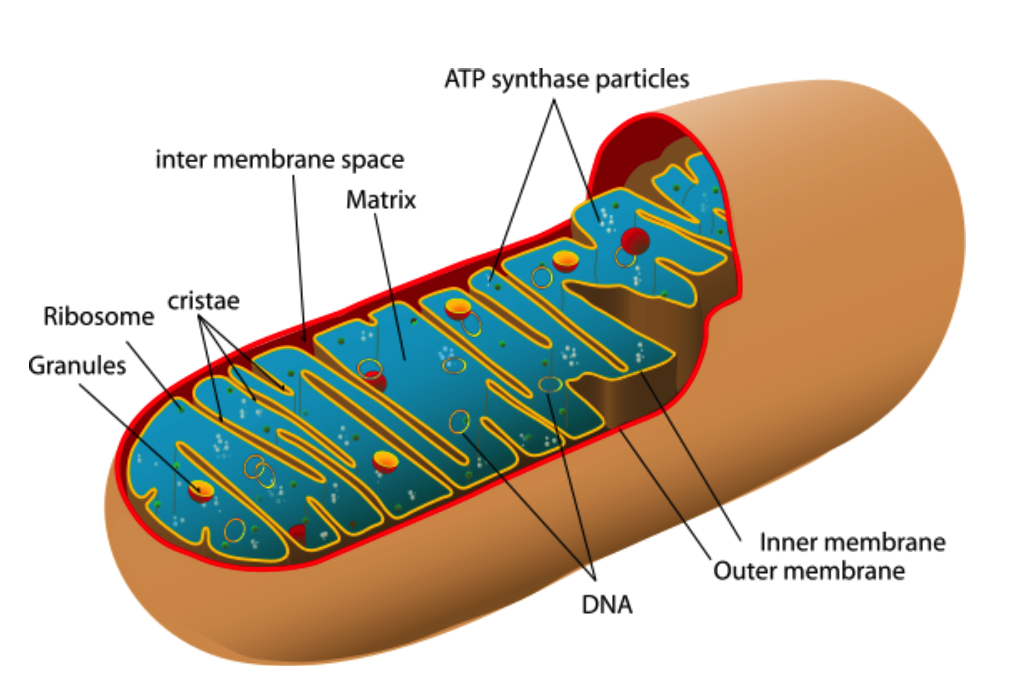
Mitochondrion:
Powerhouse of the cell
Has a smooth outer membrane and a folded inner membrane
Where aerobic respiration occurs
Converts sugars into ATP
Free ribosomes
80s sized in eukaryotes (70s size in prokaryotes)
Ribosomes in bacteria have different ribosomes
‘s’ is a unit
means bigger
Proteins synthesized for use within the cell (enzymes used in the cytoplasm)
Chloroplasts
Site of photosynthesis in plant cells
Stacks of thylakoids
exist in algae as well
Vacuoles and vesicles
Animal cells sometimes have small vacuoles (vesicles) for digestion
Unicellular organisms have contractile vacuoles for expelling water
plant cells have large vacuoles that hold water and food
vesicles are small lipid sacs used for transport
vacuoles are large
Centrioles
Bundles of microtubules found in animal cells
Pull stuff in the nucleus to the side
Help cells divide
Microtubules
Separate chromosomes in cell division and make up cilia and flagella
What centrioles are made out of
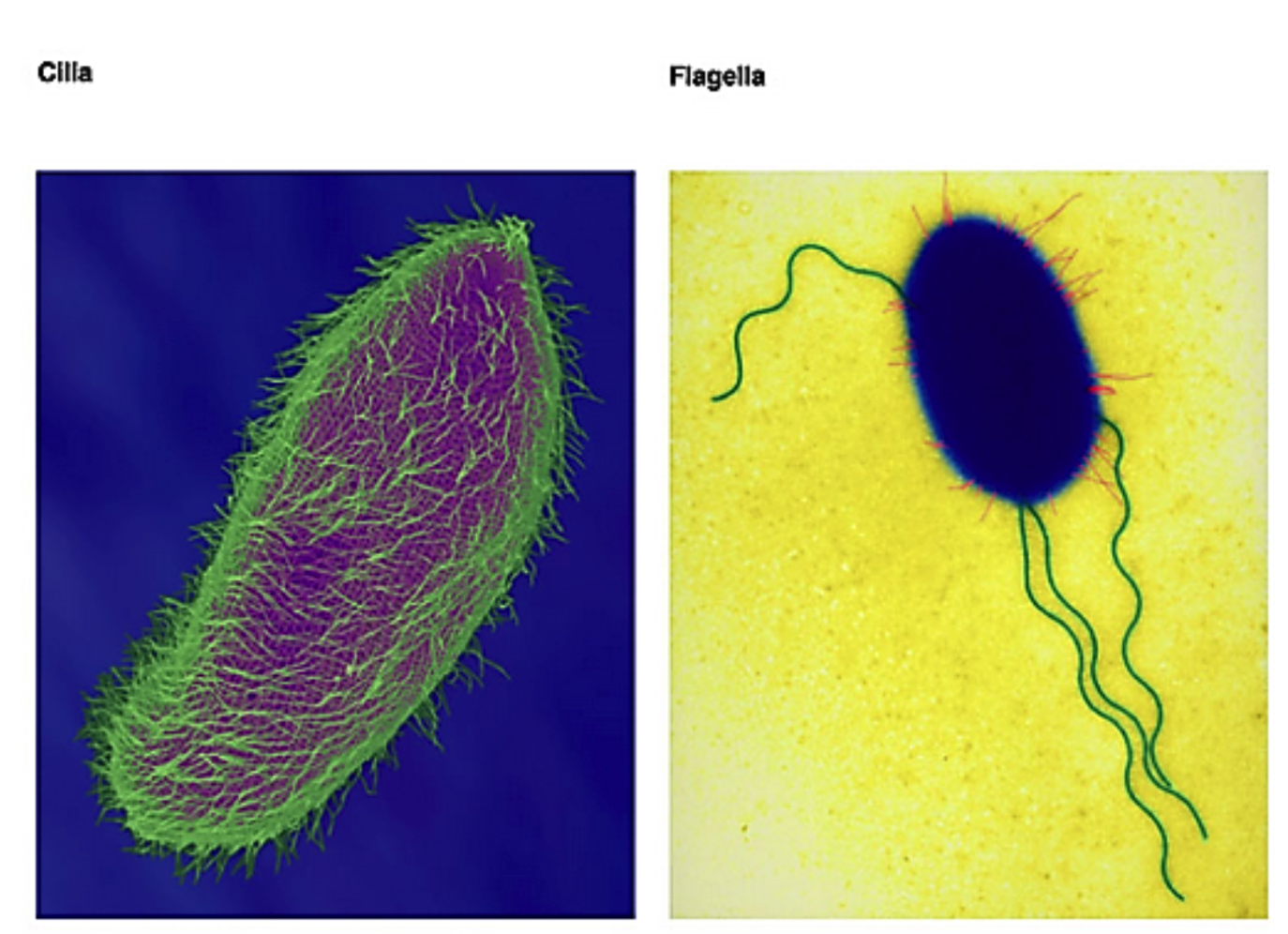
Flagella:
occur in bacteria
make bacteria move
occur in eukaryotic cells some times
Cillia:
Used for movement
only in eukaryotic
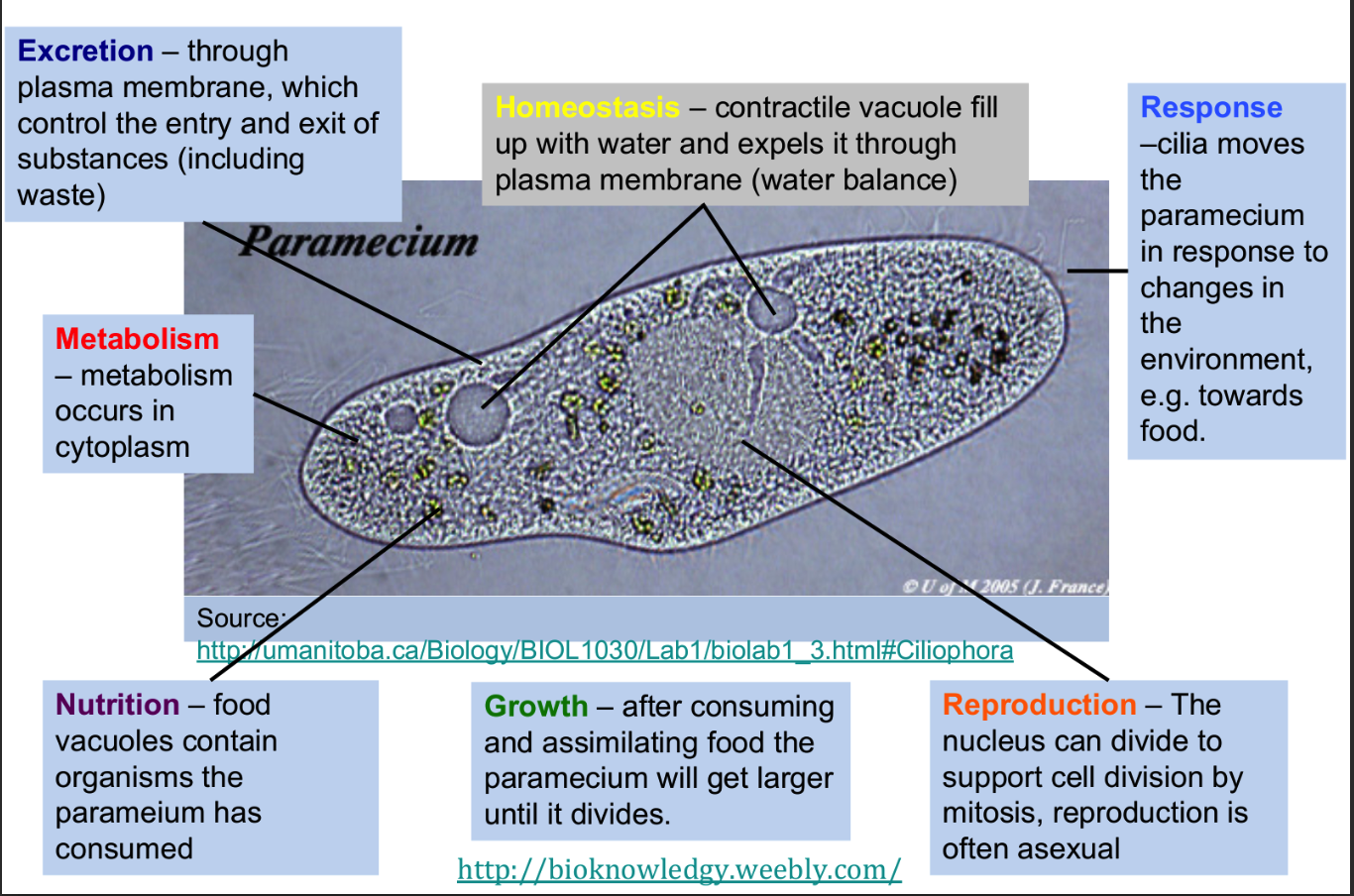
A2.2.7 Processes of life in unicellular organisms
Functions of Life
Metabolism
Reproduction
Homeostasis
Response
Excretion
Nutrition
Growth
Paramecium
Heterotroph
surrounded by cilia
take in food through specialized membranous feeding groove called a cytostome
food particles are enclosed in vesicles
solid wastes are removed through an anal pore while liquid through urine
essential gasses enter and exit the cell via diffusion
paramecia divide asexually (fission) although horizontal gene transfer can happen via conjugation (pili)
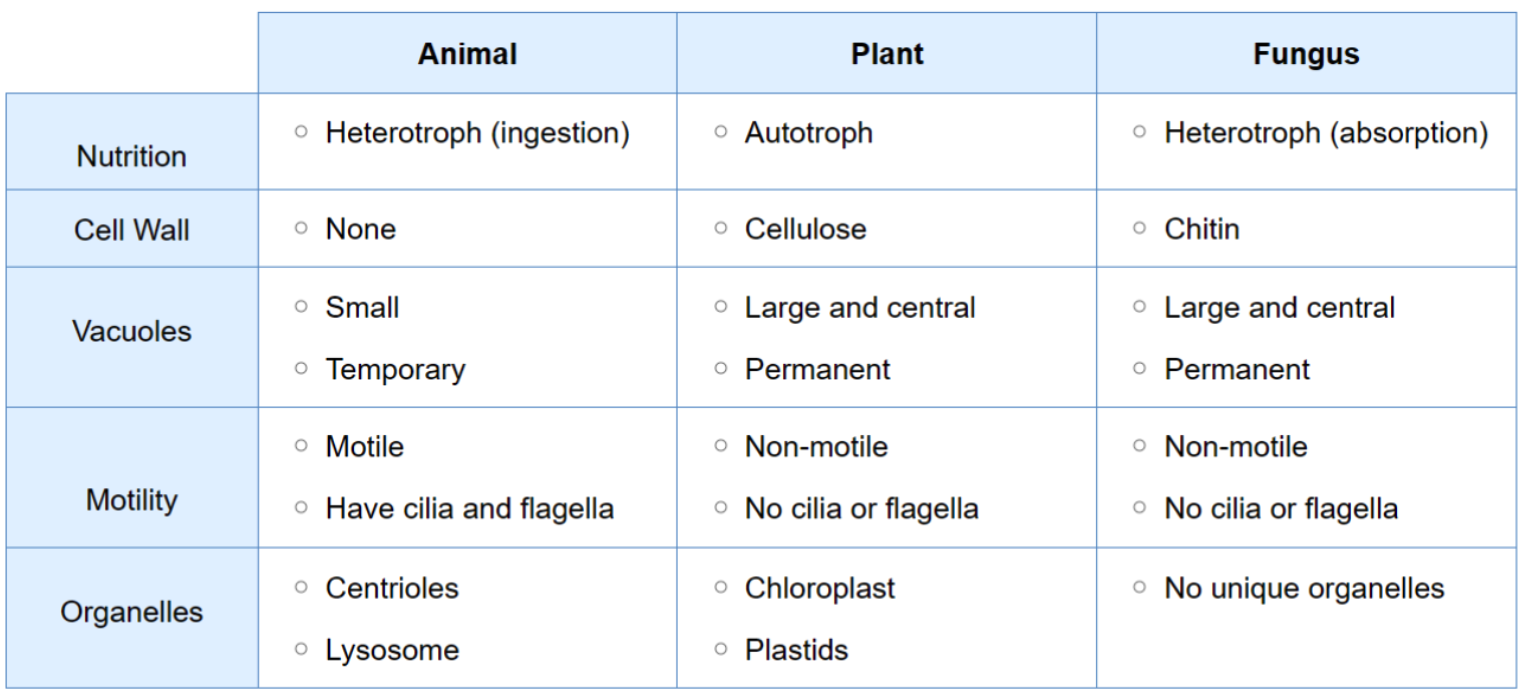
A2.2.8 Differences in eukaryotic cell structure between animals, fungi, and plants
Eukaryotes have been classified into kingdoms, based on key structural and functional differences
Animal:
no cell wall and undertake heterotrophic (ingestion) nutrition
Plant:
have a cell wall (cellulose) and undertake autotrophic nutrition (photosynthesis)
Fungi:
Have a cell wall made of chitin and undertake heterophic nutrition (absorption)
Protist:
Any eukaryotic organism that does not belong to the animal, plan, or fungal kingdoms (hetero and autotrophic)
A2.2.9 Atypical cell structure in eukaryotes
Red blood cells don’t have a nucleus
Striated muscle
Multinucleate
Composed of long muscle fibres that can measure 300mm or more and are larger than regular cells
Atypical, as each muscle fibre contains hundreds of nuclei, and each cell does not function independently
Aseptate fungi
Normal fungi have thread-like structures
does not have individual/discrete cells
Phloem
Sieve tube element
Comparison cell
Because sieve tubes do not contain a nucleus
Sieve tube elements
Found in plants and transports liquid nutrients in phloem
Lack a nucleus and have very few ribosomes
A2.2.10 Cell types and cell structures viewed in light and electron micrographs
Prokaryotic cells
single cells, sometimes arranged in chains
small size—cells usually less than 5µm
No vacuoles
Plant cells
Multicellular
larger size- cells usually larger than 5µm
Large vacuole often present
Animal cells
Multicellular
larger size- cells usually larger than 5µm
No cell wall
only small vacuoles are present
Genes
A.3.1 Diversity of organisms
A.3.1.4 Biological species concept
Species
A group of organisms that can interbreed to produce fertile offspring
If the species are not closely related it is often impossible for individuals of the different species to breed
If members of two closely related species do interbreed and produce offspring the hybrids will be sterile
Horse and donkey = mule
A.3.1.7 Karyotyping and karyograms
Chromosomes of an organism become visible when cells are dividing in metaphase
To study the chromosomes of an organism, cells are stained and placed on a microscope slide
Then they are burst to spread the chromosomes by pressing on the cover slip
Chromosomes often overlap each other but with careful searching, you can find a cell with no overlaps
Stained chromosomes can be photographed
Karyotyping
Prenatal test used to check for trisomy disorders
Extract fetal cells by amniocentesis or chorionic villus sampling
Culture cells and stimulate mitosis
Stop division in metaphase
Take a picture under the light microscope or scan with a computer
Arrange chromosomes in homologous pairs based on size, banding patterns, and centromere position
Check for gender (XX or XY) or trisomy disorders
A.3.1.4 Biological species concept
Species
A group of organisms that can interbreed to produce fertile offspring
If species are not closely related it is often impossible for individuals of the different species to breed
If members of two closely related species do interbreed and produce offspring the hybrids will be sterile (mules)
Ecosystems
Unit 2: B: Form and Function
Molecules
B.1.1 Carbohydrates and lipids
B1.1.1 Chemical properties of a carbon atom allowing for the formation of diverse compounds upon which life is based
Carbon forms the backbone of every organic molecule
Carbon atoms form covalent bonds
Strongest type of bond between atoms
Stable molecules can be formed
Carbon atoms have 4 electrons in their outer shell
Allows them to form 4 covalent bonds with 4 other different atoms
Carbohydrates
Have carbon, hydrogen and oxygen
They have a monomer (little molecules) and a polymer (a bunch of monomers chain up together that form a polymer)
Monomers are commonly ring shaped molecules
Lipids
Made up of fatty acids
Common lipids
Triglycerides
Glycerol + 3 fatty acids
Phospholipids
Phosphate + glycerol + 2 fatty acids
Steroids
4 fused hydrocarbon rings
Proteins
Contain carbon, hydrogen, oxygen, and nitrogen
Large organic compounds made of amino acids
Arranged into one or more linear chains
Structural or part of the plasma membrane
Nucleic Acids
Contain carbon, hydrogen, oxygen, nitrogen, and phosphorus
Chains of subunits called nucleotides
Base, sugar, and phosphate groups covalently bonded together
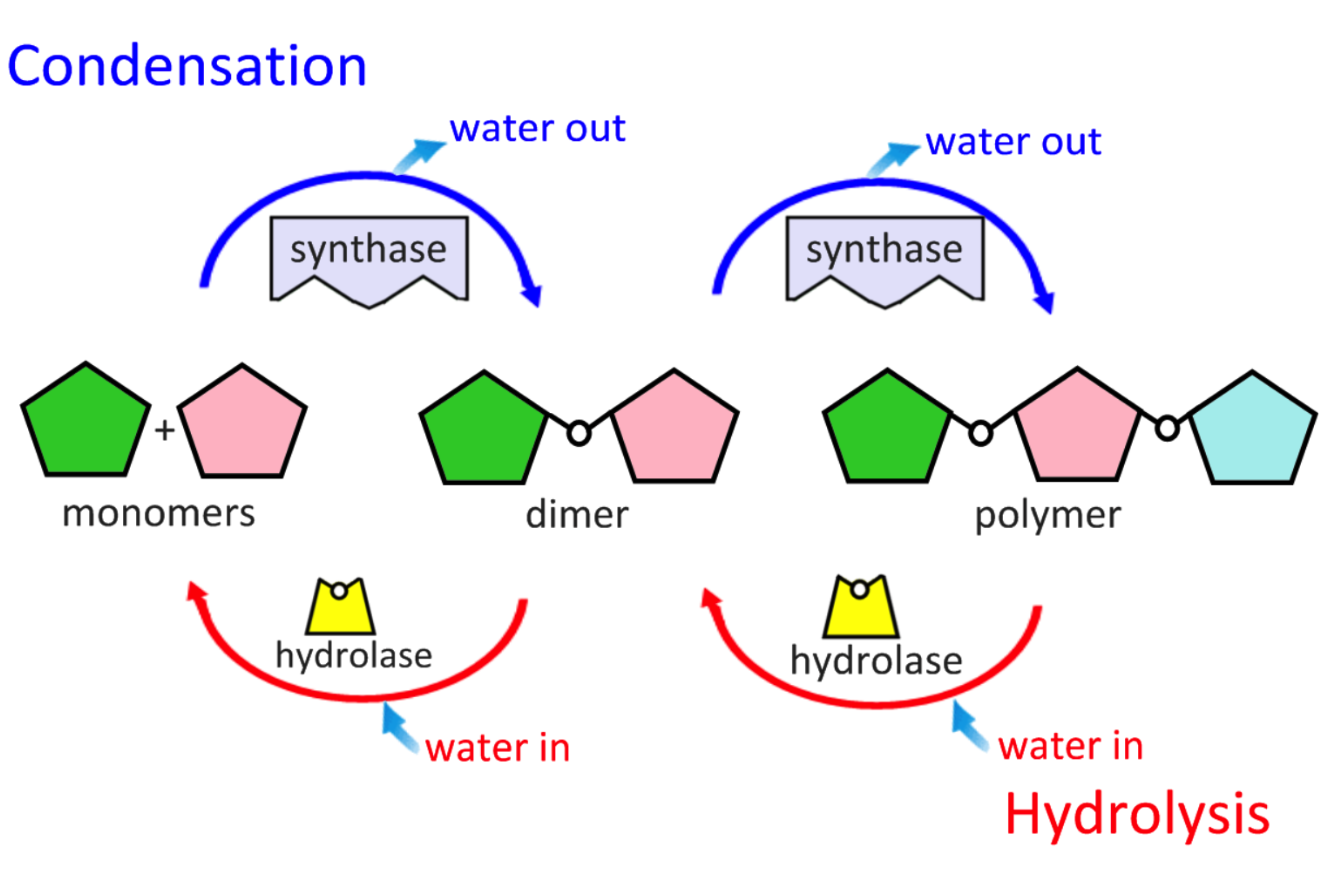
B1.1.2 Carbon production of macromolecules by condensation reactions that link monomers to form a polymer
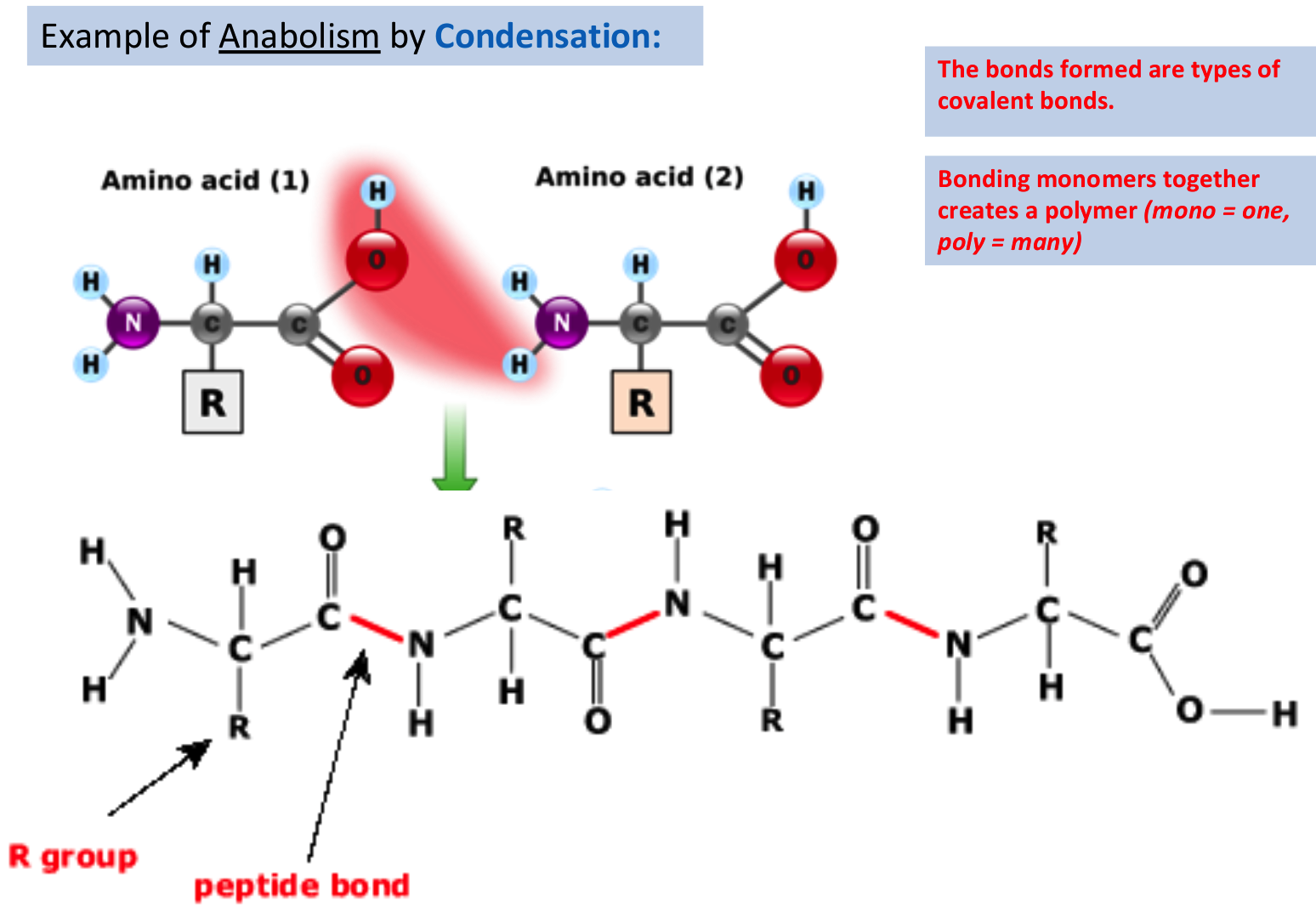
Condensation makes bonds
water releasing
Anabolic reactions are those which build molecules
Hydrolysis breaks bonds
water splitting
Catabolic reactions are those which break down molecules
Monosaccharides (sugars) are the monomers of polysaccharides (carbs)
B1.1.3 Digestion of polymers into monomers by hydrolysis reactions
B1.1.4 Form and functions of monosaccharides
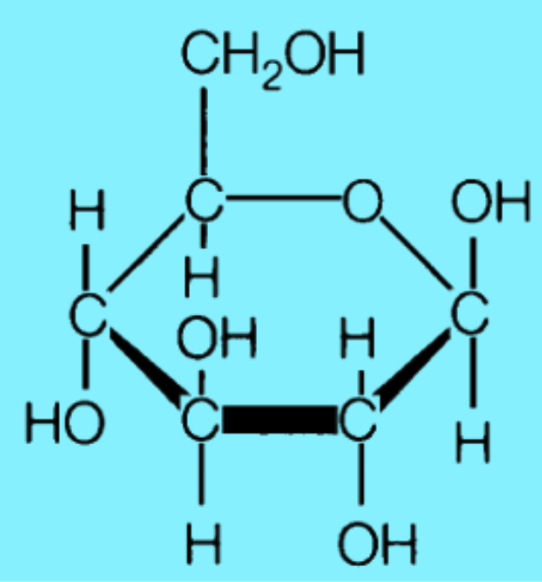
Monosaccharide 1: Glucose
Forms a hexagonal ring
Form of sugar that fuels respiration
Forms base unit for many polymers
Highly soluble in water
Monosaccharide 2: Ribose
Forms a pentagonal ring
Backbone of RNA
Deoxyribose differs as shown in the diagram and forms backbone of DNA
B1.1.5 polysaccharides as energy storage compounds
Polysaccharides
Polymers with more than two molecules
Often long and may be branched
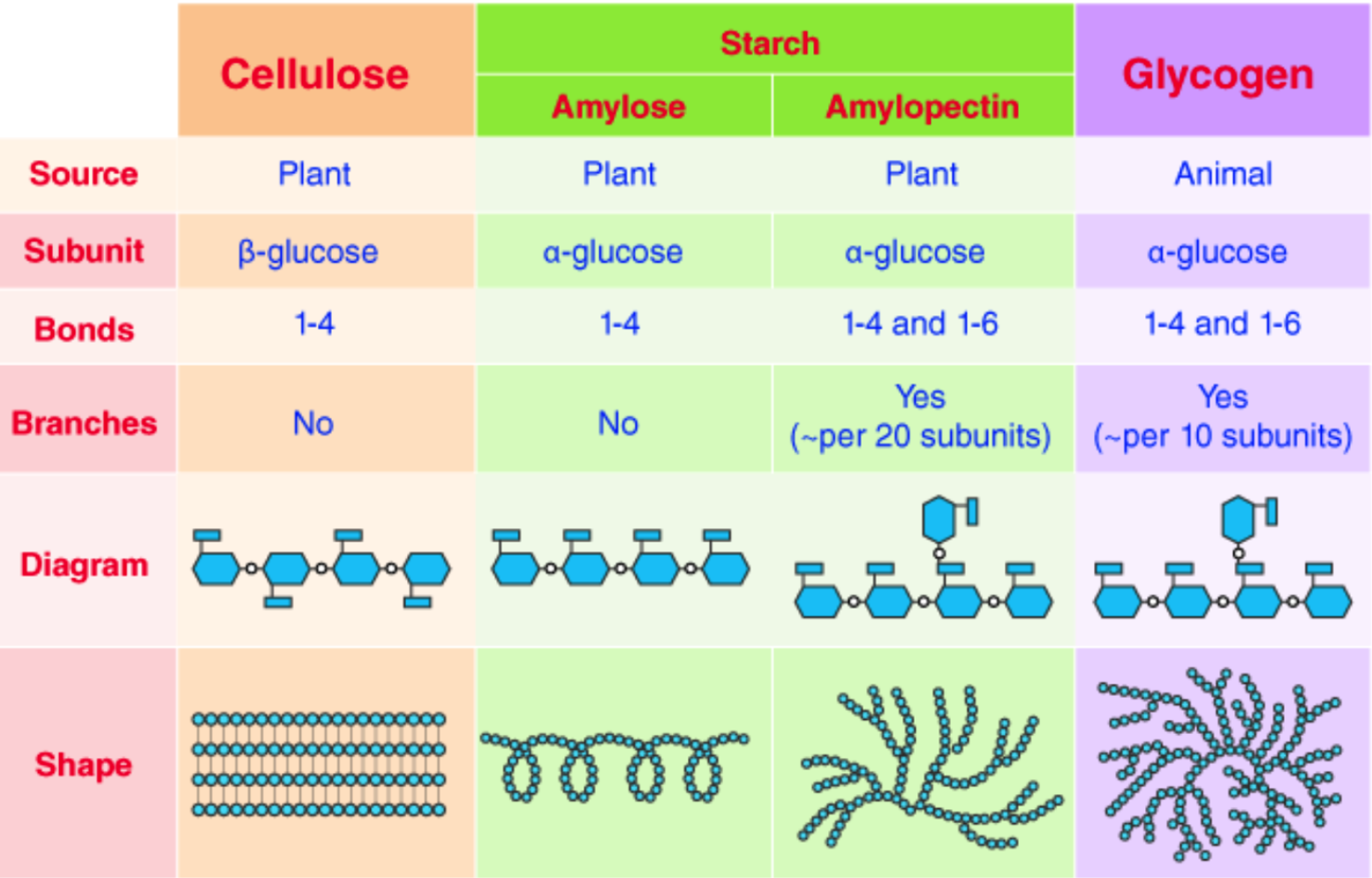
Cellulose
The tensile strength of cellulose (the basis of cell walls) prevents plant cells from bursting, even under very high (water) pressure.
Starch (amylopectin)
Contains hundreds of glucose molecules
Glycogen
Found in animals and some fungi
Stored in the liver and some muscles in humans
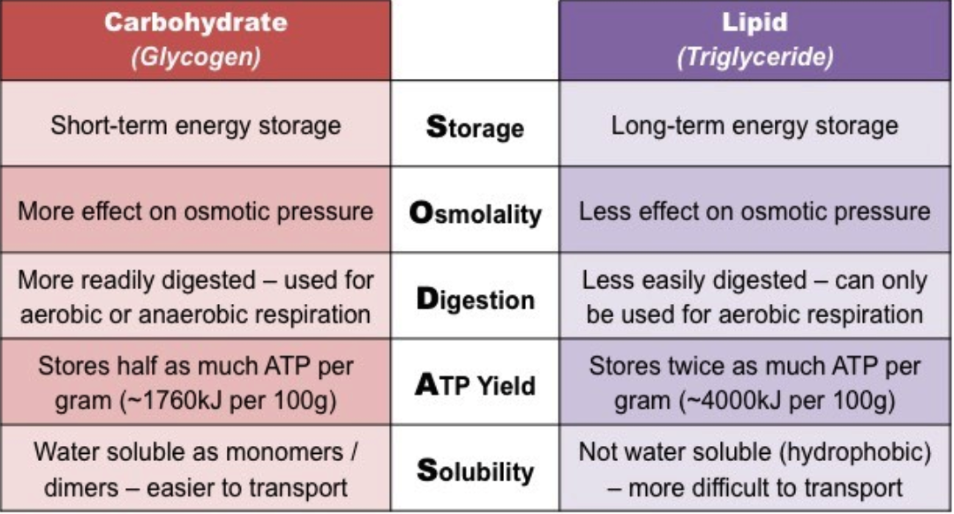
Short-term energy storage
Made up of repeating glucose subunits
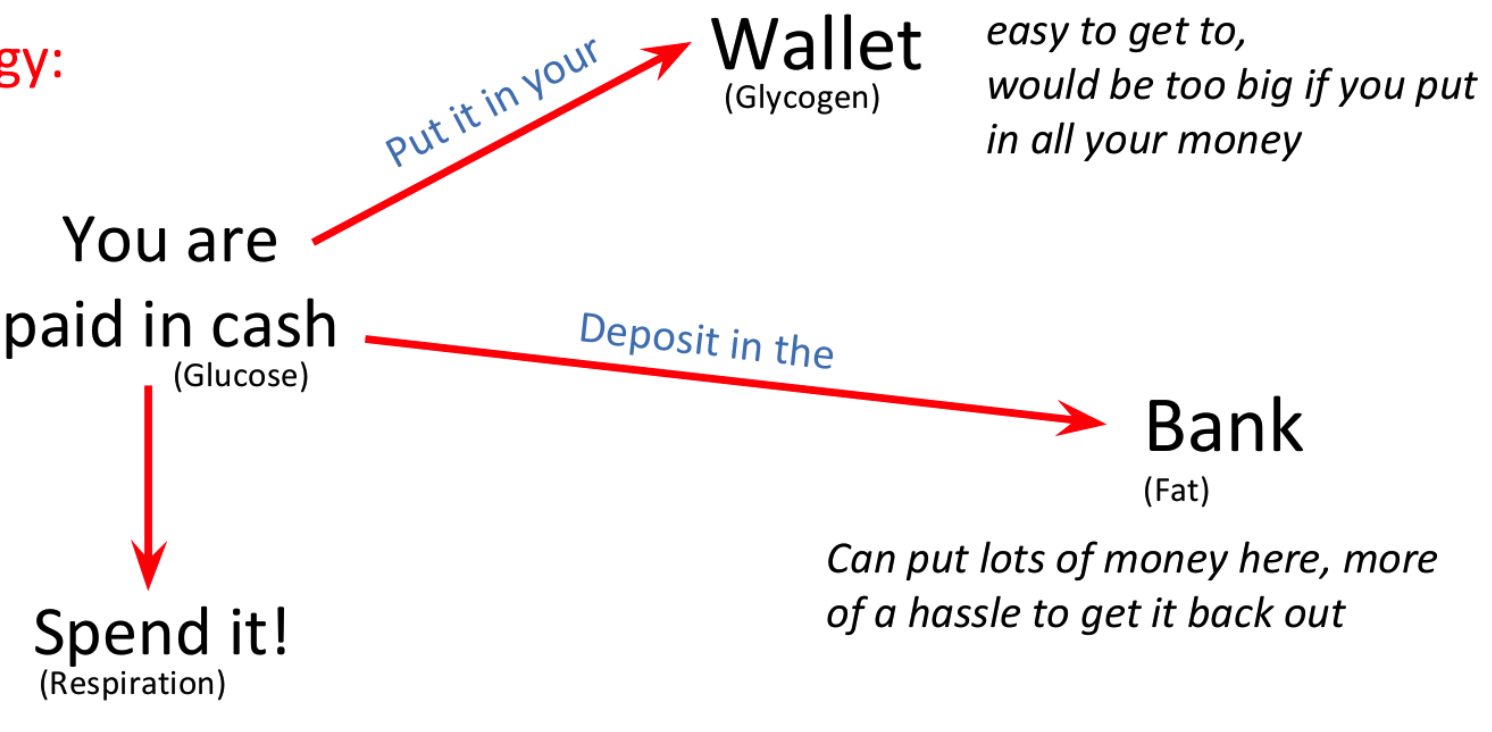
Excess glucose is converted into glycogen
Doesn’t affect the osmotic balance of cells
The way the water moves in a cell
Energy storage by lipids and carbohydrates
Why is glycogen needed at all?
Fats in adipose tissue cannot be mobilized as rapidly
Easily transported by the blood
Adipose: fat storage tissue in mammals
B1.1.6 Structure of cellulose related to its function as a structural polysaccharide in plants
Polysaccharide 1: Cellulose
Hydrogen bonds link the molecules together
Straight chain - not curved
Basis of cell walls
Very strong to keep plant cells from bursting even under very high water pressure
Polysaccharide 2: Starch
Amylose and amylopectin
Forms of starch made from repeating glucose units
Curved molecule
Only made by plant cells
Hydrophilic but too large to be soluble in water
Easy to add or remove extra glucose molecules
Short term energy storage
Polysaccharide 3: Glycogen
Polymer made from repeating glucose subunits
Made by animals and some fungi
Stored in the liver and some muscles in humans
Good for energy storage
B1.1.7 Role of glycoproteins in cell–cell recognition
Glycoprotein
Enable cells to recognize another cell as familiar or foreign
Cell-cell recognition (labeling)
Naming of the cell
Liver cells, skin cells, etc.
Carbohydrate tails
Ex. Blood antigens
A, B, O, AB
B.1.1.8 Hydrophobic properties of water
Substances that are insoluble in water
Molecules are hydrophobic if they DON’T have negative or positive charges and are NONPOLAR
All lipids are hydrophobic, including fats and oils
Hydrophobic molecules dissolve in other solvents such as propanone (acetone)
B1.1.9 Formation of triglycerides and phospholipids by condensation reaction
Triglycerides formation
Condensation reaction between glycerol and fatty acids
Glycerol + 3 fatty acids = triglyceride
Example of condensation
smaller molecules linking up to create a larger molecule
Lipids are glycerol combined with 1, 2, or 3 fatty acids
Triglycerides are lipids
B.1.1.10 Difference between saturated, monounsaturated and polyunsaturated fatty acids
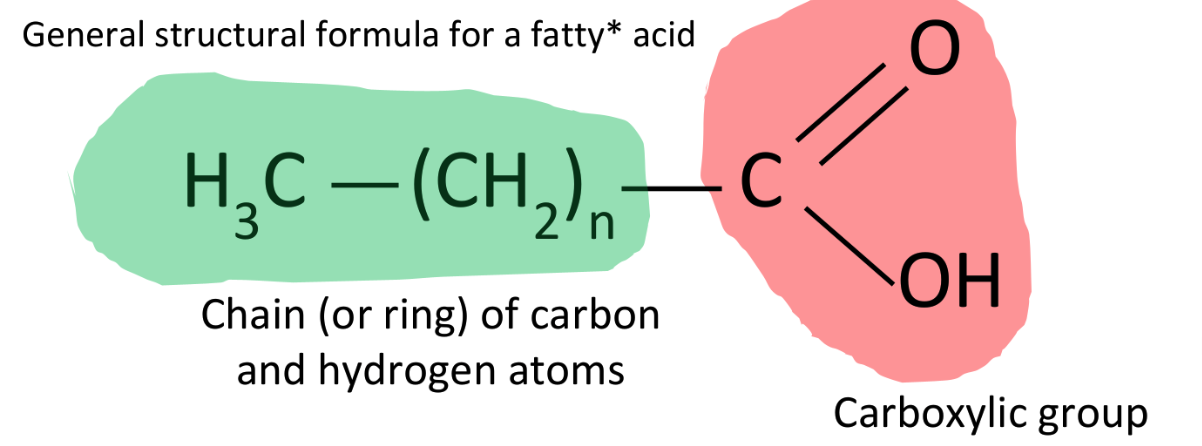

Cis-isomers
Natural
Tend to be curved because the hydrogen atoms are on the same side of the two carbon atoms
loosely packed
Liquid at room temperature
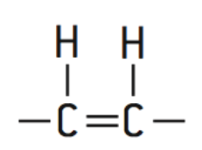
Trans-isomers
Artificial
Tightly packed
Solid at room temp
Increased chance of heart disease
Straight
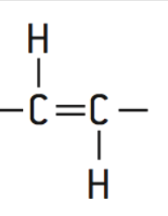
B.1.1.11 Triglycerides in adipose tissues for energy storage and thermal insulation
Functions of lipids
Structure: Phospholipids are a main component of cell membranes
Hormonal signaling: Chemical messengers, steroids are involved in hormonal signaling (estrogen, testosterone, etc)
Insulation: Fats in animals can serve as heat insulators while sphingolipids in the myelin sheath can serve as electrical insulators. Fat keeps them warm
Protection: Triglycerides form a tissue layer around many key internal organs and provide protection against physical injury. Cushioning. (The heart)
Storage of energy: Triglycerides can be used as a long-term energy storage source
B.1.1.12 Formation of phospholipid bilayers as a consequence of the hydrophobic and hydrophilic region
Cell membrane is made up of phospholipids
Phospholipids are amphipathic
Have a hydrophilic head
Have a hydrophobic tail
Phospholipid bilayer is very stable, but also flexible
They form double layers (cell membrane)
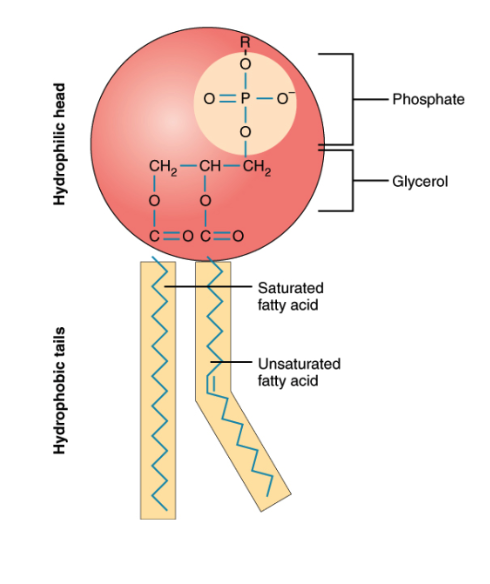
B.1.1.13 Ability of non-polar steroids to pass through the phospholipid bilayer
Hormones are chemical messengers that produce a response in the target cells of an organism
Lipid based hormones are called steroids
Steroids are nonpolar so they can pass freely through the cell membrane
Ex: Testosterone
B.1.2 Proteins
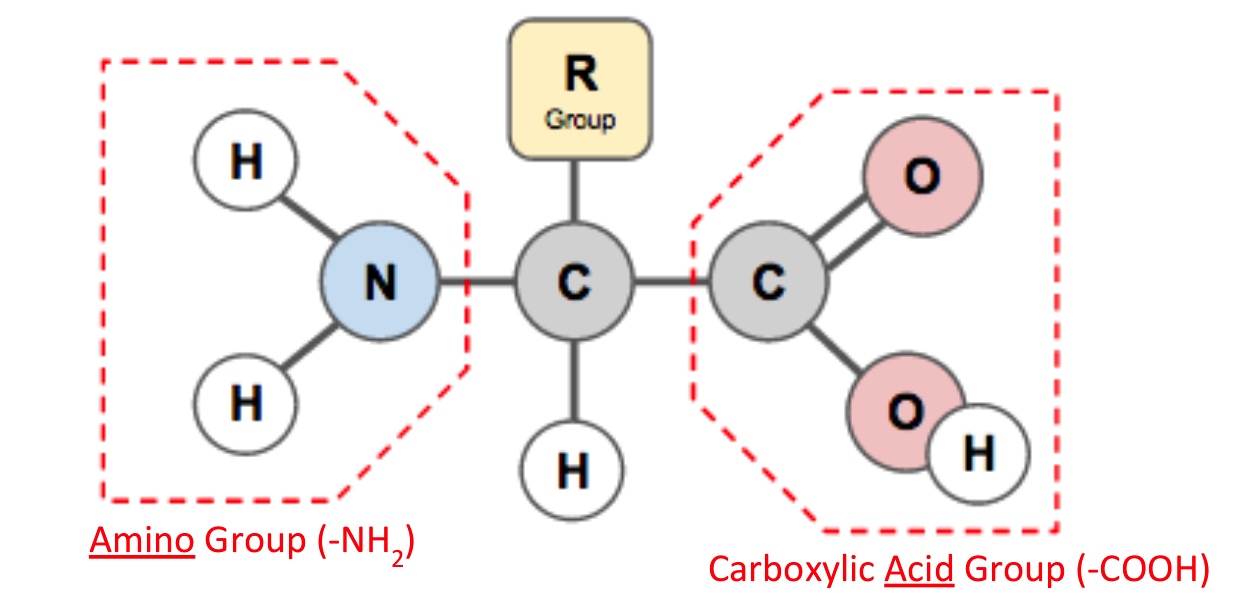
B.1.2.1 Generalized structure of an amino acid
The amino group is one of the reasons why nitrogen is an important element in living things
The carboxylic acid group contains an oxygen double-bonded to the carbon and a hydroxyl group that can be lost to form new bonds
In proteins there are 20 amino acids that build up proteins in different ways
B.1.2.2 Condensation reactions forming dipeptides and longer chains of amino acids
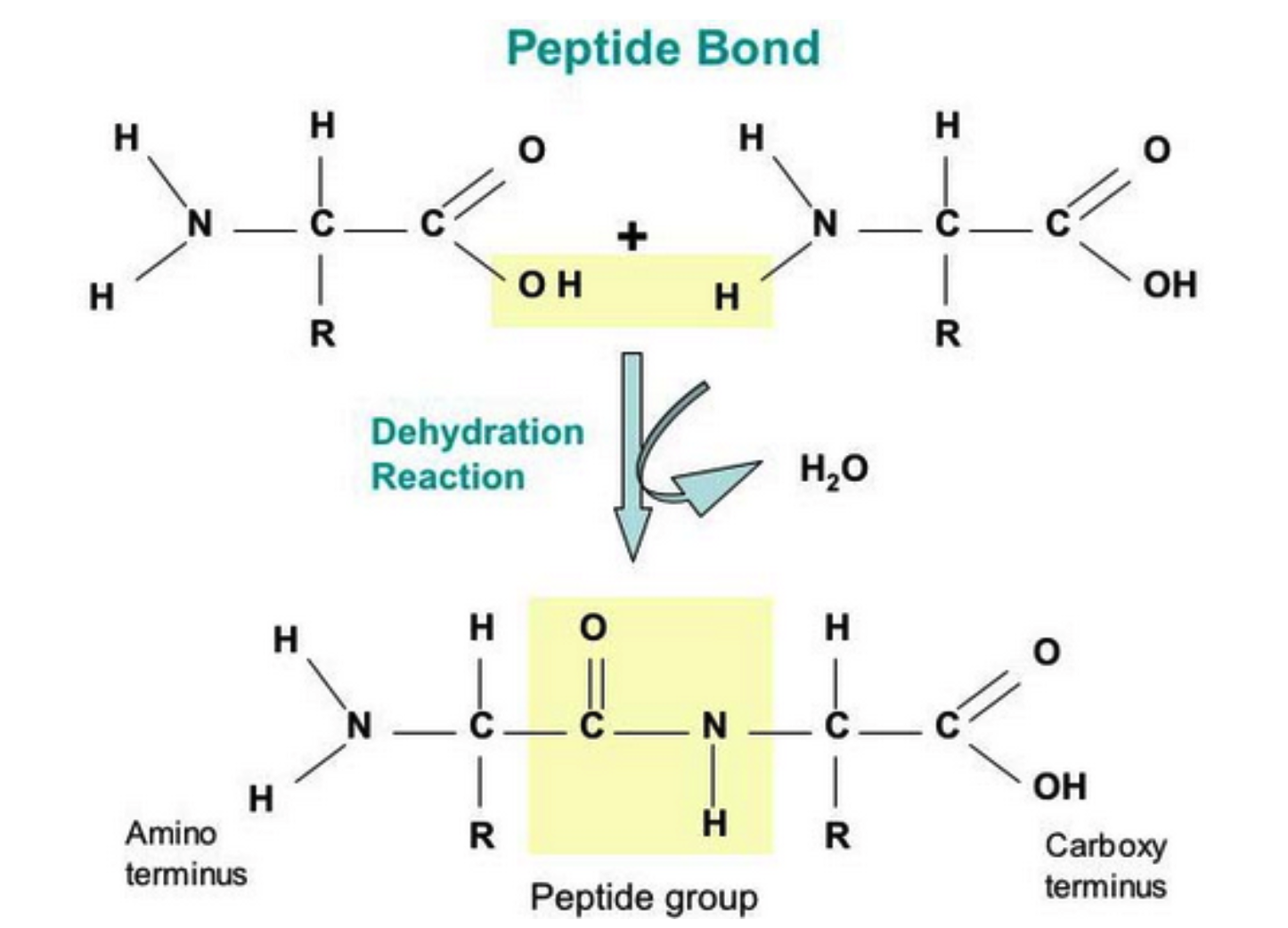
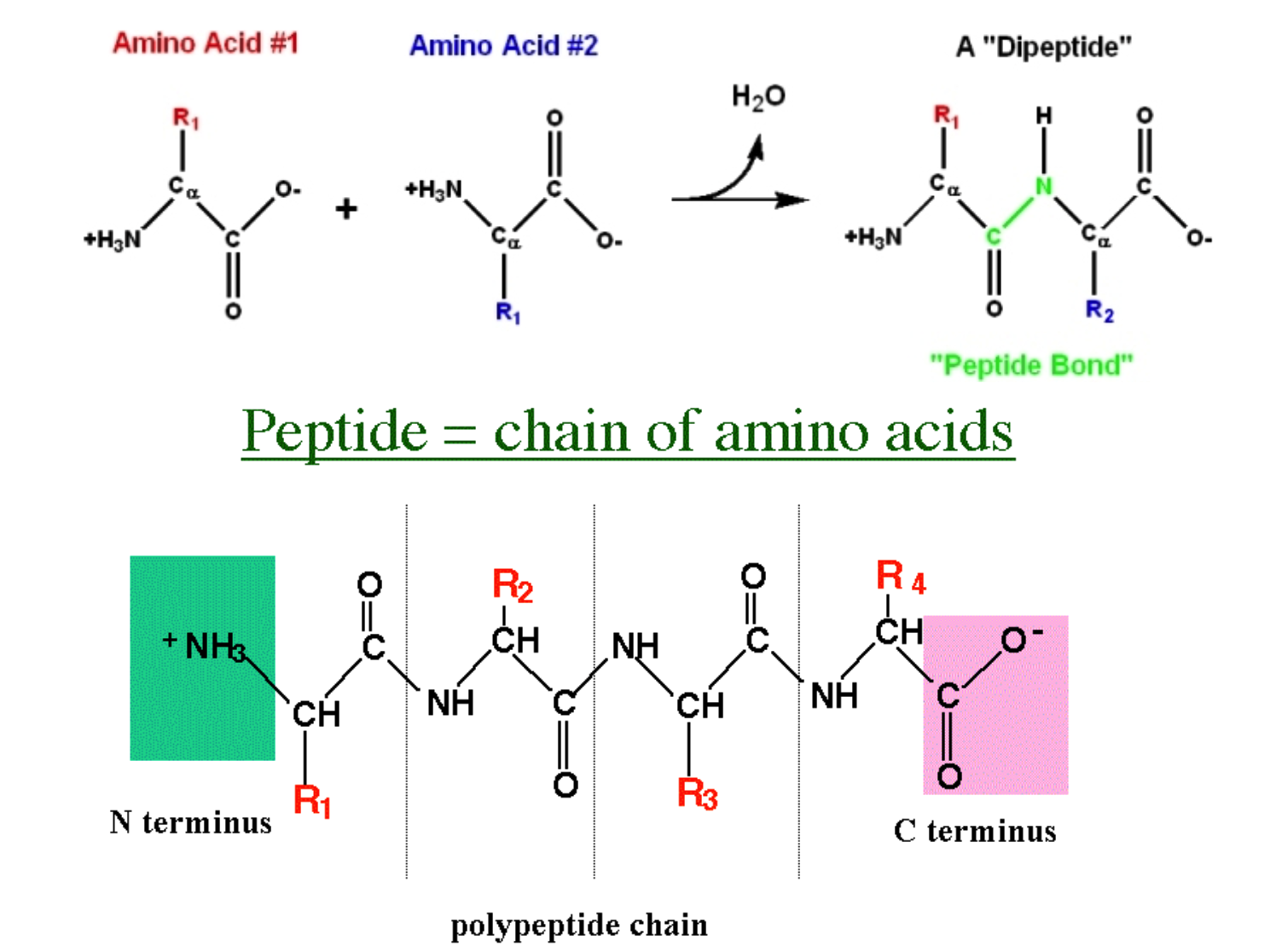
B.1.2.3. Dietary requirements for amino acids
Obtained from nutrition
Basic things to make amino acids come from food
Synthesized by the body
Essential amino acids
The ones you can’t make
Need to get them directly from food
Valine
Non essential amino acids
Once you break down food, your body can make them
Serine
B.1.2.4 Infinite variety of peptide chains
Polypeptides are chains of amino acids joined by peptide bonds
Proteins are versatile
There are 20 different amino acids
Can be combined in any order
Each amino acid has unique properties
Some a polar (hydrophilic)
Some are non-polar (Hydrophobic)
Some are positively or negatively charged
Some contain sulphur
Properties determine how a polypeptide folds up into a protein
Why are there infinite variety of polypeptides?
Because there are 20 amino acids
many possibilities in how they are built
Many different lengths we can make proteins
If a polypeptide has 7 amino acids there can be 20^7 possible polypeptides generate
Proteins have different levels of structure
Once a chain is made, it can link with other polypeptide chains
Proteins can fold and that gives them versatility
Fibrous proteins tend to be structures in nature which means its building material
Keratin (hair), collagen
Insoluble
Doesn’t want to build things that would melt in water
Globular proteins are functional in nature
Transport, have functions
Haemoglobin, insulin
Soluble
Functions of proteins
Digestion
Keep us healthy
immunoglobulins
Muscles
Involved in DNA stuff
Support to the body
Coordination for bodily function
Move essential molecules around the body
Immunoglobulins
Globular protein
Keep us healthy
Fight off viruses and bacteria
Antibodies
Spider silk
Structural protein
Very strong
B.1.2.5 Effect of pH and temperature on protein structure
Denaturation
What happens to a protein when subjected to extreme conditions of heat or pH
If you burn a protein or drop it in acid it will denature
Breaks down
Loses shape
Loses function
Sometimes in high salt or heavy metals can denature proteins

Genes are codes for making polypeptides
DNA is stored in the nucleus
Polypeptide made in the cytoplasm
Cells
Cells
B.2.2 Organelles and compartmentalization
B2.2.1 Eukaryotic organelles as discrete subunits of cells that are adapted to perform specific functions.
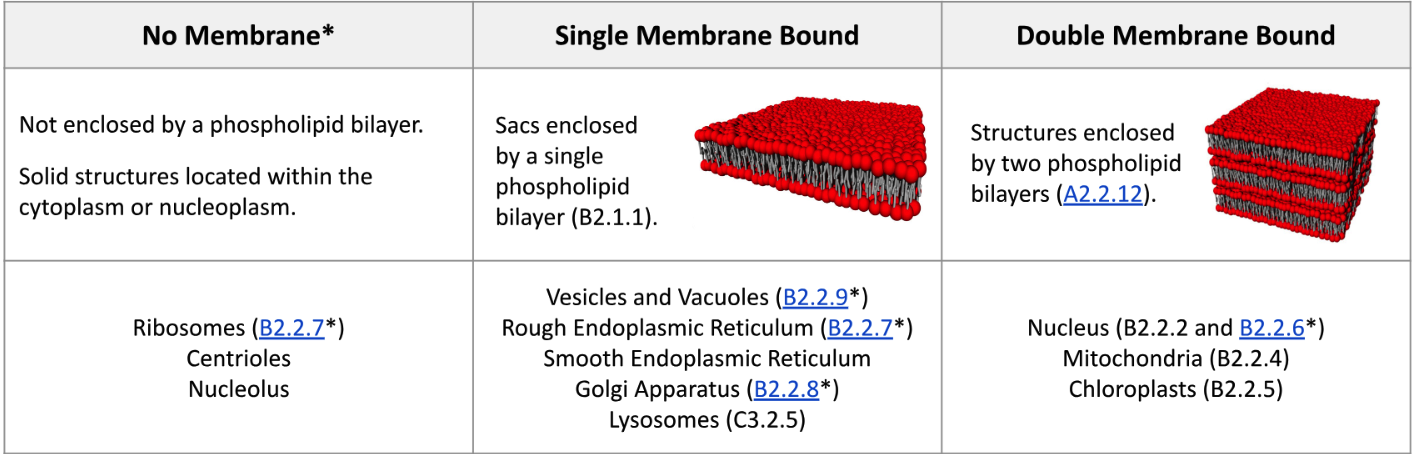
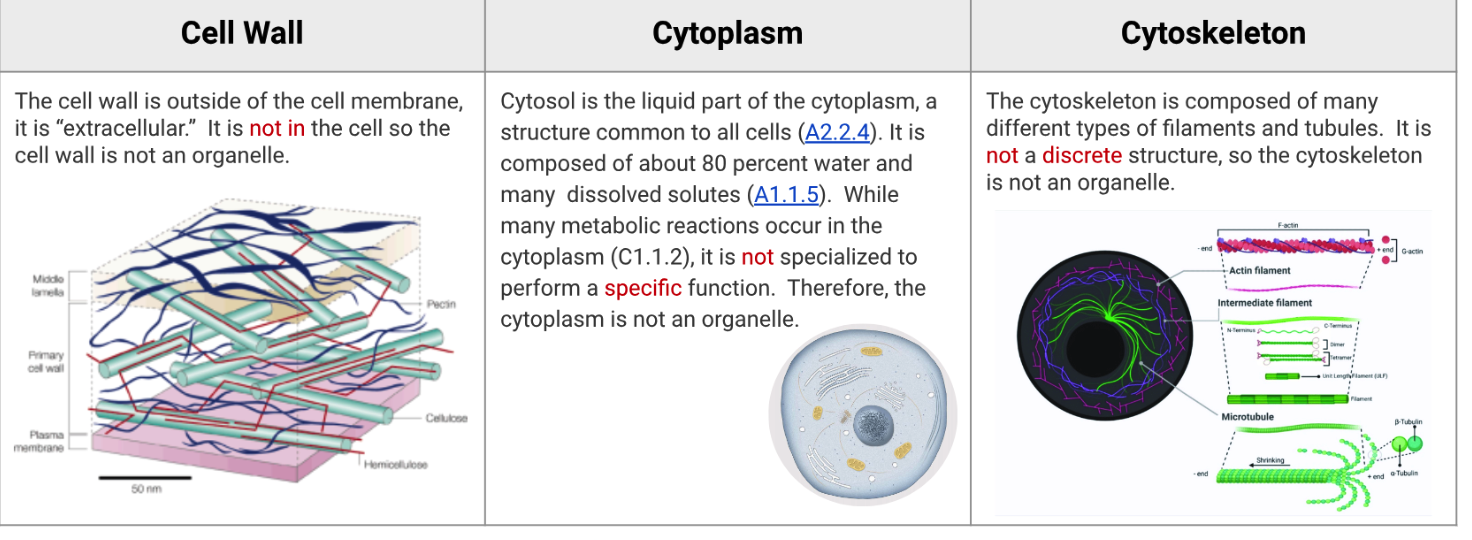
NOS Progress in science often follows the development of new techniques
Differential centrifugation
Separation technique that includes spinning things very quickly
Used for cell fractionation
separates organelles
works because different stuff has different densities
B2.2.2 Advantage of the separation of the nucleus and cytoplasm into separate compartments
Eukaryotes have their DNA safe inside the nucleus.
Allows for multiple linear chromosomes, which efficiently pack the whole DNA.
In eukaryotes DNA needs to be transcribed into RNA before it can leave the nucleus.
Allows for modification of the RNA before translation.
Does not occur in prokaryotes
B2.2.3 Advantages of compartmentalization in cytoplasm cells
B.2.3 Cell specialization
B.2.3.1 Production of unspecialized cells following fertilization and their development into specialized cells by differentiation
Following fertilisation, an unspecialised zygote will divide and develop into a mass of specialised cells (early embryo) via differentiation
This process is driven by the release of gene-regulating chemicals
(transcription factors) called morphogens
In humans, 220 distinct highly specialised cell types have been recognised
All specialised cells and the organs constructed from them have developed as a result of differentiation
B.2.3.2 Properties of stem cells
Properties of stem cells
Undifferentiated
cells with the ability to divide endlessly and differentiate along different pathways
A single cell that can replicate itself or differentiate into many cell types
No job
All cells in an organism share the same genome
Some cells differentiate, that is grow and mature into different specialized cells
By only activating some of the genes in the genome during differentiation, cells can become specialized cells
Video notes
What?
cells that are undifferentiated, no job or function
Why are they useful?
potential to become all other kinds of cells
replaces dead cells
regenerative medicine
How many types?
tissue specific (adult)
replace existing cells in organs
totipotent
differentiate into limited types of cells
embryonic
pluripotent
can differentiate into any type of cell
induced pluripotent
can become any cell in the body
artificially created from adult stem cells and can differentiate into many other cells
Why is their use controversial?
certain religious groups are against using potential life for research and medical research
All cells in an organism share the same genome (entire set of genetic
instructions)
Some cells differentiate , that is grow and mature into different specialized
cells
By only activating some of the genes in the genome during differentiation,
cells can become specialized cells
B.2.3.3 Location and function of stem cell niches in adult humans
sites in the body where a pool of adult stem cells are maintained in preparation for future proliferation and differentiation
in bone marrow, hair follicles, heart, intestines, and brain
bone marrow
give rise to different types of blood cells (erythrocytes - red blood cell, and leukocytes - white blood cell)
commonly used to treat leukemia
Hair follicles
have a range of epidermal stem cells that are used for hair growth, skin innervation, vascularization and wound repair
treat severe burns and hair regrowth
B.2.3.4 Differences between totipotent, pluripotent and multipotent stem cells
Totipotent
can differentiate into any type of cell
zygote
Pluripotent
can differentiate into many types of cells but not all
Multipotent
can differentiate into a few closely related types of cells
bone marrow
Unipotent
can regenerate but can only differentiate into their associated cell type
Liver stem cells can only make liver stem cells
B.2.3.5 Cell size as an aspect of specialization
Red blood cells need to squeeze through narrow capillaries and are small
neurons need to transmit signals throughout the body and can be very long
striated muscle fibres consist of fused muscle cells
A human ovum (egg) is one of the largest cells, while sperm is very small
B.2.3.6 surface area to volume ratios and constraints on cell size
The larger the organism, the more exchange has to take place to meet its needs.
substances move in/out of a cell through the plasma membrane
Big SA:V = big movement across membrane
Small SA: Vol = little movement across membrane
When volume increases, so does surface area, but not to the same extent
As a cell gets larger, the SA: vol ratio gets smaller
if the ratio gets too small, the particles won’t be able to enter and exit the cell fast enough
B.4.2 Ecological niches
B.4.2.5 Mixotrophic nutrition in some protists
Mixotrophs
plants and algae use a combination of different modes of nutrition
venus flytrap
B.4.2.6 Saprotrophic nutrition in some fungi and bacteria
Saprotrophs
Live in or on nonliving organic matter, secreting digestive enzymes into it and absorbing digestive products
Digest first, then absorb
Unit 3: C: Interaction and interdependence
Molecules
C.1.1 Enzymes and metabolism
C.1.1.1 Enzymes as catalysts
Enzymes
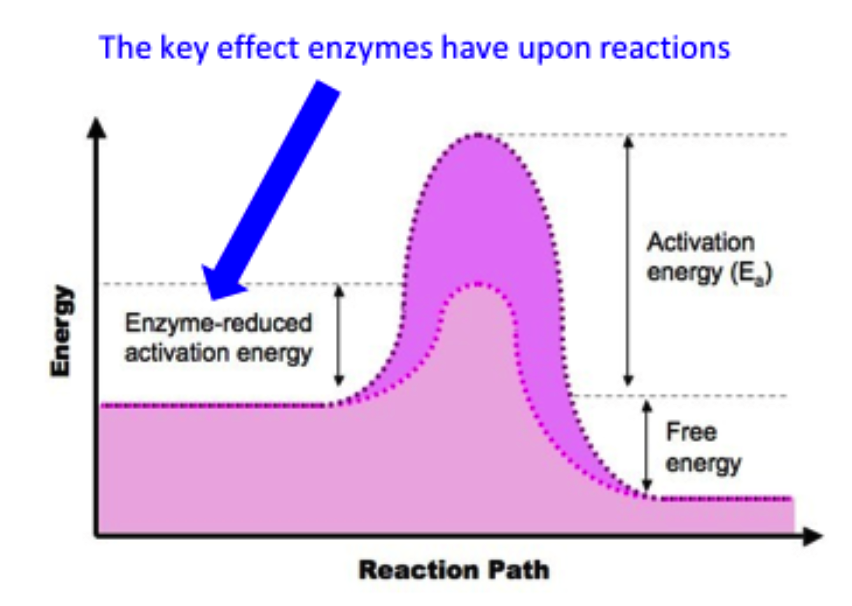
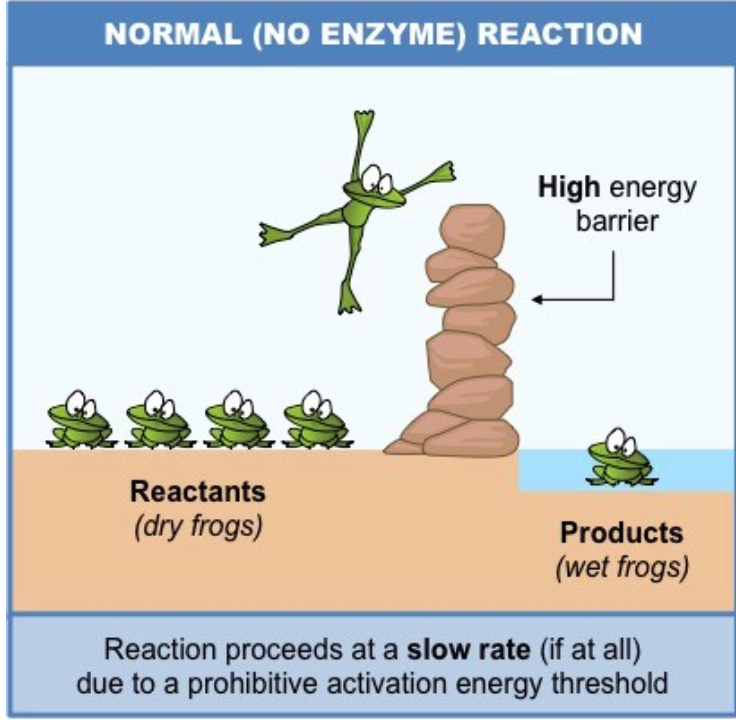
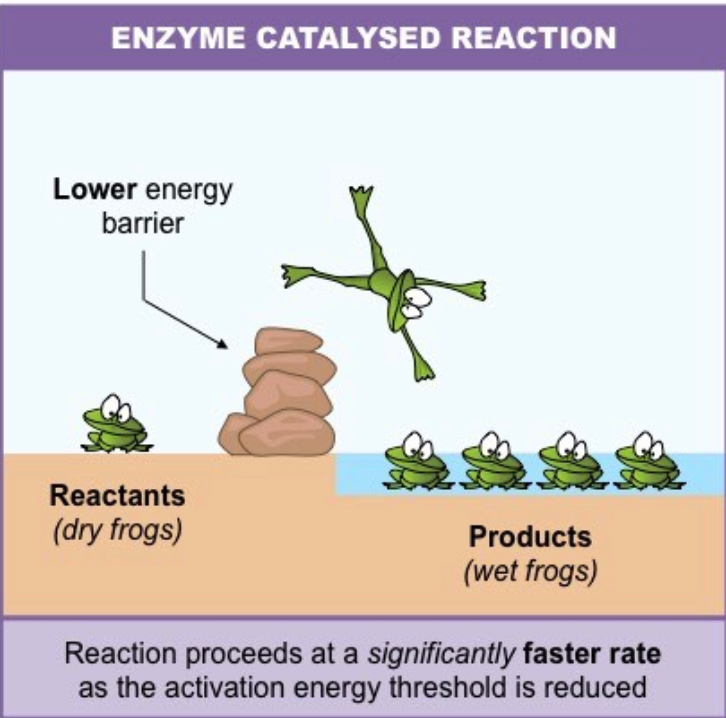
A globular protein that increases the rate of a biochemical reaction (Biological catalyst) by lowering the activation energy threshold
Proteins
Speeds up chemical reactions
Lowers energy threshold and activation energy
Minimum amount of energy needed for a chemical reaction to start
Amino Group (-NH 2)
One of the reasons why nitrogen is an important element in living things
Carboxylic Acid Group (-COOH)
Contains an oxygen double-bonded to the carbon and a hydroxyl group that can be lost to form new bonds
3D protein
Substrates (disaccharide) go into the enzymes active site where it breaks down the molecule/substrate reacts and turns into products
C.1.1.2 Role of enzymes in metabolism
Web of all enzyme catalyzed reactions in a cell or organism
Usually occur in cytoplasm
Made mostly of water so it allows reactions to happen
Can be extremely complex with numerous steps
Examples
Cellular respiration
Photosynthesis
C.1.1.3 Anabolic and catabolic reactions
Anabolism
Synthesis of complex molecules from simpler molecules by condensation reactions
Making of molecules
Examples
Protein synthesis using ribosomes
DNA synthesis
Catabolism
Breakdown of complex molecules into simpler molecules
Releases energy
Can be achieved by hydrolysis
Examples
Digestion of food in mouth
Metabolism = Catabolism + Anabolism
Sum of all building-up + breaking-down processes within in organism
Condensation
Makes bonds
water releasing
Anabolic
Hydrolysis
Breaks bonds
Water splitting
Catabolic
C.1.1.4 Enzymes as globular proteins with an active site for catalysis
Enzymes are specific
Enzymes can only bind with one type of substrate molecule
Substrate
Material which enzyme bonds to
In digestion, enzymes that break down proteins have no effect on fats or carbohydrates
Every reaction has their own substrate
Enzymes are reusable
Enzymes are not changed or used up in chemical reactions
They themselves are not reactants of products
Enzymes, substrates, and active sites
Substrate
Reactant in a biochemical reaction
Enzyme
Globular protein which acts as a catalyst for biochemical reactions
Has a 3D shape
Active site
Region on the surface of an enzyme to which substrates bind and which catalyses the reaction
Has a shape that matches with the shape of the substrate
Lock and key hypothesis
The substrate and the active site match each other in two ways
Structurally
3D structure of active site is specific to the substrate
Substrates that don’t fit, won’t react
Chemically
Substances that aren’t chemically attracted to the active site won’t be able to react
Key
Substrate
Lock
Enzyme
C.1.1.5 Interactions between substrate and active site to allow induced-fit binding
The induced-fit model does a better job of explaining enzyme activity
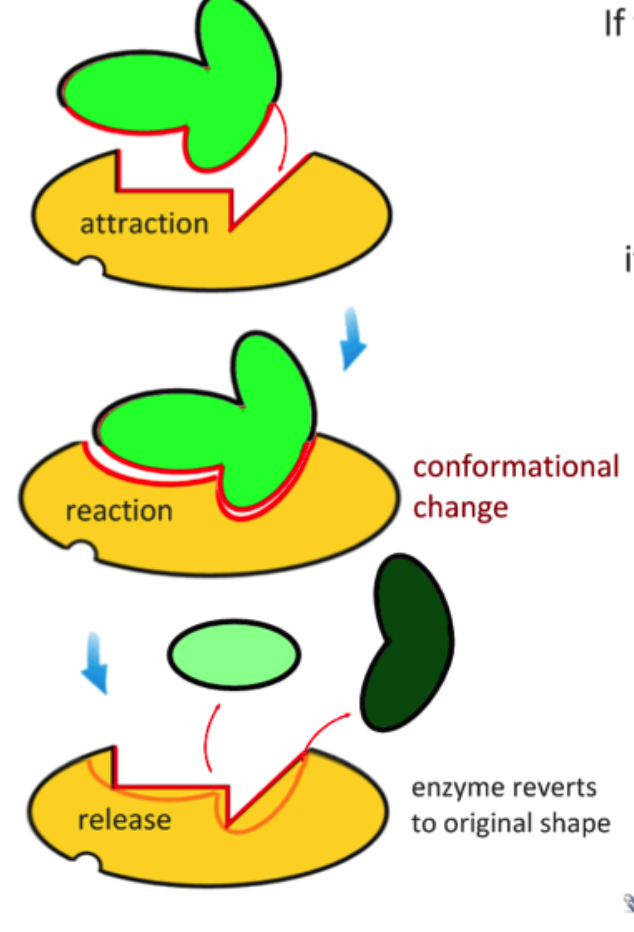
C.1.1.6 Role of molecular motion and substrate-active site collisions in enzyme catalysis
The coming together of a substrate molecule and an active site is known as a collision
All molecules dissolved in water are in random motion, with each molecule moving separately
Diffusion
Collisions are the result of the random movements of both substrate and enzyme
The substrate may be at any angle to the active site when the collision occurs
Successful collisions are ones in which the substrate and active site happen to be correctly aligned to allow binding to take place
Enzyme examples
Lipase: breaks down lipids
Lactase: breaks down lactose
C.1.1.7 Relationships between the structure of the active site, enzyme- substrate specificity and denaturation
Denaturing enzymes
For enzymes a change in structure means a change in the active site
If the active site changes shape the substrate is no longer able to bind to it
C.1.1.8 Effects of temperature, pH and substrate concentration on the rate of enzyme activity of molecular motion and substrate-active site collisions in enzyme catalysis
Temperature, pH and substrate concentration can affect all the activity of enzymes
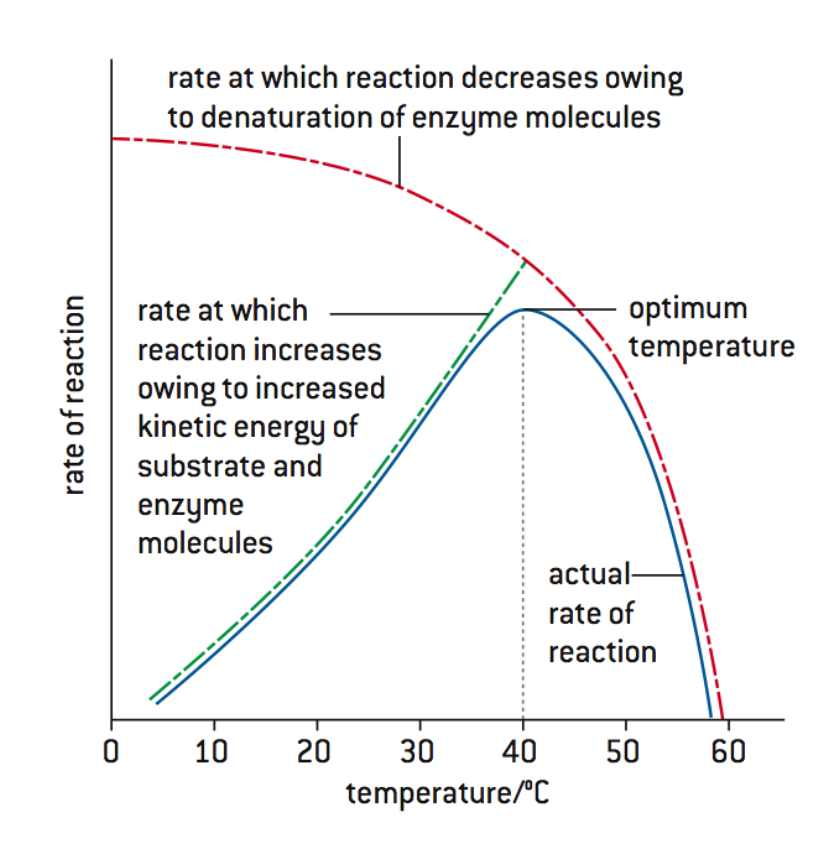
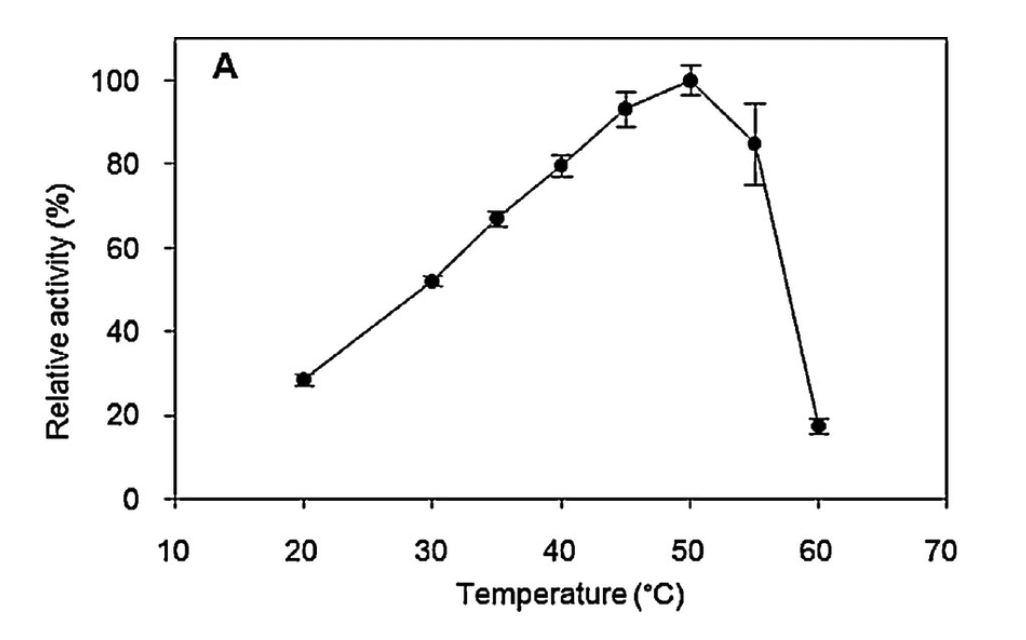
Increasing temperature increases the speed of both enzyme and substrate, resulting in higher enzyme activity (more collisions)
At an optimum temperature the rate of enzyme activity will be at its peak
If the temperature is too high the enzyme will become denatured and will stop working
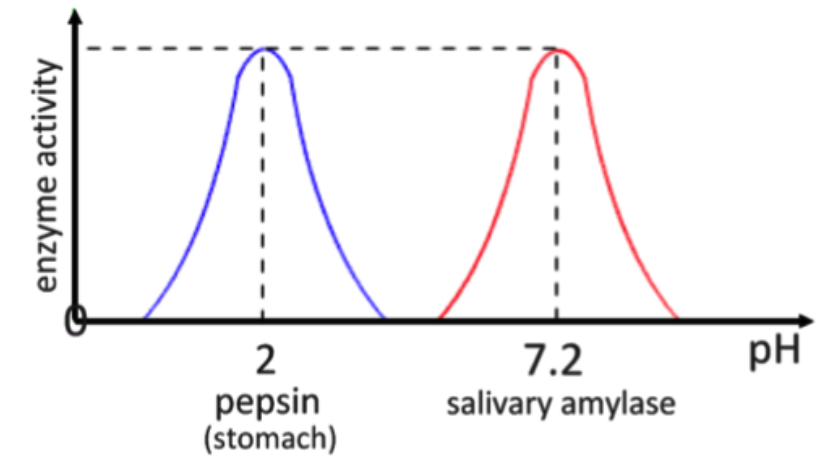
Changing the pH will alter the charge of the enzyme, which may change the shape of the molecule
Enzymes have an optimum pH and moving outside of this range will always result in a diminished rate of reacting
Remember the wrong pH can denature a protein
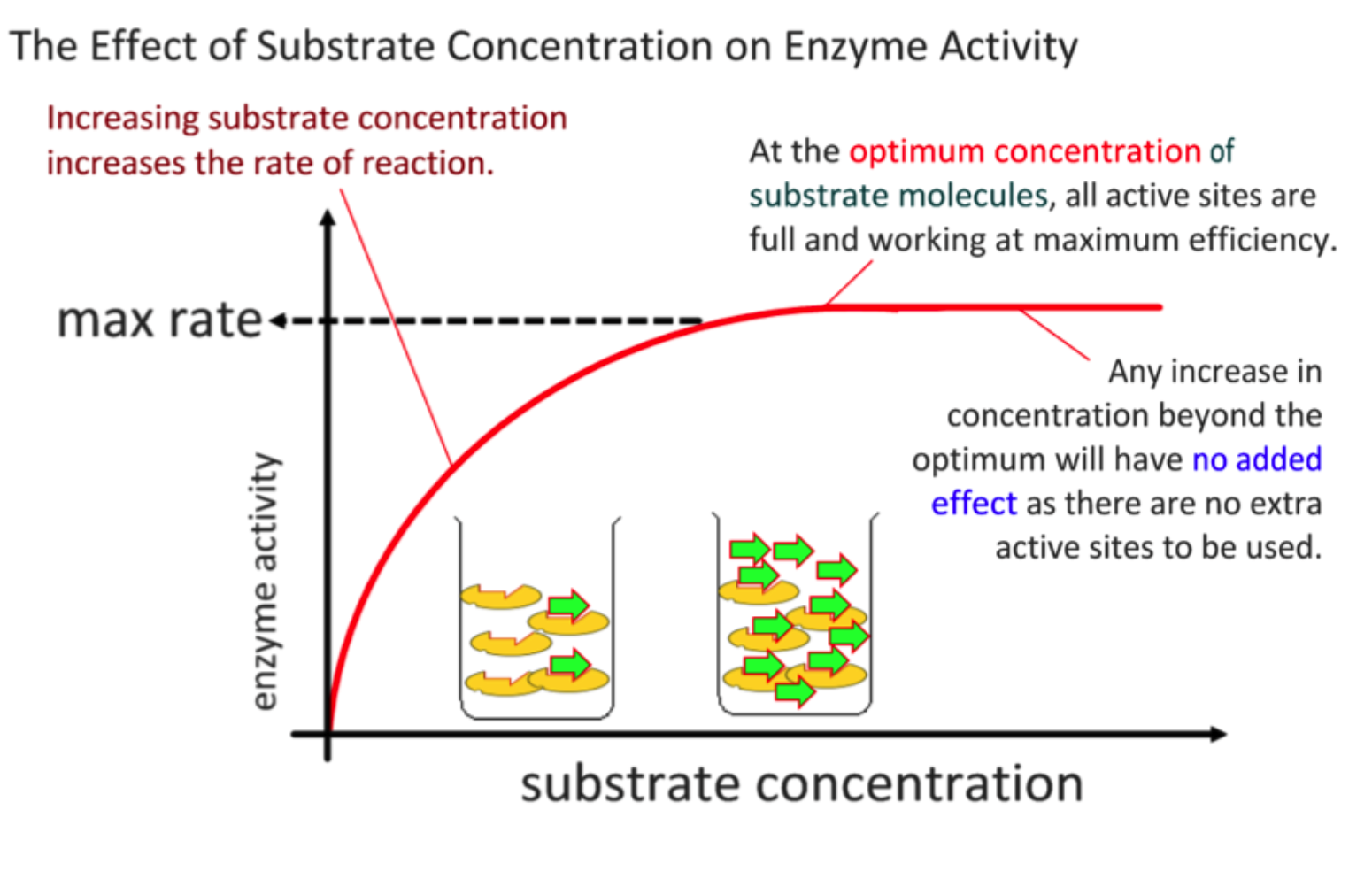
The reaction plateaus because it levels out
When all the enzymes are working as fast as they can
C.1.1.9 Measurements in enzyme-catalysed reactions
Measuring enzyme activity
The method of data collection will depend on the reaction occuring
Most reactions are measure according to
The amount/rate of substrate decomposition (e.g breakdown of starch)
The amount/rate of product formation (e.g formation of maltose)
C.1.1.10 Effect of enzymes on activation energy
Activation energy:
The initial input of energy that is required to trigger a chemical reaction
C.1.2 Cell respiration
C.1.2.1 ATP as the molecule that distributes energy within cells
The biological molecule of energy is Adenosine Triphosphate (ATP)
ATP is a nucleotide
C.1.2.2 Life processes within cells that ATP supplies with energy
Muscle contraction
Movement
Active transport
Protein synthesis
Vesicle transport
DNA/RNA replication
Cell signaling
C.1.2.3 Energy transfers during interconversions between ATP and ADP
When ATP releases energy it becomes ADP
C.1.2.4 Cell respiration as a system for producing ATP within the cell using energy released from carbon compounds
Cell respiration
The controlled release (steps) of ATP from organic compounds (food) in cell
C.1.2.5 Differences between anaerobic and aerobic cell respiration in humans
Process of cellular respiration
Anaerobic
1: Glycolysis:
Break down glucose into 2 carbon molecules (Pyruvate)
Gives us 2 ATP
6C to 2×3C
Happens in cytoplasm
Doesn’t require oxygen or mitochondria
Need 2 ATP to get it going in the first place
Need NAD+
Helps create pyruvate
NAD+ turns into NADH by getting a hydrogen
2: Anaerobic respiration
Pyruvate gets broken down
In cytoplasm
Doesn’t produce ANY ATP
Regenerates NAD+ for reuse in glycolysis
Two types
Lactic acid fermentation
Animal cells
Used to produce yogurt and cheese
Causes soreness in muscle cells
Pyruvate is converted into lactic acid and NAD+
Equation
Pyruvic acid + NADH = Lactic acid + NAD+
As the pyruvate gets broken down, it doesn’t make any ATP and it regenerates NAD+ for glycolysis
Alcoholic fermentation
Fungal cells (yeast), also plants, and bacteria
Used to produce alcoholic beverages and to make bread
Equation
Pyruvic acid + NADH = Ethyl alcohol + CO2 + NAD+
Aerobic
1: Glycolysis
In cytoplasm
2: Pyruvate into the mitochondria
Into the matrix
liquid like substance where chemicals react
Inner membrane
Oxygen needed for aerobic respiration
3: Krebs cycle
Krebs
In matrix
Regeneration of the starting molecule (4C)
4C
Binds with Acetyl CoA (2C) from pyruvate
6C
Loses a carbon to become CO2
Loses a hydrogen (stolen from NAD+ to become NADH)
5c
Loses another carbon and another hydrogen to FADH2 and more NADH
4C
Back to original molecule
Does whole process again
Have 2 pyruvates = 2 spins
Creates 2 ATP
Creates 6 NADH and 2 FADH2
4: ETC
Hydrogens deposited from the NADH and FADH2 created
Proteins take hydrogens and move them into the inner membrane space
Makes about 32 ATP
5: ATP
Hydrogen moving creates ATP
ATP synthase
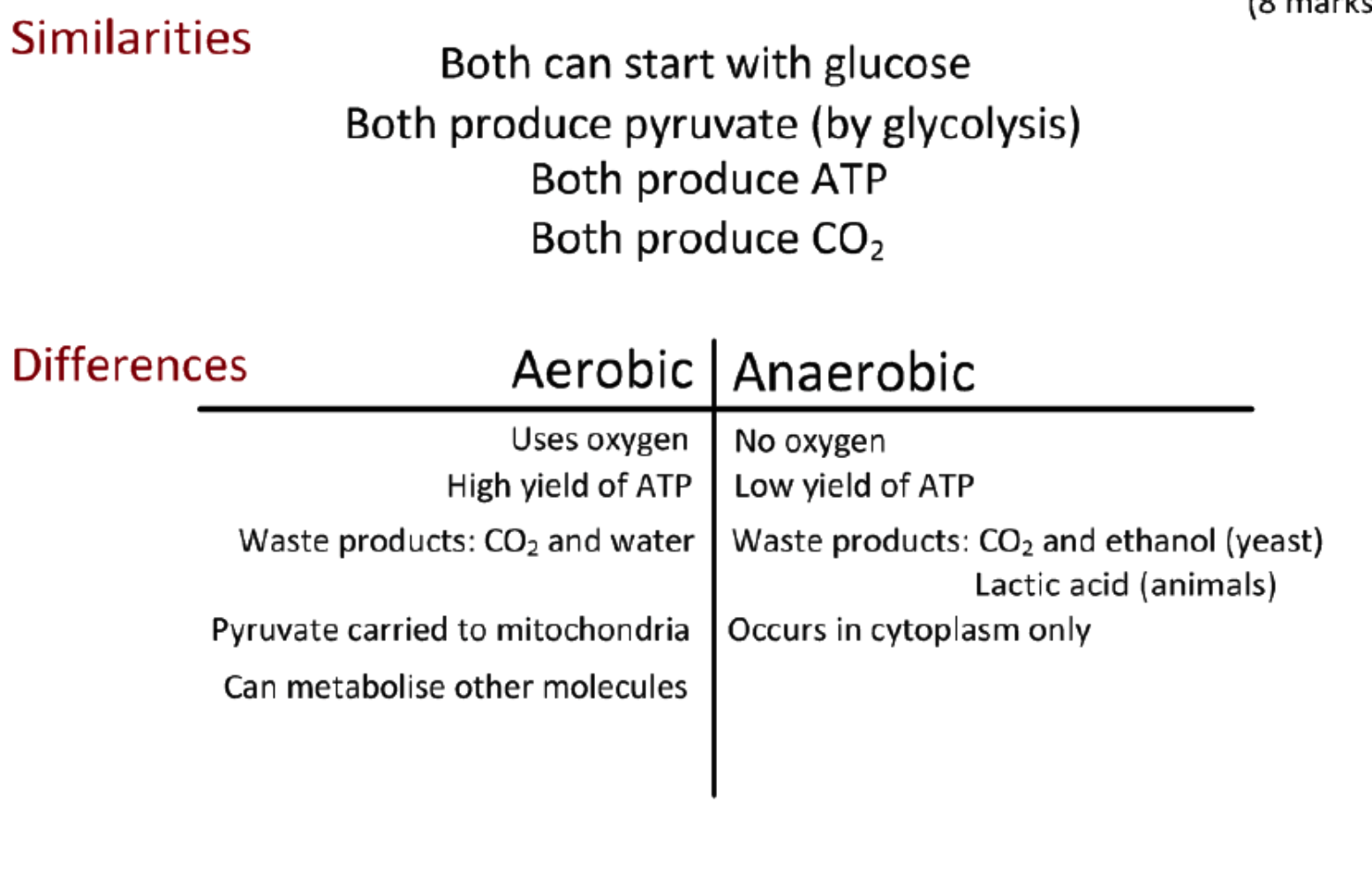
Similarities and differences between aerobic and anaerobic respiration
C.1.2.6 Variables affecting the rate of respiration
Temperature
As temperature increases, respiration increases
Until too high=denaturation
Concentration of glucose
As glucose increases, respiration increases
Until maximum level
Concentration of oxygen
As oxygen increases, respiration increases
Until maximum level
Concentration of wastes (CO2 or alcohol)
As wastes increase, respiration decreases
Respirometer
A device used to measure respiration rate
Amount of O2 consumed
Cotton wool
Separates the living organism from the soda lime
A sealed container to contain living tissue
Reaction chambre
An Alkali to absorb CO2
Soda lime
A capillary tube or pipette connected to the container
As the oxygen is used up, the fluid moves toward the container
If you can measure the movement of the water, you can measure the oxygen being consumed
C.1.2.7 Role of NAD as a carrier of hydrogen and oxidation by removal of hydrogen during cell respiration
C.1.3 Photosynthesis
C.1.3.1 Transformation of light energy to chemical energy when carbon compounds are produced in photosynthesis
Photosynthesis and Respiration: a cycle
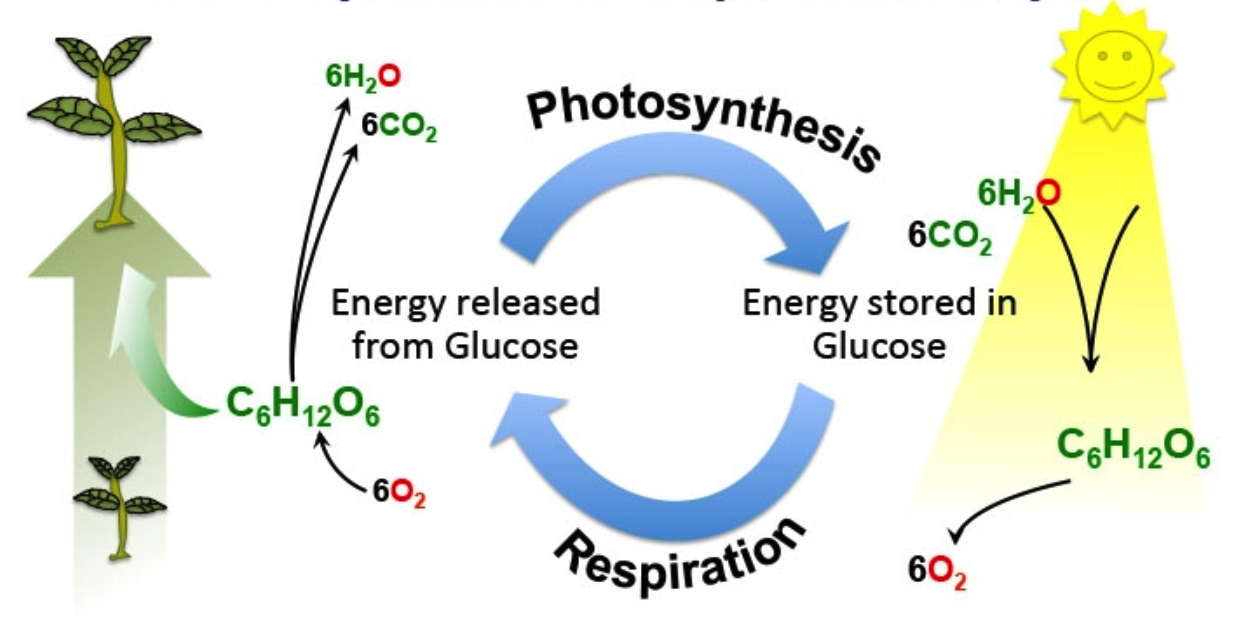
Plant captures sun’s energy
Plant later burns that sugar to use its energy
C.1.3.2 Conversion of carbon dioxide to glucose in photosynthesis using hydrogen obtained by splitting water
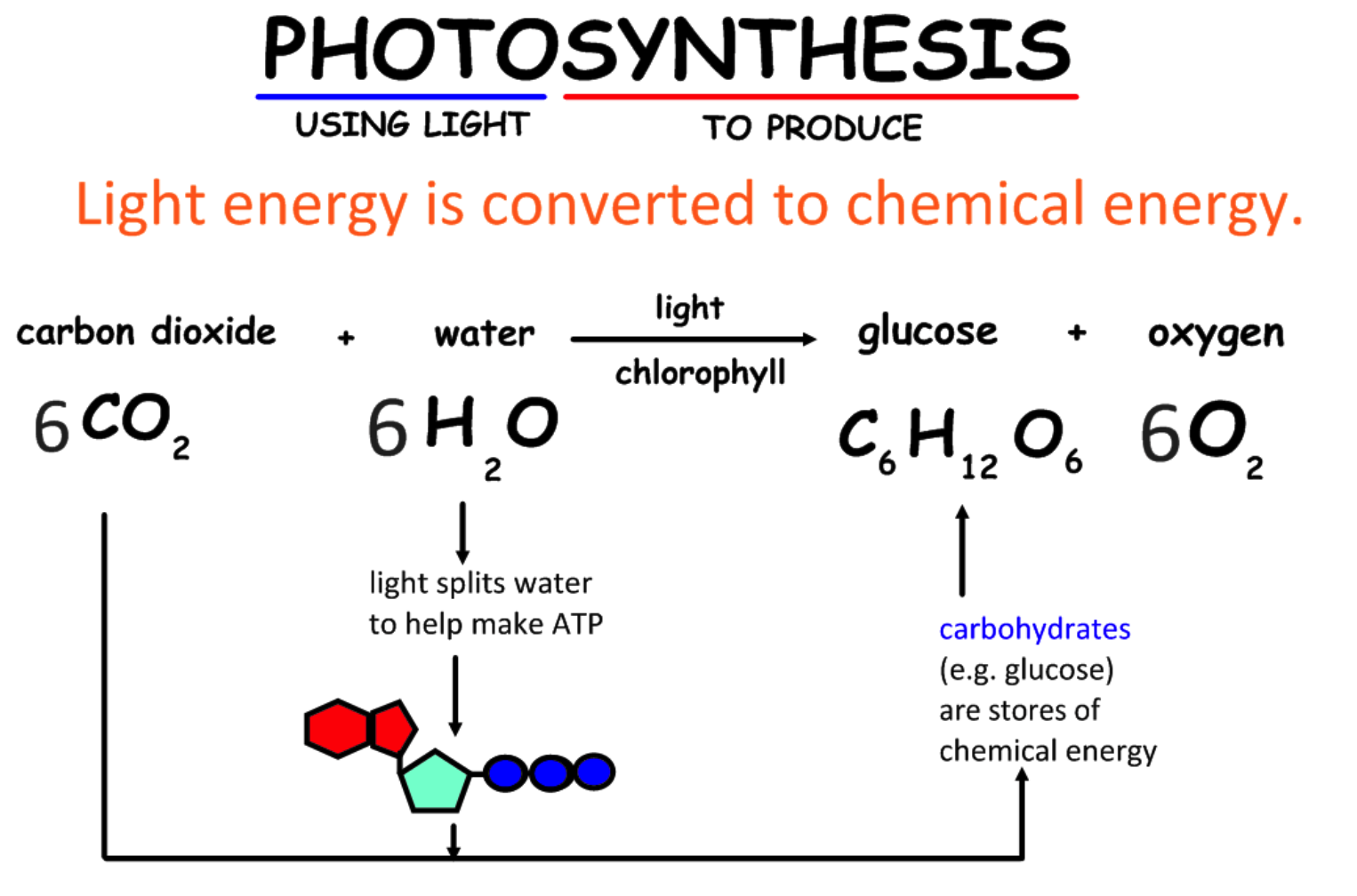
Photosynthesis occurs in two main stages in the chloroplasts of plant cells
In the light dependent reactions, photolysis happens
Result is ATP and hydrogen atoms
Waste product is oxygen
Exists through the stoma
Light independent reactions
Energy from ATP and Hydrogen is used to transform CO2 into carbohydrates
Process known as carbon fixation
Enzyme doing it is rubisco
Happens in the stroma
Calvin cycle
C.1.3.3 Oxygen as a byproduct of photosynthesis in plants, algae and cyanobacteria
Plants (leaves)
Green tissue in the interior of the leaf (mesophyll) contains chloroplasts
CO2 enters the leaf and O2 exits through the stoma
Stomata = bottom of leaf
Where most of the photosynthesis happens
Algae
Eukaryotic
Protists (not plants)
Some can perform photosynthesis in chloroplasts
Ex: Chlorella
Bacteria
Prokaryotic
Some can perform photosynthesis
They work as chloroplasts themselves
Similar size
Similar structures
Specialized structures
Very small
Ex: Cyanobacteria
Chloroplasts
Similar to mitochondria
Outer and inner membrane
Membranous sacs
Thylakoids
Concentrated in stacks called GRANA
Contain chlorophyll
First part of photosynthesis (captures light)
Filled with fluid
Stroma
Where Co2 is turned into glucose
C.1.3.4 Separation and identification of photosynthetic pigments by chromatography
Chromatography is a method of separating out different pigment molecules based on their solubility
It can be used to separate and distinguish chlorophyll and other accessory pigments (not main ones, help out) , such as carotene and xanthophyll
1. Grind up leaf
2. Mix with ethanol
3. Extract pigment
4. Put pigment on paper/filter
5. Put paper in solvent
6. Paper absorbs solvent and separates the pigments
We can calculate the Rf value for each pigment
Rf= distance travelled by the substance/distance travelled by the solvent front
Bigger ratio = bigger distance travelled
C.1.3.5 Absorption of specific wavelengths of light by photosynthetic pigments
Winter
Colder climate, less sun, shorter days, enzyme reaction rate lessens
Start to shut down photosynthesis, making less chlorophyll process
Leaves change from green to yellow to red because of accessory pigments (pigments that cannot be normally seen when chlorophyll is active) shutting everything
C.1.3.6 Similarities and differences of absorption and action spectra
Absorption spectrum
Shows percentage of light being absorbed at each wavelength by a pigment or group of pigments
Higher in reds and blues
Lowest in greens
Action spectrum
Graph showing the rate of photosynthesis at each wavelength of light
Higher in reds and blues
Lowest in greens
C.1.3.7 Techniques for varying concentrations of carbon dioxide, light intensity or temperature experimentally to investigate the effects of limiting factors on the rate of photosynthesis
Varying light intensity
Grows up to a certain point
When all chloroplasts are working at maximum capacity and adding more light doesn’t increase rate of photosynthesis
Rarely limiting factor
Varying carbon dioxide concentration
More CO2 = more photosynthesis
Until all active sites of rubisco are being used up it plateaus
Often limiting factor
Varying temperature
As you increase temperature you increase rate of reaction because of the higher amount of successful collisions until optimum temperature
After optimum it denatures the rubisco and rate of reaction decreases
C.1.3.8 Carbon dioxide enrichment experiments as a means of predicting future rates of photosynthesis and plant growth
Enclosed greenhouse experiments
Have the advantage of allowing more variables to be controlled
Free Air Carbon-dioxide enrichment Experiments (FACE)
Have the advantage of better stimulating natural conditions
Ecosystems
C.4.1 Populations and communities
C.4.1.1 Populations as interacting groups of organisms of the same species living. inan area
Ecology
The study of relationships between living organisms and between organisms and their environment
Population
A group of organisms of the same species living in the same area at the same time
Ecosystem
A community and its abiotic environment
Community
A group of populations living and interacting with each other in an area
Habitat
The environment in which a spexies normally lives
Species
A group of organisms that can interbreed to produce fertile offspring
C.4.1.1 Populations as interacting groups of organisms of the same species living in an area
C4.1.2 Estimation of population size by random sampling
Population: Total number of individuals in it
Usually impossible to count every individual in a population
Unless it’s small and easy to find, it’s hard to determine exact size and has to be estimated
Estimates are based on sampling
Small portion of something
Better to use multiple to increase representation of whole population
Random sample
Used to ensure that every member of a population has an equal chance of being selected
Must avoid unconscious bias to have a truly random sample
C.4.1.3 Random quadrat sampling to estimate population size for sessile organisms
Quadrats are square sample areas, often marked by a quadrat frame
Repeatedly placing a quadrat frame at random positions in a habitat and recording numbers of organisms present within
Goal is to obtain realistic estimates of population sizes
Not very useful for highly mobile organisms
Quadrats
Provide calculation of three aspects of species distribution
Species density
Number of individuals of a given species in a given area
Species frequency
A measure of the probability of finding a given species with any one throw of a quadrat in a given area
If a species occurs once every ten quadrants, its frequency is 10%
Obtained by recording the presence or absence of a species in a quadrat
Depends on spatial distribution and quadrat size
Species cover
Transects
A straight line along a biologically relevant gradient
Ex. amount of light in a forest
Provide calculation of three aspects of species distribution
Species density
Number of individuals of a given species in a given area
Species frequency
A measure of the probability of finding a given species with any one throw of a quadrant in a given area
If a species occurs once every ten quadrants, its frequency is 10%
Species cover
The percentage of the whole area that the species covers
C.4.1.4 Capture-mark-release-recapture and the Lincoln index to estimate population size for motile organisms
Motile organisms
Organisms that move from place to place
Steps:
Capture as many individuals as possible in the area occupied by the animal population
Mark each individual, without making them more visible to predators
Release all the marked individuals and allow them to settle back into their habitat
Recapture as many individuals as possible and count how many are marked and how many are unmarked
Calculate the estimated population size by using the Lincoln index
Population size = (n1 x n2)/ nm
n1: # of individuals caught and marked initially
n2: # of individuals recaptured
nm: # of individuals recaptured with marks
Assumptions
Mixing is complete
Marks don’t dissapear
Marks are not harmful or advantageous
It is equally easy to catch every individual
There is no immigration, emigration, births, or deaths in the population between the times of sampling
Trapping the organisms does not affect the chances of being trapped a second time
C.4.1.5 Carrying capacity and competition for limited resources
Populations take materials from their environment
Food, oxygen, water, etc.
A large population needs more resources
Resources vary in abundance but are all limited in the amount available or rate of production
If a resource becomes scarce, the members of the population will compete for it
If a population grows too large, there wont be enough for some individuals
These individuals are likely to die, reducing the population size
The maximum size of a population that an environment can support is the carrying capacity
Limiting factors can be density dependent or density independent
Density dependent factors
Will increase or decrease the carrying capacity of a population based on the size of a population
Ex: the amount of food available
Density independent factors
Will increase or decrease the carrying capacity regardless of the size of the population
Ex: temperature
C.4.1.6 Negative feedback control of population size by density-dependent factors
Population sizes can rise or fall over time
If a population is successful, there may be a long-term increase
Could happen if a population fills an ecological niche that has been unoccupied
May be long-term decreases due to ecological changes that have negative impacts on the population
Populations more commonly fluctuate but overall the population remains relatively stable over time, due to negative feedback control
Density-independent factors
Have the same effect regardless of the population size
Forest fires kill plants and animals however many there may be before the fire
Density-dependent factors
Have an increasing effect as the population becomes larges
Basis for negative feedback mechanisms because they reduce larger populations and allow smaller populations to increase
Competition for limited resources
Predation becomes more intense if a population of prey becomes denser and therefore easier to find, and less intense if the prey becomes more scarce
Infectious disease, parasitism, and prey infestation increases with population density because it is easier for pathogens, parasites, and pests to spread from host to host.
C.4.1.7 Population growth curves
Populations will be prevented from undergoing uncontrolled exponential growth by limiting factors.
Most populations will adhere to a sigmoid growth curve
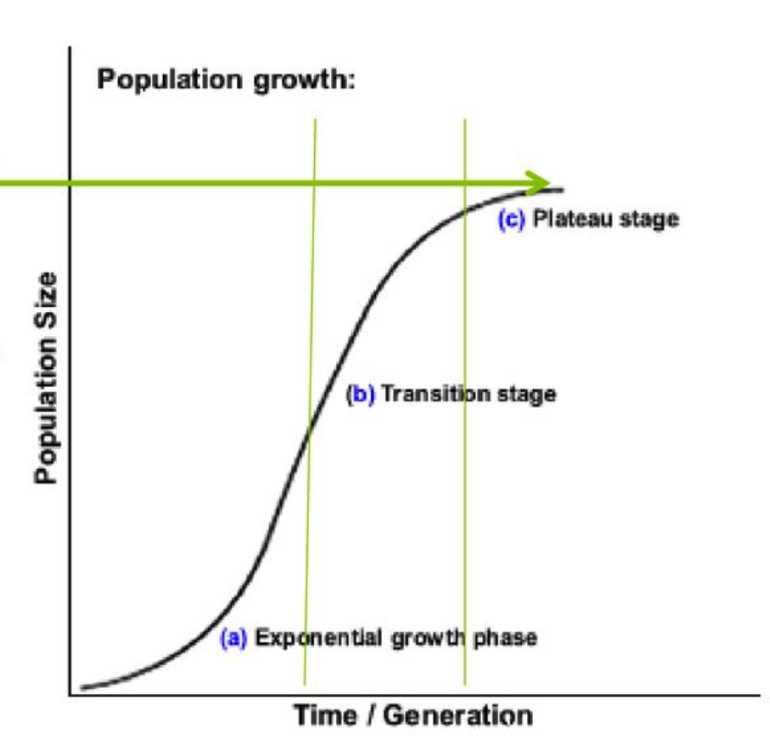
Exponential growth phase
Unlimited growth of the population due to the absence of limiting factors
Transitional phase
Limiting factors start influencing the rate of increase of the population
The number of individuals is still increasing but no longer at an exponential rate
Transition from exponential growth to no growth
Plateau phase
The number of individuals of the population no longer increases due to limiting factors
Natality + immigration = mortality + emigration
Natural selection is taking place
Population has reached the carrying capacity of the environment
Maximum number of individuals of a species that can be sustainably supported by the environment (green line (K))
Reproduction tends to cause exponential growth in populations
Is an example of positive feedback
Breeding increases number of individuals and a larger number of individuals can breed more
C.4.1.8 Modelling of the sigmoid population growth curve
Sigmoid population growth in natural ecosystems
Can be modelled experimentally using an organism like yeast
A small number of organisms should be introduced initially, with abundant resources for growth and no other organisms that could limit the population
Numbers should be monitored
Yeast
A saprotrophic fungus with ovoid cells that live on surfaces where sugars are available
Can produce asexually by budding
C.4.1.9 A community as all of the interacting organisms in an ecosystem
All species depend on relationships with other species for their long-term survival
A population of one species can’t live in isolation
So groups of populations live together
Community
Consists of hundreds or thousands of species living together in an ecosystem
A group of populations that are living and interacting together in the same area
Interactions between organisms can be complex and varied
Benefits one species and harms the other
Parasite and host
Both species benefit
Hummingbird feeds on nectar from a flower and helps pollinate it
Feeding methods
Autotrophy
Produce own food from organic molecules
Producers
Photoautotrophy (photosynthesis, green plants, algae, and phytoplankton)
Chemoautotrophy (Chemosynthesis, deep sea chemosynthetic bacteria
Heterotrophs
Derive energy from other living organisms
Decomposers
Derive energy from non-living organic matter
Detritivores
Ingests nonliving organic matter (earthworms, woodice)
Saprotrophs
Lives in or nonliving organic, secreting digestive enzymes into it and absorbing digestive products (bacteria and fungi)
Consumers
Ingest organic matter which is living or recently killed
Primary eat producers
Herbivores
Secondary eat other consumers
Carnivores, omnivores
C.4.1.10 Competition versus cooperation in intraspecific relationships
Intraspecific relationship
One that exists between individuals of the same species, usually within the same population of a species
Competition and cooperation are categories of intraspecific relationships
Competition
Individuals in a population are members of the same species so they share an ecological niche and are likely to need the same resources
Unless a resource is abundant, there will be competition for it
Some individuals will be more successful and gain more of the resource, helping them survive and reproduce
As a result, natural selection occurs over the generations for traits that allow individuals to compete more efficiently
Example
Competition for light in plants
Plants compete for light that is used in leaves for photosynthesis
Cooperation
Individuals in a population may cooperate in many ways
Extent of cooperation can vary, with less between plants and more in social animals like termites
Cooperative relationships have strong advantages because all individuals benefit
Example
Feeding in animals
Hunting in groups can increase chances of success
C.4.1.11 Herbivory, predation, interspecific competition, mutualism, parasitism, and pathogenicity as categories of interspecific relationship with communities
Herbivory
The act of feeding on plants
An animal who eats plants
Primary consumers feeding on producers
Producer may or may not be killed
Example
Bison grazing on grasses
Predation
One consumer species (predator) killing and eating another consumer species (prey) which enhances fitness of predator but reduces fitness of prey
Example
Starfish eating oysters
Interspecific competition
Two or more species using the same resource, with the amount taken by one species reducing the amount available to the other species
Example
Ivy climbing up oak trees and competing for light
Mutualism
Two species living in a close association, with both species benefiting from the association
Example
Mycorrhizal fungi growing into the roots of plants in the Orchidaceae family and exchanging nutrients with the orchid
Parasitism
One species (the parasite) living inside, or on the outer surface of, another species (the host) and obtaining food from them
The host is harmed and the parasite benefits
Example
Ticks living on the skin of deer and feeding by sucking blood from it
Pathogen
One species (the pathogen) living inside another species (the host) and causing a disease in the host
Can be cellular (fungi, bacteria) or acellular (viruses)
Example
Tuberculosis bacteria infecting badgers
C.4.1.12 Mutualism as an interspecific relationship that benefits both species
Root nodules in Fabaceae (legume family)
Bacteria live with legume (lentils)
Bacteria gets carbohydrates and carbon compounds from plants photosynthesis
Lentil gets nitrogen nutrients from bacteria which gets it from the air
Bacteria converts nitrogen into ammonia
Bacteria gets nitrogen from the air and turns it into nitrate in the ground so the plant can absorb it
Mycorrhizae in Orchidaceae
Fungi absorbs nutrients from the plant (starch sugar carbon compounds)
Fungi gives plant nitrates and phosphorus
Plant gives fungi food in exchange (carbohydrates)
Zooxanthellae in hard coral (sea animal)
Protists live within most types of corals
Provide coral with food from photosynthesis
Corals in return provide them with a protected home and the nutrients needed for photosynthesis
C.4.1.13 Resource competition between endemic and invasive species
A species that has been moved from its original native environment to a new environment
Competes with native species (endemic)
Competitive exclusion
Outcompete the native species because they do life better
No predators
All the things that kept them in check in OG doesn’t exist
Example
Cane toad
South american
Keep sugar (cane) healthy by eating bugs
Balanced with predators
In australia they grew sugar cane
Beetles ate all the sugar cane
Introduced Cane Toad
High reproductive rates
Population boom
Became invasive
Poisonous
Example (Spain)
Raccoon
C.4.1.14 Test for interspecific competition
Interspecific competition
Between different species
Indicated but not proven if one species is more successful in the absence of another
This can be studied by ecologists using:
Laboratory experiments
Field experiments by random sampling
Field manipulation (exclusion experiments)
Plant them together and see if it impacts growth rates, then plant them seperate and see the relationship
Example of exclusion experiment
Cover the coral with cage to protect from fish
Compare it to other corals that are not protected
Example 2
Study 2 species of barnacles living together in the same intertidal zone
Removed one species from rocks to see what the other one would do
Species that was mostly dry moved down to lower tide area
They were competing
C.4.1.15 Use of the chi-squared test for association between two species
Chis squared analysis
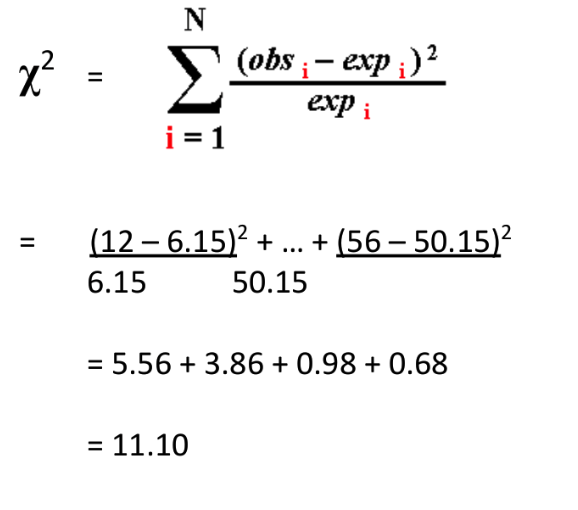
x²=Σ (O-E)²/E
O: the frequencies observed
E: the frequencies expected
: The ‘sum of’
Testing for the association between two species using the chi-squared test
1. Define the hypothesis
Null hypothesis: there is no significant difference between the distribution of two species
Alternative hypothesis: there is a significant difference between distribution in species
2. Complete the contingency table of observed frequencies using the data provided
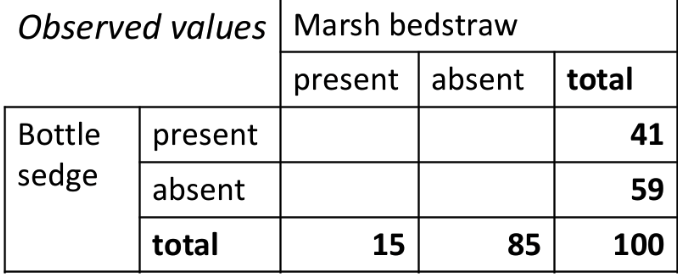
3. Calculate expected values using the formula
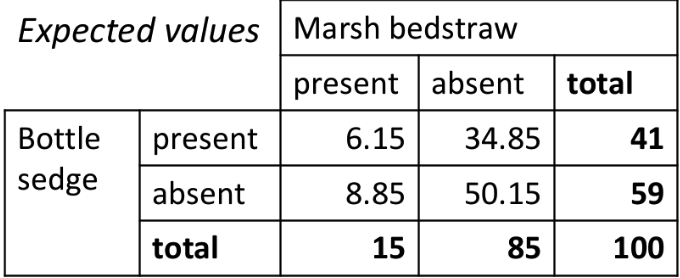
(Row total x column total)/ grand total
4. Calculate the Chi-squared value
5. Determine the degrees of freedom
(rows-1)(columns-1)
(2-1)(2-1)=1
6. Compare the X² value with the critical values and validate the hypothesis
X²> critical value = sufficient evidence to reject the null hypothesis
C.4.1.16 Predator-prey relationships as an example of density-dependent control of animal populations
When a predator makes a kill and consumes its prey, the prey population is one less
In most communities, the prey population doesn’t change much overall because new prey is being born at the same time some are being killed
Birth and death rates of predators are also mostly equal so the population also maintains stable
Sometimes relationships don’t show this
Increase in prey = increase in food availability for predators = increase in predators
Increase in predators = more prey killed = less prey
Decrease in prey = decrease in food availability = less predators
Decrease in predators = less predation of prey = more prey
C.4.1.17 Top-down and bottom up control of populations in communities
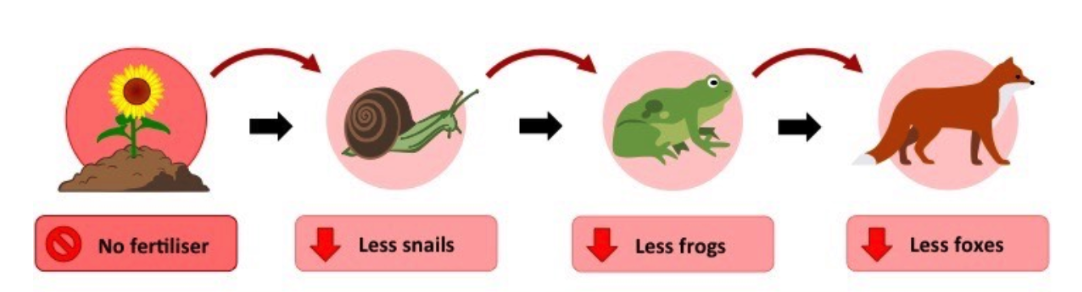
Top down control
Populations of organisms at lower feeding levels are controlled by the organisms at the top
Predators control population
Predator-controlled food web of an ecosystem
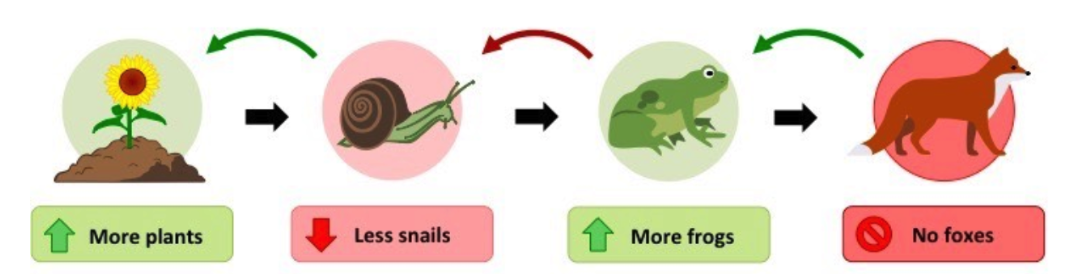
Bottom up control
Driven by the absence or presence of the producers in the ecosystem
Changes in their population will affect the population of all the species (along the food web)
Plant, algae
No fertilizer = less snails = less frogs = less foxes
Resource-controlled food web of an ecosystem
C.4.1.18 Allelopathy and secretion of antibiotics
Allelopathy
Phenomenon where plants, sometimes microorganisms, produce chemicals to inhibit the growth and development of nearby competing species
Example
Walnut trees
Toxic to a variety of crop and horticultural species including corn and soybean
Make it hard for other things to grow around there
Most allelopathic plants store protective chemicals in their leaves or roots
When leaves drop to the ground and decompose, the release the natural toxins onto the plants below which inhibit their growth.
Antibiotic secretion
The production and release of substances, termed antibiotics, that inhibit or kill other microorganisms
Example
Penicillin mold
Antibiotic that disrupts bacterial cell wall synthesis
C.4.2 Transfers of energy and matter
C.4.2.1 Ecosystems as open systems in which both energy and matter can enter and exit
Open system
Nature
Both matter and energy go in and out
Water, oxygen, sunlight, heat
Closed system
No matter going in and out
But energy going in and out
Heat, light
Isolated system
One that is very separated from everything and doesn’t exchange energy or matter with anything
C.4.2.2 Sunlight as the principle source of energy that sustains most ecosystems
Energy flows in an ecosystem and must be continuously replenished over time
The sun is the ultimate source of energy for most ecosystems
C.4.2.3 Flow of chemical energy through food chain
Consumers
Ingest organic matter which is living or recently killed
Food chains
Show the flow of energy through the trophic levels of a feeding relationship
Trophic level
Feeding position of an organism in a food chain
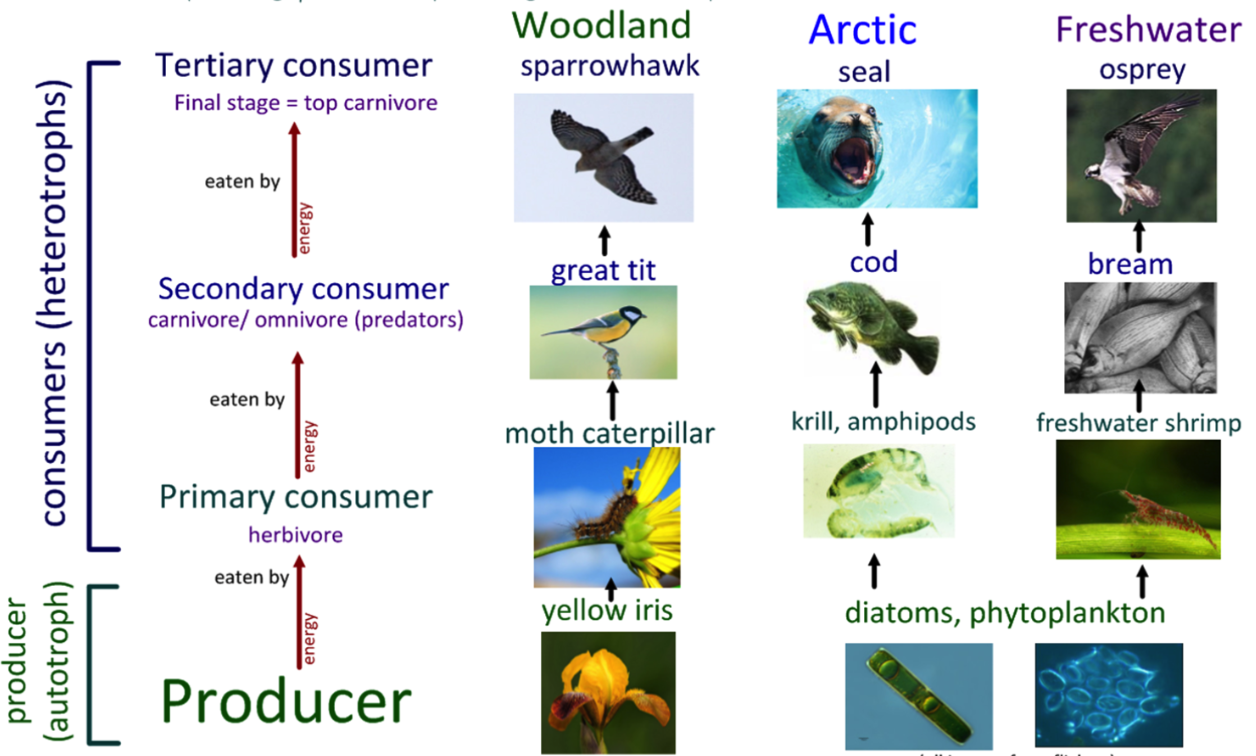
C.4.2.4 Construction of food chains and food webs to represent feeding relationships in a community
Food webs
Show all of the feeding relationships within a habitat
Contain many food chains
C.4.2.5 Supply of energy to decomposers as carbon compounds in organic matter coming from dead organisms
Decomposers
Fulfil a vital role in an ecosystem of recycling nutrients back into the system
Get their energy from the waste products and death of other organisms
C.2.4.6 Autotrophs as organisms that use external energy sources to synthesize carbon compounds from simple inorganic molecules
Producers
Responsible for using the sun’s energy to produce useful carbon compounds
Amino acids, sugars, fatty acids, organic bases
Plants use sun to synthesis glucose from CO2
C.4.2.7 Use of light as the external energy source in photoautotrophs and oxidation reactions as the source of energy in chemoautotrophs
Chemoautotrophs
Use energy obtained from the oxidation of hydrogen sulfide, methane, or ammonium, to transform carbon dioxide into organic biomass
Examples
Hydrothermal vent bacteria
Iron oxidizing bacteria
C.4.2.8 Heterotrophs as organisms that use carbon compounds obtained from other organisms to synthesize the carbon compounds that they require
Complex carbon compounds such as proteins and nucleic acids are digested either externally or internally and are then assimilated by constructing the carbon compounds that are required by heterotrophs
Examples
Mushrooms
C.4.2.9 Release of energy in both autotrophs and heterotrophs by oxidation of carbon compounds in cell respiration
All organisms gain energy (ATP) through respiration
Carbon dioxide and heat are released as byproducts of this process
Oxidation is respiration
Sunlight is the initial energy source for almost all communities
Energy flows through the food chain, being lost at each stage due to respiration
Nutrients are recycled
Energy needs to be replenished
In an ecosystem
Energy flows (continuously originating from sun)
Nutrients are recycled (by decomposers
C.4.2.10 Classification of organisms into trophic levels
Producers
Autotrophic
Make their own carbon compounds using external energy sources
Start of the food chain
Primary consumers
Herbivores
Feed on producers
Second in food chain
Secondary consumers
Eat primary consumers
Third in the food chain
Tertiary consumers
Eat secondary consumers
Fourth in the food chain
C.4.2.11 Construction of energy pyramids
Fat at bottom and skinny at the top because energy is lost as you ascend in trophic levels
More prey and consumers than there are predators
C.4.2.12 Reductions in energy availability at each successive stage in food chains due to large energy losses between trophic levels
Pyramids of energy
show the flow of energy between trophic levels
Measured in units of energy per unit area per unit time
kJ m^-2 y^-1
m: meter
y: year
Transfer of energy is never 100% efficient
Around 90% of energy is lost between trophic levels
not ingested
not digested or assimilated
excreted
lost as heat from respiration
C.4.2.13 Heat loss to the environment in both autotrophs and heterotrophs due to conversion of chemical energy to heat in cell respiration
Energy transfer between trophic levels is typically only 10% efficient
90% is lost as heat
Production efficiency
Only fraction of energy stored in food
Energy used in respiration
Lost as heat
Energy flows within ecosystem
C.4.2.12 Primary production as accumulation of carbon compounds in biomass by autotroph
Two types of productivity
Primary
Productivity of autotrophs (plants)
Measured as rate of photosynthesis
Secondary
Productivity of heterotrophs (animals)
Conservation of energy into biomass for a given period of time is measured as productivity
The units are mass (of carbon) per unit area per unit time and (g m^-2 yr^-1)
Biomass accumulates when autotrophs and heterotrophs grow or reproduce
Biomes vary in their capacity to accumulate biomass
Areas with higher rainfall and higher temperatures are also the ones with the highest productivity
Primary productivity is very dependent on rainfall and temperature
C.4.2.14 Restrictions on the number of trophic levels in ecosystems due to energy losses
Food chains are generally short because energy transfer from one level of a food chain to the next is very inefficient
C.4.2.15 Primary production as accumulation of carbon compounds in biomass by autotrophs
Conservation of energy into biomass for a given period of time is measured as productivity
Units
Mass (of carbon) per unit area per unit time
Biomass accumulates when autotrophs and heterotrophs grow or reproduce
Biomes vary in their capacity to accumulate biomass
C.4.2.16 Secondary production as accumulation of carbon compounds in biomass by heterotrophs
Amount of plant being converted into animal
Energy available in consumers
Measure
(food eaten - energy in feces) - respiration
NPP OR NSP = GPP OR GSP - R
NPP: net primary production
NSP: net secondary production
GPP: gross primary production
GSP: gross secondary production
R: respiration
C.4.2.17 Constructing the carbon cycle diagrams
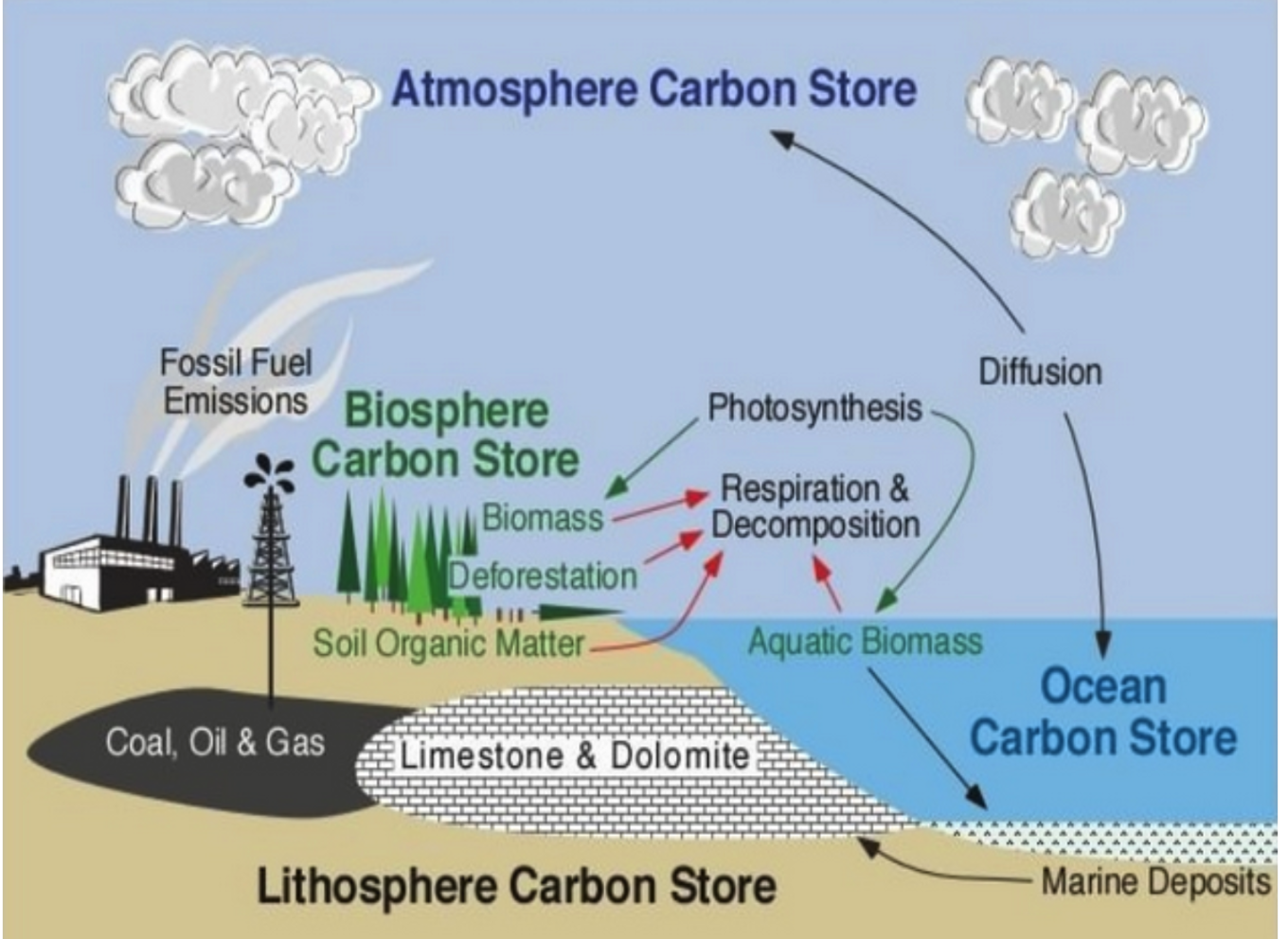
C.4.2.18 Ecosystems as carbon sinks and carbon sources
All autotrophs convert carbon dioxide (from atmosphere or dissolved in water) or into organic compounds
Carbon Sources
Things that release carbon
Decomposition of matter produces methane(CH4)
Respiration in all organisms produces CO2
Methane CH4: burns to give Water and CO2
Methanogenesis: Methane is produced from organic matter in anaerobic conditions by archaeans and some diffuses into the atmosphere
Archaea
Microorganisms that share some traits of bacteria and some of eukaryotes
Carbon Sinks
Things that store carbon
The ocean
CO2 will move into ocean and dissolve into the water
Most CO2 will combine with water to become carbonic acid
Limestone
Animals such as reef building corals and mollusks have hard parts that are composed of calcium carbonate and can become fossilized in limestone
Calcium Carbonate
An aquatic carbon sink
C.4.2.19 Release of carbon dioxide into the atmosphere during combustion of biomass, peat, coal, oil, and natural gas
Peat formation
Soil-like peat forms when organic matter (dead vegetation) is partially decomposed in anaerobic conditions in waterlogged soils
Burns well
Used as a fuel source
If not burning its an important sink
Conditions
Low oxygen
Slightly acidic soils
Anaerobic decomposition
slow
in absence of oxygen
Fossil fuels
Coal, oil, and gas formation
Partially decomposed organic matter from past geological eras was converted into crude oil, natural gas, or into coal
How coal was formed
Swamp 300M y/ago
Before dinosaurs, many giant plants died in swamps
Water 100M y/ago
Over millions of years, the plants were buried under water and dirt
Rocks and dirt → coal
Heat and pressure turned the dead plants into coal
Combustion
Reaction of hydrocarbons with heat and oxygen to release energy and produce CO2 and H2O
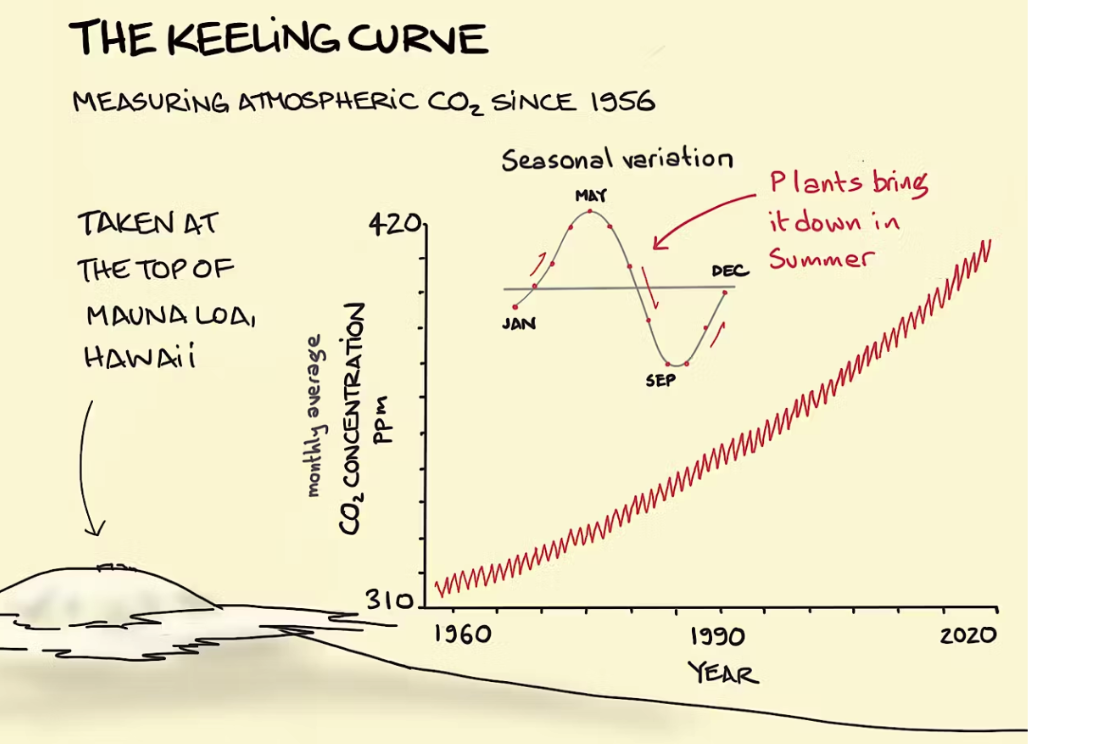
C.4.2.20 Analysis of the Keeling Curve in terms of photosynthesis, respiration and combustion
Shows the general increase in CO2 over the years
Cycles every year
Higher in May
Lower in September
Plants in summer
Blooming
High photosynthesis
They’re absorbing all the CO2 so there’s less in the atmosphere
C.4.2.21 Dependence of aerobic respiration on atmospheric oxygen produced by photosynthesis, and of photosynthesis on atmospheric carbon dioxide produced by respiration
It is not possible to measure the size of carbon sinks and the fluxes between them.
Estimates are based on many different measurements are often published with large uncertainties as a result
C.4.2.22 Recycling of all chemical elements required by living organisms in ecosystems
Nitrogen cycle
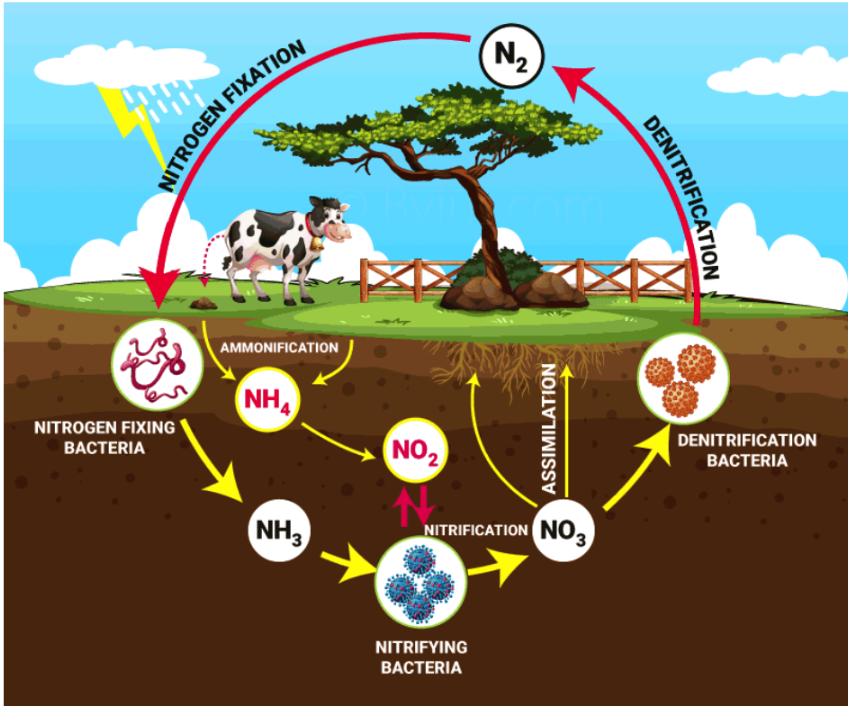
All nutrients recycle
Unit 4: D: Continuity and change
Molecules
D.1.1 DNA Replication
D.1.1.1 DNA replication as a production of exact copies of DNA with identical base sequence
Cell cycle
Every cell has a life span
They divide and grow
Before division they need to double up genetic material (interphase)
DNA replication
The production of new strands of DNA with base sequences identical to existing strands
Required for two life processes
Reproduction
Growth and tissue replacement in multicellular organism
Before a cell divides into 2 daughter cells it must replicate all of its DNA
D.1.1.2 Semi-conservative nature of DNA replication and role of complementary base pairing
Replication happens in a semi-conservative way
Each time DNA is copied, the new double stranded molecule consists of one old template strand plus a new complementary strand made from previously free bases
Conserving exactly 50% of the OG
Replication
Making a new copy of DNA
Complementary base pairing makes it so that mistakes rarely happen
Makes it very unlikely that they will bond with the wrong partner
If it goes wrong we get a mutation
D.1.1.3 Role of helicase and DNA polymerase in DNA replication
Helicase
Unwinds and unzips DNA
An enzyme
Breaks the hydrogen bonds between complementary base pairs
ATP is needed by helicase to move along the DNA molecule and to break the bonds
The two separated strands become parent/templates for the replication process
DNA polymerase
Creates complementary strands
Uses two original strands as templates
Moves along the template strands, adding one nucleotide at a time
Reads the code (A,T,C,G) and brings in the complementary base pair to create new strand
Moves in a 5’ to 3’ direction
D.1.1.4 Polymerase chain reaction and gel electrophoresis as tools for amplifying and separating DNA
Polymerase chain reaction (PCR)
Amplifying small amounts of DNA
Useful for testing crime scene samples of blood, semen, hair, etc.
Process artificially recreates DNA replication
Taq DNA polymerase
Artificial way we do replication
Comes from heat-resistant bacterium, Thermus aquaticus, that lives in hot springs
Can resist denaturation at high temperatures required to separate DNA strands in PCR
Copies up to 1000 nucleotides per minute
PCR process
1: Denaturation
DNA sample is heated to 95 C to break hydrogen bonds and separate it into two strands
2: Annealing
DNA sample is cooled to 54 C which allows primers to attach to opposite ends of the target sequence
Primers: signal molecules, guide the Taq polymerase to attach to the DNA fragments and start replication process
3: Elongation
Taq polymerase sees primers and starts copying the strands
One cycle of PCR creates two identical copies of the DNA sequence
Cycle usually repeats 30 times to make larger amounts of DNA
Gel electrophoresis
DNA samples are taken and amplified with PCR
Restriction enzymes cut DNA into fragments at specific base sequences in each samples
Different length fragments move different ways along the gel, the smaller ones go really far, ends up giving you a pattern
A fluorescent marker binds to a triplet in the DNA fragments
Added to a gel electrophoresis chamber, the electric current is passed through which pushes the fragments along,
Different length fragments move differently
Smaller fragments move farther
Larger fragments stay closer to the origin
DNA is negatively charged so it moves towards the positive side of the machine
D.1.1.5 Applications of polymerase chain reaction and gel electrophoresis
DNA profiling
Forensic investigations
Straightforward, just look for a full match between the DNA sample and the potential suspects
Paternity investigations
Since offspring inherits a mix of DNA from parents, the child will show bands unique to each parent
Each band in the child’s profile must match to either a band in the mother’s profile or a band in the father’s profile
D.1.2 Protein synthesis
D.1.2.1 Transcription as the synthesis of RNA using a DNA template
Transcription is the synthesis of RNA, using DNA as a template
Because RNA is single stranded, transcription only happens along one of the two strands of DNA
Transcription happens in the nucleus
RNA polymerase is the enzyme that catalyzes the reaction
3 main types of RNA
Messenger RNA (mRNA): a transcript copy of a gene used to encode a polypeptide
Transfer RNA (tRNA): a clover leaf shaped sequence that carries an amino acid
Ribosomal RNA (rRNA): a primary component of ribosomes
D.1.2.2 Role of hydrogen bonding and complementary base pairing in transcription
Transcription
Ribonucleotide triphosphates (NTP) bond to template strand
Phosphodiester bond between NTP
Used to copy the base sequence of one of the two strands in a DNA molecule
The DNA strand that needs to be copied is called the sense strand
The other strand which has the complementary base sequence to the sense strand is called the antisense strand.
Transcription of this strand results in a strand of RNA with the same base sequence as the sense strand of DNA except that uracil is replaced with thymine
The copying of base sequences during transcription depends on complementary base pairing
Each nucleotide added to the growing RNA strand by RNA polymerase must have a base that is complementary to the corresponding base on the template DNA strand
Pairs of bases are complementary because of the hydrogen bonds formed with each other but not with other bases
Transcription occurs in the nucleus, once made, the mRNA moves to the cytoplasm (where translation can occur)
D.1.2.3 Stability of DNA templates
When RNA splits DNA into single strands and uses the template strand to guide transcription, there shouldn’t be any changes to the base sequence of the DNA
After transcription the two DNA strands pair up again with each base linked by hydrogen bonds to its complementary base on the opposite strand
The two strands are only parted for a little bit because the RNA polymerase moves along the gene, so the bases are only briefly vulnerable to chemical changes that would cause mutation
Stability is essential because they may be transcribed many times during the life of a cell
Needs to last a long time
D.1.2.4 Transcription as a process required for the expression of gene
Purpose
Genes are instructions for proteins or messages
The cell needs to take this instruction and carry it out
One gene is responsible for one protein
In transcription
The gene is converted into a mRNA messenger which is posted to the ribosomes
The ribosomes then translate the message into a polypeptide
The sequence of amino acids is determined by the gene, and in turn determines the properties of the finished protein
D.1.2.5 Translation as the synthesis of polypeptides from mRNA
To make a specific polypeptide, amino acids must be linked together in the correct sequence.
A typical polypeptide is a chain of hundreds of amino acids
Could be any of the 20
Information needed to make a polypeptide is in the base sequence of an RNA molecule copied from a gene by transcription.
Information is held as a genetic code in RNA
Code is translated to make an amino acid sequence
This process is called translation
Happens in the cytoplasm, in eukaryotes, RNA is made in nucleus and then passed out to the cytoplasm
The RNA with the information for making a polypeptide travels from one place to another in a cell, so it’s called mRNA.
Translation is the synthesis of polypeptides from mRNA
D.1.2.6 Roles of mRNA, ribosomes and tRNA in translation
mRNA has a site to which a ribosome can bind and a sequence of codons that specifies the amino acid sequence of the polypeptide
start and stop codons which indicate where translation should begin and end
One mRNA molecule can be translated many times but is broken down if it becomes damaged or if more copies of the polypeptides it codes for are not required
tRNA translates the base sequence of mRNA into the amino acid sequence of a polypeptide.
tRNA molecules have an anticodon at one end which consists of three bases
they have an attachment point at the other end for the amino acid that corresponds to the anticodon
Each type of tRNA molecule has a distinctive shape that is recognized by a dedicated activating enzyme, which attaches the correct amino acid onto the tRNA
Ribosomes are complex structures that have a large and a small unit.
Small subunit has a binding site for mRNA
Large subunit has three binding sites for tRNA and a catalytic site that makes peptide bonds between amino acids, to assemble the polypeptide
D.1.2.7 Complementary base pairing between the tRNA and mRNA
Translation depends on complementary base pairing
The three bases of an anticodon on tRNA must be complementary to the next three bases of the next codon on mRNA for the tRNA to be able to bind to the ribosome and deliver its amino acid.
D.1.2.8 Features of the genetic code
DNA is well suited to data storage because it can hold long sequences of bases which can be arranged in any order and accurately copied
Data commonly stored in DNA base sequences is amino acid sequences of polypeptides and is stored in a coded form
There are four different bases and 20 amino acids, so one base cannot code for one amino acid
There are 16 combinations of two bases, which still isn’t enough,
Living organisms use a triplet code, with groups of three bases coding for an amino acid
64 combinations of three bases
Sequence of three bases on mRNA is called a codon
Codon AUG acts as the start codon in translation
Codon UGA acts as the stop codon in translation
Genetic code is universal
Used by all living organisms and viruses
Genetic code is degenerate
Different codons can code for the same amino acid
GUU and GUC both code for valine
D.1.2.9 Using the genetic code expressed as a table of mRNA codons
Look at slides
D.1.2.10 Stepwise movement of the ribosome along mRNA and linkage of amino acids by peptide bonding to the growing polypeptide chain
An activating enzyme with an active site that fits the tRNA binds to it and attaches the specific amino acid corresponding to the anticodon of the tRNA
The tRNA carrying a single, attached amino acid binds to the A site on the ribosome, with its anticodon linked by complementary base pairing to the next codon on mRNA
The single amino acid on the tRNA is linked to the end of the growing polypeptide by formation of a peptide bond. The tRNA is now holding the whole of the growing polypeptide
tRNA moves from the A to the P site as the ribosome moves along the mRNA by one codon. The anticodon of the tRNA is still paired with the codon on the mRNA
The polypeptide held by the tRNA is transferred to another tRNA that has arrived at the A site
The tRNA moves from the P site to the E site (exit) as the ribosome moves along the mRNA by one more codon, causing the anticodon of the tRNA to separate from the codon on the mRNA and the tRNA to separate from the ribosome
Cycle starts again with an amino acid being linked to a tRNA
D.1.2.11 Mutations that change protein structure
Mutation
A change to the base sequence of a gene
A single base substitution changes the codon to another which may code for a different amino acid.
Sickle cell disease
Change due to a base substitution
Mutated gene codes for the beta-globin polypeptide in haemoglobin
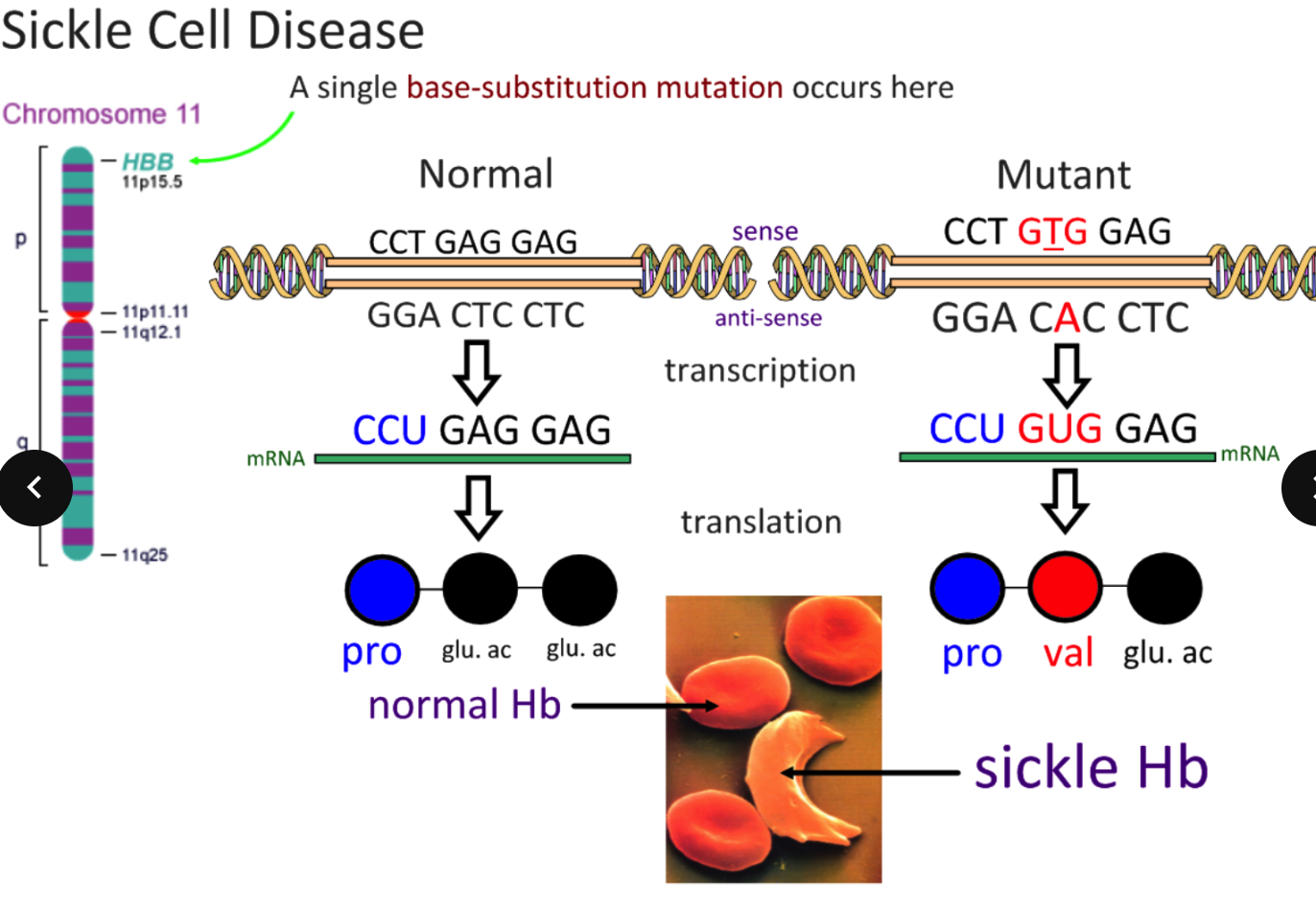
CellsCells
D.1.3 Mutation and gene editing
D.1.3.1 Gene mutations as structural changes to genes at the molecular level
Gene mutations
A permanent change in the base sequence of DNA
It is the cumulative effects of millions of mutations and natural selection that have allowed all organisms to evolve from simpler ancestors
Not all mutations cause disease
Environmental factors can increase the probability of this happening
radiation
Happen randomly
Substitution
One base in the coding sequence is replaced by a different base
Adenine for Cytosine, Guanine, or Thymine
Insertion
A nucleotide is inserted, so there is an extra base in the sequence of the gene
More major change
Deletion
A nucleotide is removed, so there is one base less in the sequence of the gene
D.1.3.2 Consequences of base substitutions
In non-coding DNA between genes on chromosomes, base substitutions are unlikely to have any effect. Only changes to the coding sequences of genes cam affect the amino acid sequence of polypeptides
Same-sense mutations are base substitutions that change one codon for an amino acid into another codon for the same amino acid
Nonsense mutation change a codon that codes for an amino acid into a stop codon
Mis-sense mutations alter one amino acid in the sequence of amino acids in a polypeptide. May not have much effect if the new amino acid has a similar structure
D.1.3.3 Consequences of insertions and deletions
Frameshift Mutation
When there is an insertion or deletion of nucleotides that is not a multiple of three
If 3 nucleotides are inserted it will insert an additional amino acid
Most detrimental mutation
Alters amino acid sequence
Can change the stop codon to lengthen or shorten the polypeptide
D.1.3.4 Causes of gene mutations
Radiation
Increases the mutation rate if it has enough energy to cause chemical changes in DNA
Gamma rays, X-Rays, alpha particles from radioactive elements such as radon are mutagenic
Short wave UV radiation in sunlight is also mutagenic
Chemical substances
Mutagenic
Polycyclic aromatic hydrocarbons and nitrosamines found in tobacco smoke
Carcinogens
Mustard gas is also mutagenic
D.1.3.5 Randomness in mutation
D.1.3.6 Consequences of mutation in germ cells and somatic cells
Germ cell mutations can be inherited
entire organism carries the mutation
Somatic cell mutations can lead to cancer
not heritable
patch of organism carries mutation
D.1.3.7 Mutation as a source of genetic variation
So evolution can happen
Cells
D.2.1 Cell and nuclear division
D.2.1.1 Generation of new cells in living organisms by cell division
All organisms need to produce new cells
growth, maintenance and reproduction
They do this by cell division
One cell divides into two, the cell that divides is called the mother cell and the result are two daughter cells
Mother cell disappears as an entity in the process, unlike reproduction by animal parents
Cells need to divide so they don’t get too big
D.2.1.2 Cytokinesis as splitting of cytoplasm in a parent cell between daughter cells
Cytokinesis
Cytoplasm of a cell is divided between two daughter cells
In animal cells
All done by contractile proteins
Form up in the middle and release material that grabs onto opposite ends of the cell membrane and drag it together causing a cleavage furrow
When the cleavage furrow reaches the centre of the cells it is pinched apart to create two daughter cells
In plant cells
Done by cell plate
Small pockets of cellulose are delivered to the centre by vesicles which makes the cell plate
Cell plate continues to develop until it reaches the cell membrane and completes division of the cytoplasm and forms two daughter cells
D.2.1.3 Equal and unequal cytokinesis
Oogenesis
Production of a mature egg characterized by an unequal cytokinesis
Budding in yeast
Yeast cells reproduce asexually by budding
D.2.1.4 Roles of mitosis and meiosis and eukaryotes
Growth
Multicellular organisms increase in size by increasing their number of cells through mitosis
Asexual reproduction
Certain eukaryotic organisms may reproduce asexually by mitosis
Tissue repair
Damaged tissue can recover by replacing dead or damaged cells
Embryonic development
A fertilized egg (zygote) will undergo mitosis and differentiation in order to develop into an embryo
Mitosis
Human diploid number is 46
Haploid is 23
Gametes are haploids because they contain half the genetic material
Continuity
Used to produce genetically identical cells
Cells produced using mitosis have the same number of chromosomes as the parent cell
Have the same genes as the parent cell, so mitosis maintains the genome
Ensures that every cell in a multicellular organism has all the genes it needs
Ensures that the cells in an individual are genetically identical, preventing tissue rejection
Allows a successful genome to be inherited without changes by offspring in asexual reproduction
Meiosis
Change
Used to halve the chromosome number from
D.2.1.5 DNA replication as a prerequisite for both mitosis and meiosis
Interphase
The parts of the cell cycle that don’t involve cell division
Longest part of the cell cycle
Protein synthesis and DNA replication
G1
Increase the volume of the cytoplasm
Organelles produced
Protein synthesized
Synthesis
DNA replicated
G2
Increase the volume of cytoplasm
Organelles produced
Proteins synthesized
Mitosis
Prophase
DNA supercoils, chromatin condenses and becomes sister chromatids, which ware visible under a light microscope
The centrosomes move to opposite poles of the cell and spindle fibres begin to form between them
The nuclear membrane is broken down and disappears
Metaphase
Spindle fibres from each of the two centrosomes attach to the centromere of each pair of sister chromatids
Contraction of the microtubule spindle fibre cause the sister chromatids to line up along the centre of the cell
Anaphase
Continued contraction of the microtubule spindle fibres cause the separation of the sister chromatids
The chromatids are now referred to as chromosomes
Chromosomes move to the opposite poles of the cell
Telophase
The chromosomes uncoil and decondense to chromatin and are no longer visible under light microscope
Chromosomes arrive at the poles
Microtubule spindle fibres disappear
New nuclear membranes reform around each set of chromosomes
Cytokinesis begins
D.2.1.6 Condensation and movement of chromosomes as shared features of mitosis and meiosis
DNA supercoiling
It bundles up
It twists itself and when done a lot it does supercoiling
Done because it’s so long and needs to be managed
Done by wrapping the double helix of DNA around histone proteins to form nucleosomes, and linking the nucleosomes together
Sister chromatids
duplicated chromosomes attached by a centromere
Centromere
Part that links the sister chromatids
Centrioles
Organise spindle microtubules
Release the fibres (spindle fibres) that divide the chromosomes
Spindle fibres
Help separate the chromosomes
Two centrioles
Centrosome
D.2.1.9 Meiosis as a reduction division
Meiosis
Process that divides one diploid (2n) eukaryotic nucleus to form four haploid (n) nuclei
The original 2n cell is divided twice in this process
Meiosis I
Prophase I
Crossing over
Homologous chromosomes pair up and condense
Nuclear membrane breaks down
Metaphase I
Homologous chromosomes line up
Microtubules from the two poles link to different homologous chromosomes in each pair
Anaphase I
Homologous chromosomes separate from each other and pulled to opposite ends
Telophase I
Two haploid nuclei are formed and both prepare for second division of meiosis
Meiosis II
Prophase II
Chromosomes move to opposite ends of the cell
Metaphase II
Spindle fibres align the chromosomes along the cell equator
Anaphase II
Sister chromatids are pulled apart from each other and move to opposite sides of the cell
Telophase II
Nuclear membranes form again around the chromosomes
Spindle fibres break apart
Cell undergoes cytokinesis
End up with 4 haploid cells
Since the chromosome number is halved, meiosis is called a reduction division
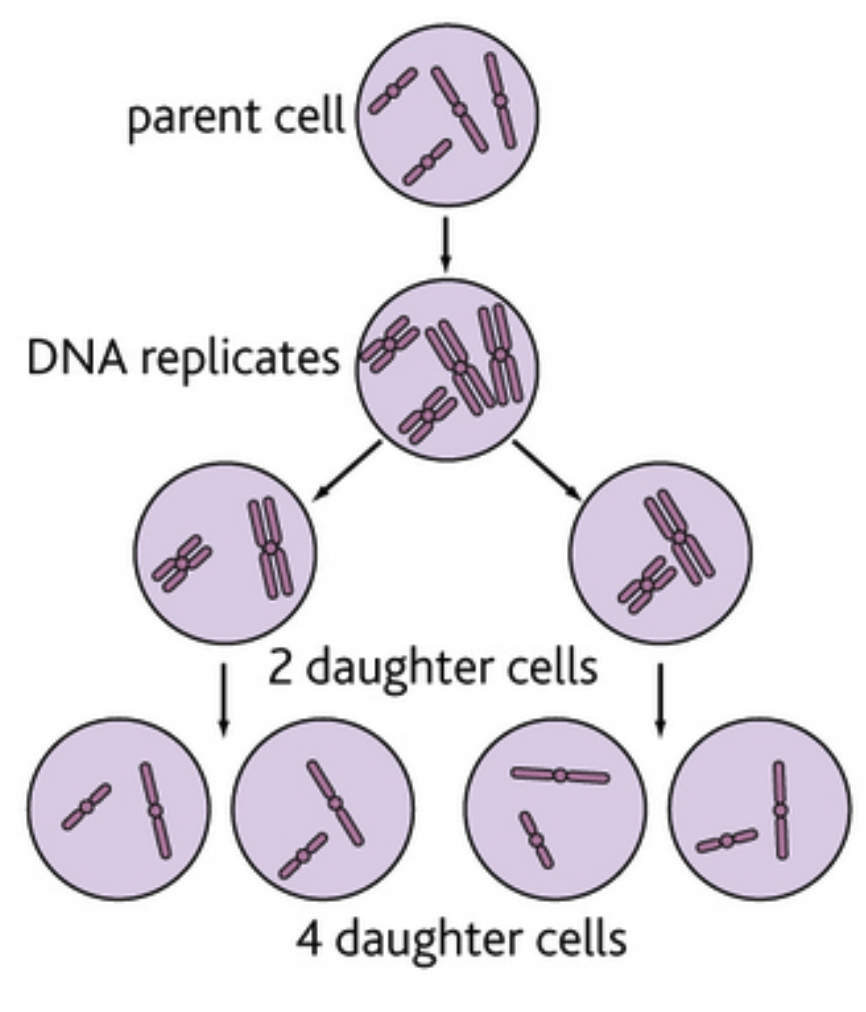
D.2.1.10 Down syndrome nondisjunction
Nondisjunction
Chromosomes fail to split properly in Anaphase I or II
Anaphase I: Affects all the gametes
Anaphase II: can affect all or some
A pair of homologous chromosomes might move to the same pole in Anaphase I, or both chromatids of one chromosome might move to the same pole in Anaphase II
Result is the production of a gamete with an extra chromosome or a missing chromosome
Trisomy
Extra chromosome
Monosomy
Missing chromosome
Ex: Down syndrome
Person having three copies
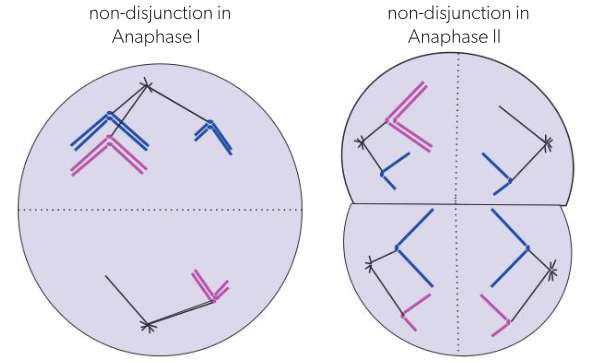
of chromosome #21
Trisomy on the 21st chromosome
D.2.1.11 Meiosis as a source of variation
The orientation of the bivalents (homologous pairs) is random and affects which of the homologous chromosomes and will be assorted into which sex cell
2²³ ways the 23 pairs could arrange at this stage, giving more than 8 million possible ways of dividing the bivalents
In metaphase I
Randomly you get 23 from mom and 23 from dad because of sexual reproduction
Crossing over
In prophase
When a sister chromatid from each of the homologous chromosomes form a junction at a random point to exchange genes
They synapse (homologous chromosomes pair up)
Results in chromatids with new allele combinations
Chiasma
Kind of like a centromere
Allows for the exchange of genetic material
In asexual reproduction
Offspring have same chromosomes as parents and are genetically identical
Stickbugs
In sexual reproduction
Differences between parent and offspring chromosomes which creates genetic diversity
The fusion of a male and female gamete to form a zygote results in a mixture of alleles that has likely never existed before
Organisms
D.3.2 Inheritance
D3.2.1 Production of haploid gametes in parents and their fusion to form a diploid zygote as the means of inheritance.
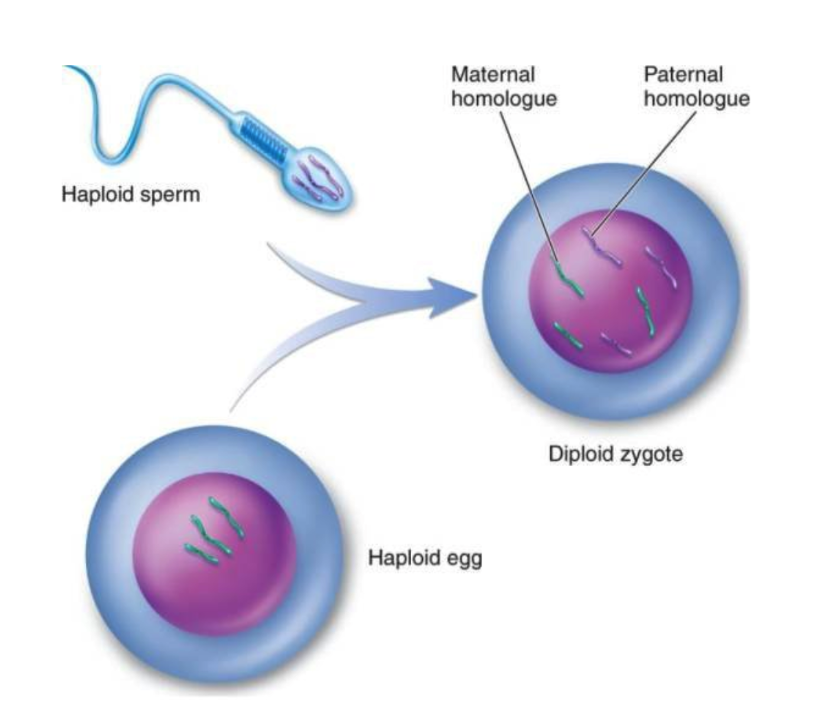
In meiosis each haploid gamete gets only one of the two alleles that a parent has for eac gene
Which allele each sex cell receives is random
D.3.2.2 Methods for conducting genetic crosses in flowering plants
Gregor Mendel
Established pure breeding lines by breeding one trait until only that trait came out
and did cross breeding to see how genetics worked
He noticed that certain versions of a trait show up when crossed with a purebred plant
Dominant versions of the trait
Other versions of the trait only showed up in hybrid crosses or when the dominant trait was not present in either parent
Recessive traits
Monohybrid cross
Using a punnett square
Crossing a single trait
D.3.2.3 Genotype as the combination of alleles inherited by an organism
Phenotype
The outward characteristic
The trait you’re interested in
Green, tall, etc.
Alleles of the gene
Different versions of the trait
Expression of alleles of a gene carried by an organism
Genotype
Combination of alleles of a gene carried by an organism
Alleles
Different versions of a gene
Dominant alleles: capital letter
Recessive alleles: lowercase letter
Homozygous dominant
Two copies of the same dominant allele
AA
Homozygous recessive
Two copies of the same recessive allele
Only expressed when both are recessive
aa
Codominant
Pair of alleles which are both expressed when present
Heterozygous
Having two different alleles
The dominant allele is expressed
Aa
Gene Loci
Specific positions of genes on a chromosome
Carrier
Heterozygous carrier of a recessive disease-causing allele
Gametes are haploid
Contain one copy of each chromosome and therefore one allele of each gene
When the male and female gametes fuse in fertilization, the resultant diploid cell — called the zygote — will have two alleles of each gene, one from each parent
D.3.2.4 Phenotype as the observable traits of an organism resulting from genotype and environmental factor
Genotype
Organism’s genetic information
BB: homozygous dominant
Bb: heterozygous
bb: homozygous recessive
Phenotype
The outward characteristic
The trait you’re interested in
Green, tall, etc.
Alleles of the gene
Different versions of the trait
Expression of alleles of a gene carried by an organism
D.3.2.5 Effects of dominant and recessive alleles on phenotype
Dominant alleles always show their encoded trait when they present in an organism
Code for functional proteins
Recessive alleles only express their encoded traits when no other alleles present
Code for non-functional proteins
Codominant alleles can have joint effects if both are present
D.3.2.6 Phenotypic plasticity as the capacity to develop traits suited to the environment experienced by. an organism, by varying patterns of gene expression
Phenotypic plasticity
The capacity of an individual organism to alter its behavior, physiology, and/or morphology in direct response to changing environmental conditions
Many genetic diseases in humans are due to recessive alleles of autosomal genes
Autosomal gene
A gene whose loci is on an autosome (not a sex chromosome)
Genetic disease
Disorder caused by a gene
A muted allele causes a protein to be altered with impairs normal function
Most disease causing alleles are recessive
Individuals can be carriers for these genetic disorders but are not affected
D.3.2.7 Phenylketonuria as an example of a human disease due to a recessive allele
Autosomal gene is a gene who’s loci is on an autosome
Genetic disorder
Disorder caused by a gene
Huntington’s disease
PKU
If you have PKU phenylalanine cannot be converted to tyrosine
Amino acid
Builds up in body
Brain seizures
D.3.2.8 Single nucleotide polymorphisms and multiple alleles in gene pools
A gene consists of a length of DNA that can be hundreds or thousands of bases in length
Alleles of a gene often differ only very slightly in their base sequence
These base differences are called Single Nucleotide Polymorphism (SNIPS)
base pairs in genes that give rise to different alleles
D.3.2.9 ABO blood groups as an example of multiple alleles
In humans, ABO blood group is determined by a single gene on chromosome #9 and is an example of multiple alleles (and codominance)
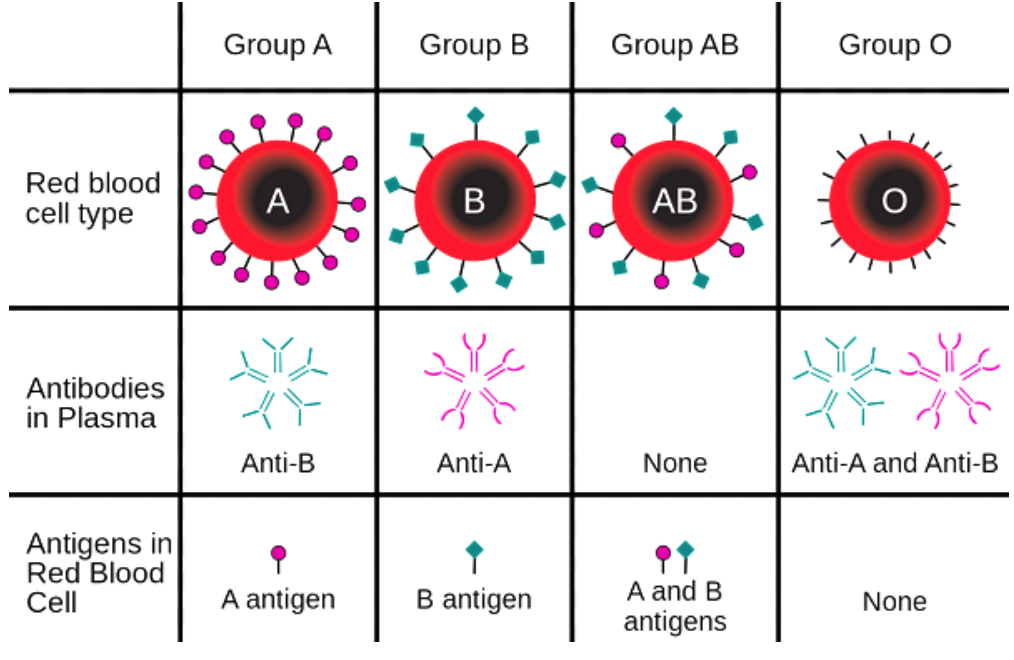

D.3.2.10 Incomplete dominance and codominance
Incomplete dominance
Some genes have pairs of alleles where neither allele is fully dominant over the other
A mix of both come out
Red and white but neither is dominant, you get pink
Codominance
Some Both alleles are dominant
ABO blood group is an example
Blood group AB is a dual phenotype and is not intermediate between group A and B
Different blood groups have different glycoproteins
D.3.2.11 Sex determination in humans and inheritance of genes on sex chromosomes
The sex chromosomes are non-homologous
There are many genes on the X chromosome which are not present on the Y chromosome
Sex linked traits are those which are carried on the X chromosome in the non-homologous region
They are more common in males
Haemophilia
Color blindness
D.3.2.12 Haemophilia as an example of a sex-linked genetic disorder
A recessive X-linked mutation in people with haemophilia results in globular proteins called clotting factors not being produced
The clotting response to injury and bleeding does not work and the patient can bleed to death
Potential treatment
Injections of clotting factors produced industrially through gene transfer
1. Find gene for healthy human clotting factors
2. Insert into sheep milk gene in sheep embryos
3. Extract clotting factor from sheep milk
4. Purify and produce injections for patients
D.3.2.13 Pedigree charts to deduce patterns of inheritance of genetic disorders
Used to trace family histories and deduce genotypes and risk in the case of inherited gene-related disorders
Sex of person
Square: male
Circle: female
Presence of trait
Shading: affected
Unshaded: unaffected
Half shaded: carrier
Crossed out: dead
Rows represent generations
Sex linked, recessive
Trait can skip generations
Males are predominantly affected
Autosomal recessive
Trait can skip generations
No major sex-bias in expression
Autosomal dominant
Trait can’t skip generations
No major sex-bias in expression
D.3.2.14 Continuous variation due to polygenic inheritance and/or environmental factors
Polygenic inheritance
Many genes making up one trait
Skin color
Continuous variation in the phenotype
4 separate genes
You get a mix and blend of skin colors
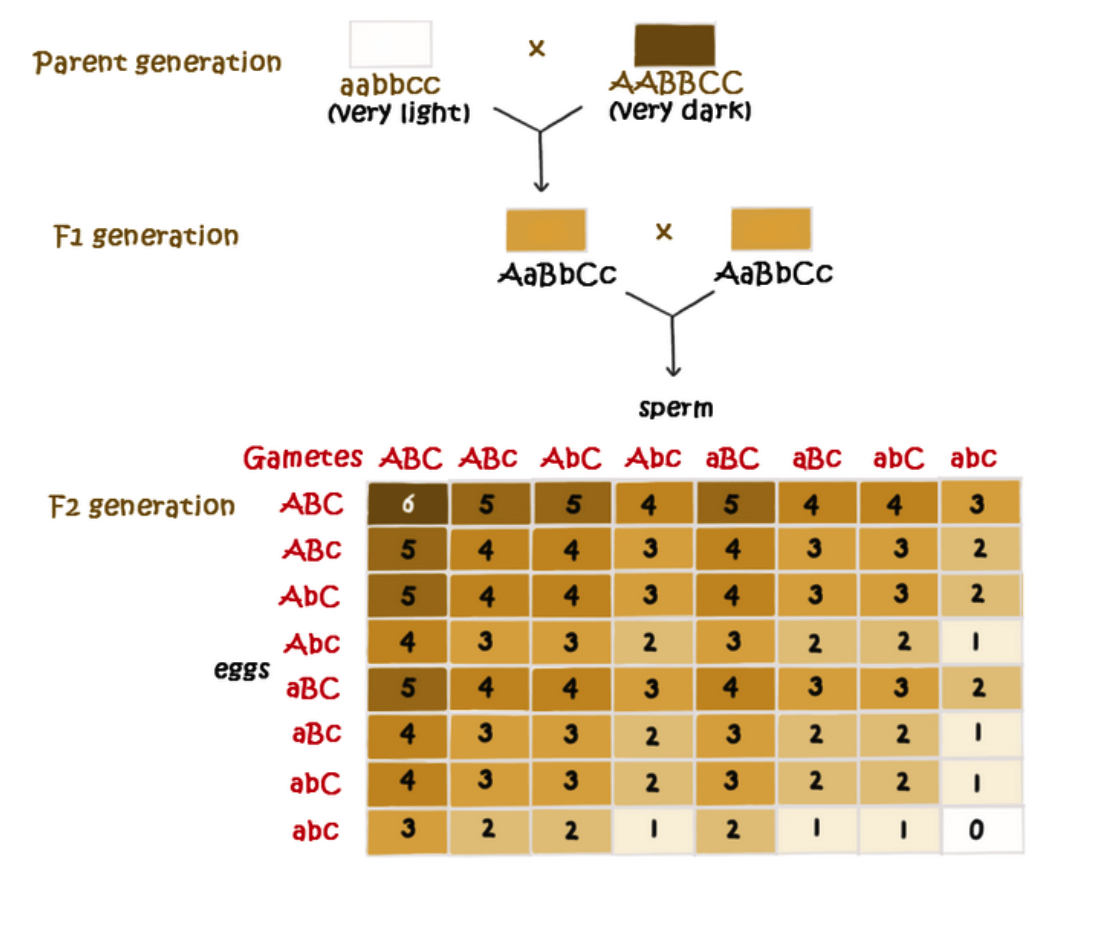
D.3.2.15 Box-and-whisker plots to represent data for a continuous variable such as student height
Displays:
Outliers
1.5 x IQR
Minimum
Maximum
1st Quartile
3rd Quartile
Median
D.4.3 Climate change
D.4.3.1 Anthropogenic causes of climate change
Greenhouse effect
CO2 and other gases in the atmosphere trap heat, keeping the earth warm
Greenhouse gases
Water vapour
CO2
Methane
Nitrous oxide
Elevated levels of greenhouse gases are strongly correlated with an enhanced greenhouse effect
CO2, methane, water vapor, and oxides of nitrogen increase, more radiation is reflected back to earth instead of being lost to space
Anthropogenic
et Human caused
Increase in global temperature as CO2 increases
Ice core data over the last 400,000 years
Temperature shows greater variation than CO2
Most but not all rises and falls in CO2 have correlated with temperature rises and falls
Link between human emissions and atmospheric levels of CO2
Strong correlation between human emissions and atmospheric levels of CO2
As atmospheric CO2 levels have increased the amount of CO2 absorbed by carbon skinks has increased
Climate science controversy
Some claim human actions are not main reason for recent increases in carbon and global temperatures
Anaerobic decomposition
Methane formation
Aerobic decomposition
CO2
D.4.3.2 Positive feedback cycles in global warming
Climate feedback loops can be positive or negative
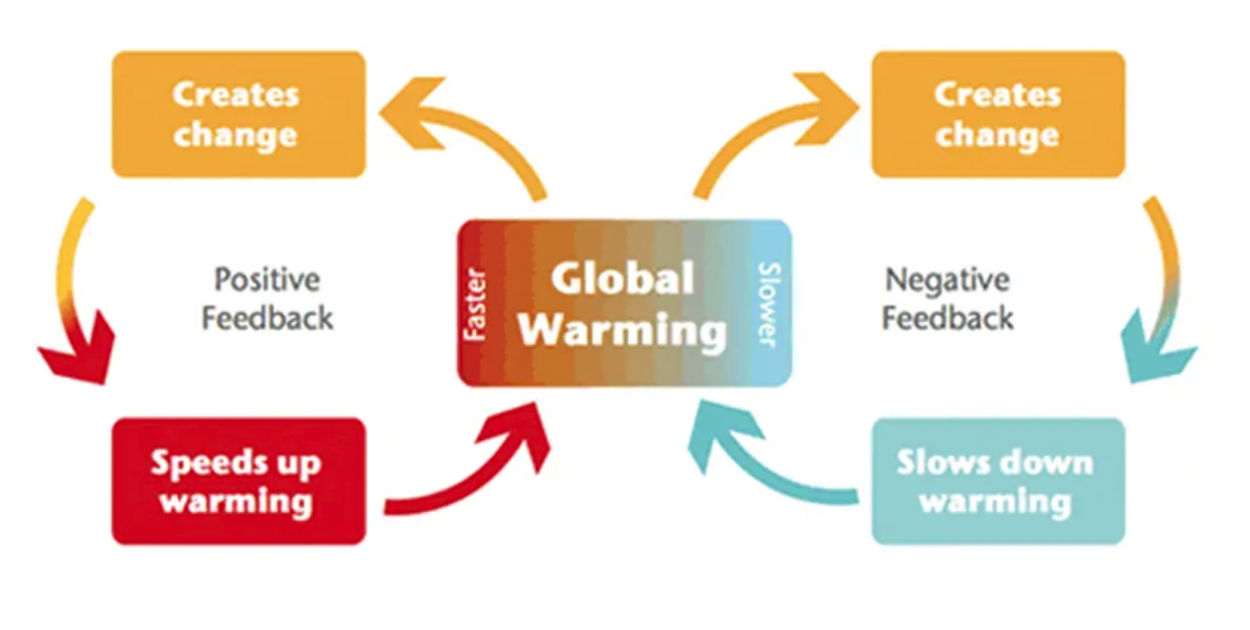
Example: Albedo
Measure of how reflective a white surface
Ice has a high albedo and therefore arctic regions can reflect back a lot of the suns radiation and keep the earth cool
A reduction in this ice, therefore leads to a reduction in cooling
Example: decomposing organic matter
Once exposed due to melting of permafrost can lead to an increase in methane emissions as a result of decomposition
Its thawing releases methane which warms up the earth which melts the permafrost and it becomes a cycle
Example: forest fire feedback loop
High temp = more forest fires
More forest fires = more CO2 in atmosphere
More CO2 in atmosphere
= warmer earth
Warmer earth = dryer forest
Dryer forest = more forest fires
D.4.3.3 Change from net carbon accumulation to net loss in boreal forests as an example of a tipping point
Boreal forest
Originally carbon sink
Warmer temperatures and decreased winter snowfall has led to increased incidence of drought and reductions in primary production in taiga, with forest browning and increases in the frequency of forest fires, which result in legacy carbon combustion
Tipping point
System becomes destabilized and can’t come back to its original state
Point of no return
At some point the slightest push makes it fall off the edge and becomes irreversible
D.4.3.4 Melting of landfast ice and sea ice as examples of polar habitat change
Emperor penguins
Make babies on big sheets of ice that extend into ocean
Sheets are melting so there’s less ice
Over years colonies decide to not make babies
Penguin population reduced
Walrus
Rest and catches its breath on ice and can’t do that with no ice
Polar bears
Need ice to hunt and feed themselves
D.4.3.5 Changes in ocean current altering the timing and extent of nutrient upwelling
Temperature is an important factor for driving the currents in our oceans
Currents
Super important
Affected by temperature and salinity
Transport nutrients
Give stable climate to many countries
Upwelling
Process that occurs in some of the world’s coastlines when cold nutrient rich water is brought to the Surface as a result of surface winds
Due to climate change, warmer surface water can prevent nutrient upwelling to the surface
This negatively impacts ocean primary production and energy flow through the entire marine food chain
No upwelling = no photosynthesis = no food = collapse of foodchain
D.4.3.6 Poleward and upslope range shifts of temperature species
Peru
3 species of birds lived on separate parts of the mountain
Top was cold but due to climate change it became warm
Other birds went up and outcompeted endemic species
D.4.3.7 Threats to coral reeds as an example of potential ecosystem collapse
Threats to coral reefs
Dissolved carbon dioxide increases acidity of oceans which breaks down calcium carbonate that makes up reefs
pH decreasing = more acidic
Temperature is too high for survival