Plant defences
Transmission of pathogens in plants
direct transmission
contact with any part of a diseased plant
vectors
wind
water
animals
humans
soil contamination
spores remain in soil
Reducing chances of disease transmission
Use plants that are not susceptible to a specific disease
Do not plant too close together
Provide minerals
Ensure environmental conditions are good
not damp and warm
reduce climate change
3 factors for disease
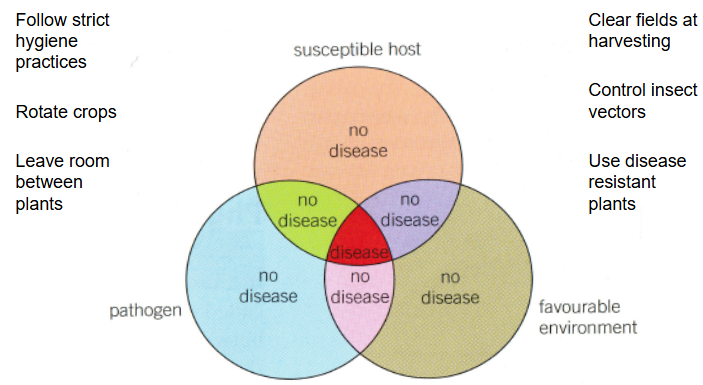
Following strict hygiene practices - removes pathogen
rotate crops - removes favourable environment
leave room between plants - removes favourable environment
clear fields at harvesting - removes all
control insect vectors - removes pathogen and favourable environment
using disease resistant plants - removes susceptible host
Plant defences
similar to humans
barriers
bark
waxy cuticle
cellulose cell walls
stomata closing
different to humans
do not repair damaged tissue
seal off and replace using meristem tissue
Physical defences
molecules or chemicals from a pathogen are detected by receptors in the plant cell
signalling molecules are produced which switch on genes in the nucleus
transcription and translation of these genes results in a range of defensive responses
defensive chemicals are used to:
warm other cells
attack pathogen directly
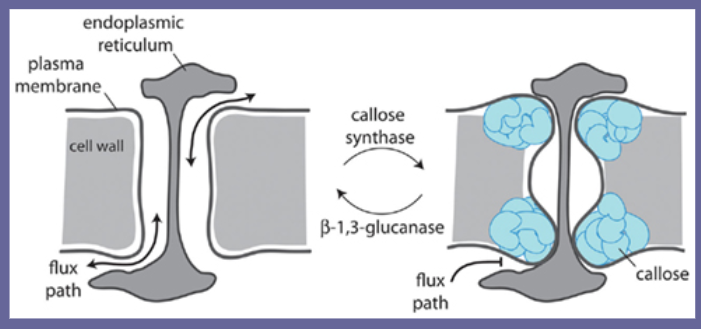
Callose and lignin produced
strengthens cell walls from further attack from pathogenic enzymes (eg)
callose seals sieve plates and plasmodesmata so infected part of plant sealed off and pathogen cannot spread
(callose is made of glucose molecules joined by BETA 1,3 and BETA 1,6 linkages)
Chemical defences
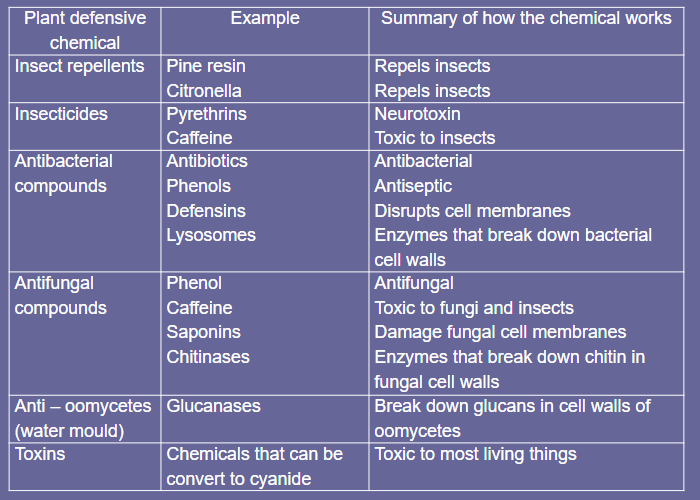
plants produce chemicals to:
repel disease vectors
kill pathogens
We also make use of these chemicals:
eg insecticides, antifungals, antimicrobials
herbs and spices
caffeine