Cell Signaling
Cell Signaling
A signal is passes
Cell signaling is required because cells respond to extracellular signals to produce
- the cell responds to outside signals to adapt the signal into the cell
- Intracellular pathways to accomplish a goal
Cells have intercellular signaling to produce an output
A change in response to extracellular signal
Intercellular pathway to accomplish a goal
Extracellular signaling
Communitication passes from one cell to another with a molecule and receptor interaction
- Endocrine signaling, endocrine secretes something that acts as a receptor in bloodstream in which the receptor is picked up by the target cell (diffusible signal)
- Paracrine signalling is a diffusible signal on smaller distance between cells
- Synaptic signalling; also short-range signalling with an axon transmitter between cells
- Contact-dependent signalling; extremely close range signaling where two cell have molecules that adhere to each other
The 3 Types of intracellular pathways are metabolic pathways, slot pathway (ETC) and signalling pathway
Cell signaling does not act as an assembly line but acts as a series of events
- The signal enter/transmits into the cell
- Amplify the signal to make the signal stronger
- Since the signal has been amplified their are multiple signals so the cell must integrate them into a response so it takes multiple signals and brings them down to step 4( distribute the signals): integrate other pathways
- Distrubuted signals to cellular functions that need to occur that are the outputs
Transmits signal into the cell
Transmission into the cell can occur through direct permeability
Transmission into the cell can occur through gated channels only open with the signalling molecule and with something else going through: where the signal does not pass through but the molecule moving with the signal does pass through the membrane: where the signal is transduced after entering a channel
Transmemebrane receptor: the signal attaches to the receptor. Nothing goes through but the shape of the receptor is changed: signal is transduced
Amplify the signal
Once the single is inside the cell we start the process from primary messenger to second messager
A second messenger is a intercellular signaling molecule that is not present except when the pathway is active
- often this pathway is opened by an enzyme
- Each second messenger produced during amplication will go bind with a target activation
For the molecule that produces the second messenger
Amplify signal the signal through a Kinase Cascade
This is a series of kinases that phosphorylate one to the next
- Kinase cascade
Series of kinases that phosphorylate each other with logarithmic growth of the signal labeled as one to many activation
/ where one kinase can phosphorylate a variety of kinases
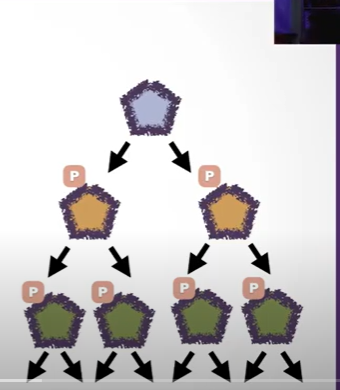
After amplication there should be an integration of the signals
Integrate and Distribute Signals
The collected signals must be integrated and collected as a signal which is described as: fan in
When a signal is amplified and distributed the process is a: fan out
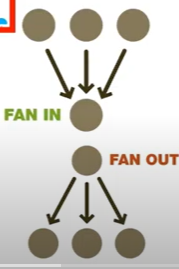
Generalize Signaling Behaviors in a Signal Pathway
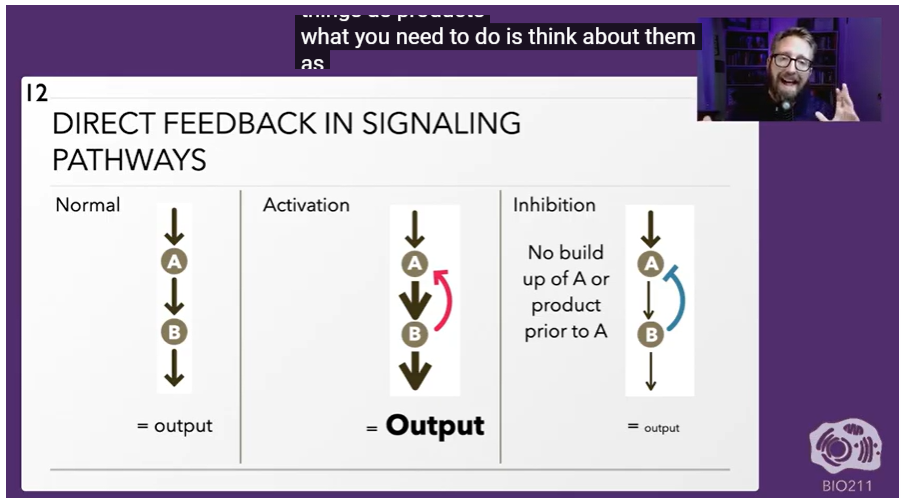
Direct Feedback Signaling
Activation more production of the signal B triggers the greater production of signal A
Inhibition: The increased production of signal B inhibits the production of signal A which eventually inhibits the production of signal B
Indirect Feedback Signaling
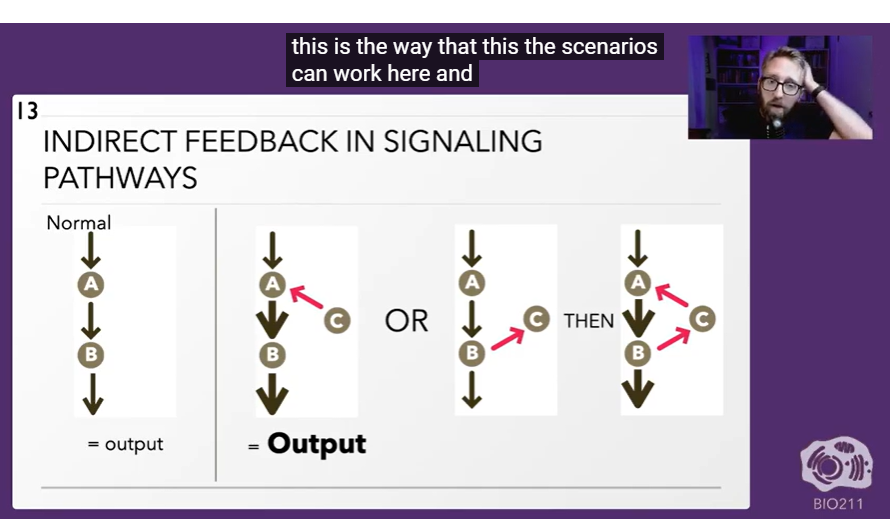
Signal C is on the outside/external molecule but Single C activate signal A which increases its signal to B which increases the output → this is not feedback this is an external molecule coming in
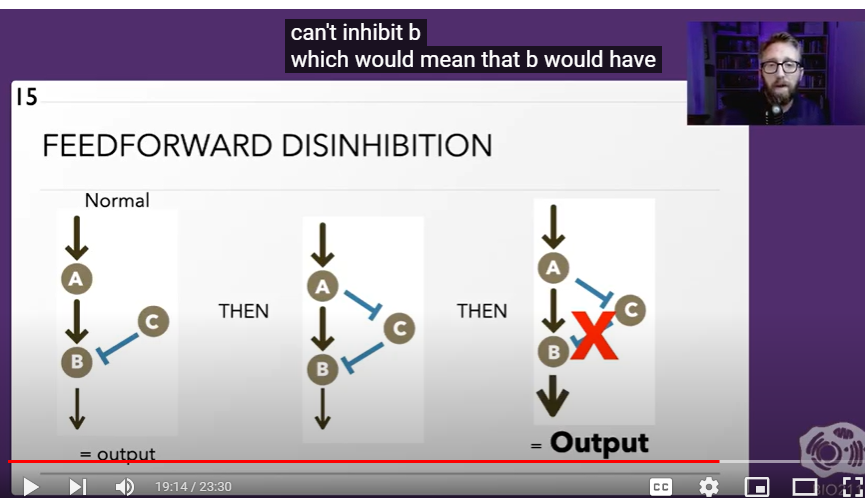
Disinhibition
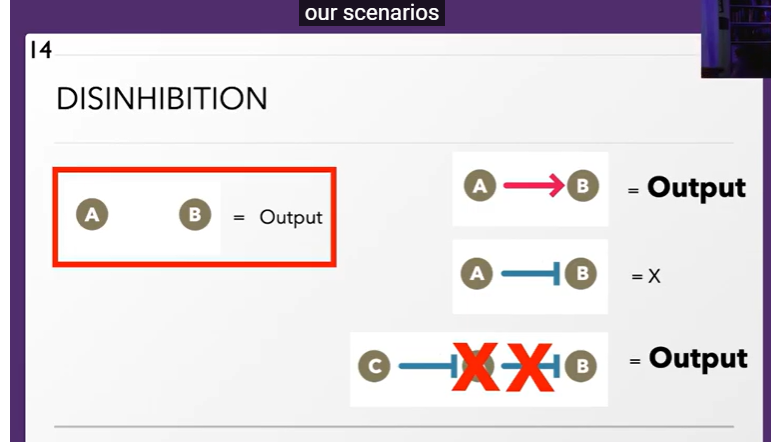
FeedForward Disinhibition: something at the beginning of the pathway is feeding forward to the end of the pathway
Feedback Disinhibition: something at the end of the pathway is feeding back to the beginning
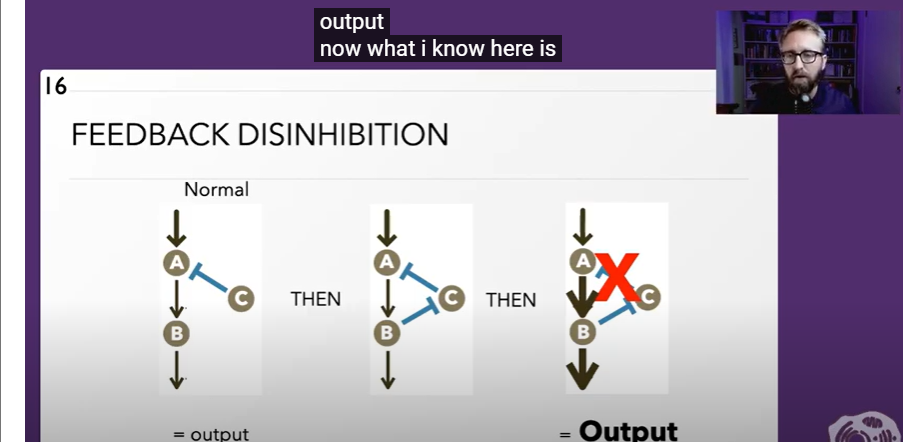
When b is signaled it inhibits c, c cant inhibit a and get increased signaling to b and increased output
Signaling pathways vary in speed
Fast pathways are pathways when key figures/components already exist in the cell such as proteins, phosphorylation, modifications, etc
Slow signaling pathways change the way the gene works ig more proteins or less protein used in gene expression