Private Rating - Archer (copy)
Check Ride Maneuvers
Slow Flight
RPM 1700 - 1800 (maintaining altitude)
Flaps 1 (Air speed drops)
Flaps 2 (air speed drops)
Flaps 3 (air speed drops)
Add Power to 2100 ish at 55 kts
Maintain heading and AS 55 kts and altitude
Steep Turns
Air speed 92-95 kts
Maintain altitude
Roll in: starting 45 degree turn (pull up)
Left
Put at 5 degree mark
Right
In between 2.5 - 5 degree mark
Add power (100 - 200 ish RPM)
Stay coordinated (use the rudders
Dashboard parallel to the horizontal (pitch up)
360 degree turn
Roll out: level off at original heading (nose down)
Before maneuver checklist
HELL
Height above 1500 ft AGL or 2800 ft MSL
Engine instruments (fuel pump ON)
Look out turns
Landing spot
Before ground reference maneuver checklist
HELL
Height above 600 - 1000 ft AGL or 2200 MSL (900 ft AGL)
Engine instruments (fuel pump ON)
Look out turns
Landing spot
S-turns
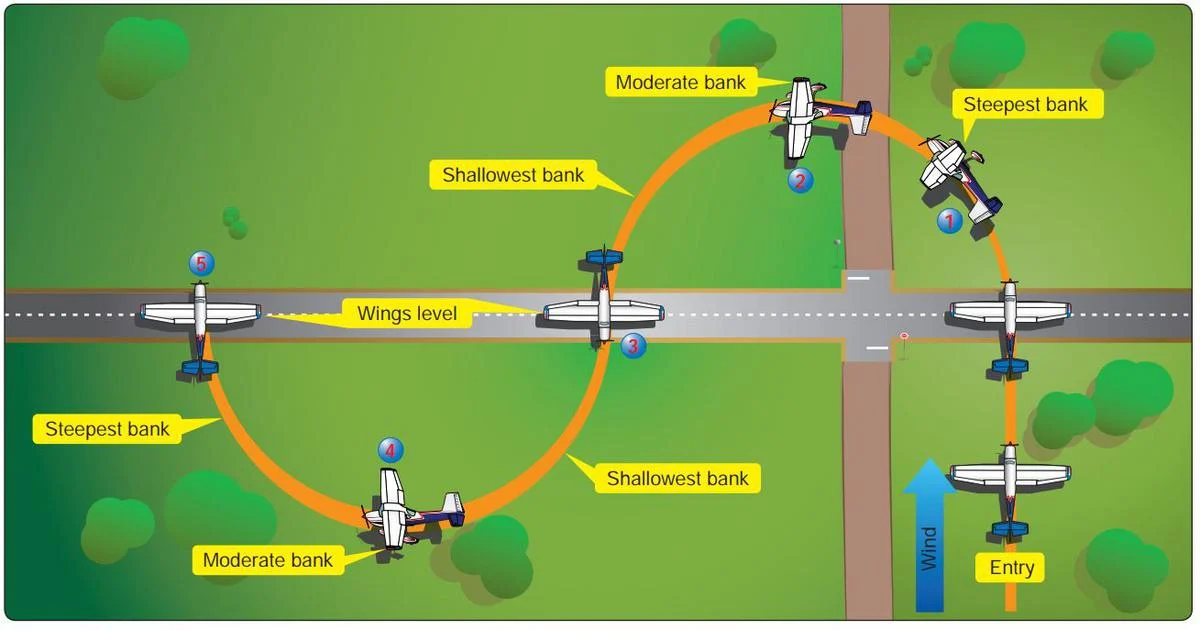
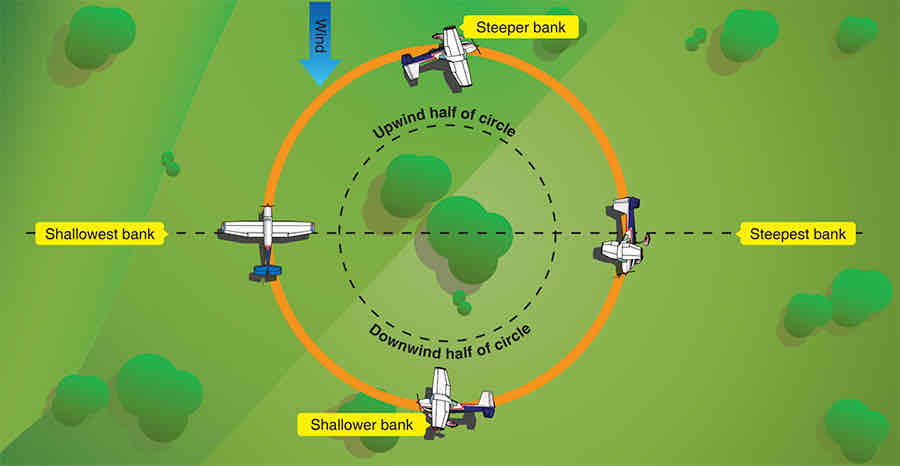
Turn around a point
Landing and take off
Landing maneuvers
Left or Right downwind (AS 90 kts and RPM 2100)
Abeam: 1700 RPM, white arc check - 1st notch flap 10 degree, carburetor heat on
Descent 500 ft p.u.
45 degree turn to base
Base: 2nd flap (25 degree) AS 80 kts
Final: 3rd flap (40 degree) AS 70-75 kts
Approach: Mastin center line
Round out: power idle and pitch slightly up
Flare: hold the pitch
Land: clean flaps, carburetor heat off
Exit the runway
Slips
Power idle
Aileron into the wind (maintain center line)
Full opposite rudder
NOSE DOWN (AS 70-75 kts)
On the runway: release rudder, aileron level, center line
Land: clean flaps, carb heat off
Exit the runway
Power-On Stalls
1600 RPM (NO FLAPS)
Maintain altitude
Reach AS 60 kts
Add power to 1800 RPM
Pitch up to 17-20 degree mark
Hold the pitch (level) - buffeting
Hear stall horn, Say “eminent stall”
Lower the nose to the horizon
Full throttle (recover)
Pitch up for AS 76
Once established, lower nose, maintain altitude, 90 kts
Power-Off stalls
Power IDLE
Ease the yoke down
Hit 500 ft p.u. To descent (AS 70 kts)
Pitch up gradually
Use the rudder to maintain the heading
Nose buffeting
Hear stall horn, Say “eminent stall”
Ease the yoke to the horizon
Full throttle (recover)
Retract 3 rd flaps
Pitch up to see positive break
Retract 2nd flaps
Build airspeed and maintain positive climb
Past 72-73 kts
Clean flaps
Once established, lower nose, maintain altitude, 90 kts
Before landing checklist
BCGUMPS
Boost pump
Carb heat
Gas (fuel selector
Undercarriage (fixed)
Mixture (Rich)
Power (As required)
Seatbelts
Before take off brief
Runway ## in used
Rotate at 60 kts
Climb at Vy = 76 kts
If there is emergency on the runway during take off: power idle, brakes
Emergency below 1000 ft AGL: land traitor ahead between 30 degree apart
Emergency above 1000 ft AGL: turn 180 degree land opposite of the runway
Short field take off
Second notch (25 degree) flap
Maximum runway used
Brake hold
Full throttle
Engine instruments (check green)
RPM (check stabilized)
Release brake
Maintain center line (use the rudder)
Rotate 49 kts
Pitch up where the dashboard is below the horizon (54 kts)
After 50 ft AGL obstacles (1300 ft MSL)
Pitch nose down to the horizon Vx = 64 kts
Retract flaps (positive rate 60 kts)
Maintain positive climb Vy = 76 kts
Start the turn 2000 MSL (above 700 ft AGL or 300 ft AGL below traffic pattern)
Emergency procedures
Engine failure
ABC
Airspeed 76 kts
Best place to land
Checklist
Trouble shoot
R to L
Fuel pump
Carb heat
Mixture
Throttle
Primer
Magneto
Fuel selector
Distress call
Squawk 7700 and frequency 121.5
Mayday, mayday, mayday, airplane model & airplane name, engine failure, position (where I am, how far I am from the airport), # souls on board
Shut down
Fuel pump off
Carb heat off
Mixture cut off
Prime lock in
Magneto off
Fuel selector off
Avionics off
Lights off
Master off
Focus on landing
Engine fire
Fuel pump off
Mixture cut off
Throttle idle
Fuel selector off
Emergency descent: 45 degree bank, AS 113 kts
Fire extinguish
ABC
Airspeed 76 kts
Landing spot
Check list
Distress call
Squawk 7700 and frequency 121.5
Mayday, mayday, mayday airplane model, airplane name, engine fire, where I am, who is with me
Shut down
Fuel pump already off
Carb heat off
Mixture already off
Prime lock in
Magneto off
Fuel selector already off
Avionics off
Lights off
Master off
Go around
On the runway about to land but
Mixture rich
Full throttle
Clean 3rd notch flap
Vx = 64 kts (climb immediately)
Airspeed is alive (building AS)
Clean 2nd notch flap
Airspeed increase
Clean flaps
Radio call (go around)
Low approach
On the runway about to land but
Mixture rich
Full throttle
Flaps up or down
Stay right above the runway (but still be low)
Once established, climb Vx = 64 kts (clean flaps)