L13 Apoptosis
Objectives
Describe the concept of apoptosis
Discuss the difference between necrosis and apoptosis
Outline the differences between intrinsic and extrinsic pathways
Discuss the role of caspases in apoptosis
Outline the importance of apoptosis
What is another name for Apoptosis?
Programmed Cell Death
What is Apoptosis
Elimination of unwanted or useless cells during the development and other normal biological processes
What are the Physiologic conditions that induces Apoptosis?
Embryogenesis
removal of excess cells
Tissue cells with high turnover rates
Skin, Bowels
Immune cells
Cytokine Depletion
Autoreactive T-cells in Thymus development
Hormone-dependent Involution
shrinking of an organ due to old age or inactivity
Endometrium, Ovary, Breasts
What are the Pathologic conditions that induce Apoptosis?
Damaged cells via Viruses
DNA damage
Radiation, Cytotoxic Agents
Cancer/Tumors
What are Apoptotic Bodies?
Membrane bound vesicles that contain ribosomes and mitochondria
What occurs (Morphology) to the cells that undergo Apoptosis ?
Cell Shrinkage, Organelle Reduction, Mitochondrial Leakage, Membrane Blebbing & Changes
Nuclear Chromatin Condensation
peripherally under the Nuclear Membrane
Nuclear and Cytoplasmic Aggregation
Partition (division) of Cytoplasm and Nucleus → Apoptotic Bodies
How does Blebbing directly lead to Apoptosis?
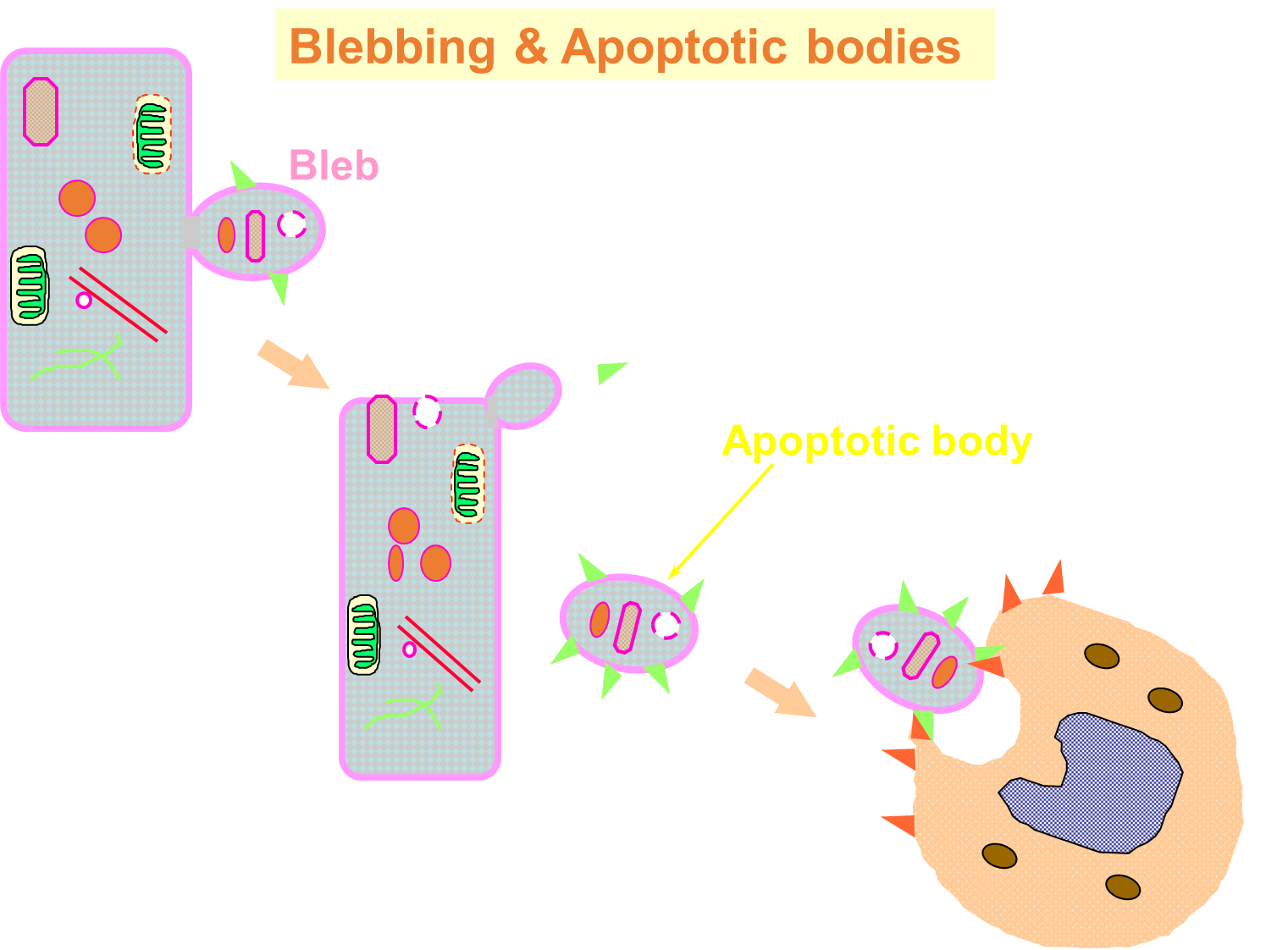
Apoptotic Bodies are Phagocytized by what?
Macrophages
T/F: Apoptotic Cell Death induces an inflammatory response
False
What components of younger development is Apoptosis used in?
Immune systems maturation, Morphogenesis, Neutral development
What components of adult development is Apoptosis used in?
Immune privilege, DNA damage and wound repair
What is another name for Necrosis?
Accidental Cell Death
What is Necrosis?
When cells are exposed to serious physical or chemical injury → swells → ruptured plasma membrane
What are examples that can stimulate Necrosis?
Hypoxia and Toxins
When can Necrosis occur?
Pathological infections such as Bacterial or Fungal
Hypothermia
Hypoxia
T/F: Product of Necrotic Cell Death also results in Phagocytosis
True
What dysfunctions are seen in both Apoptosis and Necrosis?
Profound membrane and Mitochondrial
T/F: Apoptosis and Necrosis can occur in Plants and Animals
True, but with different mechanisms
T/F: Necrosis induces an inflammatory response?
True due to cellular and nuclear lysis
Differences between Apoptosis and Necrosis
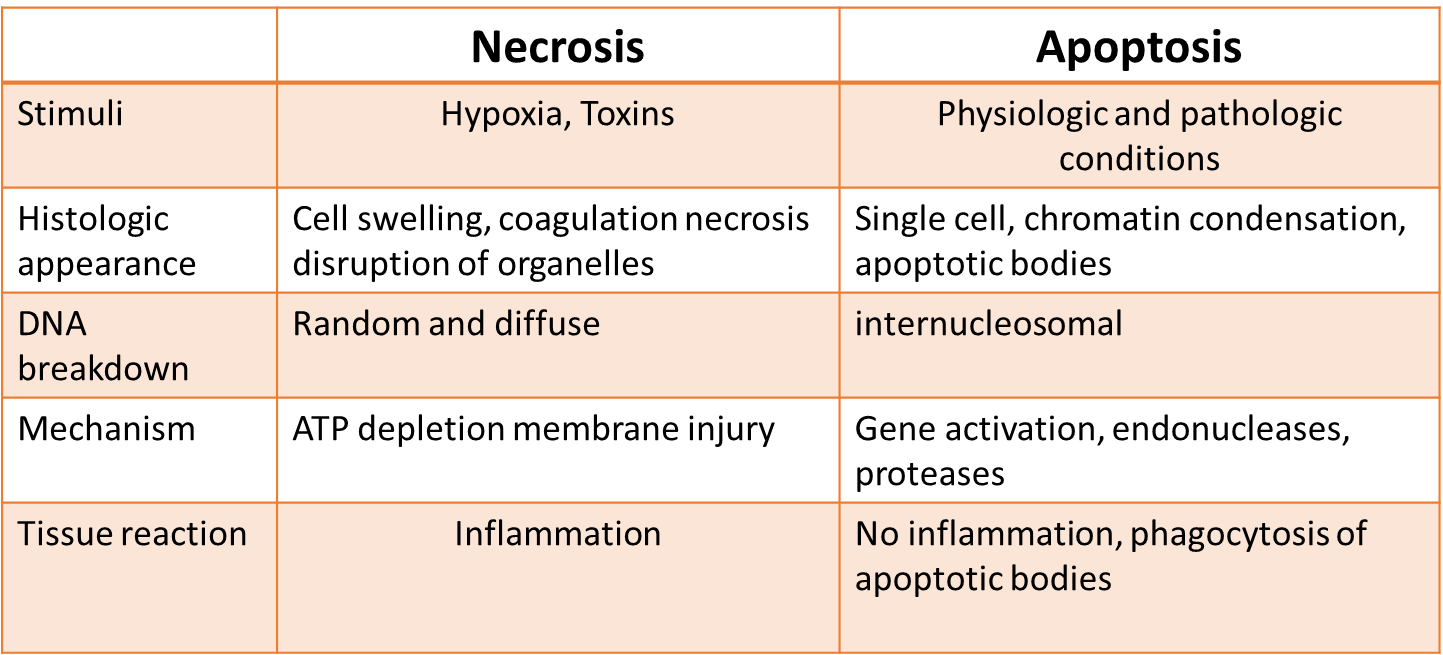
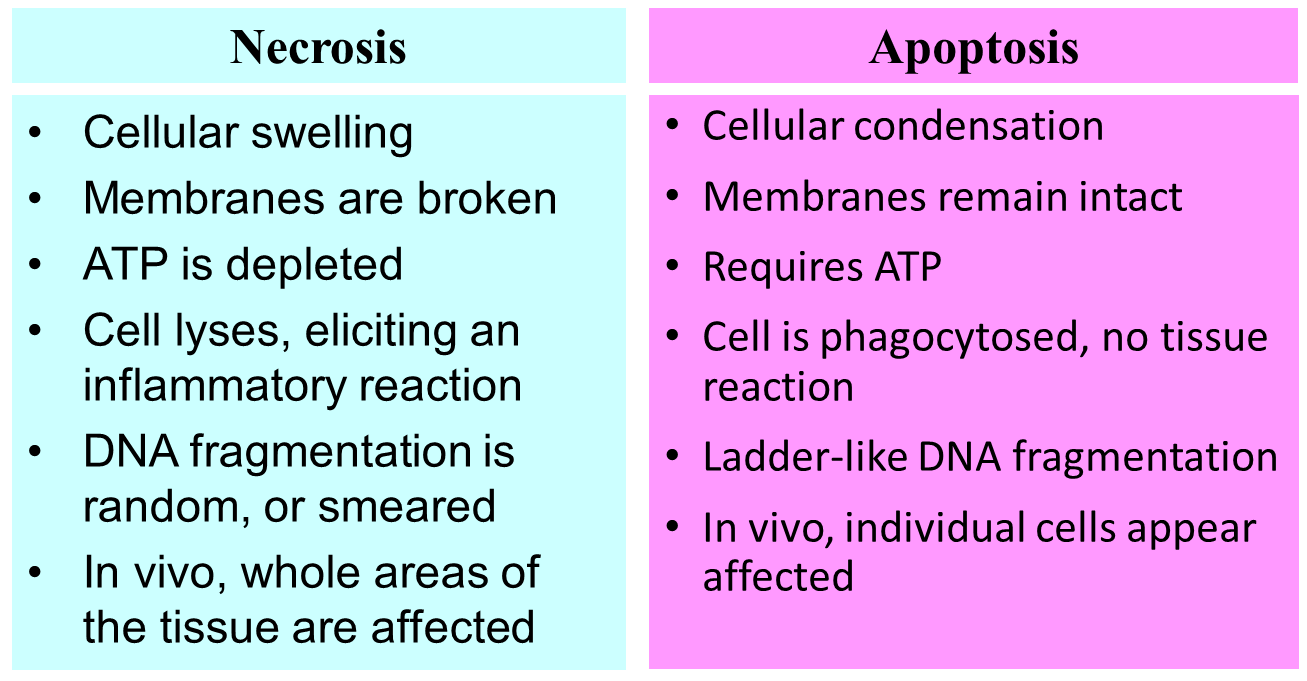
What are examples of development that Apoptosis is utilized in?
Formation of fingers and toes of fetuses
Sloughing off of the uterus’ inner lining
What is an indication of Apoptosis
DNA Laddering
What is DNA Laddering?
pattern of DNA fragments that are separated by Gel Electrophoresis
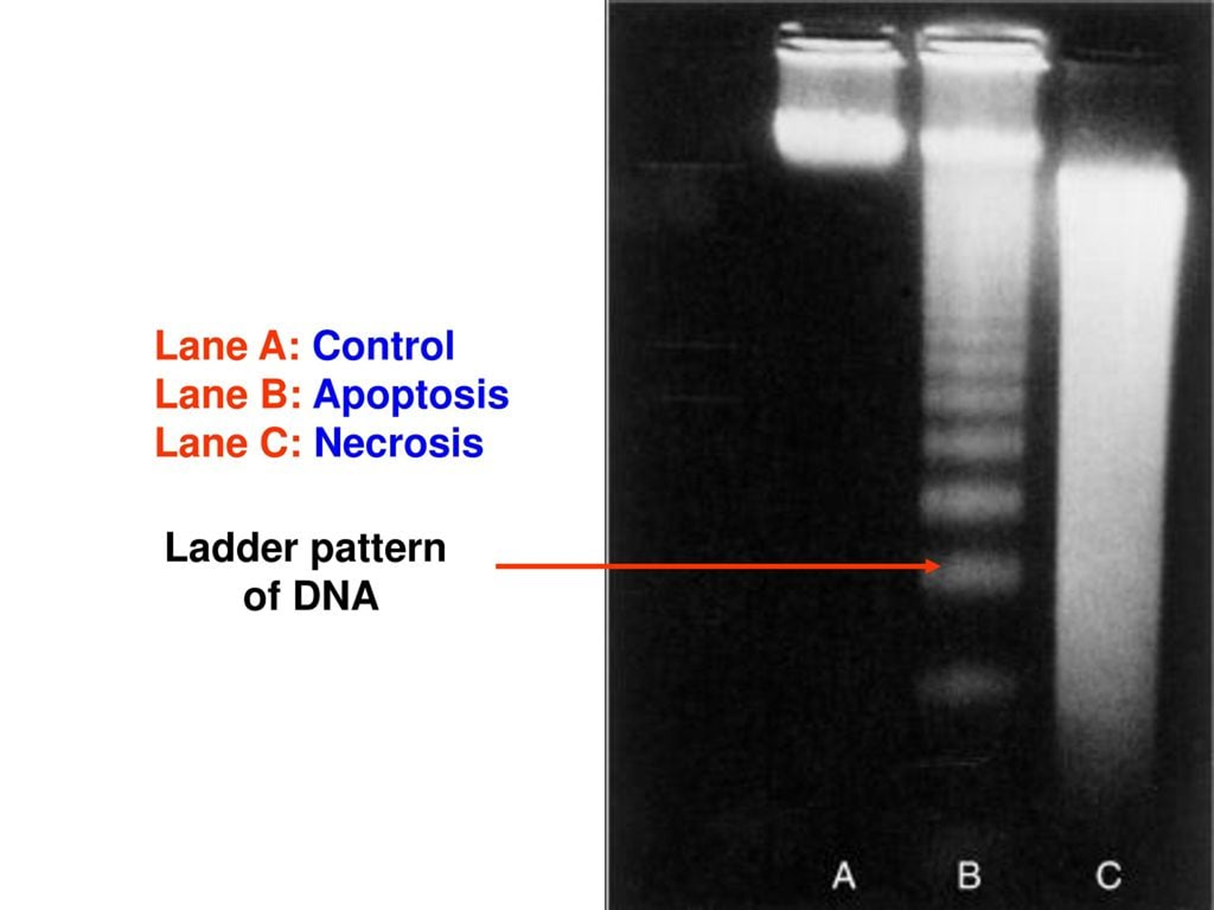
When does p53 induce Gene Activation → Apoptosis?
when there is too much cell damage after cell growth arrest between G1 → S of the cell cycle
What are some genes examples that help regulate cell production and apoptosis?
Anti-Apoptosis
bcl-2 and bcl-xL
bcl-2 oncogene over-expression prevents apoptosis
localized in mitochondria, nuclear envelope, ER
Pro-Apoptosis
bax, bcl-xS, bad, bid
How might p53 be involved with regulatory genes for apoptosis?
Upregulate Pro-Apoptosis genes such as bax
What are Caspases?
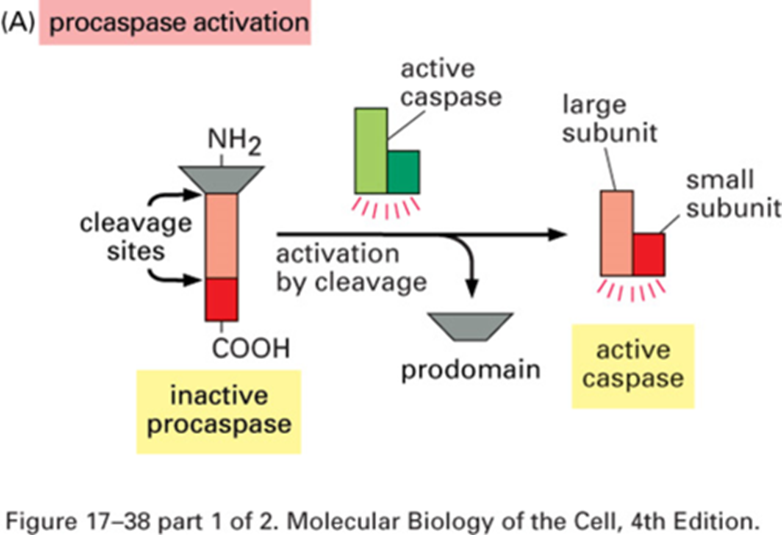
site-specific, cysteine Proteases the work as effectors/initiators of the cell death cascade
What is the inactive, precursor form of Caspases
Procaspases
N-terminal pro domain
large subunit (p20)
small subunit (p10)
What is the formation of a matured Caspase
Heterotetramer with two p20/p10 heterodimers and two active sites
What can result from dysregulated Caspases?
CA, autoimmunity, neurodegenerative disorders (excess apoptosis)
What are possible benefits of altering Caspase activity?
Therapeutic benefits
Mammalian Caspases can be divided into what 3 functional groups
Initiators, Executioner, and Inflammatory
What are examples of Initiator Caspases
2, 8, 9, 10
What are examples of Executionary Caspases
3, 6, 7
What are examples of Inflammatory Caspases
1, 4, 5, 11, 12
What two pathways are triggered to induce cell death with Caspases?
Death-Receptor and Mitochondrial Pathways
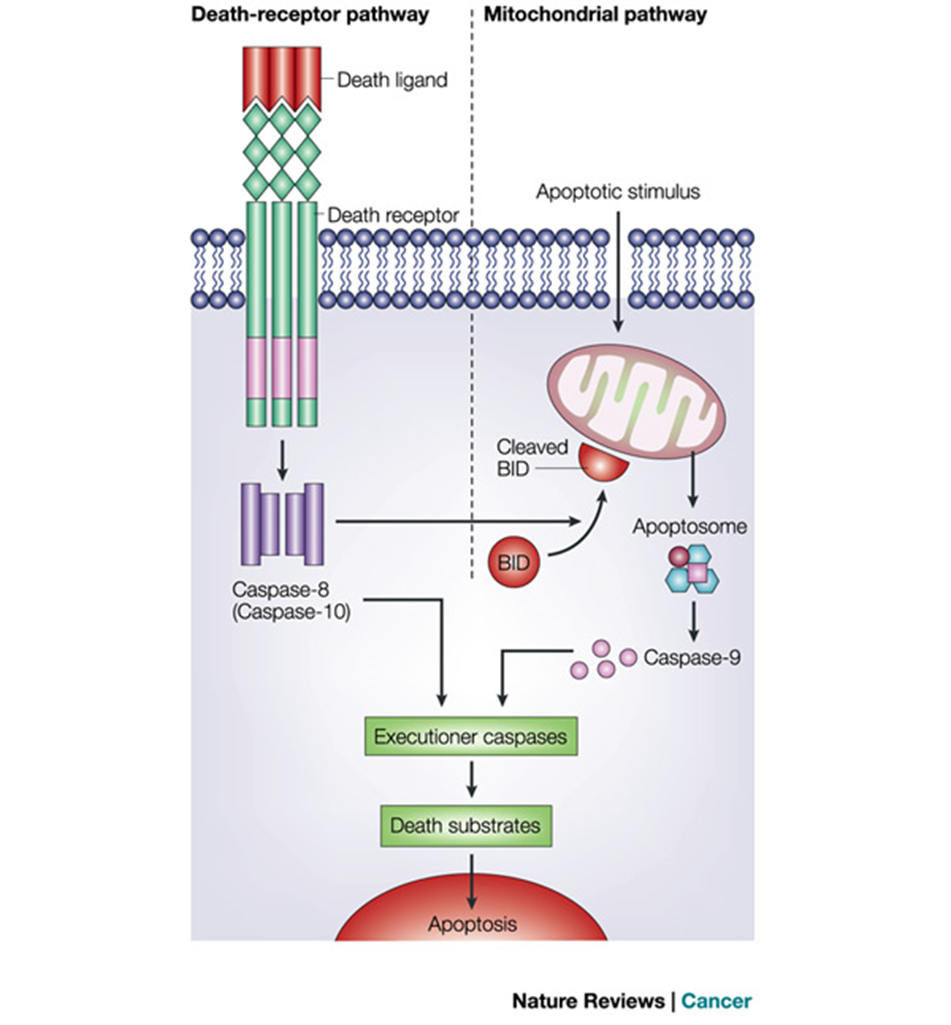
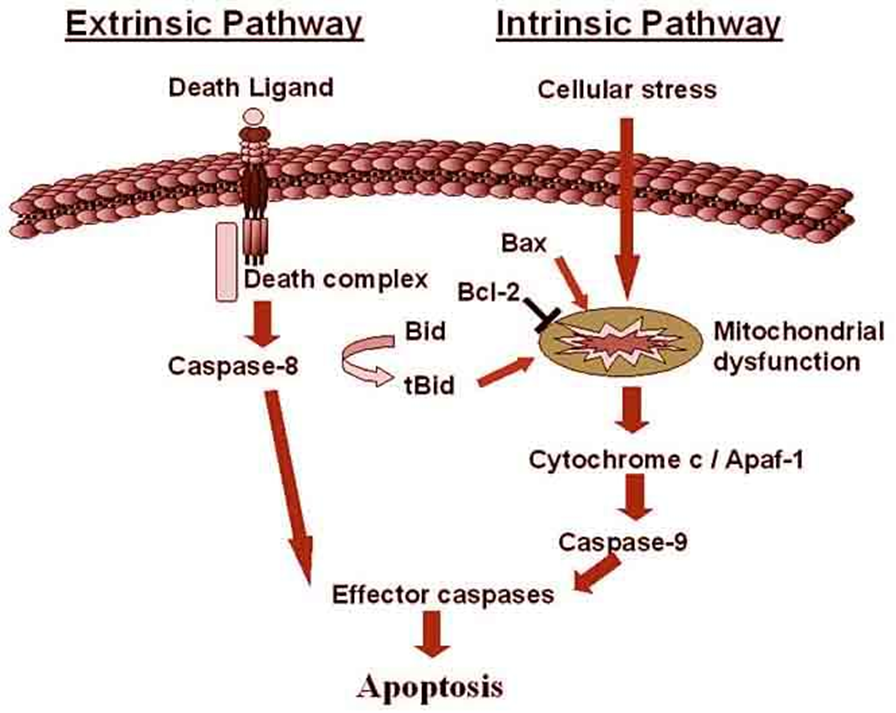
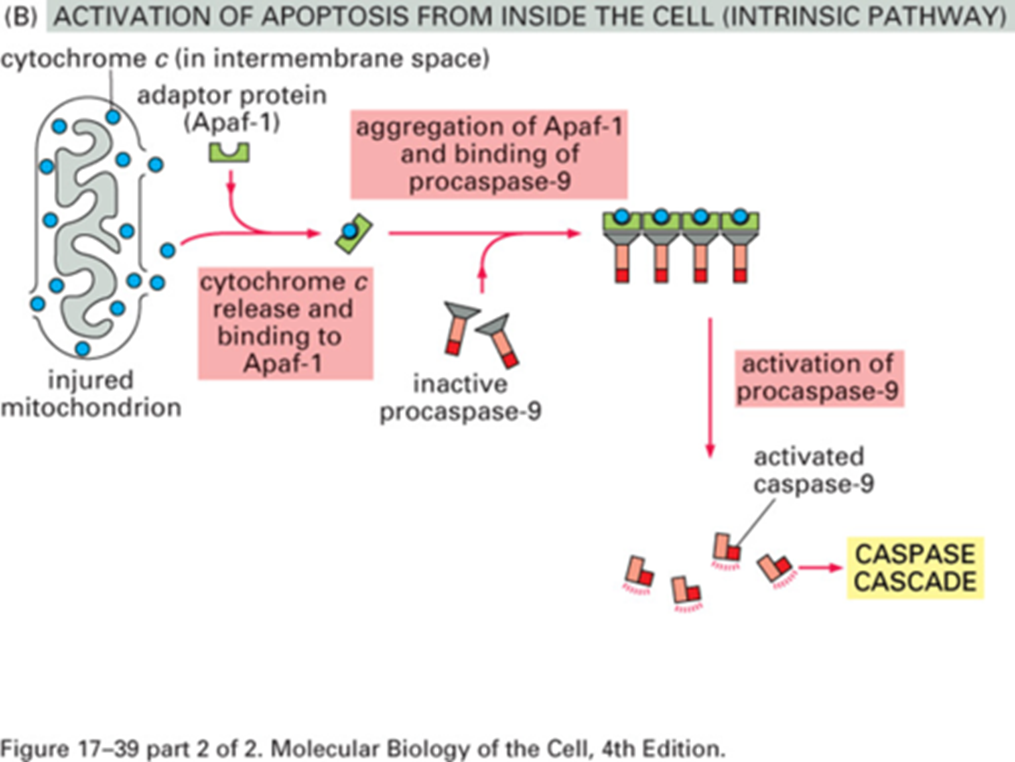
What is Intrinsic Cell Death?
when apoptosis receives activating signals from INSIDE a cell
ex. Genotoxic Stress
What is Extrinsic Cell Death?
when apoptosis receives activating signals from OUTSIDE a cell
ex. Fas ligand
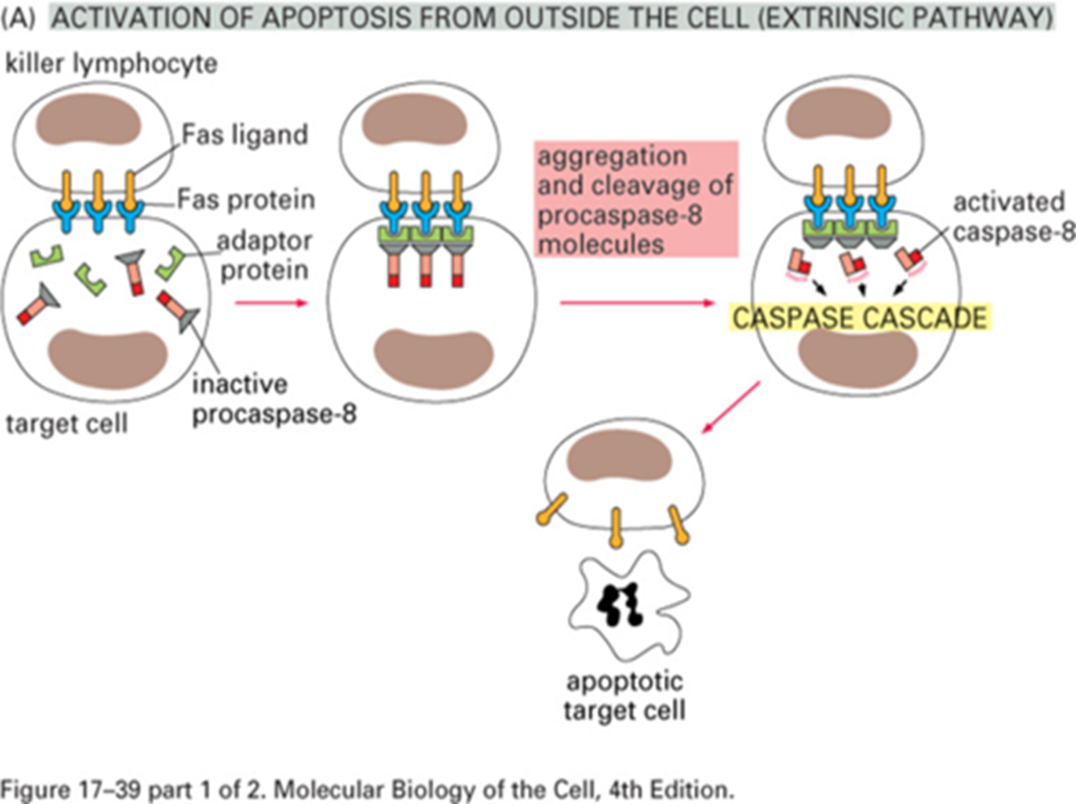
Explain how Fas ligands activate Extrinsic Cell Death