Cellular & Molecular Principles of Life Study Notes
Cellular & Molecular Principles of Life
Lecture Overview
Overview of the module's key topics:
What is life?
Molecular building blocks of life
Introduction to cells
Introduction to genes
Origins of life
Instructor: Professor Phil Dash (p.r.dash@reading.ac.uk)
Module Introduction
The Cellular & Molecular Principles of Life module covers the fundamental components of life that are common across all organisms.
All known life forms are composed of cells, which are the basic units of life.
Cells are made from molecular building blocks, including:
Proteins
Lipids
Carbohydrates
These components are regulated and governed by genes.
Module Introduction - Lectures Breakdown
Week 1: Building blocks of life (molecules, genes, & cells) - Phil Dash
Week 2: Genome organisation & DNA replication - Susanna Cogo
Week 3: Gene expression control - Susanna Cogo
Week 4: Protein synthesis - Susanna Cogo
Week 5: Transport and trafficking in cells - Phil Dash
Week 6: Cytoskeleton - Phil Dash
Week 7: Energy production - Phil Dash & Renee Lee
Week 8: Cell death and the cell cycle - Phil Dash
Week 9: Cell communication and cell differentiation - Phil Dash
Week 10: Connecting cells in tissues - Phil Dash
Week 11: Robustness and adaptation - Phil Dash
Module Introduction - Practicals
Practical classes will allow students to:
Work in a laboratory environment
Learn fundamental scientific techniques.
Classes are compulsory and linked to module assessments.
Practical handouts available for download on Blackboard prior to classes.
Module Introduction - Assessment
Assessments include:
A scientific report
An exam:
Weighting: 40% Scientific report, 60% MCQ exam
Total of 50 questions covering all lectures and practicals.
Scheduled for assessment period post-Christmas.
Individual report on practical class due later in the semester.
All Life is Made of Cells
Types of cells:
Single cells: Prokaryotes and Eukaryotes
Multicellular: Includes invertebrates, vertebrates, plants, and humans.
Disease and Treatment
Treatments and diseases are linked to cellular function.
diseases can be traced back to something going wrong in our cells, and most treatments work with cells to help them work normally again.
Example medications:
Paracetamol: 500 mg tablets
Penicillin: 5,000,000 IU
Atenolol: 50 mg tablets
Salbutamol: various formulations
Herceptin: 150 mg powder for infusion
Are Viruses Alive?
Viruses are fundamentally different from cells:
They require host cells to replicate and cannot function independently.
they are tiny
Viruses have proteins on the outside to attach to cells and proteins inside to help organise the genome.
Viruses can’t metabolise and need a host to replicate
Example: The SARS-CoV-2 virus replication process involves:
Binding of spike protein to ACE2 receptor on host cells.
RNA release and translation to proteins using host ribosomes.
Formation of new virions in the Golgi and subsequent release from the cell.
Defining Life
Common Criteria for Life:
Growth
Reproduction
Response to stimuli
Adaptation to the environment
Self-assembly
Evolution
Life is categorized by:
Evolution through natural selection
Separation from the environment by membranes
Metabolic activity. - generative energy
Molecular Building Blocks of Life
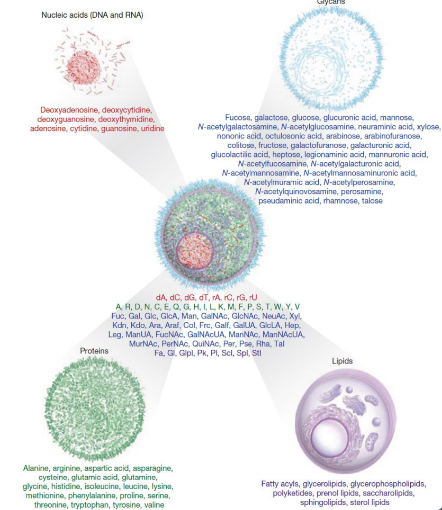
Four main groups comprise the molecular building blocks:
Nucleic acids
Proteins
Lipids
Carbohydrates
Each group exhibits considerable diversity, e.g., proteins consist of combinations of up to 20 amino acids.
there are 68 molecules that contrubure to the 4 major groups
Nucleic Acids – DNA and RNA
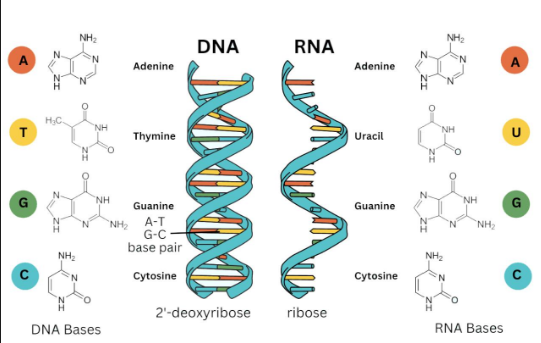
Function: Encode information necessary for cell function.
Structure:
DNA and RNA are polymers consisting of a sugar-phosphate backbone; encoded information is found in the base sequence.
DNA located in the nucleus
DNA base pairing: Adenine (A) with Thymine (T) and Cytosine (C) with Guanine (G).
universial, degenerate and triplet
DNA Structure:
Double-helix with antiparallel strands, read from 5' to 3' end.
RNA is single-stranded.
base pairing allows for replication
Amino Acids
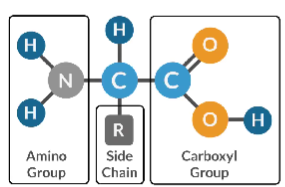
Amino acids serve as the building blocks of proteins:
Common structure includes:
Carboxyl group
Amino group
Variability comes from differing R groups.
Nearly 500 types exist, yet only 20 amino acids are integrated into proteins through genetic coding (DNA).
Amino Acids Chart
Key Types Essential, Non-essential.
Essential: need from food
Non Essential: we can make
Some examples include:
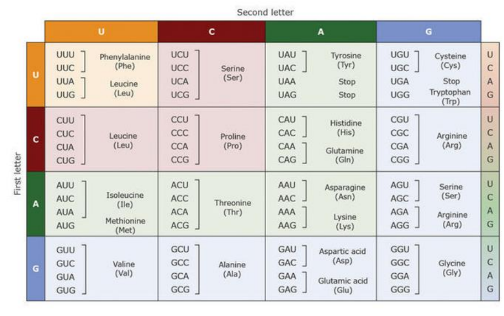
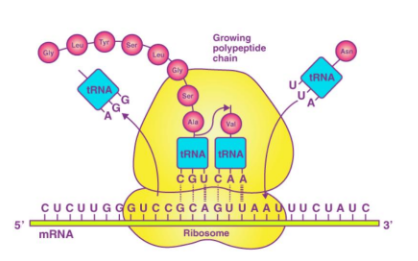
Alanine (A) - Codons: GCT, GCC, GCA, GCG
Phenylalanine (F) - Codons: TTT, TTC
Arginine (R) - Codons: CGT, CGC, CGA, CGG, AGA, AGG
Genetic Code
Links DNA sequence to protein structure:
Comprised of codons (triplets of nucleotides) specifying each amino acid.
With four nucleotides, there are 64 possible codons for 20 amino acids.
During translation, mRNA codons are read by ribosomes, and tRNA delivers corresponding amino acids.
Proteins
Integral functions in cells including:
Catalyzing reactions
Transport functions
Structural support
Repair mechanisms
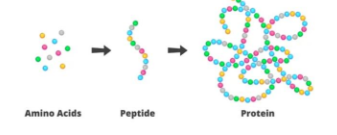
Proteins consist of polypeptide chains that fold into specific three-dimensional structures essential for their function.
Lipids
Essential roles, including:
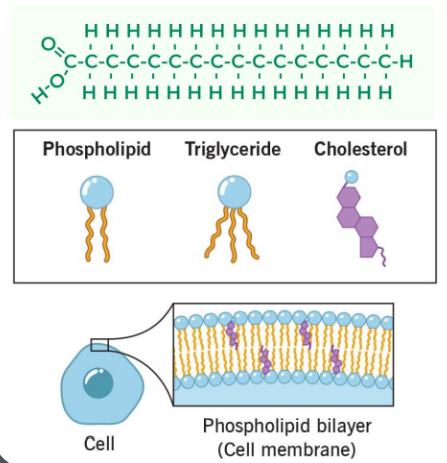
Membrane formation (cell boundaries)
Energy storage
Cell communication
Structure: Generally hydrophobic, some amphiphilic, e.g., phospholipids forming lipid bilayers in water.
Sugars
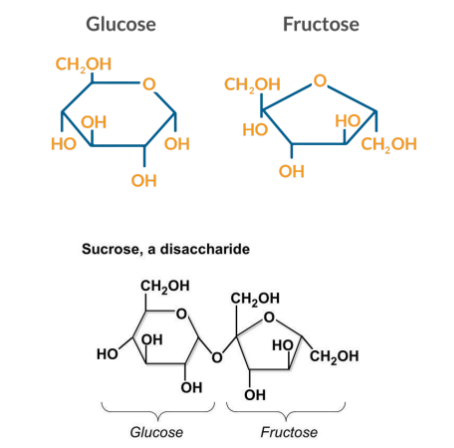
Main energy source for cells (e.g., glucose).
Structural roles in cells, often in complex carbohydrates.
Introduction to Cells
Cells are created when molecular building blocks combine correctly.
Lipid assembly results in vesicles or membranes that facilitate enzymatic reactions encoded by DNA.
Types of Cells
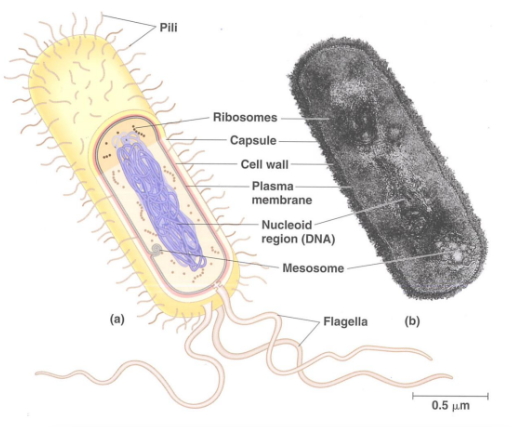
Prokaryotic Cells:
Simplest form, lack nucleus, includes bacteria and archaea.
no nucleas, mitrchondria.
capable of moving in search of food.
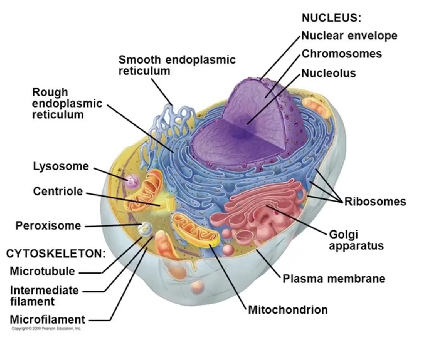
Eukaryotic Cells:
More complex, contain organelles, include plants and animal cells.
DNA in the nucleus
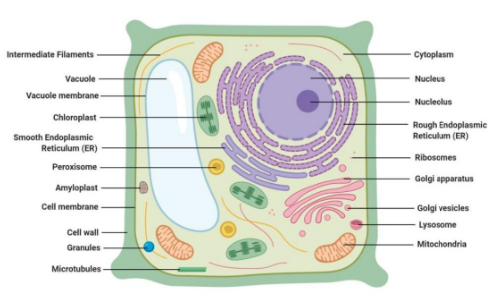
Common Features of Cells
All cells have:
Cell membranes are made of lipids
Ability to sense and respond to their environment (temp, pH and light)
DNA for protein coding
Shared building blocks (proteins, lipids, carbohydrates, nucleic acids).
Cells are dynamic, highly organised, and often highly specialised.
Sizes of Cells and Biological Molecules
Comparison of sizes ( volume) :
Prokaryotic cells: ~1 mm³
Eukaryote cells: ~1000 mm³
Viruses: Much smaller than both; require host cells.
Small molecules can diffuse substance quickly and so there is no need for organisation.
In bigger cells diffusion slows down as there is a lot more organelles in the cell. So eukaryotic cells break themselves up into different compartments.
Compartmentalisation in eukaryotic cells enhances efficiency and productivity.
Compartmentalisation is the formation of organelles
from here, cells can change the number and type of organelles they produce in orfer to allow the cell to take on different functions to allow cells to specialise.
specialised cells can be brought together to enable diversity of life ont he planet.
specialised cells:
red blood cell, which is responsible for the transport of (haemoglobin) in the blood and so has lots of heamoglobin and no nucleus.
skin cells, which act as a barrier between us and the environment. Cells are flat and overlap each other through their cytoskeleton.
Cilia line the upper respiratory tract which traps the mucus. so they focus on creating mucus
Introduction to Genes
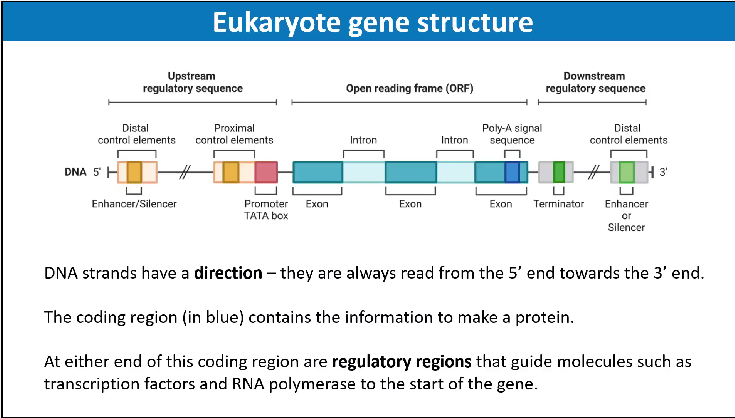
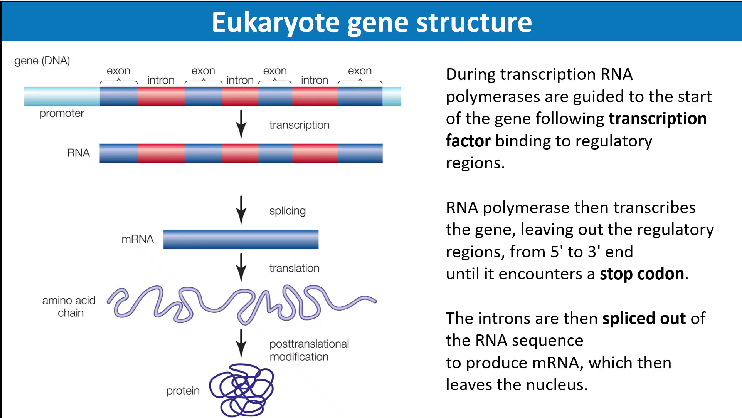
Genes are sequences of DNA that is transcribed into RNA. They tell the cell which proteins to make, how to use them, where to put them etc
genome is organised into chromosomes.
Definitions and functions of various RNA types:
mRNA (messenger RNA): translated into proteins.
tRNA (transfer RNA) and rRNA (ribosomal RNA): functions in protein synthesis.
miRNA (micro RNA): regulates gene expression.
Gene Information
Only about 2% of human DNA encodes genes; the rest includes non-coding DNA, which has essential functions. Examples include:
Regulatory sequences
Introns
Telomeres
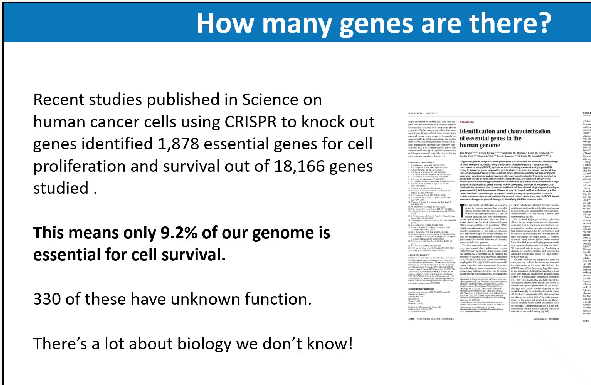
Human genome has roughly 22,000 genes; statistics for other organisms vary.
a lot of the non-coding DNA is about control, the genes are the instructions for making proteins and the non-coding regions are importnat in telling cells how much of a protein to make, or when to turn it on or off.
this allows DNA to be more responsive to their enviroment.
The Origins of Life
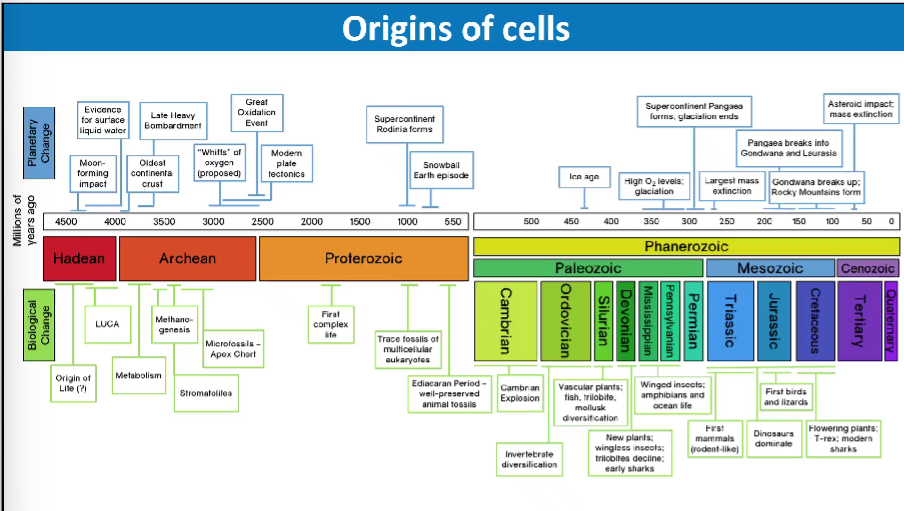
Life’s beginnings span billions of years:
Major events include:
Formation of Earth’s crust
Presence of liquid water
Notable biological changes recorded in geological history.
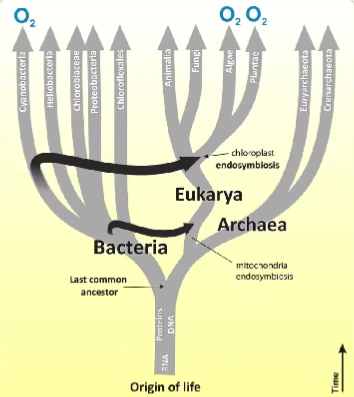
Key terms: LUCA (Last Universal Common Ancestor), endosymbiosis theory explaining the origin of cells.
1st: A planet collided with another planet. Nothing was living
2nd: the 1st cells formed, all life originated from Luca, including bacteria, fungi and archea. which used methane
3rd: the great oxidation period due to cells being metabolically active. these were prokaryotic cells
4th: eukaryotic cells emerged which then formed more complex molecules
The mycoplasma is the smallest cell with the smallest genome. with 475 genes.
Endosymbiotic Theory
Mitochondria are the same size as bacteria. This is helpful because of compartamentalilsation, which allows things to occur faster. They used to be bacteria. (same for chloroplast)
Proposes that certain organelles (mitochondria, chloroplasts) originated from independent prokaryotic organisms.
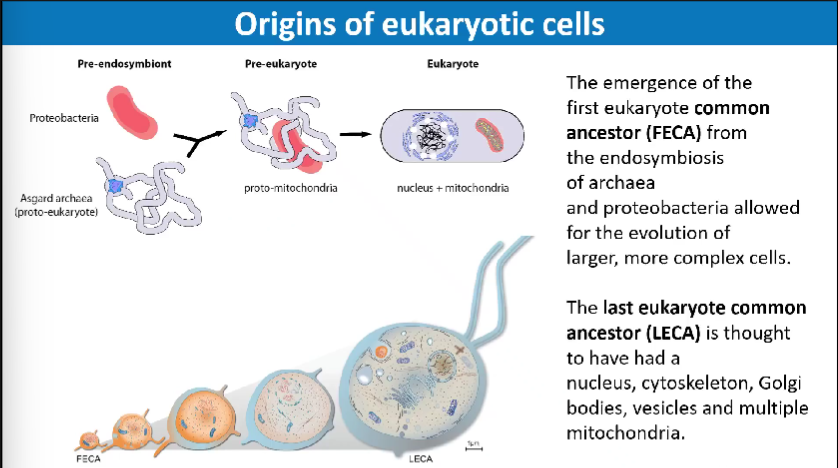
First endosymbiosis likely involved the engulfing of aerobic bacteria by a proto-eukaryotic cell.
Subsequent endosymbiosis involved the incorporation of photosynthetic bacteria for chloroplast formation.
Eukaryotic Cell Structure
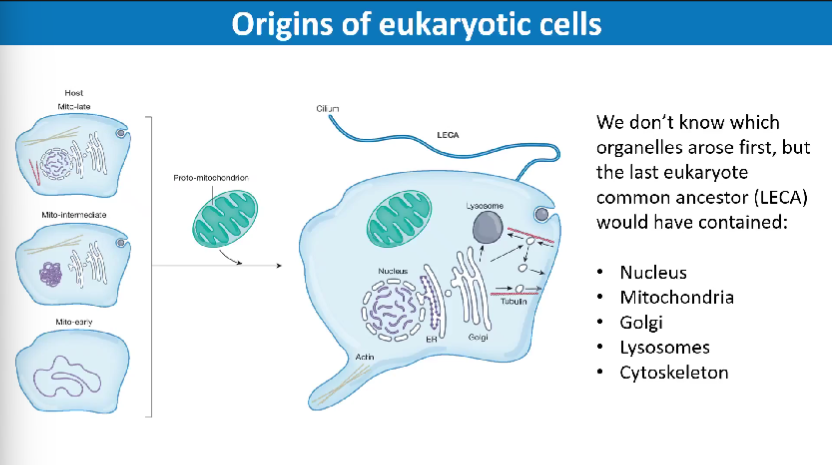
Eukaryotic cells consist of:
Nucleus
Golgi apparatus
Lysosomes
Cytoskeleton
The precise origin of the first eukaryotic cell remains undetermined.
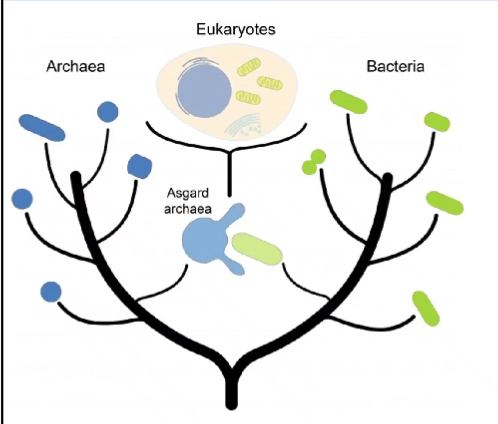
Asgard Archaea
Discovered as potential ancestors to eukaryotes, possessing genes for proteins vital for eukaryotic functions, including cytoskeletal elements and nuclear transport proteins.
Conclusion and Further Reading
Suggested readings for deeper understanding:
Chapter 1: Life - Chemical, Cellular and Evolutionary Foundations
Chapter 6: A Tour of the Cell
Chapter 1: Cells, Genomes, and the Diversity of Life