Recycling within ecosystems
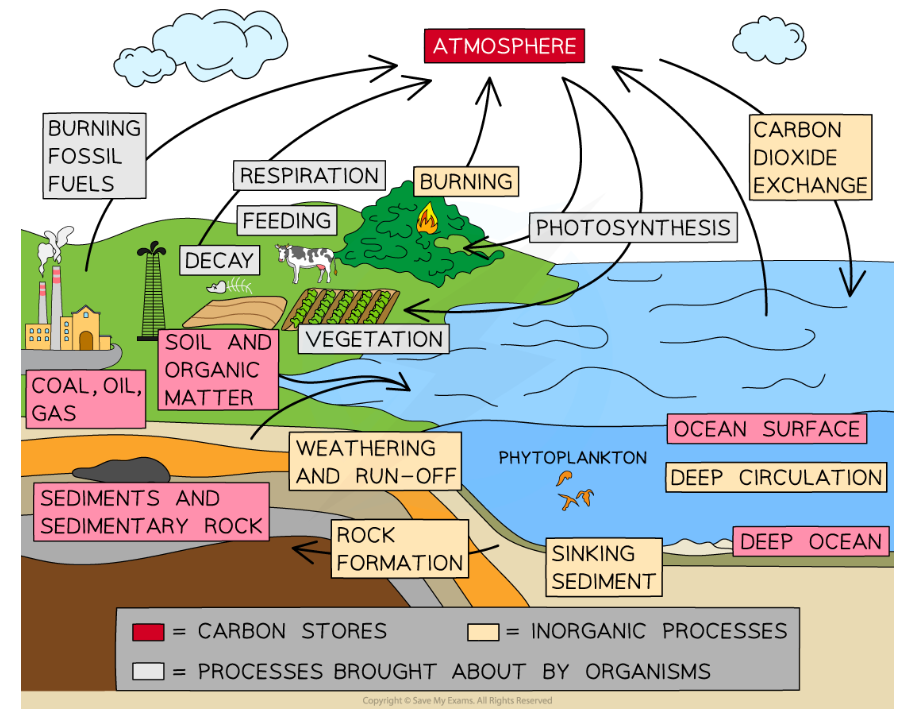
Carbon cycle
carbon in form CO2 from air and water is absorbed by plants when they carry out photosynthesis
form glucose
used to produce other carbon containing macromolecules
primary feeders feed on the producers
take up carbon containing compounds to make their own biomass
carbon containing biomass is then passed up the food chain
Decomposers (saprophytes) feed on dead and decaying organic matter
assimilate carbon into their biomass
all living organisms return carbon to the air or water as carbon dioxide
waste product of cellular respiration
If DOM ends up in places where there are no decomposers fossil fuels may form
the carbon in fossil fuels is released by combustion
Marine animal shells may be turned into rock
limestone and chalk formed from calcium carbonate in shells
the carbon in rock can also be returned to the atmosphere
volcanic eruptions
physical and chemical weathering
CO2 fluctuations
daily fluctuations
photosynthesis removes CO2 from the air only during the day
respiration occurs all the time
so atmospheric CO2 levels are lower during the day
seasonal fluctuations
photosynthesis rates are higher during the warmer and lighter summer months
so CO2 levels are lower on a summer’s day
Nitrogen cycle
78% of atmosphere
inert
has to be converted into a form that is useable by living organisms
bacterial processes
nitrogen fixation
nitrification
dentrification
ammonification
Nitrogen fixation
converting atmospheric nitrogen into ammonia
nitrogen fixing bacteria
contain nitrogenase enzyme
azotobacter (free living soil bacteria)
rhizobium (root nodules of legumes)
symbiotic and mutualistic

Nitrification
ammonia is converted into nitrogen containing molecules
oxidation reaction so only occurs in well aerated soil
nitrifying bacteria
nitrosomonas converts ammonia to nitrites (NO2-)
nitrobacter converts nitrite to nitrates (NO3-)
nitrate ions are soluble and easily taken up by plant roots
Denitrification
in the absence of oxygen denitrifying bacteria converts nitrates back into nitrogen gas
released back into the atmosphere
only under anaerobic conditions
eg waterlogged soil
Pseudomonas denitrificans
bacteria use the nitrates as an energy source for respiration
Ammonification
decomposers convert nitrogen containing molecules in dead organisms, urine, and faeces into ammonia
nitrifying bacteria will then use the ammonia as an energy source producing nitrites and nitrates