Wk 7: Colour spaces and pathology, memory and HM/clinical studies
7b: Memory
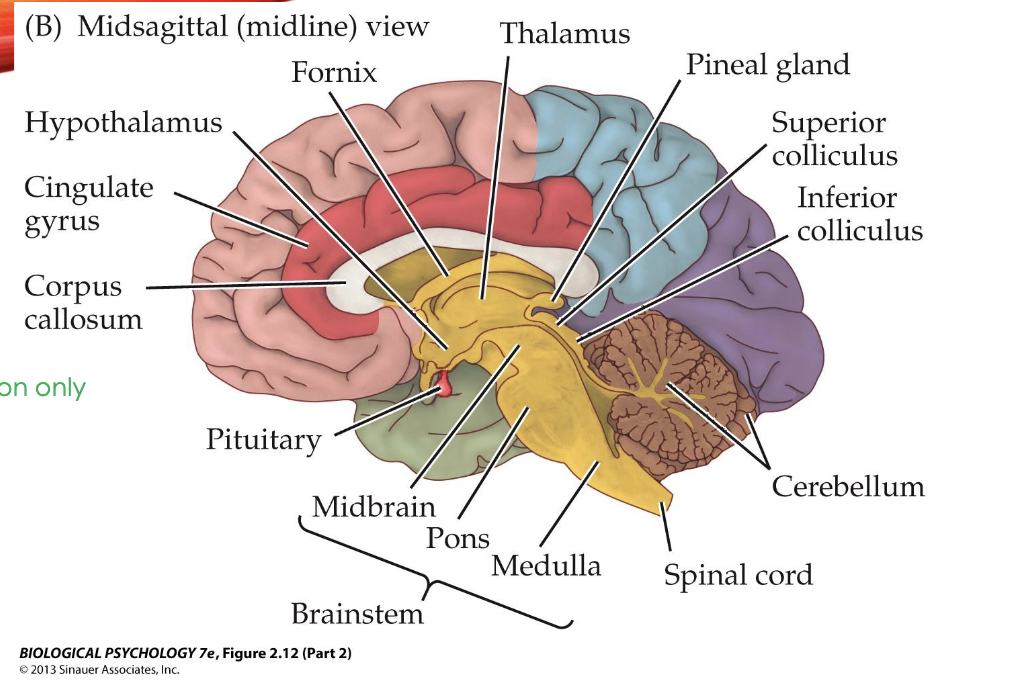

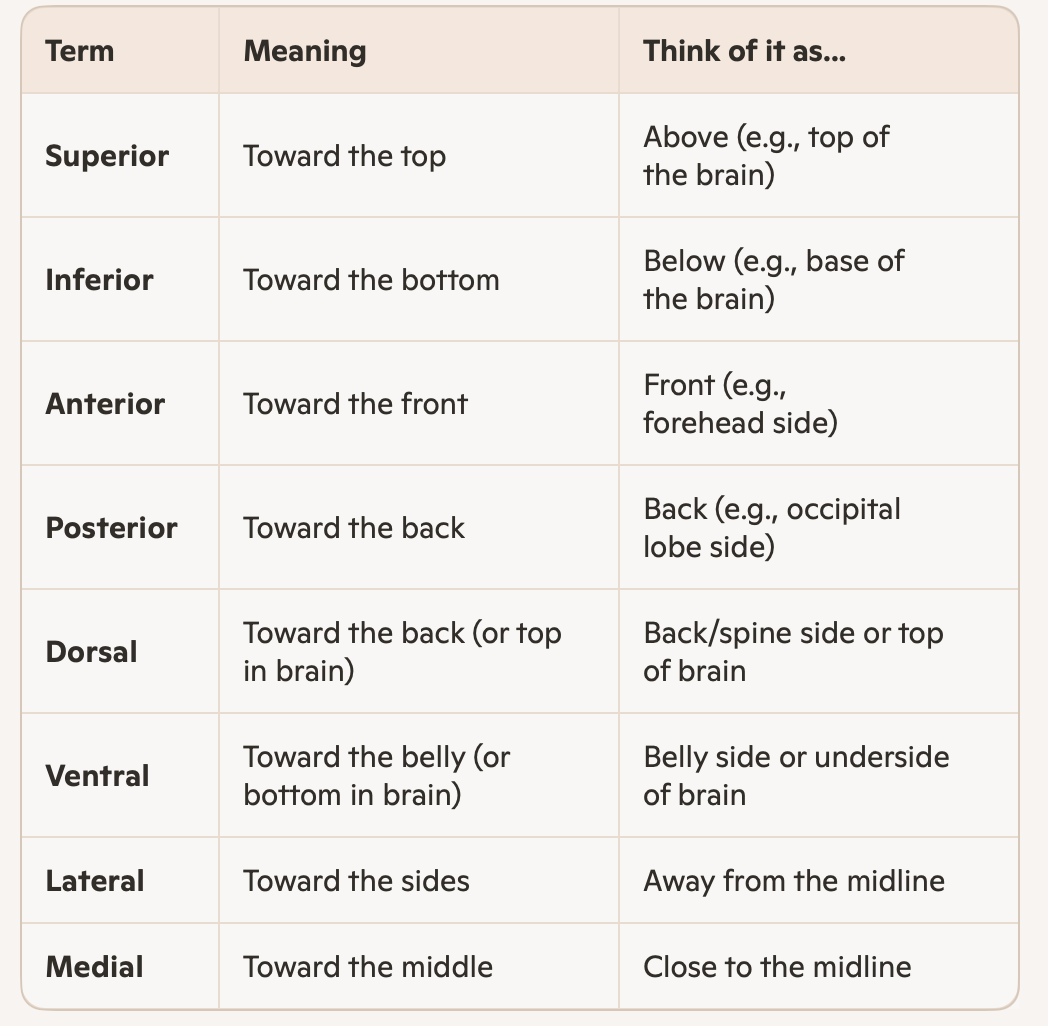
learning and memory
the brain handles diff kinds of memory in diff regions
classical conditioning
automatic association
amygdala and cerebellum
operant conditioning (rewards and punishments)
goal-directed learning
bassal ganglia and frontal cortex
encoding of memories: how experiences becom stored in the brain
Hebbian learning
cells that fire together, wire together
when two neurons activate together repeatedly, their connection strengthens
forms the basis of long term memory
Patient HM case
had parts of the brain removed to treat epilepsy
couldn’t form new long term memories
hippocampus critical for memory consolidation
learning: acquiring new info
memory: storing that info
important brain areas
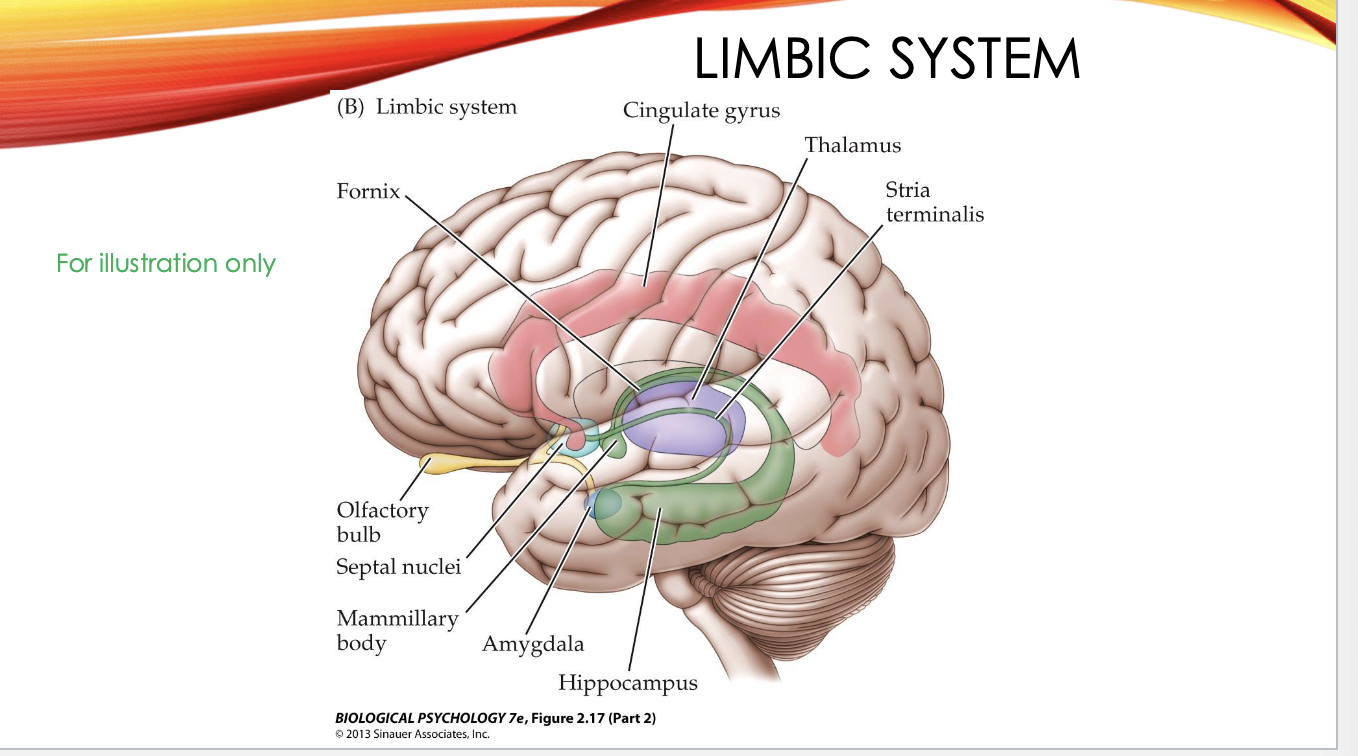
limbic system
network of structures curving through each hemisphere
crucial for emotion and learning/memory (also motivation and olfaction - smell)
includes:
hippocampus
amygdala
fornix
7c: HM and other clinical studies
amnesia
types:
retrograde - forgets the past
loss of memory prior to the event
loss of past memories
involves temporal lobes, hippocampus and surrounding cortex
disrupts retrieval pathways
anterograde - can’t make new memory
loss of memory after an event
inability to form new memories
long term memory fucked
short term memory may still be usable
involves hippocampus and medial temporal lobe (for memory consolidation (making something stronger))
prevents new info from being transferred into long term storage
memory
types based on duration:
short term STM
info that is currently held in the mind
stays for 30s unless repeated
has limited capacity
long term LTM
info that is stored
considered to have unlimited capacity
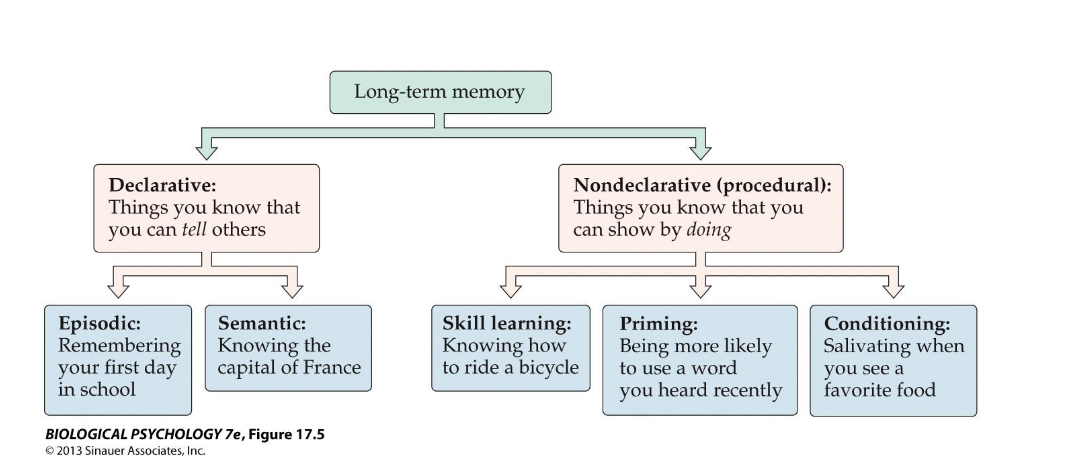
LTM
types:
declarative - what
typically thought of as memory
facts and info
things that can be declared
nondeclarative/procedural - how
memory about perceptual or motor procedures
shown by performance
not by conscious recollection
e.g. riding a bike, playing a guitar
types of declarative
episodic
remembering autobiographical info
episodes of your life
semantic
generalised declarative memory
e.g. meaning of the word (do not need to know where and when the word was learnt)
example: chess
episodic: first time playing chess
semantic: rules of the game
types of non declarative
skill learning
learning a motor skill via repeated trials
priming/repetition priming
a change in the processing of a stimulus
e.g. shown the word stamp, then asked to complete this word: STA__
conditioning
learning simple associations between stimuli
required memory stages
a functional memory system requires
encoding
consolidation/strengthening
storage
retrieval
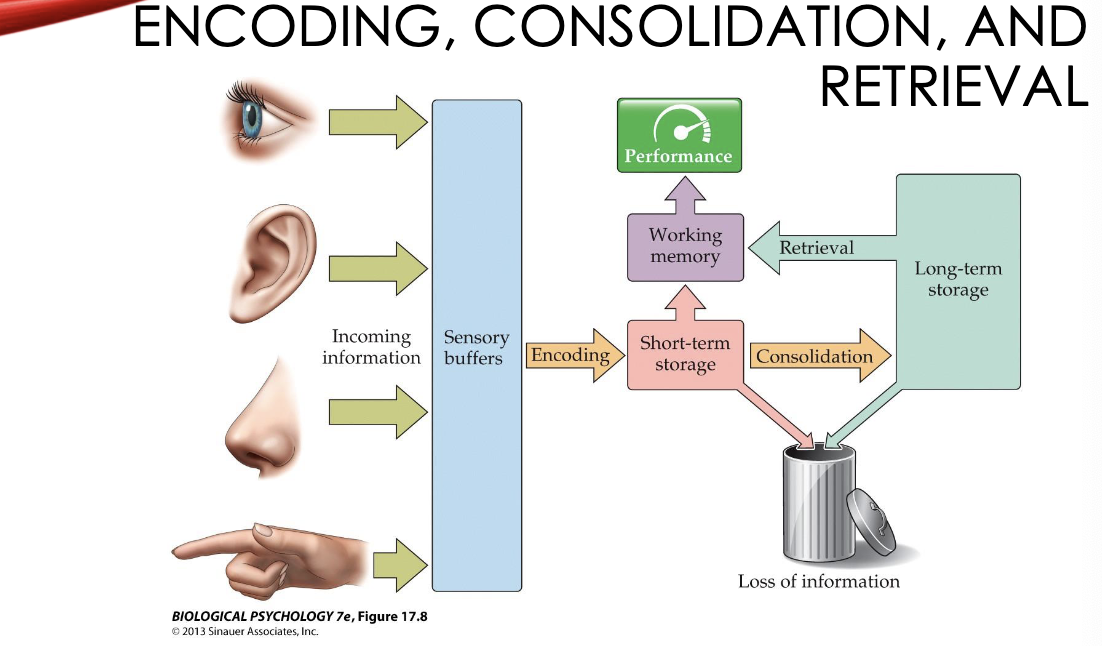
sensory info goes through encoding
encoded info goes to short term
short term goes through consolidation and strengthening and becomes long term
retrieval of long term memory becomes working memory (shown through performance)
sensory info goes through encoding
encoded info goes to short term
short term goes to working memory which is shown through performance
HM consequences
Henry Molaison had seizures in both temporal lobes
amygdala, most of the hippocampus and some surrounding context were removed in 1953
consequences:
positive
seizures reduced
controllable with meds
negative
anterograde amnesia (can’t make LTM) for long term declarative memories
could retain a new fact only briefly
only had STM
HM knew something was wrong. no memories since surgery
other patients: had amygdala removed but not hippocampus. showed no amnesia
hence, hippocampus is vital for consolidation of declarative LTM
given that HM could retrieve old memories, the hippocampus can’t be the storage site
Patient NA
damaged the diencephalon (thalamus and hypothalamus) and other regions
anterograde amnesia (fucked LTM) primarily for verbal material
Korsakoff’s syndrome
typically caused by a lack of vitamin B1 (thiamine
shrunken/diseased mammillary bodies and some damage to the dorsomedial thalamus
anterograde amnesia
makes up stories they seem to accept as true to account for the gaps in their memory
consolidation and retrieval
hippocampus
important for consolidation of declarative memories
once stored, the hippocampus is not required for retrieval
—-
memories stored in other cortical regions
tend to be areas of the cortex where the info was first processed and held in STM
e.g. the visual cortex is crucial for visual object recognition memory
—-
medial temporal lobe
crucial for declarative memory
amygdala not important for declarative memories
cortex is important for storage
episodic vs semantic memories
stored and retrieved differently
patient KC
retrograde amnesia for episodic memories only
does not affect semantic declarative memories
also has anterograde amnesia for episodic only
again, does not affect semantic declarative memories
episodic:
relies heavily on the hippocampus for reconstructing time-bound experiences
semantic:
stored diffusely across neocortex
especially lateral temporal and parietal area.