Kingdom Protista
Kingdom Protista
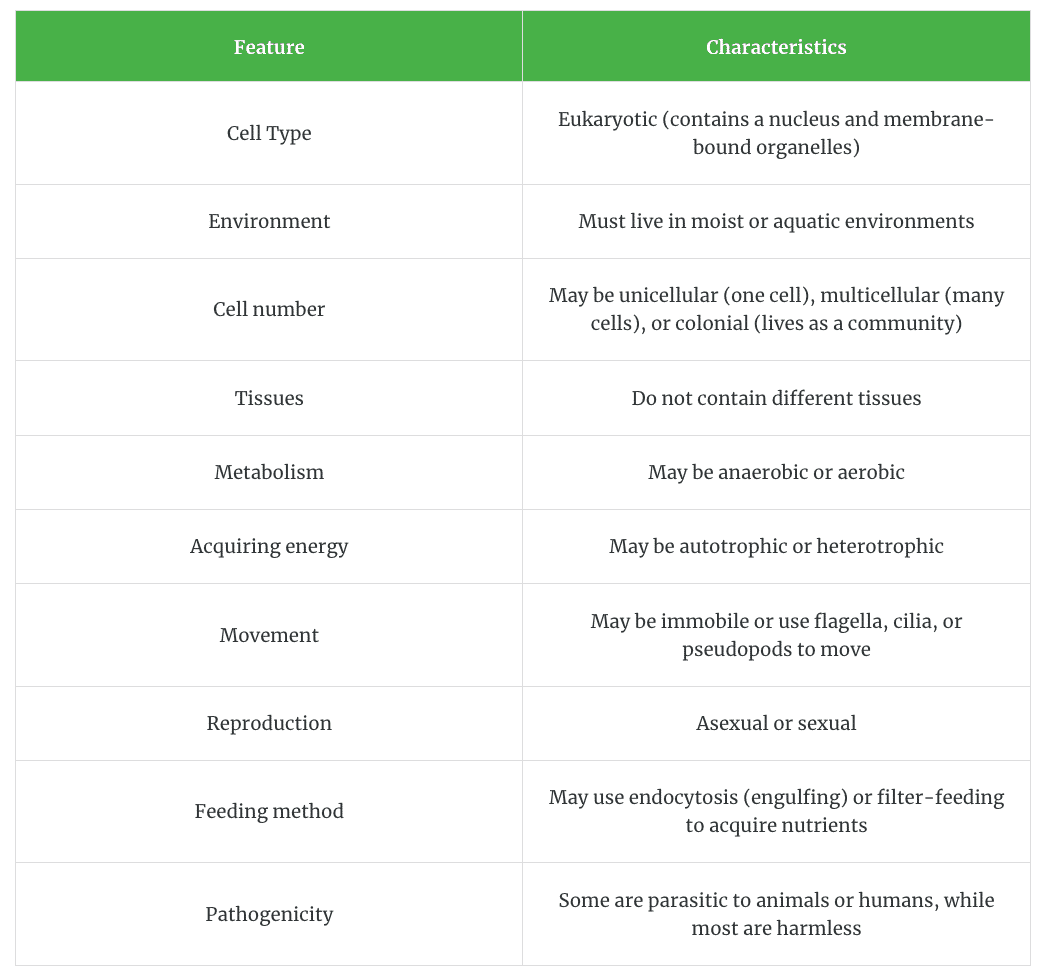
Kingdom Protista includes various eukaryotic organisms that have unusual characteristics, making it appear to be a "catch-all" kingdom for eukaryotes that do not necessarily fit in the plant, animal, or fungi kingdoms. This means that the characteristics of the members of this kingdom are widely varied.
Fungus-like
- Heterotrophic
- Unicellular or multicellular and contain a cell wall
- Reproduce by forming spores
- Usually sessile (does not move)
- Examples: Water molds, mildews, and slime molds
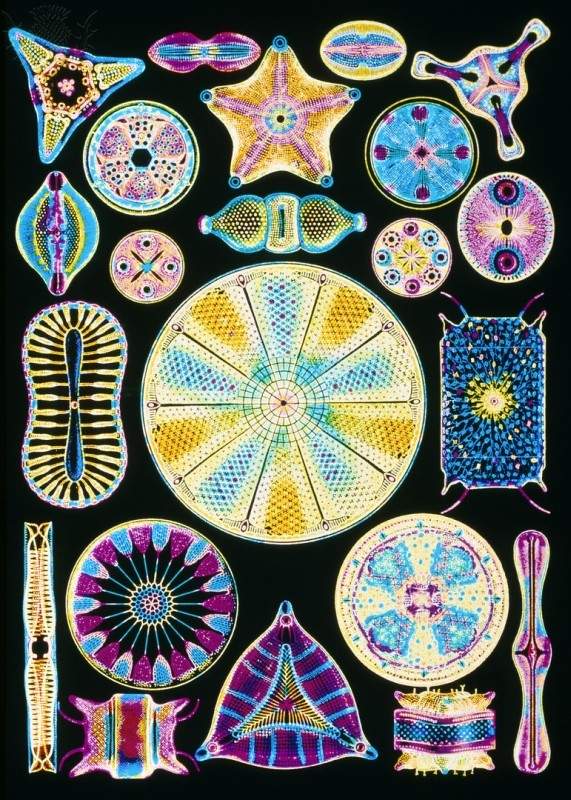
Plant-like
- Autotrophic
- Unicellular, multicellular or colonial
- Examples: Algae, euglena, diatoms, dinoflagellate
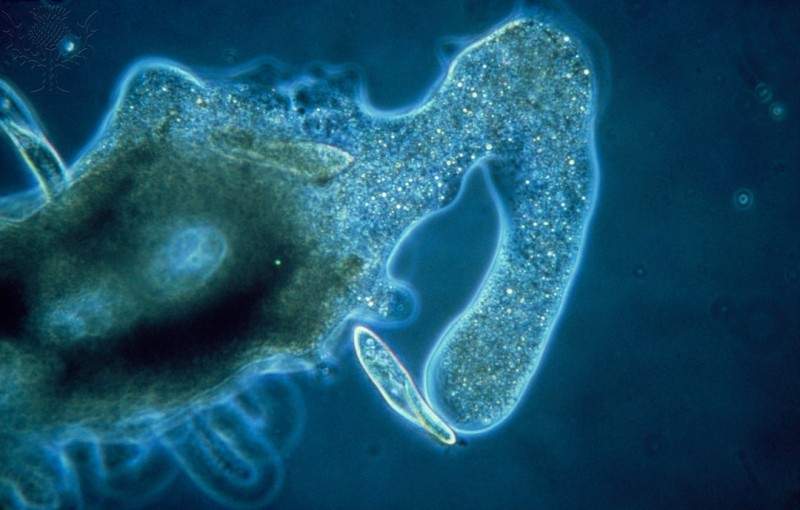
Animal-like (also called protozoa)
- Heterotrophic
- Unicellular
- Mobile
- Examples: Amoeba, plasmodium, paramecium
Importance of Protists
So, why do protists matter? Think about the last time that you brushed your teeth. Did you know that algae are contained within the ingredients of your toothpaste? You likely use products that contain protists every day. Pudding and ice cream also contain algae or algal products! Other types of algae are used to make fertilizer, cosmetics/make-up, and paints.
Protists also have very important roles in the environment. They act as decomposers by consuming and breaking down dead organic matter making resources available in the ecosystem again. Photosynthetic protists significantly contribute to oxygen in the atmosphere through photosynthesis. Additionally, protists form an important part of the food web in all the ecosystems they are a part of.
Termites
+
Marine Plants
+
Algal Blooms
+
Producers
+
The largest protist
+
Disease-Causing Protists
Not all types of protists are beneficial; in fact, there are many protozoans that are considered parasitic and can cause disease. Below are a couple of common examples of parasitic protists.
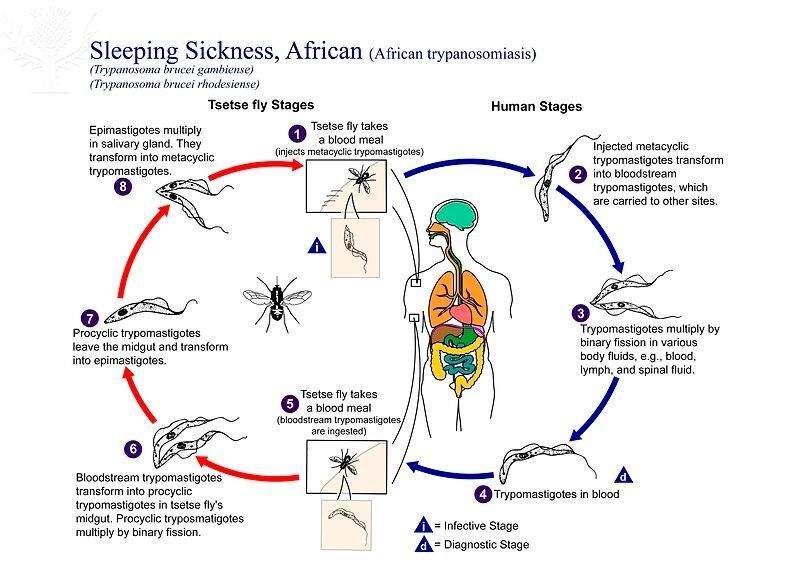
Above is a diagram of the life cycle of the protists that causes African Sleeping Sickness. The life cycle is complex and involves two hosts, the tsetse fly and humans. Humans become infected with the protists if they are bitten by an infected fly.
African Sleeping Sickness
The parasitic protist Trypanosoma brucei is transmitted to humans through the bite of a tsetse fly, which is found in numerous countries of sub-Saharan Africa. Once transmitted, Trypanosoma brucei causes a disease called the African Sleeping Sickness. In the first stage of the disease, symptoms include fever, headache, pain in the joints, and itchiness. During the second stage of the disease, confusion, numbness, and trouble sleeping begin.
Malaria
Malaria is another disease caused by a few protist species of the genus Plasmodium. This protist is also transmitted to humans through an insect vector: the anopheles mosquitoes. These mosquitoes carry the parasitic protists during a portion of their life cycle and can infect a person with a single bite. The parasite eventually infects the red blood cells of the human host and causes the cells to burst. Malaria results in fever, headache, chills, muscle aches, diarrhea, and vomiting. Every year, nearly 300–500 million people are infected with malaria, and roughly one million die from the disease.
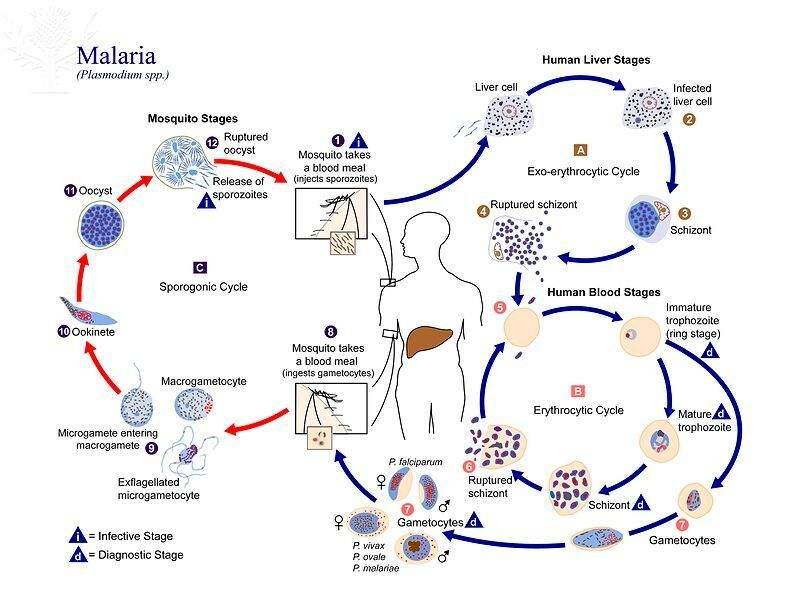
Malaria parasites have a complex life-cycle. Part of their life is in a mosquito where they can be transmitted to humans through a mosquito bite. Once in the human, they inhabit the liver and then move into red blood cells.
Kingdom Protista comprises various eukaryotic organisms that do not fit neatly into the plant, animal, or fungi kingdoms, exhibiting diverse characteristics. Members can be classified into three groups:
Fungus-like Protists
Heterotrophic
Unicellular or multicellular with cell walls
Reproduce via spores
Usually sessile; examples include water molds and slime molds.
Plant-like Protists
Autotrophic
Unicellular, multicellular, or colonial; examples include algae and diatoms.
Animal-like Protists (Protozoa)
Heterotrophic
Unicellular and mobile; examples include amoeba and paramecium.
Protists play vital roles in the ecosystem as decomposers and contributors to oxygen production through photosynthesis. They are also used in everyday products like toothpaste and ice cream. However, some protists, such as Trypanosoma brucei (causing African Sleeping Sickness) and Plasmodium (causing malaria), can cause diseases in humans.