Variety of living Organisms
Plants
Multicellular Organisms
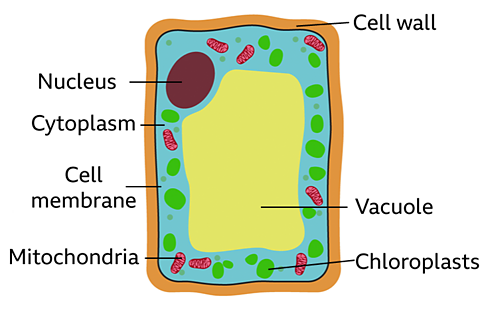
Cells contain chloroplasts which carry out photosynthesis
Store starch or sucrose
Cell walls are made of cellulose
Animals
Multicellular organisms
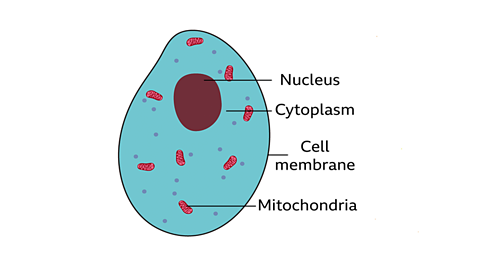
Cells dont contain chloroplasts so don’t carry out photosynthesis
Usually have nervous coordination to help them move
Often store carbohydrates as glycogen (many glucose molecules joined)
No cell walls
Fungi
Not able to carry out photosynthesis
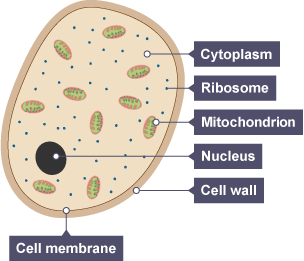
Body usually organised into mycelium
This is made of thread like structures called hyphae which contain many nuclei
Feed by extracellular secretion of digestive enzymes onto food nutrition and absorption of organic products (saprotrophic nutrition)
They may store carbohydrate as glycogen
Some fungi are single celled
They have cell walls made of chitin
Examples = Mucor and yeast (single celled)
Protoctists
Microscopic single-celled organisms
Some (like Amoeba that live in pond water) have features like animal cells
Some (like Chlorella) have chloroplasts and are like plants
Example = Plasmodium that causes malaria
Bacteria
It is a protoctist
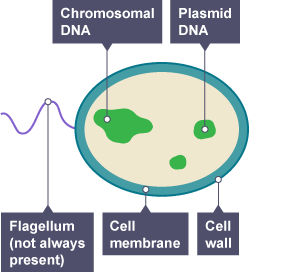
Some bacteria carry out photosynthesis
Most bacteria feed off living or dead organisms
Examples = Lactobacillus and Pneumococcus
Viruses
Not living organisms
Smaller than bacteria
They infect every type of living organism
Parasitic and can only reproduce inside living cells
No cellular structure but they have a protein coat and contain either DNA or RNA
Examples = tobacco mosaic virus (discolouring of leaves of tobacco plants), HIV virus that causes AIDS