Population Ecology
Evolution
- ==Microevolution==::change in allele frequencies over time
- not always visible in a population unless looking into the genetics and biochem aspects - all kinds of alleles for all kinds of traits that your not always gonna see
- ==Macroevolution==::Descent with modification; speciation
- common ancestors - but changes over time, some changes very visible but others may not be
==Phenotypic Variation==::the currency of evolution
For evolution to occur:
- phenotypic variation exists
- can be a drive for evolution
- traits are heritable
- needs a heritable basis
- cannot be a environmental differentiation
- heritable traits can evolve if they give the bearer a reproductive advantage
- differential reproductive success
- the variation is accompanied in differences in fitness
- if all these tigers have the same amount of gametes and phenotypic success and all have offspring then no evolutionary change will occur
Sources of genetic variation:
- Random assortment
- 2^23 possibilities
- Recombination
- during meiosis
- Mutations
- Occurs during DNA replication (forms a basis of where mutations come from)
Evolutions occurs through random processes and selection
Random Processes:
- Mutations
- DNA copied in a weird way
- genetic drift::completely random, not in response to selection
- not a genetic process but can lead to a change in species
- Change in allele frequency between generations based solely on random chance
- in large populations there are many possibilities and changes within the population have a higher probability of occuring
- Especially potent in small populations
- Rare genetic diversity gets lost bc of its size and not many chances of change and may hurt the population when change needs to occur like in a environmental change and need for diversity is necessary
- Tends to result in less variation bc rare alleles are lost
- Starts with an even mix of red and blue - but through time you see fewer red and end up with only blue - think at first it’s gonna be natural selection and the red ones might can’t survive in the jar but this doesn’t always have to be bc of genetic drift
- bottlenecks
- Change in allele frequency between generations based solely on random chance
- Genetic diversity is lost as a result
- May or may not inhibit population recovery, but it often does correlate with changes in fitness
- frequently decrease fitness
- usually a response to a particular event
- when the population size shrinks so does the genetic diversity
- when you lose genetic diversity there is lost measurable traits - that may affect the fitness of the overall populations and damage their health later on
- founder effects
- Colonizing groups have lower genetic diversity than their original population
- small subset of a population goes and finds a new area to live close or far
- humans are good for studying this bc we move around alot
Selection:
- ==Artificial selection==::human decisions drive which individuals breed, and the phenotypeof those individuals increases in frequency (intentional or unintentional)
- ==natural selection==::environmental conditions allow one phenotype more reproductive opportunity than another, and the favor phenotype increases
- ==stabilizing selection==::selection pressure stays the same and the population becomes more similar through time and we see less phenotypic variation (bell shaped curve continues to get skinnier)
- ==directional selection==::it changes the phenotype frequency into something different
1. example is in a plant population the coloration is greening over time over yellow 2. the selection is pointing towards more pigmented coloration not the color green
- ==disruptive selection==::pushes the phenotype into two different directions
1. progeny are less like the parents but in two different directions
Phylogenetic trees:: display hypothesized relationships between taxa (read the nodes not the tips)
==Speciation==::depends on ecology and geography 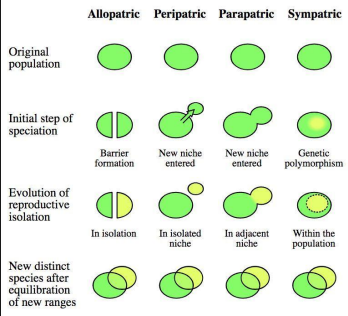
allopatric “different country”
- most common
- physical barrier splits population
Peripatric “near country”
- small group splits off into a different place
- new environment has new selective pressures that vary
Parapatric “side-by-side country”
- continuous population
- ecological differences in habitat lead to assortative mating
Sympatric “same country”
- rare
- selective pressures vary even if within the same river/lake
- only ecological or genetic barriers
- dependence on specific microhabitat
- polyploidy - extra sets of chromosomes
Life History::the schedule of major life events

growth::whether a species reaches adulthood
development::how a species reaches adulthood
reproduction::how the species continues to reproduce
survival::how long an individual is likely to live
Traits depend on:
- organismal characteristics
- morphology
- condition
- environmental conditions
- predators (type of predators may change the survival rates)
- temperature (if its hotter than an individual may move faster and grow faster than if it was cold)
- resources
- light
Example:
- capital breeders::save up resources (like fat) to finance reproduction. Offspring number and survival depend on parent condition
- income breeders::depend on resources available now to finance reproduction. Offspring number and survival depend on environment
Traits are not independent of each other all these factors intertwine
Traits are linked to evolutionary processes
3 axes of life history traits
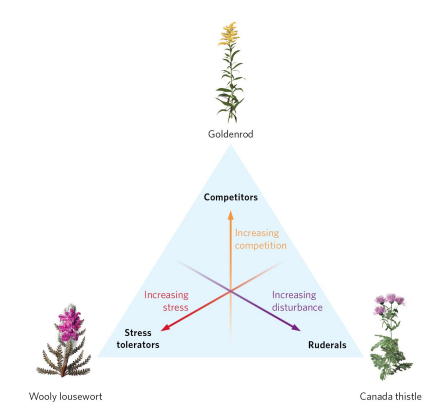
- Stress tolerators - plant species that live in areas of high intensity stress and low intensity disturbance
- adapted this strategy generally have slow growth rates, long-lived leaves, high rates of nutrient retention, and low phenotypic plasticity
- Competitors - compete with each other for light exposure, temperature, humidity, pollinators, soil nutrients and growing space
- Ruderals - a plant species that is first to colonize disturbed lands
- The disturbance may be natural – for example, wildfires or avalanches – or the consequences of human activities, such as construction (of roads, of buildings, mining, etc.) or agriculture (abandoned fields, irrigation, etc.)
Trade offs:
Genetically-Controlled products of Evolution!!!
- Typical r-selected traits - traits that are good in unstable environments strong genetic basis - as a result of adaptation and selection pressures
- greater number of offspring
- shorter life span
- faster growth
- earlier reproduction
- earlier sexual maturation
- smaller parental investment - born smaller, limited parental interaction, plants seeds, lots of offspring but not as many resources at birth in the seeds, aid in dispersal (protective coatings and fragrances to bring dispersers near)
- resources for one traits cannot be allotted to another - a give or take - a parent gives offspring plentiful resources or give them protective coatings but cant have both
- Typical K-selected traits
- Fewer offspring
- longer life span
- slower growth
- delayed reproduction
- later sexual maturation
- Greater parental investment
Tradeoffs guided by the Principle of Allocation
- Resources devoted to one body structure, physiological function, or behavior, cannot be allotted to another
- environmentally dependent - where resources are devoted is based on what resources are available
Reproductive Mode
- Asexual is the primitive form - cloning, doesnt take much resources but it give zero genetic variation
- Sexual reproduction is more resourcefully expensive but it gives genetic variation
Offspring numbers
- goldenrod individuals that produced more seeds also have smaller seeds - this trade off exists between species but also in the same species
- more seeds = smaller
- less seeds = bigger
- correlation between latitude and clutch size
- closer to equator more eggs
- producing less eggs when there is a higher survival for each egg
- Tradeoff between reproductive success and evolutionary fitness
- maybe because if there is much reproductive success then there is not many offspring then there’s not much genetic variation which prolongs evolution
- Life history traits correlate with environmental variables
- Number of offspring is limited by food supply
- near the equator = more food availability for longer periods of time
Tropical Strategy
- More provisioning on a per-nestling basis
- fewer foraging trips means higher survival, and increased lifelong fitness
- the less time the parents have to spend foraging the more time the parents allocate to offspring = high chance survival
Number of Reproductive Bouts
- Iteroparity - Keep reproducing indefinitely throughout life span
- Example: cicadas produce so many offsprings that even if they are getting eaten there is no way they can all get eaten and therefore ensure the next generation
- Semelparity - reproduce only one, favored in extreme environment
- Example: salmon swim upstream lay eggs then die, or annual plant species
- fitness not impacted on whether they can survive these extremes
Senescence - a gradual decrease in fecundity and an increase in the probability of mortality 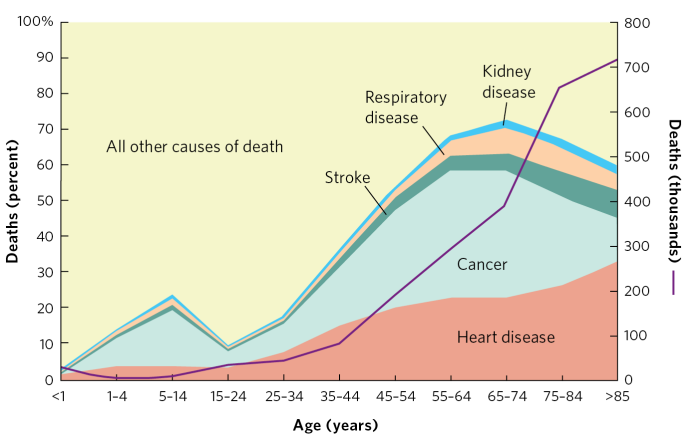
- ‘normal wear and tear’ at the cellular level
- environmental survival rates correlate to inherent mortality rates - senescence curves interact with the environment
- example: naked mole rats live for really long time
- example: ancient trees - exceedingly rare, but vital as genetic reservoirs key to healthy forests (ancient means in relations to the typical senescence of that species)
Environmental Variation: Climate Change
- If the canopy leafs out earlier they may shade out the ground floor of the forest and cause extinction of some of those plants bc they can not produce enough carbon
- not all species are dealing with climate change int he same location in similar ways birds are arriving earlier than bees are here - if they are appearing at different times than this may affect the survival of both the plants and the bees bc of the pollination flowers are arriving 10 days earlier - due to leaf out earlier
Reproduction
Sexual reproduction::progeny inherit genes from two parents
- Costs
- energetically expensive
- mating can be dangerous::like deer they can be so distracted that they forget their individual value (run into streets or into predators viewpoint if they spot a doe they want)
- reduced fitness relative to asexual
- Benefits
- Eliminating mutations::can be done in selective breeding bc w asexual reproduction they constantly keep cloning and cannot produce other genes cause death
- Evolutionary rate
- the red queen hypothesis: evolution as an arms race, species must adapt constantly or be outcompeted
Sexes
- Hermaphrodites::F and M parts on same flower
- most plants (85%)
- Monoecious::individuals have F and M flowers
- Dioecious::individuals have F or M flowers
- * a few rare plants can be all of these things - rarely once a male producing plant may randomly begin producing cones
- Sex can be determined by genes or environment
- Genetic Sex determination
- mammals
- Heterogametic males (XY)
- Sperm determines sex
- Birds
- Heterogametic females (ZW)
- Egg determines sex
- Herpetofauna
- Some XY system (some turtles and lizards)
- Some WZ system (snakes)
- Some Temperature dependant!
- Sex Ratio: Fischer’s Principle
- Suppose male births are less common than female
- Newborn male = better mating prospects than a newborn female, can expect to have more offspring
- Parents genetically disposed to produce males = more than average numbers of grandchildren
- Genes for male-producing tendencies spread, male births more common
- 1:1 sex ratio is approached, advantage of producing males is reduced
- The same reasoning holds if females are substituted for males
- Therefore 1:1 is the equilibrium ratio, evolutionary stable ratio
- Sex ratios tend toward 50:50 … but females can actively manage the ratio!!
Mating Systems
- In animals
- Monogamy::pair bond
- serial or life-long
- caveat: some species are only only socially monogamous
- Polygyny::one male, multiple females
- Polyandry::one females, multiple males
- Polygynandry::multiple males and females mate, care for offspring
- Promiscuity::no pair bonds, mating may be random
- Bateman’s Principle:
- Female mating success rate less variable
- Male mating success rate highly variable, fewer males mate successfully
- High selection pressure for traits that improve success
- Multiple matings can be beneficial for females too:
- high predation, short lifespans
- increasing genetic diversity
- preventing infanticide
- increasing odds of reproducing (like more likely to encounter a fertile mate)
- In Plants
- Selfing:: self-pollination, does not result in genetic recombination
- Outcrossing:: cross-pollination, does result in genetic recombination
- Some plants do both: the mixed breeding system
- Chasmogamous flowers:: large, showy, outcross
- Cleistogamous flowers:: inconspicuous, selfing
- Plant pollination
- Pollination is an ecological interaction
- Can be abiotic:: wind, water
- Can be biotic:: bats, beetles, flies, moths, hummingbirds, bees, and more!
- Many specialized adaptations exist
Sexual Selection
- Individuals with certain heritable traits are more likely to acquire mates than other individuals
- leads to sexual dimorphism
- Sexually selected traits can reduce average fitness!
- Evolves through:
- good genes hypothesis:: the traits females choose when selecting a mate are honest indicators of the male's ability to pass on genes that will increase the survival or reproductive success of her offspring
- good health hypothesis::females choose healthy mates for the direct benefit of avoiding disease transmission or for indirect benefit of passing on their “good genes” for parasite resistance
- Handicap principle::males with the most exaggerated traits indicate their good genes by having to overcome the cost (or handicap) of such extraordinary secondary sex characters
- Can occur within sexes
- like males competing for males
- Can occur between sexes
- like females choosing mates
- Can occur before or after copulation
Population Distribution
The 5 characteristics of population distributions
Geographic Range
- The complete geographic area of the globe that a species inhabits as a result of evolutionary, geological, and biological processes
- Distributions can be patchy within a species’ geographic range, especially due to human impacts
- Many species on islands are (endemic species::those that are restricted to a geographical area and do not occur naturally in any other part of the world.)
- Geographic range of Homo sapiens, a (cosmopolitan species ::its geological distribution is exhibited in all regions if not most regions of the globe)
Abundance
- How many individuals in a population
- subsampling
- indices
- genetics
- Mark-recapture
- Assumptions
- no mortality
- no immigration/emigration
- marks are ‘permanent”
- do not affect population
- M/N = R/C OR N = (M*C)/R
- M = # captured and marked
- N = Estimate population #
- C = Total # captured
- R = # re-captured
Density
- Number per unit area
- varies by:
- body size
- resource availability
- location within range
- take population number and divide by the m^2
Dispersion
- the arrangement of individuals within a habitat at a particular point in time, and broad categories of patterns are used to describe them
- Clustered::many individuals settle together in a relatively small area
- may happen where there is a favourable climate and rich natural resources
- Evenly spaced::organisms keep a specific radius of clear space around them and the overall pattern is organized in rows or patterns
- a result of interactions between individuals like competition and territoriality
- Random::organisms are dispersed in the absence of competition for resources and organisms can spread out seemingly at random
Dispersal
- The process by which groups of living organisms expand the space or range within which they live
- Dispersal operates when individual organisms leave the space that they have occupied previously, or in which they were born, and settle in new areas
Population Growth
- Dependent on:
- birth rates
- death rates
- calculated per capita: frequency of event per individual in a population
- Demographic model: model using demographic rates
- Predictable and can be modeled
- population growth model tries to predict the population of an organism that reproduces according to fixed rules
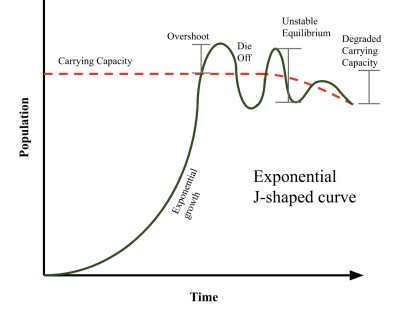
- When intrinsic growth rate is achieved, populations grow exponentially
- N𝑡 = 𝑁0𝑒^𝑟t
- Nt = the population size at time t
- N0 = the initial population size
- e = the base of ln (~2.72)
- r = the intrinsic growth rate
- t = the length of time growing
- Geometric Growth model::population growth that compares population sizes at distinct time intervals
- 𝑁𝑡 = 𝑁0𝜆^t
- Nt = population size at time t
- N0 = the initial population size
- λ = growth ratio in 1 time interval
- t = number of time intervals
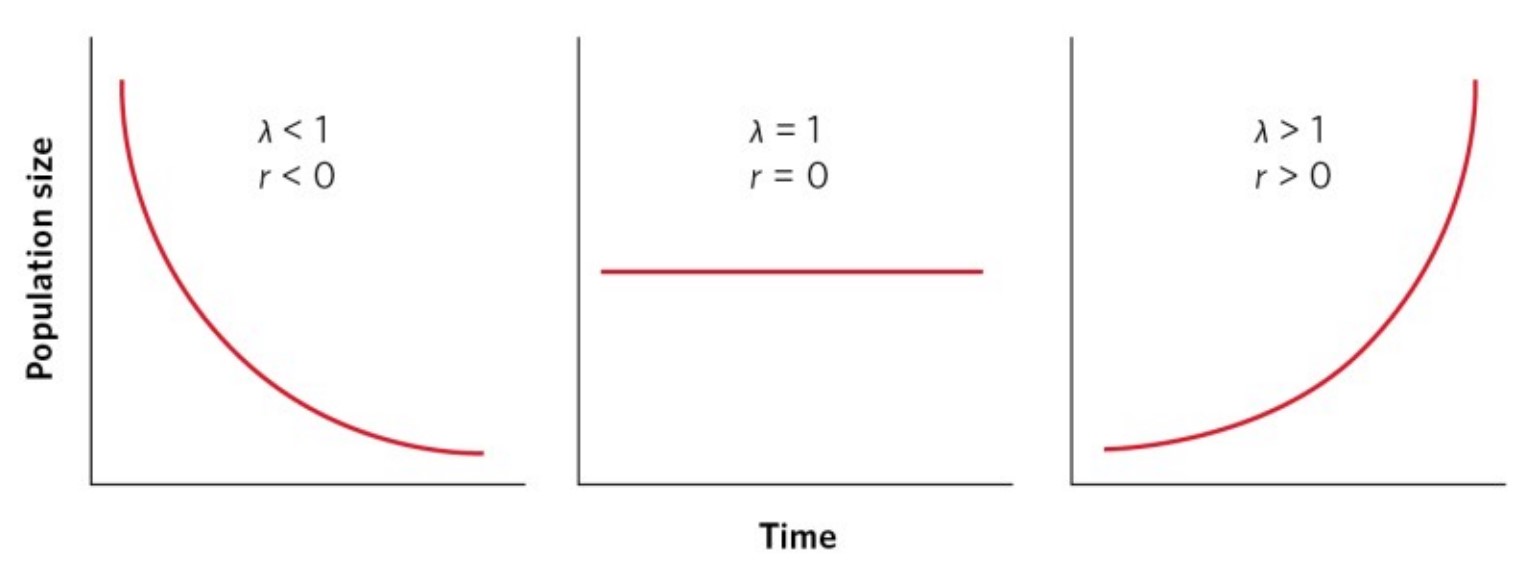
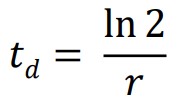
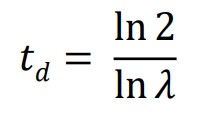
- Doubling time is a good way to compare growth rates between species
Limits to population growth
- density independent::factors that limit population size regardless of the population’s density
- Nt = N0 + B - D + I - E + (temp/optimal temp) + (Precip/opt precip)
- Density dependent::factors that affect population size in relation to the population’s density
- Positive density dependence::both density and growth decrease
- AKA, the allee effect reproduction problems arise if population density is too low
- Negative density dependence::density increases while growth decreases
- limited by resources, space, competition, and parasites
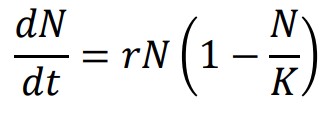
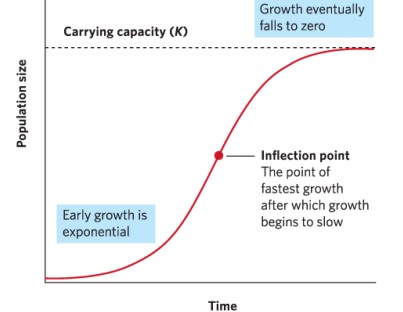
- Logistic growth model
- population growth slows at high densities
- carrying capacity (K)::the maximum population size that can be supported by the environment
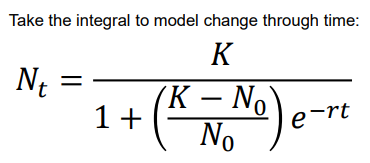
- inflection point - the point of fastest growth after which growth after which growth begins to slow
Population Dynamics
- fluctuations in a population through time, relflect:
- natality: births
- immigration: individuals arriving
- mortality: deaths
- Emigration: individuals leaving
- Changes in size
- Changes in populations occur in space and time
- Variation can be addressed in terms of:
- Population size: increasing number of individuals
- Occupancy: increasing number of occupied habitat patches
- Distribution: increasing geographic area
- Survivorship
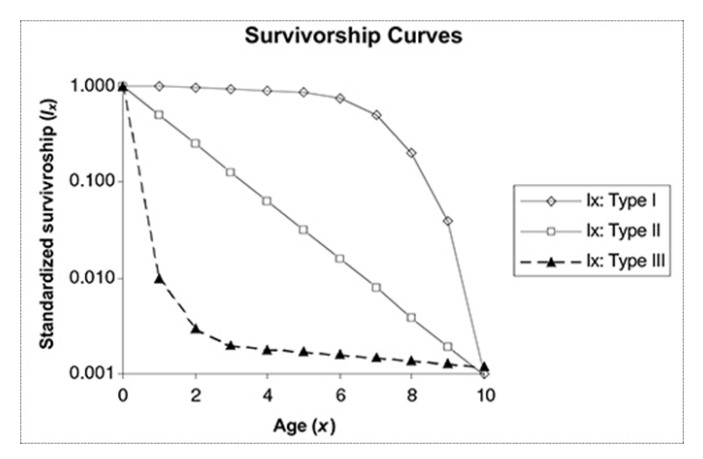
- Cohort: population born during one period of time
- Survivorship: measures life spans and mortality patterns of a cohort
- Survivorship patterns vary depending on life history
- Age distributions
- Reflect patterns of births and deaths
- Can be patchy or continuous
- Age structures can reflect events that trigger birth of new cohorts
Populations naturally fluctuate over time - fluctuations vaary based on environment, resources, species, characteristics and many other factors
Cyclic populations::populations cycle based on carrying capacity or resources
Small populations and the extinction vortex
- caused by:
- humans
- habitat destruction
- overharvesting
- species invasion
- climate change
- Natural events
- physical factors
- disturbance events
- biological interactions
- induces:
- inbreeding depression
- genetic drift
- demographic stochasticity
- environmental stochasticity
- overall loss of genetic variation
- as the vortex continues extinction will occur
- many habitats are fragmented
- habitat patches may be broken up and spatially separated
- can be:
- natural habitat::a complex of natural, primarily native or indigenous vegetation, not currently subject to cultivation or artificial landscaping, a primary purpose of which is to provide habitat for wildlife, either terrestrial or aquatic
- anthropogenic Habitat::habitats that may be similar to and at least partially mimic the structure and function of natural habitats
- Metapopulations
- “population of populations”
- spatially separated group of populations that interact
- Basic metapopulations
- equally suitable habitat patches within a matrix of unsuitable habitat
- some patches may be empty, but can be colonized
- example: karner blue butterflies, thrive in recently burned forest patches, but dont disperse well through forests
- Source-sink metapopulations
- habitat patches are not equally suitable
- high quality patches are sources
- low quality patches are sinks
- The areas of active growth and areas of storage
- habitats in which populations cannot survive when they are isolated from other habitats
- EXAMPLE: human-dominated areas are sinks for grizzly bears
- Landscape meta-populations
- suitability vaires in the habitat patches and the matrix