Water Pollution
Significance of Water:
Water comprises over 70% of Earth's surface and is the most precious natural resource.
Essential for life on Earth for growth and prosperity.
Understanding water pollution is vital for creating solutions.
Freshwater Availability
Fresh Water Statistics:
Less than 3% of the world's water is freshwater.
Most freshwater is frozen in polar ice caps; only about 1% is available for consumption.
NYC Drinking Water Supply
History and Scale:
NYC's water supply system was established in 1842.
Supplies over 1 billion gallons of water per day to approximately nine million residents.
Water is delivered from reservoirs located more than 125 miles away from the city.
Quality Monitoring:
NYC Department of Environmental Protection (DEP) monitors the water supply with 1,200 sampling stations, conducting over 200,000 tests.
Lead contamination in water is a health concern.
Pollution Sources
Types of Water Pollution:
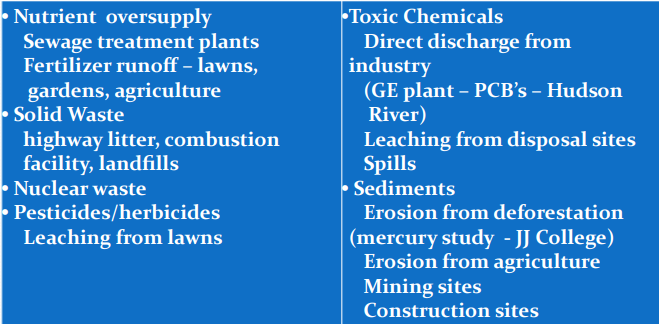
Point Source Pollution- Pollution from a single identifiable source (e.g., factories, sewage systems).
Easier to monitor and regulate due to being easy to identify, but may face enforcement challenges.
Non-Point Source Pollution- Pollution that cannot be traced back to a single source (you don’t know where it comes from)
Includes agricultural runoff, stormwater drainage, and atmospheric deposition.
Wastewater Treatment
Treatment Processes:
Primary Treatment- Solid materials settle out of wastewater.
Secondary Treatment- Air is pumped in to promote bacterial digestion of remaining organic material (85-95% breakdown efficiency).
Treated wastewater can still release inorganic nutrients (nitrogen and phosphorus), which may adversely affect aquatic systems.
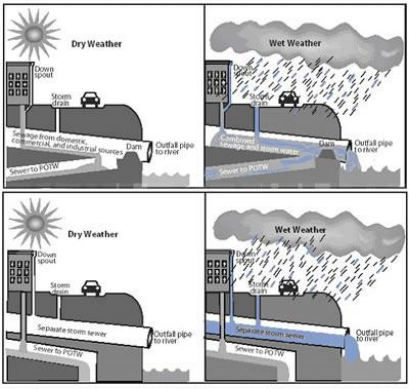
In heavy rains, stormwater can mix with untreated sewage, leading to discharge into rivers and lakes.
This is particularly problematic in older sewage treatment systems.
Pollutants
Pathogens are a significant water pollutant, causing diseases transmitted via contaminated water; parasitic diseases.
Typhoid fever (Salmonella typhi)
Cholera (Vibrio cholera)
E. coli (causing severe diarrhea)
Waterborne Illness- condition caused by bacteria in water
Chemical Pollutants
Organic Chemicals- Pesticides, hydrocarbons, industrial chemicals.
Inorganic Chemicals- Heavy metals (lead, mercury, cadmium) and acids (sulfuric acid).
Nutrient Pollution- Primary sources include agricultural runoff and sewage discharge.
Sediments
Sand, silt, clay, and organic particles from the natural weathering of land forms and human activities such as construction are transported into waterways, leading to habitat degradation and reduced water quality.
clogs fish gills and feeding structures
Groundwater Contamination
Common contaminants include pesticides, leaking fuel tanks, wastewater facilities, and road salt.
Regulatory Challenges:
Leaks from underground tanks are difficult to detect and remediate, posing severe environmental risks.
Water Cycle
evaporation, condensation, precipitation
infiltration and runoff is crucial for replenishing freshwater resources.