Cell Structure
Cells
│
├── Prokaryotic Cells
│ └── Bacterial Cells
│
└── Eukaryotic Cells
├── Animal Cells
└── Plant Cells
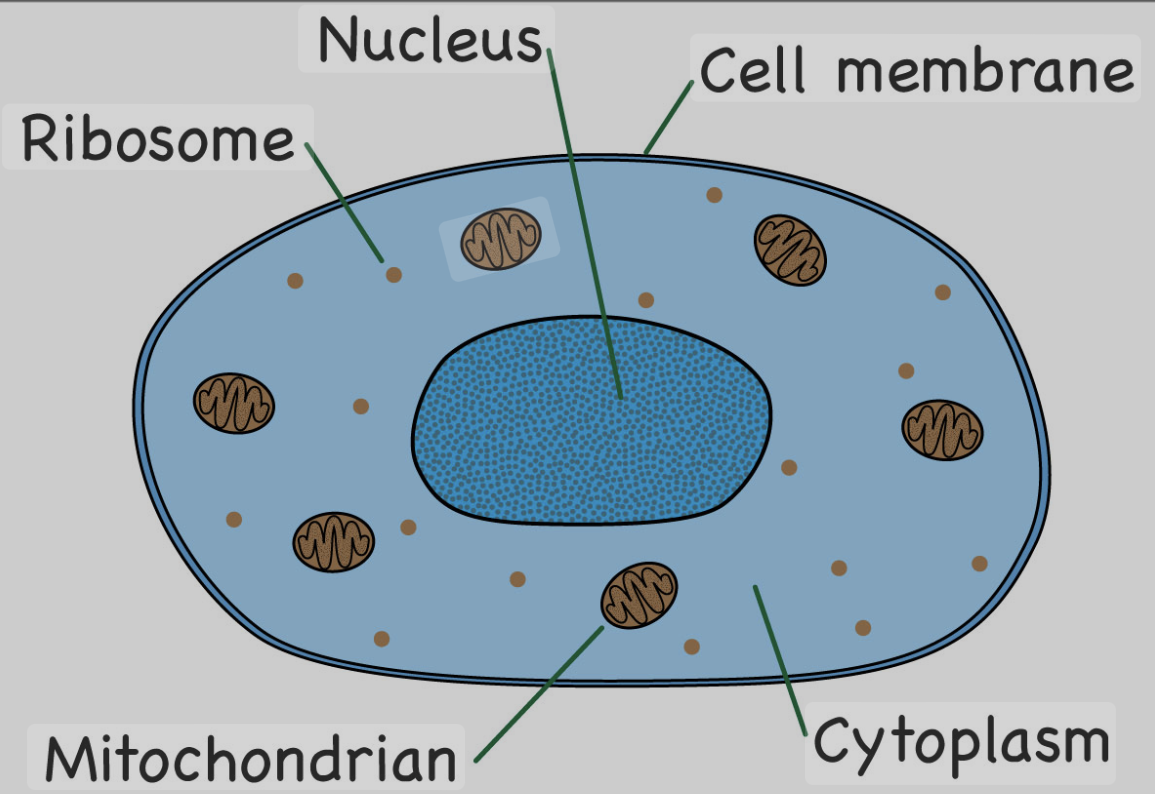
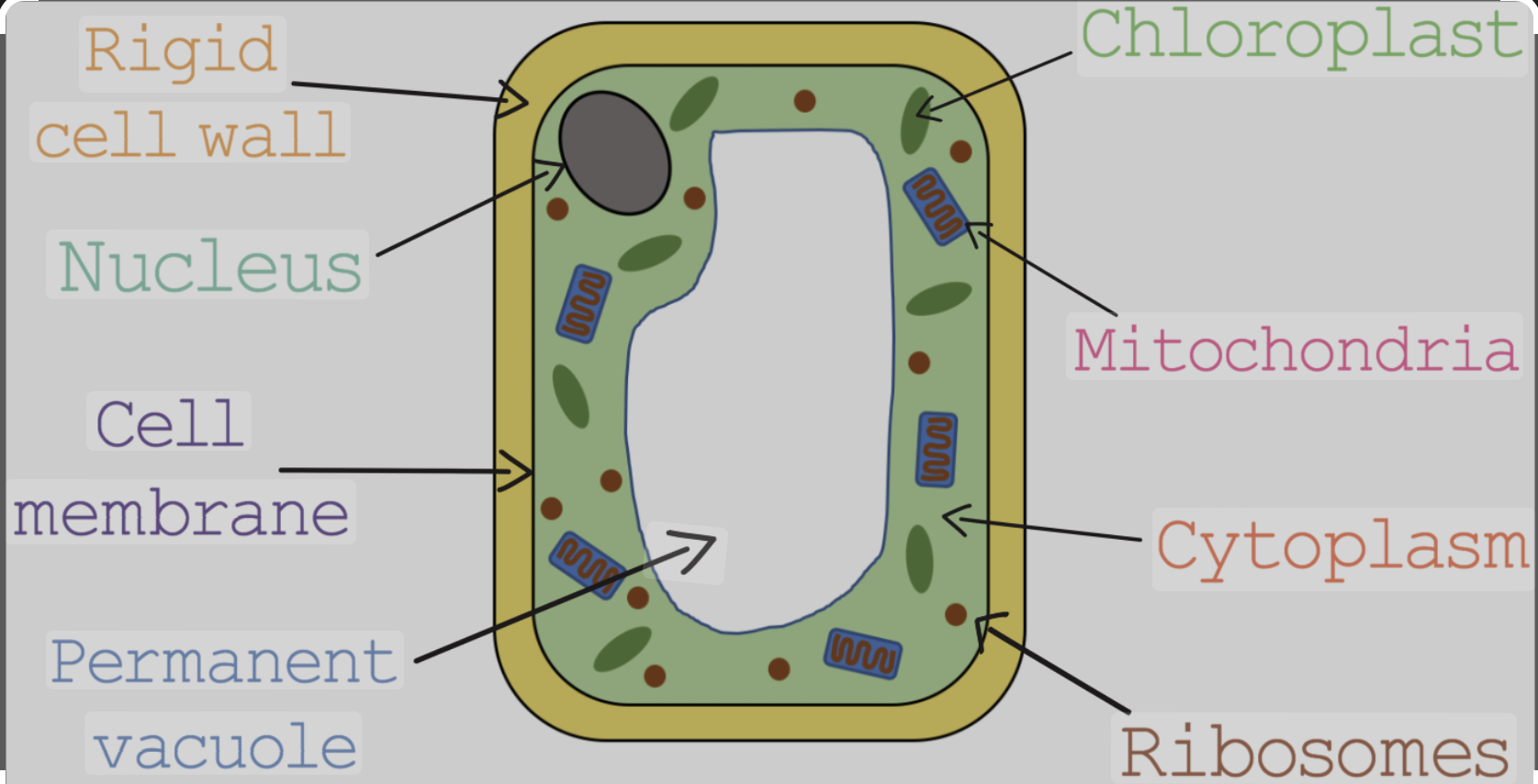
Prokaryotic cells are smaller than eukaryotic cells.
Prokaryotic cells do not have mitochondria.
Prokaryotic cells have no nucleus – the DNA is free in the cytoplasm.
Prokaryotic cells have a loop of genetic material, not chromosomes.
Prokaryotic cells have plasmids, whereas eukaryotic cells do not.
Organelle | Animal Cell | Plant Cell | Bacterial Cell | Function |
|---|---|---|---|---|
Ribosomes | ✔ | ✔ | ✔ | Site of protein synthesis |
Mitochondria | ✔ | ✔ | ✖ | Site of respiration |
Nucleus | ✔ | ✔ | ✖ | Contains DNA and controls cell activities |
Chloroplasts | ✖ | ✔ | ✖ | Absorb light for photosynthesis |
Cytoplasm | ✔ | ✔ | ✔ | Jelly-like substance where chemical reactions occur |
Cell Wall | ✖ | ✔ (cellulose) | ✔ (peptidoglycan) | Surrounds the cell and provides strength |
Cell Membrane | ✔ | ✔ | ✔ | Controls what enters and leaves the cell |
Vacuole | ✖ (small/temporary) | ✔ (large, permanent) | ✖ | Contains cell sap |
Flagella | ✔ (some) | ✖ | ✔ (some) | Tail-like structure for movement |
Plasmids | ✖ | ✖ | ✔ | Small rings of DNA found in cytoplasm |