Esci-REVIEWER
Esci REVIEWER
LESSON 1
THE ORIGIN AND STRUCTURE OF THE EARTH
What makes Earth habitable?
- Liquid water
- Scientists believed that water came from 2 sources:
- Water released from volcanism
- Water came from icy meteor
- Life would not have begun without water
- Water allowed the first photosynthetic organisms to survive.
- Cyanobacteria used sunlight, CO2, and water to produce biomass and oxygen
- Scientists believed that water came from 2 sources:
“Earth is situated within a habitable zone—the distance from a star where liquid water can exist.”
- Heat source
- Heat drives the different systems necessary to support life on Earth
- Heat comes from two sources:
- internal heating of the Earth
- It is caused by radiogenic heat from radioactive decay of materials in the core and mantle.
- It is extruded via active tectonic activities such as volcanism and plate movement.
- external heating from the sun
- It is the heat provided by the sun in the form of radiation.
- As sunlight enters the Earth, most are trapped in the atmosphere.
- internal heating of the Earth
- Atmosphere
- Traps some of the heat from the sunlight.
- Responsible for the occurrence of greenhouse phenomenon (a process that maintains heat)
- Provides heat by greenhouse effect— the trapping of the sun's warmth in a planet's lower atmosphere.
- Photosynthesis—process by which green plants and certain other organisms transform light energy into chemical energy—ensures adequate amount and flow of gases on Earth.
- A planet without an atmosphere would have an average surface temperature below freezing, extreme weather and climates, and extreme UV radiation.
- The atmosphere exists because gravity pulls the atmosphere from being carried away by solar radiation and volcanism on Earth.
- Layers of Atmosphere:
- Exosphere
- Thermosphere
- Mesosphere
- Stratosphere
- Troposphere
How is Earth a system?
- Feedback mechanism
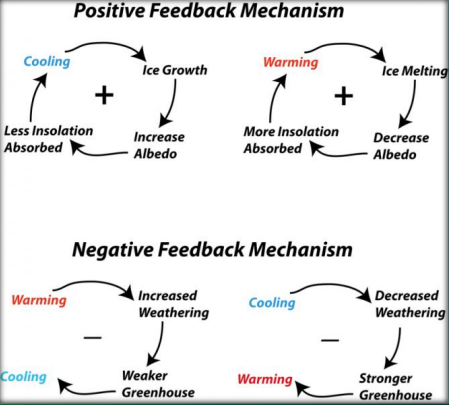
- The Earth’s subsystems
- Geosphere
- It refers to ‘solid earth’
- It is composed of naturally occurring aggregate of minerals, organic material, or natural gas (rocks), and loose particles of rocks that blanket the surface called regolith.
- It also includes geologic landforms such as mountains and hills.
- Hydrosphere
- It is the totality of Earth’s water
- Earth is the only planet in the solar system that has water
- The water in the atmosphere is not part of the hydrosphere but is connected.
- Cryosphere
- Snow and ice reflect heat from the sun, helping to regulate our planet’s temperature.
- Because polar regions are some of the most sensitive to climate shifts, the cryosphere may be one of the first places where scientists are able to identify global changes in climate.
- Atmosphere
- It is a mixture of gases:
- Nitrogen
- Oxygen
- Argon
- Carbon Dioxide
- Water Vapor
- The atmosphere surrounds the planet
- Its relative abundance is crucial to Earth’s survival.
- It is generally composed of:
- It is a mixture of gases:
- Geosphere
78% nitrogen
21% oxygen
0.9% argon
0.10% of trace gases
- Biosphere
- It includes all life forms and organic matter that has not decomposed
- Most life on Earth exists within a zone less than 20km wide
- In this zone, interactions between the subsystems is most dynamic.
- Biosphere
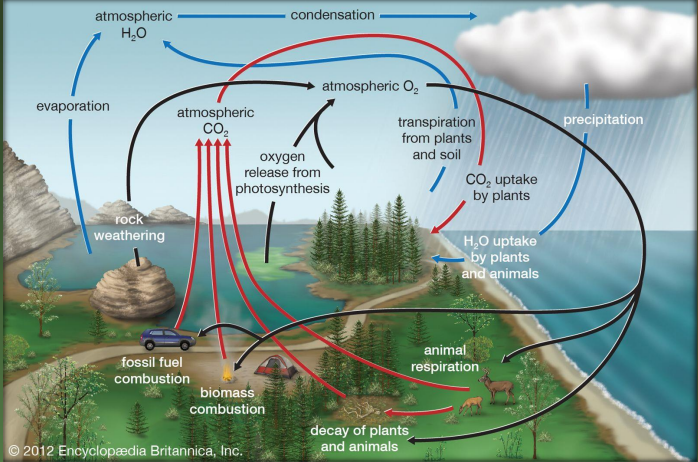
- Biochemical Cycles
LESSON 2
MINERALS AND ROCKS
Minerals
- For a substance to be considered a mineral, it must have the following characteristics:
- Solid
- Formed by nature
- Has a defined, but inorganic, chemical composition
- Has an organized internal structure
- Examples:
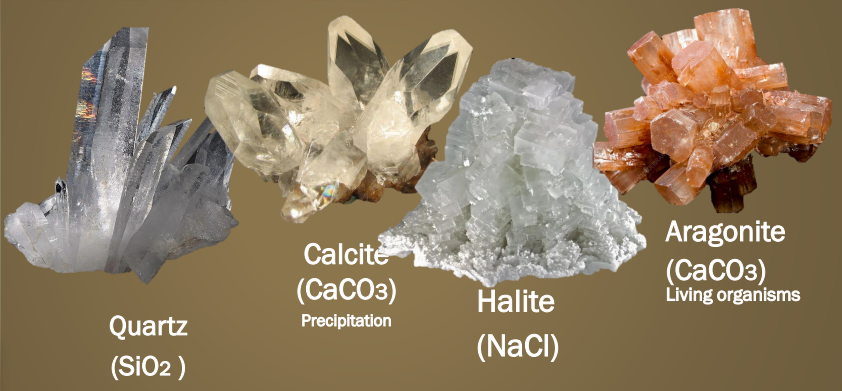
- General Characteristics
- Naturally-occurring
- Inorganic
- Solid
- Definite chemical composition
- Ordered internal structure
- How do minerals form?
- When atoms transfer electrons from one atom to another (ionic) or share electrons (covalent), minerals are formed.
- When atoms transfer electrons from one atom to another (ionic) or share electrons (covalent), minerals are formed.
- Physical properties of minerals
- Color
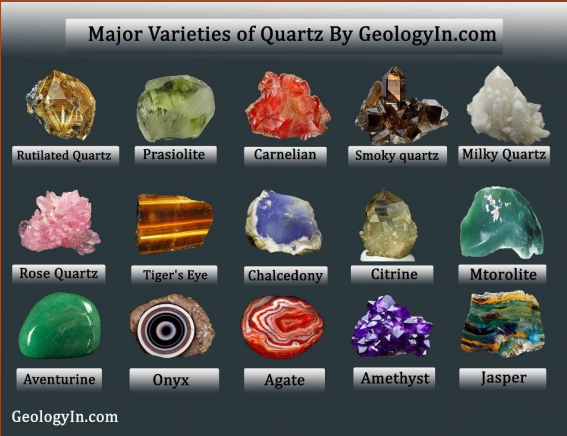
- Can be altered by chemical impurities.
- For example, Quartz is colorless but small amounts of impurities can change its color. It is not a reliable feature for identifying minerals.
- Himalayan salt is a table salt. Analysis of a range of Khewra salt samples showed them to be between 96% and 99% sodium chloride, with trace presence of calcium, iron, zinc, chromium, magnesium, and sulfate, all at varying safe levels below 1%.
- Streak
- Is the color of the mineral’s fresh, ground form. This can be obtained through a streak plate method.
- It is the color of the mineral in powdered form.
- Luster
- The appearance of light reflected from a mineral surface.
- Diaphaneity
- Ability to let light pass through.
- Transparent - allows most light to pass through undistorted. (Ex: Calcite)
- Translucent - light passes through but it is bent and cannot resolve images. (Ex: Muscovite)
- Opaque - no light passes through even the thinnest slice. (Ex: Cinnabar)
- Ability to let light pass through.
- Hardness
- It is measured by the strength of the chemical bonds.
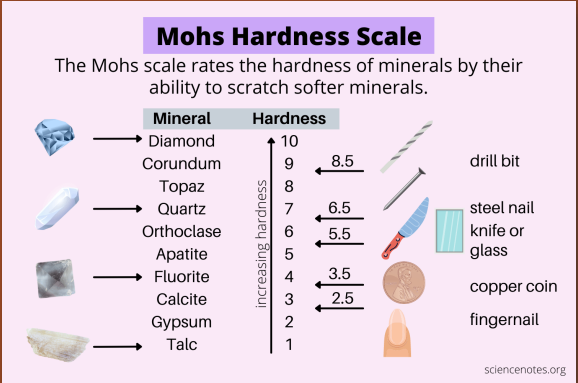
- It is measured by the strength of the chemical bonds.
- Cleavage and Fracture
- The breaking of minerals depending on its molecular bonding and structure.
- Cleavage: mineral breaks along a certain directions and angles.
- Fracture: mineral breaks with lots of jagged edges or no particular direction.
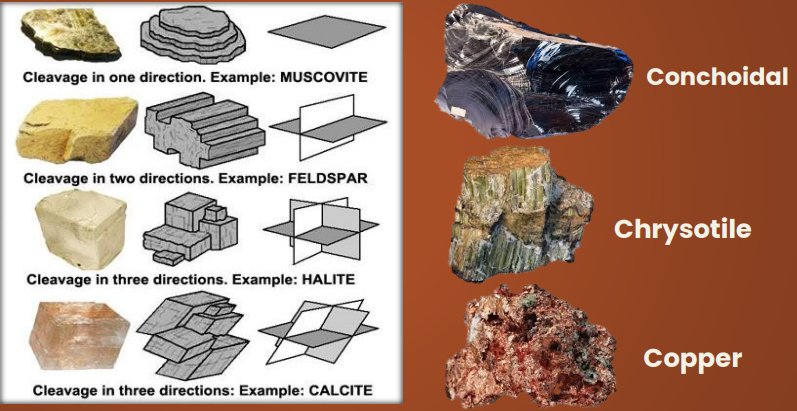
- The breaking of minerals depending on its molecular bonding and structure.
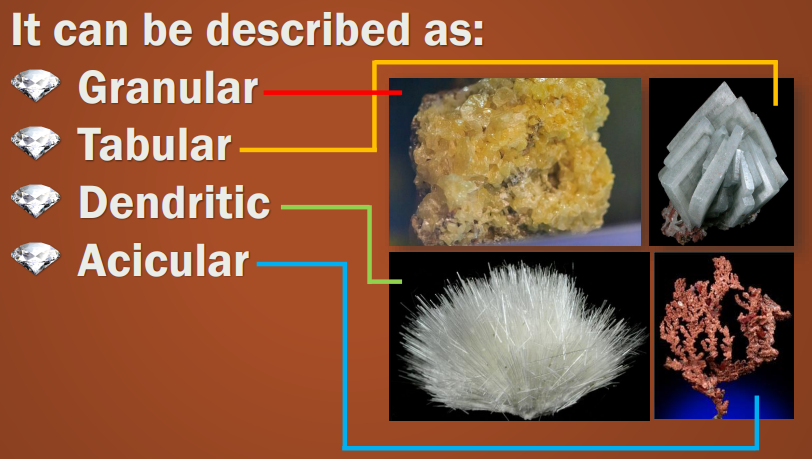
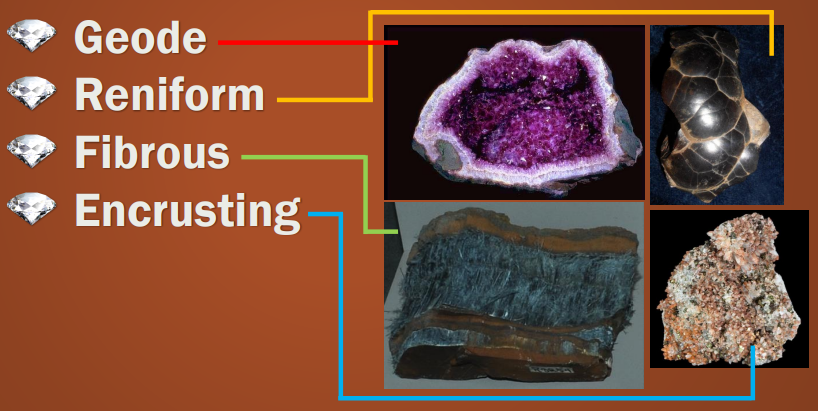
- Crystal Form and Habit
- Minerals can grow and exist in various shapes and sizes.
- It forms independently from cleavage and is affected by the environment where the mineral forms.
- Density
- The density of a material is measured by its specific gravity. Most common minerals have a specific gravity of 2.7 while gold has 19.
- The ratio of water volume that a mineral displaces in proportion to its own volume.
- Most metallic minerals tend to have high specific gravity while nonmetallic minerals tend to have relatively lower specific gravity.
Iridium, at a calculated density of 22.65grams per cubic centimeter, is probably the densest element known to man.
- Other physical properties
- Magnetism
- Taste (saltiness)
- Effervescence (reaction toacid)
- Feel (greasiness)
- Common rock-forming minerals
- Silicates
- Composed of minerals that contain silicon (Si) and oxygen (O) as their main constituents, along with other elements like aluminum (Al), iron (Fe), magnesium (Mg), potassium (K), and sodium (Na). Silicate minerals are the most abundant minerals in the Earth's crust
- Examples of silicate rocks include:
- Silicates
- Color
Granite: A common igneous rock composed of quartz, feldspar, and mica.
Basalt: Another common igneous rock with a more fine-grained texture, composed mainly of plagioclase feldspar, pyroxene, and olivine.
Gneiss: A metamorphic rock formed from granite or other igneous rocks that has been subjected to high heat and pressure, resulting in distinct layering.
Schist: Another metamorphic rock with a foliated texture, composed of minerals like mica, chlorite, talc, and graphite.
- Non-silicates
- Composed of minerals that do not contain silicon and oxygen as their primary components. These rocks are generally less common and include a wide range of mineral compositions.
- Examples of silicate rocks include:
- Non-silicates
Limestone: A sedimentary rock composed mainly of the mineral calcite (calcium carbonate).
Dolomite: Another sedimentary rock that is similar to limestone but contains the mineral dolomite (calcium magnesium carbonate).
Halite: A sedimentary rock composed of the mineral halite, also known as rock salt (sodium chloride).
Gypsum: A sedimentary rock composed of the mineral gypsum (calcium sulfate).
- Oxides
- Sulfides
- Sulfates
- Halides
- Carbonates
- Native Metals
Rocks
- A rock is a naturally-occurring, coherent aggregate of minerals such as natural glass or organic matter.
- Rocks are found in the lithosphere.
- The lithosphere is the rigid, rocky, outermost part of Earth
Rock Cycle:
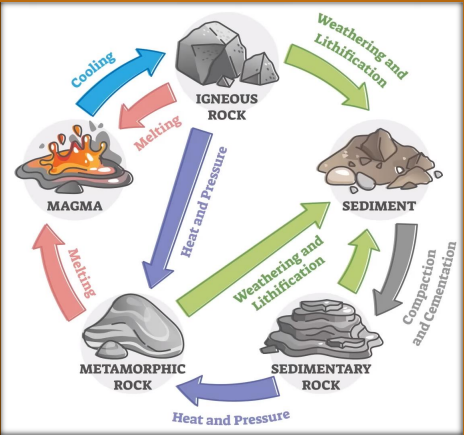
Igneous Rocks
- Three ways igneous rocks can form:
- Below the surface from slow cooling magma
- On the surface from rapid cooling lava
- On the surface from consolidation of particles of a volcanic activity
- Types of Igneous rocks based on texture
- Aphanitic (fine-grained)
- This texture is characterized by fine-grained crystals that are too small to be seen with the naked eye.
- Aphanitic rocks cool quickly at or near the Earth's surface, giving the crystals less time to grow.
- Phaneritic (coarse-grained)
- In phaneritic rocks, the crystals are visible to the naked eye and have grown large enough due to slower cooling within the Earth's crust.
- Porphyritic (mixed)
- This texture is a combination of two crystal sizes within one rock. Porphyritic rocks have larger crystals (phenocrysts) embedded in a fine-grained matrix (groundmass).
- This texture indicates a twostage cooling history, with initial slow cooling allowing larger crystals to form, followed by rapid cooling for the fine-grained matrix.
- Porphyritic andesite is an example of this texture.
- Aphanitic (fine-grained)
Sedimentary Rocks
- Formation of sedimentary rock
- Sedimentary rocks are products of lithification —is a complex process whereby freshly deposited loose grains of sediment are converted into rock.
- Types of sedimentary rocks
- Clastic - when they form from lithification of rocks and mineral fragments
- Crystalline - when they precipitate out of solution
- Bioclastic - when it forms the result of the accumulation of organic material or biological activity
Metamorphic Rocks
- Foliated (the dominant agent is pressure)
- Microscopic, the texture is slaty
- Barely visible, the texture is phyllitic
- Visible to the naked eye, the texture is schistose
- Visible and elongated, the texture is gneissic
- Crystalline (the dominant agent is heat)
- Foliated
- Non-foliated
LESSON 3
MINERAL RESOURCES
Earth’s Resources
- Wind Power
- Solar Energy
- Water Resources
- Crude Oil
- Land Resources
- Animal Resources
- Natural Gas
- Precious Metals, Minerals, Rocks
- Forest Resources
Metallic Resources
- Metallic resources are natural materials that are primarily composed of metals or metal compounds and are used for various purposes due to their unique properties.
- Copper: A highly conductive metal used in electronics, wiring, and plumbing.
- Aluminum: Lightweight metal used in construction, packaging, and transportation.
- Iron: Essential for steel production, used in construction and manufacturing.
- Coal: Fossil fuel used for energy generation and industrial processes.
- Petroleum and Natural Gas: Fossil fuels used for fuel, chemicals, and various products.
- Lithium: Key component in batteries for electronics and electric vehicles.
- Rare Earth Elements: Group of minerals with specialized applications in technology, from magnets to electronics.
- Gold, Silver, and Platinum Group Metals: Precious metals used in jewelry, electronics, and industry.
- Phosphates: Minerals used in fertilizers to enhance plant growth.
- Sulfur: Element used in chemicals, manufacturing, and energy production.
- Salt: Essential mineral for food preservation and various industrial uses.
- Silica (Silicon Dioxide): Used in glass, electronics, and as a strengthening agent.
- Tungsten: Hard metal used in electronics, cutting tools, and aerospace applications.
What is mining?
- Mining is the process of extracting useful materials from the earth.
- Purpose of Mining
- Almost every aspect of our modern lives relies on minerals or mineral products, such as base metals, precious metals, coking coal, iron sands, aggregates, limestone and industrial minerals.
- These are all vital elements used for building and construction, vehicle manufacture and fuel, computers and other electronics, communications, healthcare and dentistry, food production, and energy production and transmission.
- Steps of Mining
- Processing - Looking for the ore body; The ore body is a large deposit that can yield a large amount of the required ore.
- Drilling - A small part of the ore is extracted to determine the resulting ore, ore’s quality, and the amount of ore minerals.
- Modeling - Determining the ore’s size, shape and grade distribution throughout the deposit to apply appropriate mining methods
- Identifying and assessing potential impacts - Consideration on the social and environmental aspects; Finding ways of mitigating any consequence of the mining operation.
- Designing and constructing the mine - Engineer and scientists work together to create the appropriate mine and design.
- Ore extraction - High grade ores are separated from the rest of the deposit
- Did you know? High-grade ore contains a large concentration of the desired mineral. It has less impurities. Low-grade ore has a smaller concentration. It has more impurities.
- Milling - The ore is crushed and concentrated; waste minerals are released.
- Common Mining Methods
- Surface mining (open-pit mining)
- Underground mining (urban mining)
- Mining in The Philippines
- Natural Resource Management
- “Mining is not sustainable”
- Negative Impact
- Acid Mine Drainage
- Heavy Metal Contamination
- Sediment and Erosion
- Processing Chemical
- Reducing our reliance on nonrenewable resources and expanding our renewable energy usage is one of the keys to a sustainable future.
- Support gadgets with long lifespan
- 3R’s (recycle, reduce, reuse)
- Metal-recycling Plant
LESSON 4
ENERGY RESOURCES
What are energy resources?
- Energy - is the capacity to do work
- Resource - is any item used for a specific purpose.
- Renewable
- can be replenished or regenerated
- continue to exist despite being consumed
- includes:
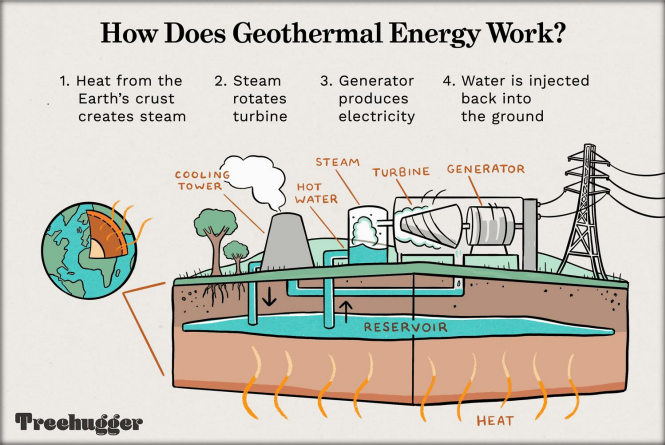
- Geothermal
- One source of energy in Earth is its internal heat.
- Geothermal Energy contributes about 27% in the electricity generated in the Philippines.
- Hydro
- Hydropower, or hydroelectric power, is one of the oldest and largest sources of renewable energy, which uses the natural flow of moving water to generate electricity.
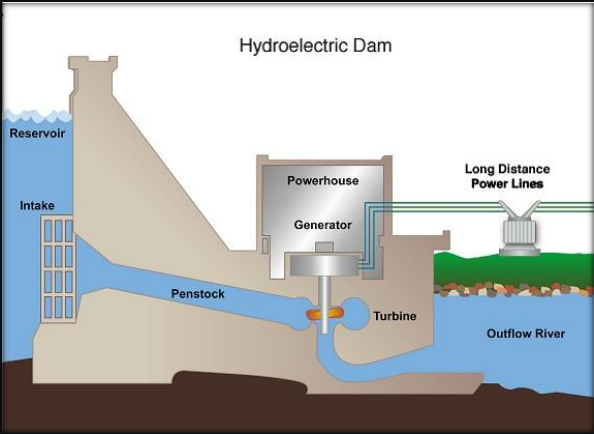
- Hydropower, or hydroelectric power, is one of the oldest and largest sources of renewable energy, which uses the natural flow of moving water to generate electricity.
- Wind
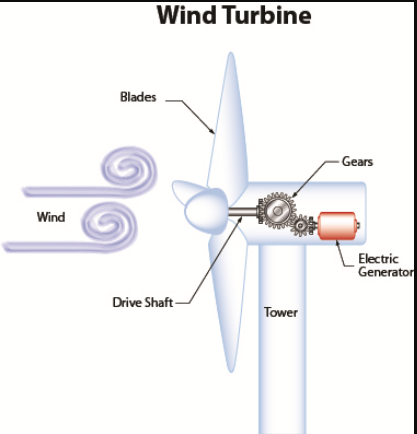
- Wind power or wind energy describes the process by which the wind is used to generate mechanical power or electricity.
- Wind turbines convert the kinetic energy in the wind into mechanical power. This mechanical power can be used for specific tasks (such as grinding grain or pumping water), or can be converted into electricity by a generator.
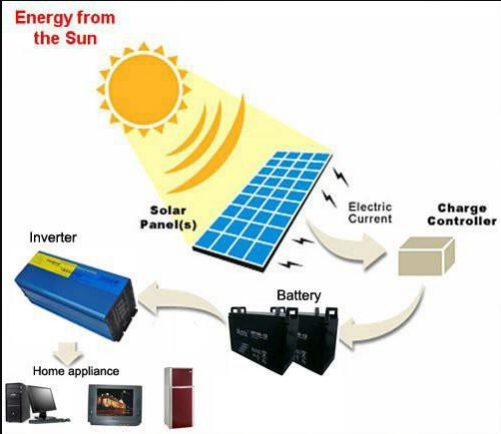
- Solar
- Solar power is energy from the sun that is converted into thermal or electrical energy. Solar energy is the cleanest and most abundant renewable energy source available.
- Solar technologies can harness this energy for a variety of uses, including generating electricity, providing light or a comfortable interior environment, and heating water for domestic, commercial, or industrial use.
- Biomass
- Biomass is renewable organic material that comes from plants and animals.
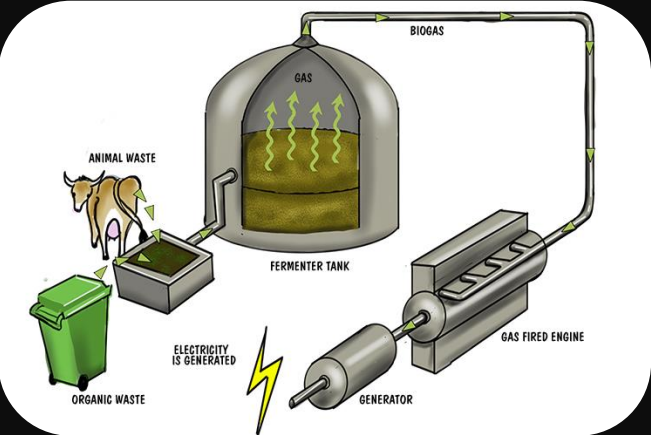
- Biomass is renewable organic material that comes from plants and animals.
- Geothermal
- Renewable
- Non-renewable Resource
- canNOT be replenished or regenerated
- include coal, natural gas, oil, and nuclear energy.
Electricity
- a form of energy which can be generated from almost any energy source.
- Earth’s resources are harnessed and converted into electricity for industrial consumption
- How is electricity made?
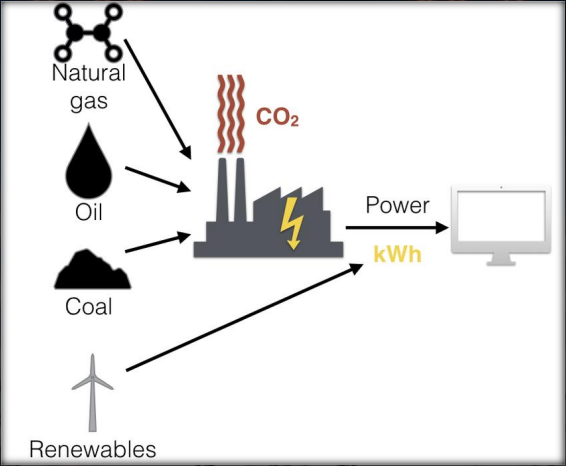
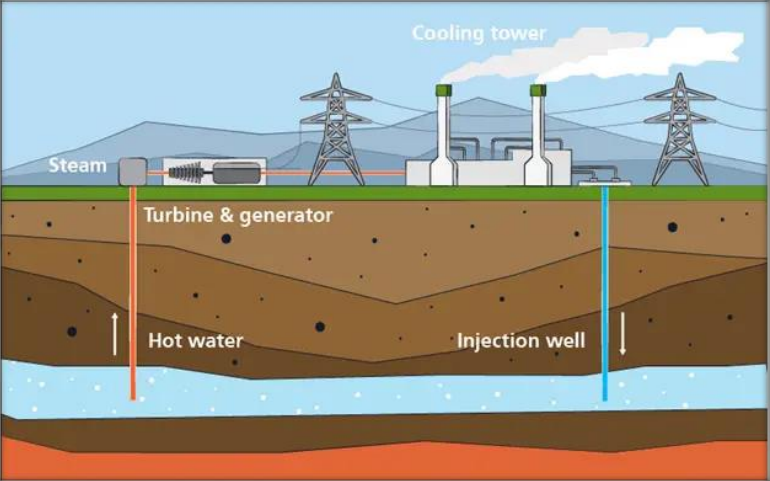
- How is electricity made?
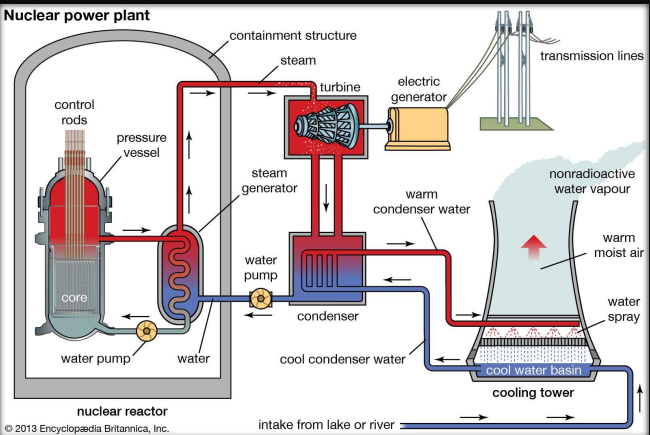
Nuclear Energy
- Nuclear reactions occur when atoms of one species of chemical element are transformed into atoms of another species. This can occur...
... by fission or the splitting of heavy atoms into lighter atoms
... by fusion or the combination of two light atoms to form a heavier atom
Fossil Fuels
- Are made from decomposing plants and animals.
- These fuels are found in the Earth’s crust and contain carbon and hydrogen, which can be burned for energy. Coal, petroleum, and natural gas are three fossil fuels.
- Coal - is a material usually found in sedimentary rock deposits where rock and dead plant and animal matter are piled up in layers.
- Natural Gas - is a hydrocarbon mostly made out of methane. This gas is lighter than air and highly flammable.
- Petroleum - is ‘rock oil’. It is a naturallyoccurring liquid composed of hydrocarbons. Petroleum was formed from the remains of ancient marine organisms, such as plants, algae, and bacteria.
- Formation of Fossil Fuels
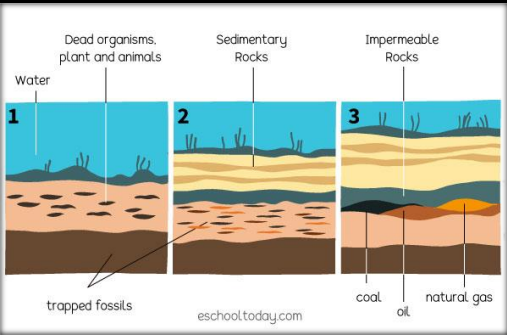
- How long do Fossil Fuels form?
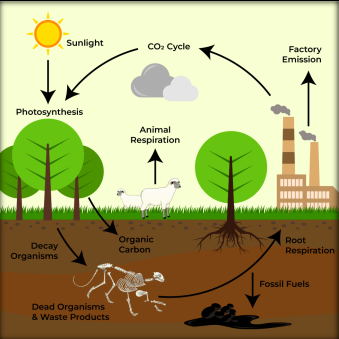
- Carbon Cycle
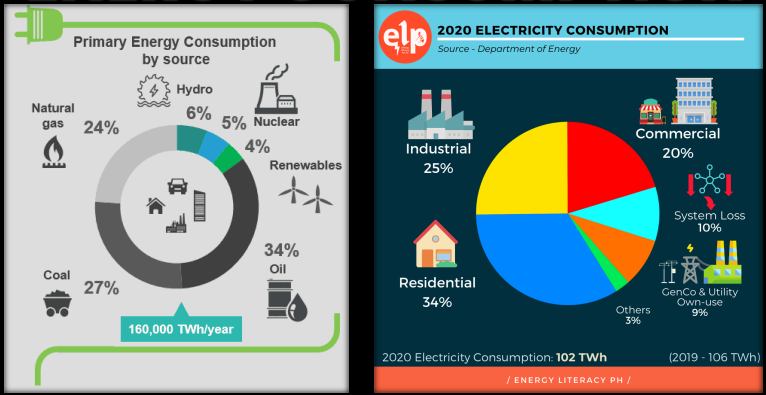
- Energy Consumption
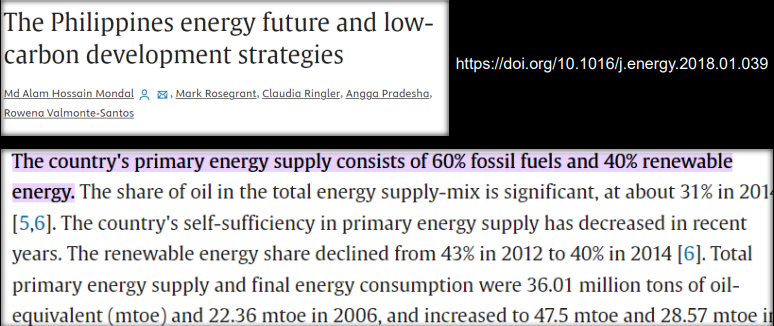
- Carbon Cycle
Energy Resource Management
- Supporting renewable energy
- Be aware of your energy consumption
- Be aware of your carbon footprint
LESSON 5
WATER RESOURCES
Why is water important?
- Essential for Life
- Hydration
- Agriculture
- Industry
- Energy
- Production
- Ecosystems
- Recreation
- Transportation
- Climate Regulation
- Biodiversity
- Source of Food
- Cultural and Spiritual Significance
Earth’s Water
- Earth’s water budget or the ‘total amount of water on Earth’ remains constant through time. Water moves and changes in form but is neither created nor destroyed.
- The largest reservoir of water is the ocean accounting for 97.5% of Earth’s total water, which is mostly saline.
- Saltwater Reservoirs
- Oceans - There is only one global or world ocean that covers 71% of the Earth. It is geographically divided into five distinct regions. The five recognized oceans are:
- Arctic Ocean
- Oceans - There is only one global or world ocean that covers 71% of the Earth. It is geographically divided into five distinct regions. The five recognized oceans are:
- Saltwater Reservoirs
- Atlantic Ocean
- Indian Ocean
- Southern Ocean
- Pacific Ocean
- Freshwater Reservoirs
- Freshwater which accounts for 2.5% of Earth’s total water is found in:
- Glaciers (68.7%)
- Groundwater (30.1%)
- Permafrost (.8%)
- Surface Water
- Atmospheric Water
- Permafrost
- is a soil, rock or sediment that is frozen for more than two consecutive years. PERMAFROST Most of the permafrost is found in the Polar Regions
- Surface water
- Glaciers and Ice Sheets
- A glacier is a permanent body of ice that is usually consisting of recrystallized snow while an ice sheet is a mass of glacial land ice extending more than 50000km²
- Stream
- is a moving body of surface water that flows downslope towards sea level because of gravity.
- It has a clearly defined passageway called ‘channels.’
- A river is a stream with a considerable volume and a well-defined channel.
- Lakes
- are large inland bodies of fresh or saline water. Geological processes form natural lakes.
- For example, a landslide or lava flow could block a stream and create a natural barrier. Water will accumulate behind the barrier and create a lake.
- Wetlands
- Land areas where water covers the surface for significant periods is referred to as wetlands. There are three types of wetlands:
- Glaciers and Ice Sheets
- Freshwater which accounts for 2.5% of Earth’s total water is found in:
- Freshwater Reservoirs
Marsh
Swamp
Estuary
- Floods
- is a natural event wherein an area that is usually dry is submerged under water. It occurs when the rate of precipitation is higher than the rate of in which it could be absorbed by the ground or carried by streams.
- Groundwater
- It is fresh water found in the rock and soil layers beneath the surface.
- Water-bearing rock layers are called aquifers
- Floods
- Water-related environmental issues
- Ground Subsidence
- is the sinking or settling of the Earth's surface, caused by natural processes like sediment settling or human activities like groundwater extraction and mining, often resulting in damage to infrastructure and increased flood risk.
- Saltwater Intrusion
- is the process by which saline or saltwater infiltrates and contaminates freshwater aquifers or surface water bodies, often due to factors like excessive groundwater pumping, sea-level rise, or geological conditions. This intrusion can lead to a decrease in the availability of fresh drinking water and harm to ecosystems reliant on freshwater.
- Water Pollution
- is the process by which saline or saltwater infiltrates and contaminates freshwater aquifers or surface water bodies, often due to factors like excessive groundwater pumping, sea-level rise, or geological conditions. This intrusion can lead to a decrease in the availability of fresh drinking water and harm to ecosystems reliant on freshwater.
- Ground Subsidence
- Effluents
- Effluent is liquid waste or discharge released into the environment, often containing pollutants from industrial, agricultural, or wastewater sources.
- Domestic Effluents
- Effluent is liquid waste or discharge released into the environment, often containing pollutants from industrial, agricultural, or wastewater sources.
refer to wastewater and liquid waste generated by households and residential areas.
These effluents typically include sewage, graywater (from activities like bathing and washing dishes), and other liquid waste produced in homes.
- Agricultural Effluents
- are liquid waste or runoff that originates from farming activities and agricultural operations. These effluents can contain a variety of contaminants, including fertilizers, pesticides, herbicides, animal waste, and sediment, among others.
- Industrial Effluents
- are liquid wastes and discharges produced by industrial processes and activities. These effluents can contain a wide range of contaminants, such as chemicals, heavy metals, organic compounds, and other pollutants, depending on the specific industrial processes involved.
- Population Growth
- Population growth can lead to increased water pollution through higher volumes of domestic wastewater, urbanization, intensified agriculture, expanded industry, groundwater depletion, habitat destruction, and potential climate change impacts.
- Population Growth
- Water Resource Management and Conservation
- Reducing Volume Allocations
- Reducing volume allocations for water typically involves managing and limiting the amount of water allocated to various users or purposes. This is often necessary in regions facing water scarcity or to ensure the sustainable use of water resources.
- Rain-catching
- Rain-catching, also known as rainwater harvesting, is a process of collecting and storing rainwater for various purposes, such as irrigation, landscape watering, flushing toilets, and even drinking water in some cases.
- Damns
- Dams help conserve water by storing excess water during periods of high flow, such as heavy rainfall or snowmelt, and releasing it gradually during drier times, ensuring a more reliable and consistent water supply for various uses, including agriculture, municipal supply, and hydropower generation.
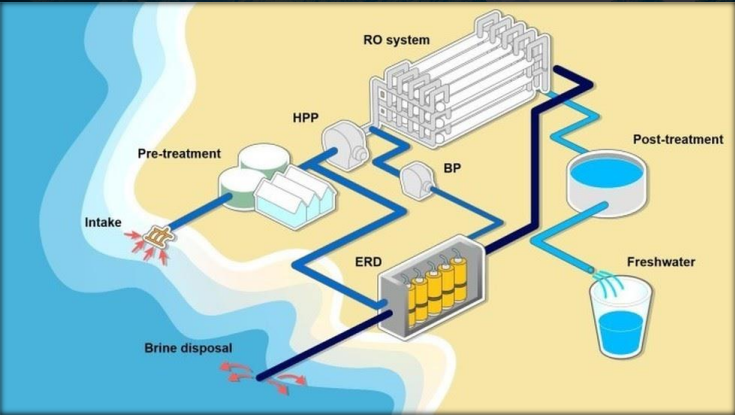
- Desalination Plants
- Desalination plants are facilities designed to remove salt and other impurities from seawater or brackish water, making it suitable for various purposes, including drinking, irrigation, and industrial use.
- The primary process used in desalination is known as "reverse osmosis," where water is forced through a semi-permeable membrane to separate freshwater from the saline solution. Desalination plants play a crucial role in providing a sustainable source of freshwater, especially in regions with limited access to freshwater resources.
- Wastewater Treatment Plants
- Wastewater treatment plants purify sewage and industrial wastewater, removing contaminants to protect the environment and public health. They use physical, biological, and chemical processes to clean the water before its safe disposal or reuse.
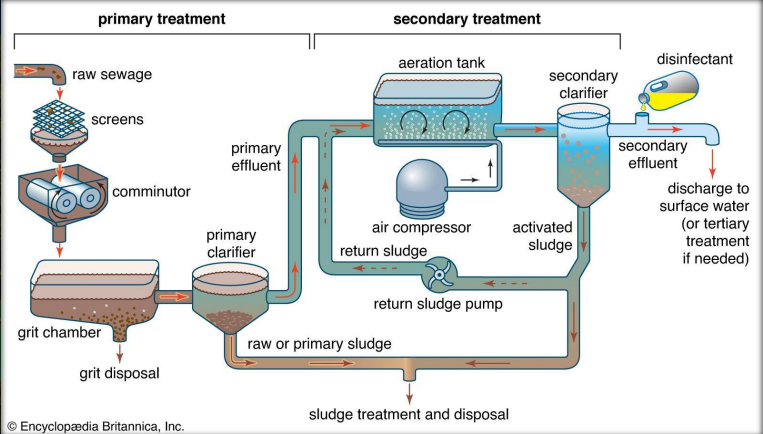
- Wastewater treatment plants purify sewage and industrial wastewater, removing contaminants to protect the environment and public health. They use physical, biological, and chemical processes to clean the water before its safe disposal or reuse.
- Reducing Volume Allocations
- are liquid wastes and discharges produced by industrial processes and activities. These effluents can contain a wide range of contaminants, such as chemicals, heavy metals, organic compounds, and other pollutants, depending on the specific industrial processes involved.
LESSON 6
HUMAN ACTIVITIES AFFECTING SOIL QUALITY AND QUANTITY
What is SOIL?
- unconsolidated regolith (fragments of rock or mineral fragments) modified over time by water, air, and organic material.
- the layer that supports the growth of plants.
- forms where the four subsystems of the planet meet
- Soil Component
- Mineral (45%)
- Air (25%)
- Water (25%)
- Organic matter (5%)
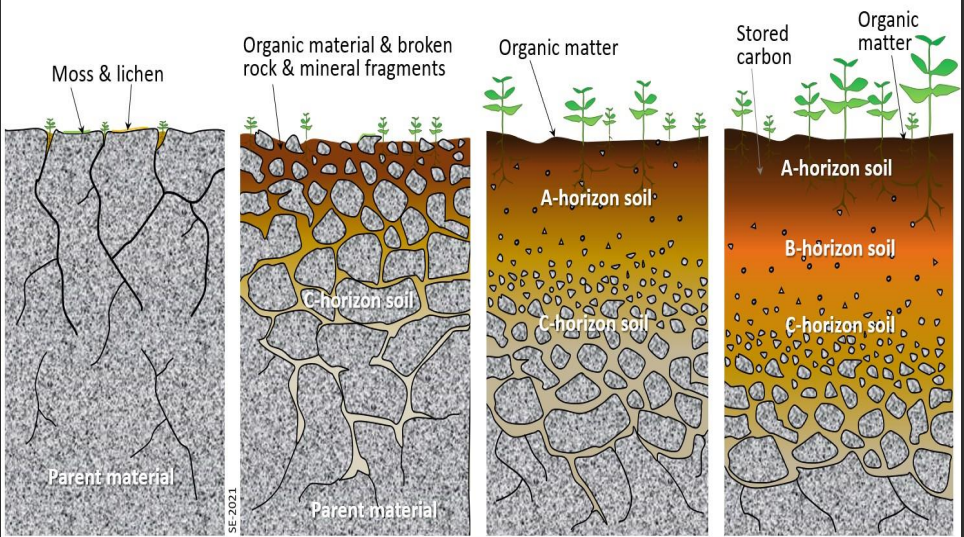
- Soil Formation
- through the process of rock weathering
- four steps:
- Rock disintegration
- Early stage of soil
- Soil slowly develops
- Soil is developed to support thick vegetation
- Soil Texture
- is a basic property which strongly influences the ability of soil to retain and transmit air and water. The types of soil based on texture are:
- Sandy
- Clay
- Silt
- Loam soil
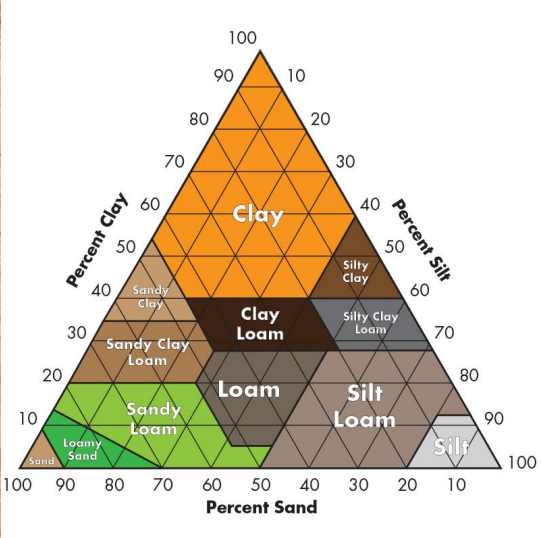
- is a basic property which strongly influences the ability of soil to retain and transmit air and water. The types of soil based on texture are:
- Soil Profile
- is the vertical sequence of all the soil horizons. A typical soil profile has O, A, E, B, and C horizons.
- Note that not all horizons are present in all soil profiles.
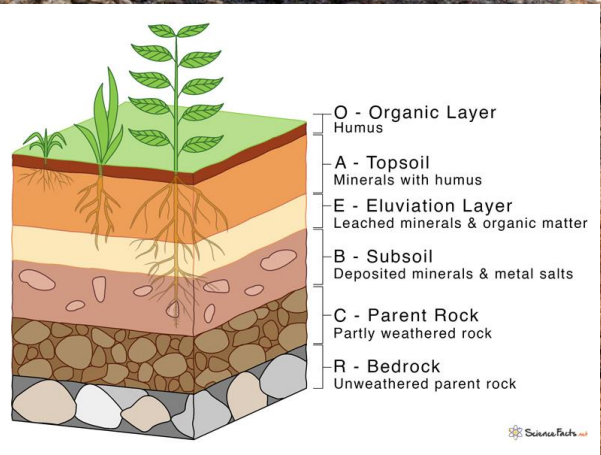
Human Activities Affecting Soil Quality and Quantity
- Soil Degradation
- Change in soil health which slowly results in decreased capacity of soil to support organisms
- Natural Activities
- Physical Factors
- Rainfall
- Run-off
- Floods
- Wind erosion
- Tillage
- Mass movements
- Biological Factors
- Activities by organisms and humans that degrade the soil
- Chemical Factors
- Reduction of soil quality due to changes in alkalinity and acidity of the soil
- Physical Factors
- Anthropogenic
- Deforestation
- Cutting down trees hasten soil erosion
- Exposes soil and affects water retention
- Excess use of fertilizers and pesticides
- Results in the decrease of organisms that bind soil together.
- Industrial and mining activities
- Improper cultivation practices
- Urbanization
- Overgrazing
- Deforestation
- Natural Activities
- Change in soil health which slowly results in decreased capacity of soil to support organisms
Activities to Prevent Soil Degradation
- Reducing Deforestation
- Educate how important trees are and vegetation covers
- Reforestation efforts must be also done
- Land reclamation
- Adding plant residues
- Salt level correction and salinity control
- Proper tillage methods
- Leaving previous crop residues on the surfac
“DECEMBER 5 WORLD SOILS DAY”