Forecasting
Trend Analysis
Importance of accurate demand prediction to avoid shortages or excess inventory.
Consequences of Forecasts
Underestimating demand leads to shortages.
Overestimating demand results in surplus inventory that may need to be sold at a loss.
Demand Prediction Methods
Qualitative Methods:
Expert opinions (sales teams).
Market research.
Quantitative Methods:
Moving averages (simple, weighted).
Exponential smoothing.
Regression analysis (linear).
Types of Trends
Linear increasing, decreasing, or non-linear patterns.
Seasonal patterns (e.g., ice cream sales peak in summer).
Cyclical patterns influenced by economic conditions.
Irregular variations caused by unexpected events (e.g., COVID-19).
Importance of Demand Patterns
Helps in predicting future demand and identifying market opportunities while managing risks.
Forecasting Techniques Introduction
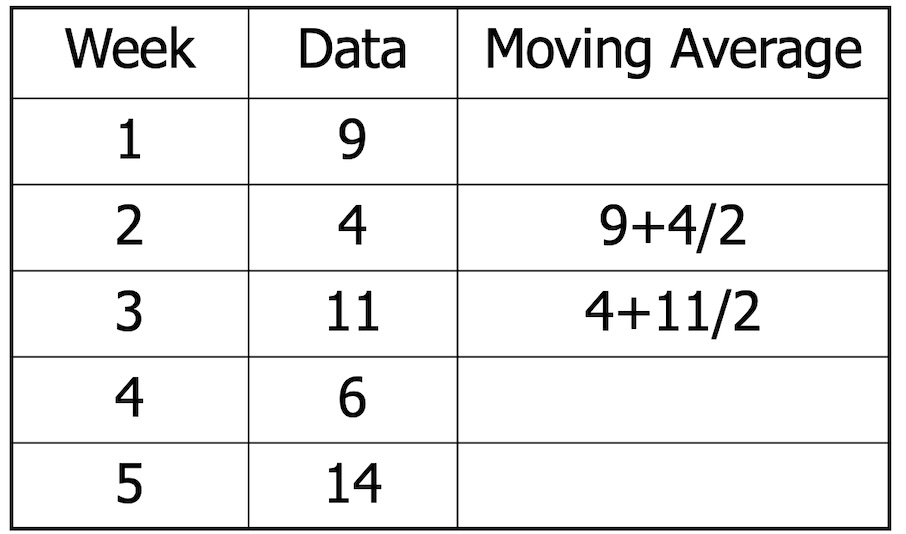
Simple Moving Average (SMA):
Smooths out data fluctuations for trend identification.
Focuses on recent data for better predictions.
Calculation of the moving average involves averaging a specific number of recent observations.
Forecasting Error
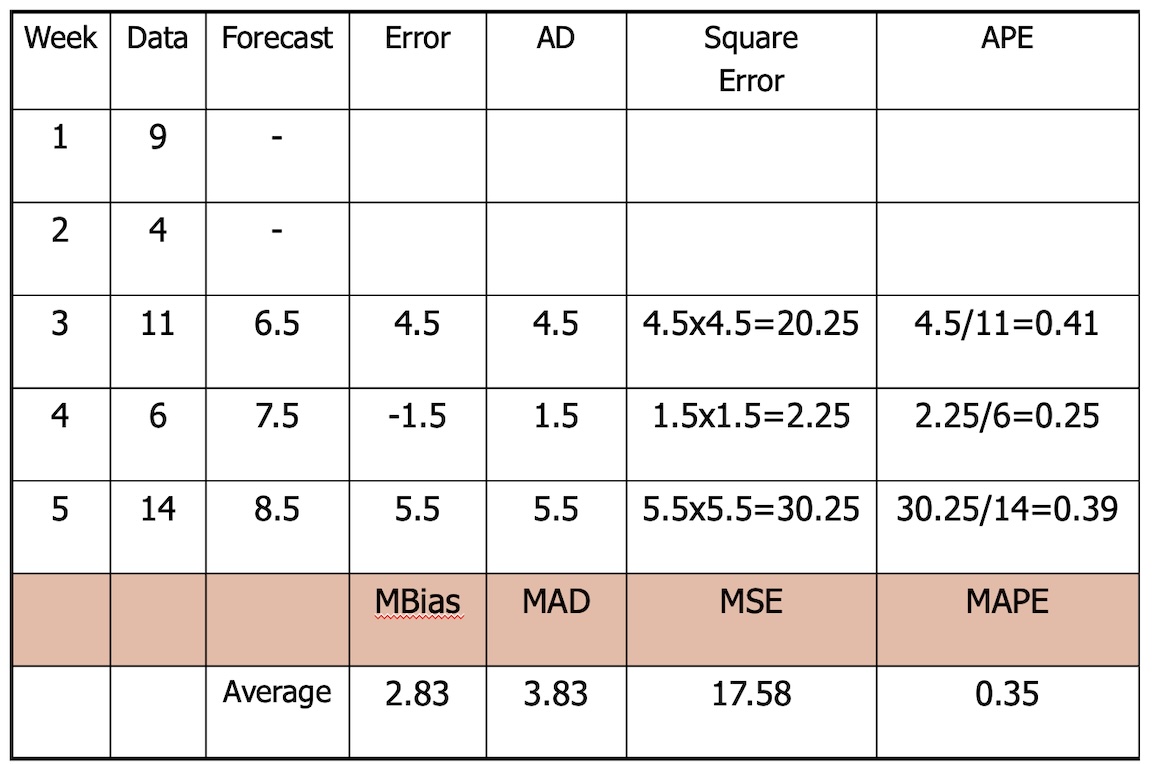
Forecasting Error: Difference between observed and forecasted values.
Mean Absolute Deviation (MAD) and Mean Squared Error (MSE):
MSE: average of squared differences from the mean.
MAD: average absolute differences.
Lower value indicates better accuracy.
Absolute Percentage Error (APE)
APE = (Absolute Error / Actual Outcome) * 100%
Offers a clear picture of forecasting accuracy.
Practical Application
Forecasting demand using historical data to identify optimal moving average techniques based on measurement errors.
Seasonal Index Calculation
Use seasonal indices to adjust forecasts based on historical seasonal demand patterns.
Average annual demand can be divided by seasonal indices to determine expected demand in each season.