Light independent reaction
Light independent reaction
occurs in stroma of chloroplasts
fluid filled space surrounding the thylakoids
contains the enzymes needed for carbon fixation and sugar synthesis
reactants
carbon dioxide
ATP
reduced NADP from light dependent reaction
products
glucose
other organic molecules
Stages of light independent reaction
3 main stages
fixation
reduction
regeneration
cyclical process
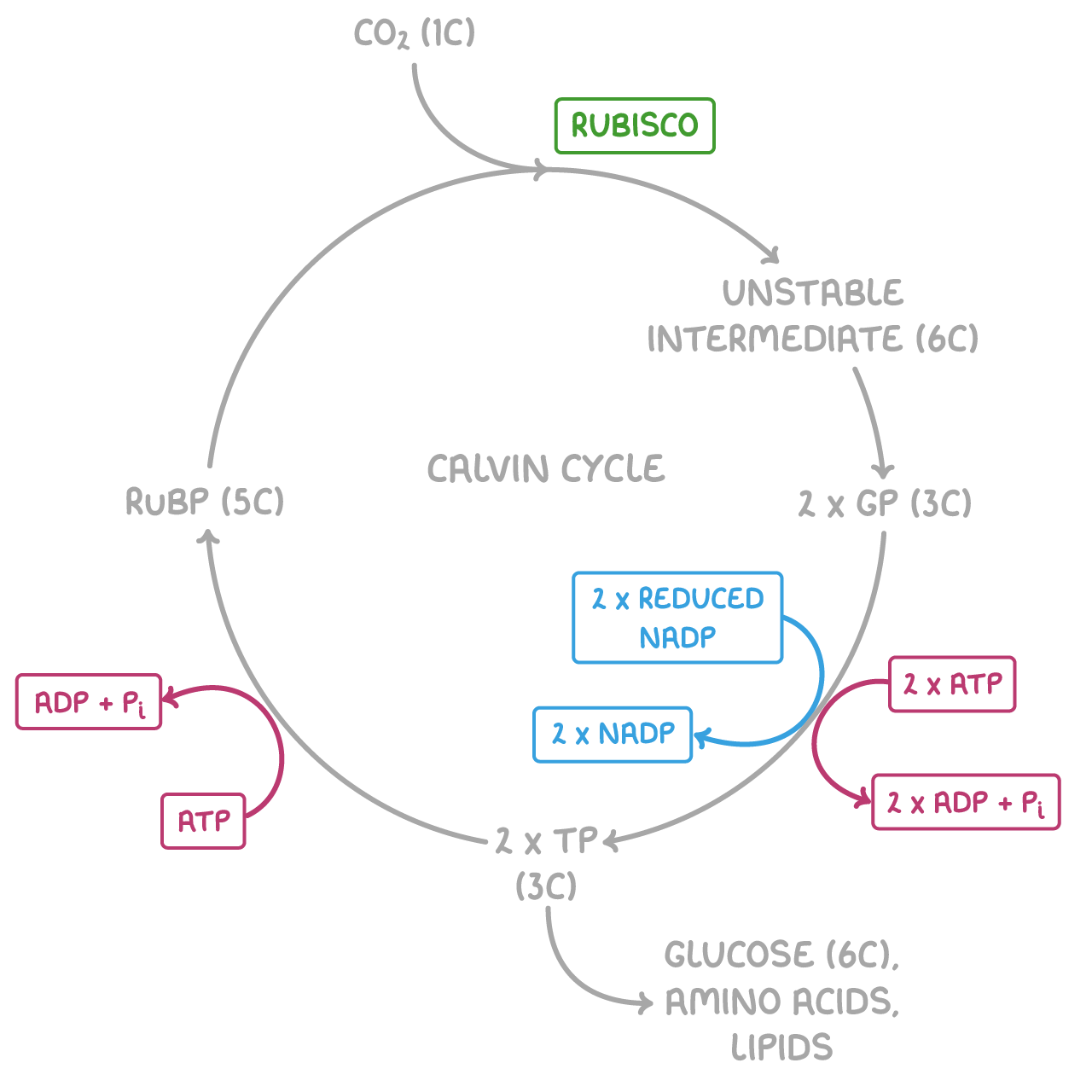
Calvin cycle
Carbon fixation
carbon dioxide reacts with a 5 carbon compound ribulose bisphosphate (RuBP) to form an unstable 6C compound
this 6C compound splits into two 3C glycerate-3-phosphate (GP) molecules
catalysed by the enzyme ribulose biphosphate carboxylase (rubisco)
Reduction of GP
GP is reduced into triose phosphate (TP)
this uses energy from the hydrolysis of ATP
also requires protons and electrons from reduced NADP, which itself is oxidised to regenerate NADP
the NADP that is reformed returns to the light dependent reaction to be reduced again
Regeneration of RuBP
most TP is used to regenerate RuBP using ATP
the rest of the TP can be used to make other organic molecules
Calvin cycle
for each turn of the CC, 5 carbons are used to regenerate RuBP and only 1 carbon from CO2 is available to make new organic compounds
means 6 full turns of the CC are needed to make 1 molecule of glucose
Use of triose phosphate
TP can be used to make other molecules as well as regenerate RuBP
simple sugars
glucose
larger carbohydrates
starch
sucrose
cellulose
amino acids
lipids
nucleotides
Importance of the Calvin cycle
real world impact
inorganic carbon is turned to organic molecules
supports all life on earth by providing the basis for food chains
products of the cycle are used for energy, growth, and storage in plants and other photosynthetic organisms