6.1.1 (b) - regulatory mechanisms
spec points
the regulatory mechanisms that control gene expression at the transcriptional level, posttranscriptional level and post-translational level To include control at the:
transcriptional level: lac operon, and the general role of transcription factors in eukaryotes (Learners are not required to recall specific transcription factors)
post-transcriptional level: the editing of primary mRNA and the removal of introns to produce mature mRNA
post-translational level: the activation of proteins by cyclic AMP. HSW2
How are genes regulated?
different levels of control of gene expression
Transcriptional - genes are turned on/off.
Post-transcriptional - modification of mRNA.
Translational - stopping/starting translation.
Post-translational - modification of proteins after synthesis.
Chromatin remodelling:
Heterochromatin: tightly wound w/ histone, can’t be transcribed
Euchromatin: loosely wound, can be transcribed
Histone modification:
+charged histone attracts -charged DNA molecules to help w/ packaging of DNA
Acetylation (adding acetyl groups) to histone reduces +charge on histone, makes DNA coil less tightly coiled on histone → greater gene expression
Methylation of histone makes them bind DNA stronger → decreases gene expression
Both are post-translational modifications of histone protein!
Can also be methylation/acetylation of cytosine/adenine bases in DNA.
These are epigenetic changes.
Transcription factors:
TF: short non-coding sections of RNA (or proteins) - bind at specific promoters on DNA + either promote/suppress transcription.
About 8% of genes code for transcription factors.
Promoters not always right next to structural gene when DNA unwound. Also, translocation mutations can separate promoters from their gene.
Operons in prokaryotes
The role of cyclic AMP
The Lac Operon: Gene induction
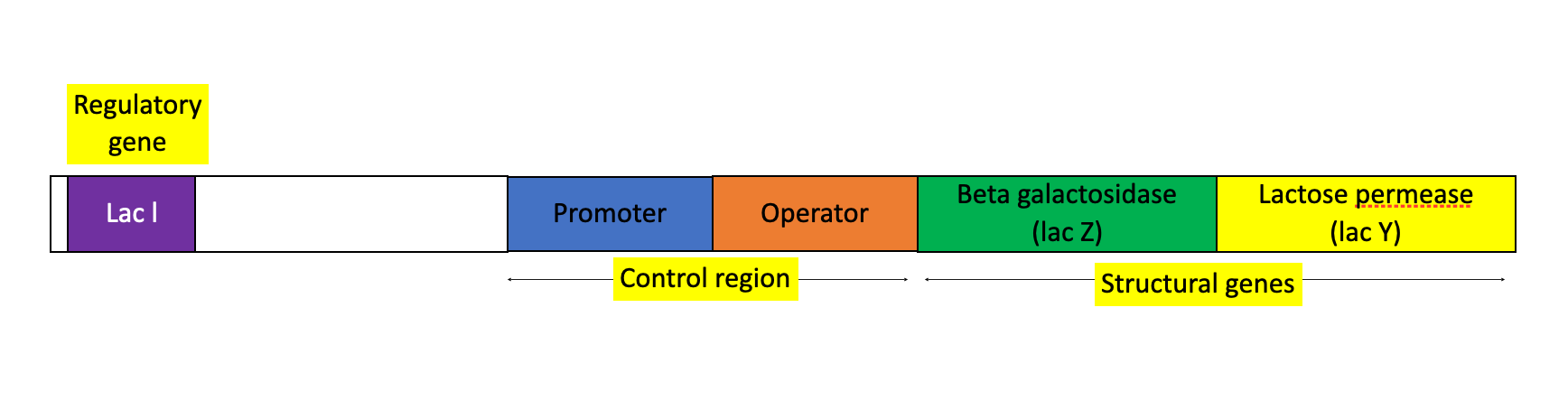
Prokaryotes: genes arranged in operons containing control regions + structural genes
Promoter: recognition site where RNA polymerase binds to DNA.
Operator: Potential blocking site where repressor protein may bind preventing RNA polymerase from binding.
so controls production of mRNA (transcription).
Structural genes: Code for particular functional protein e.g. enzyme/channel protein.
Beta-galactosidase (lac Z): hydrolysis of lactose → glucose and galactose
Lactose Permease (lac Y): increase uptake of lactose (transporter protein)
Regulatory gene (lacl)
Not part of operon
Codes for repressor protein that recognises + binds to operator. Affects/ prevents transcription.
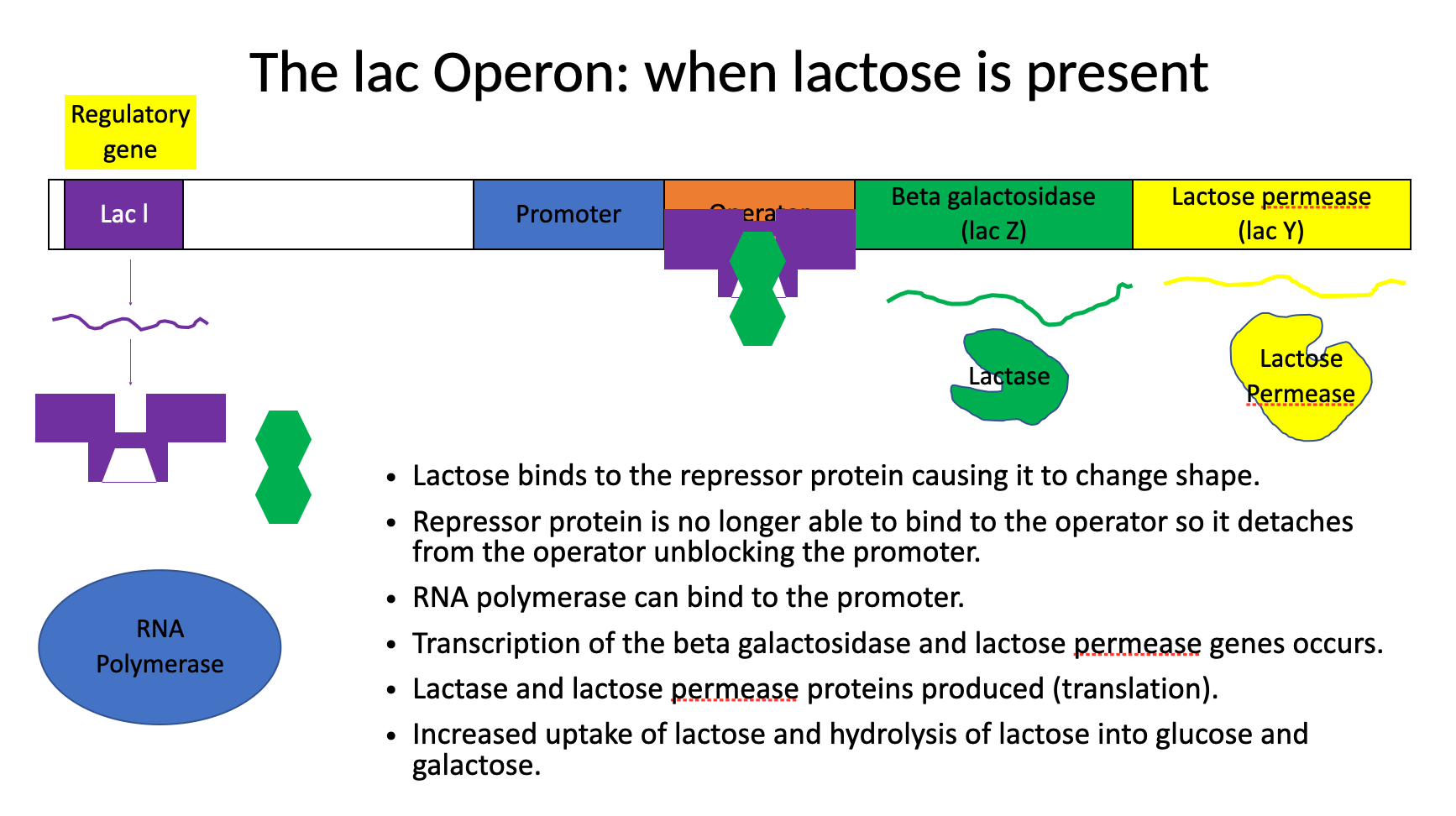
Process is called gene induction
The Lac Operon: when no lactose is present
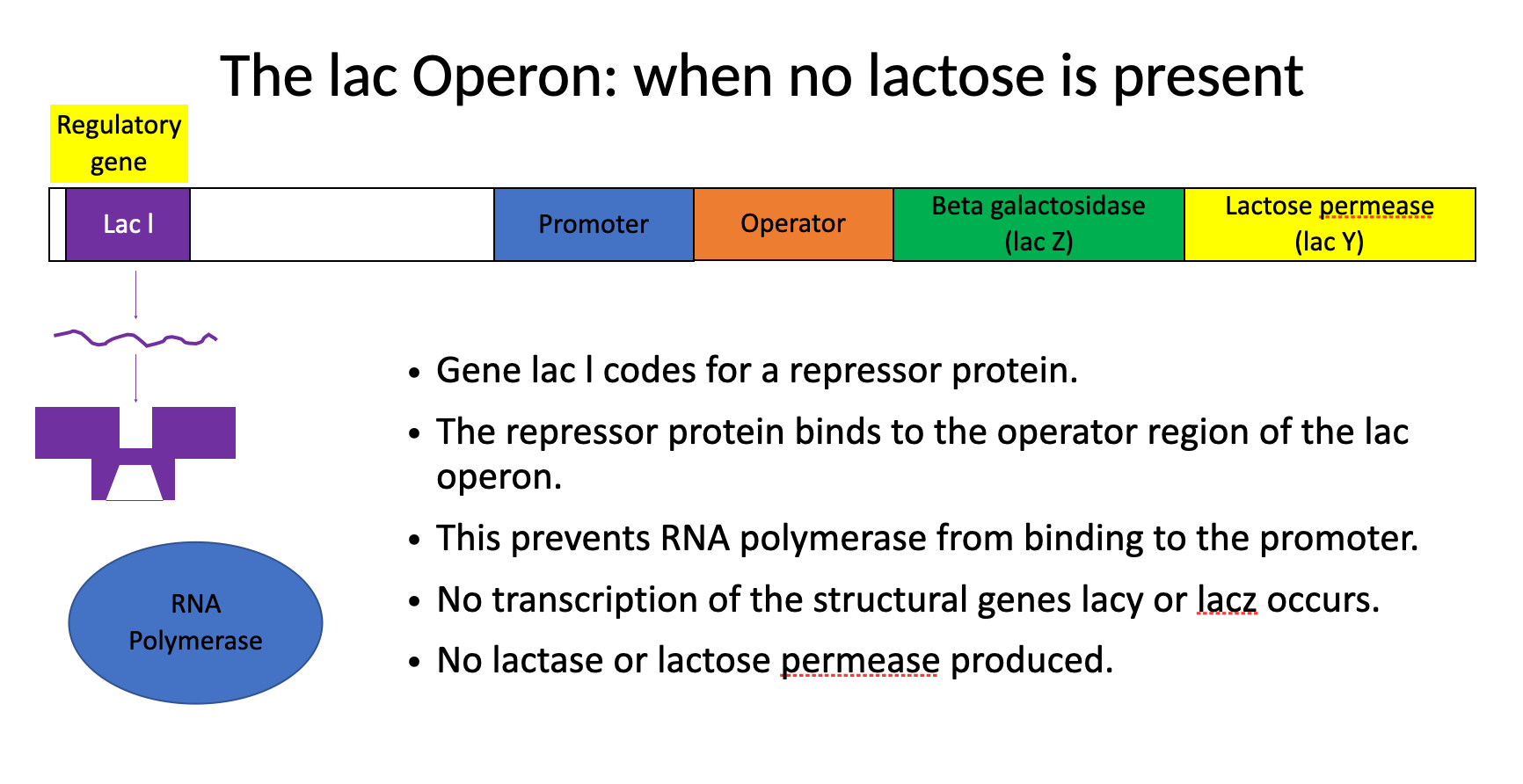
when no lactose present, genes need to be switched off - saves energy
The lac Operon: when lactose is present
starter review
What are the 4 levels of control of gene expression?
translational, post-translational, transcriptional, post transcriptional,
How does the strength of binding DNA to histone affect gene expression?
Stronger binding leads to lower levels of gene expression in that region.
What type of molecules re produced by HOX genes?
Homeodomain protein, Transcription factor.
In the lac operon, what is the operator?
Region of DNA (sequence of bases) in the operon where repressor protein can bind to prevent RNA polymerase from binding.
What level of control is shown by the lac operon
Transcriptional
What level of control is shown by phosphorylation of glycogen synthetase
Post-translational: Phosphorylation de-activates the enzyme.
Lac operon in different conditions
high glucose, low lactose
no
high glucose, high lactose
yes
low glucose, low lactose
no
low glucose, high lactose
yes
will lac operon structural genes be transcribed and why/why not
Control of transcription: Role of cyclic AMP in lac operon
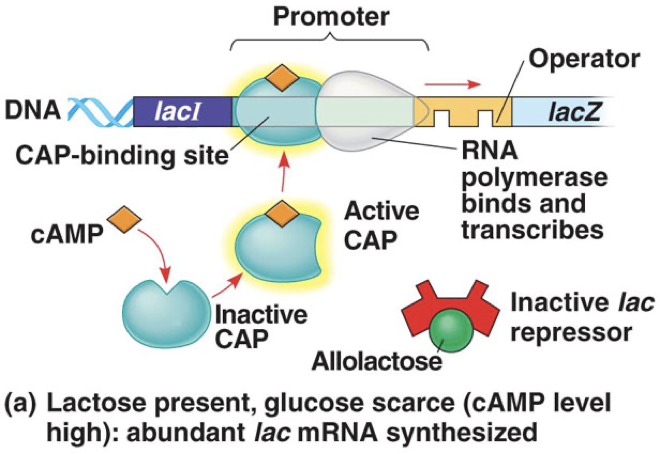
protein called cAMP receptor protein (CRP) is involved.
binding site for this protein next to promoter region of lac operon (where RNA polymerase binds).
When CRP protein binds to binding site it makes it easier for RNA polymerase to bind to promoter + so increases expression of lac operon.
CRP protein can only bind to binding site when it’s activated by binding to cAMP. (also an example of post-translational modification)
cAMP builds up when glucose levels low (glucose may be running out).
when glucose levels are high, cAMP levels are low, so CRP protein is inactive + can’t bind to binding site → RNA polymerase can’t bind as easily → expression of lac operon is reduced.
So Lac operon has on/off switch (induction) (presence of lactose (+ therefore if repressor binds or not) + also volume control (positive regulation) due to glucose conc
post transcription modification of mRNA
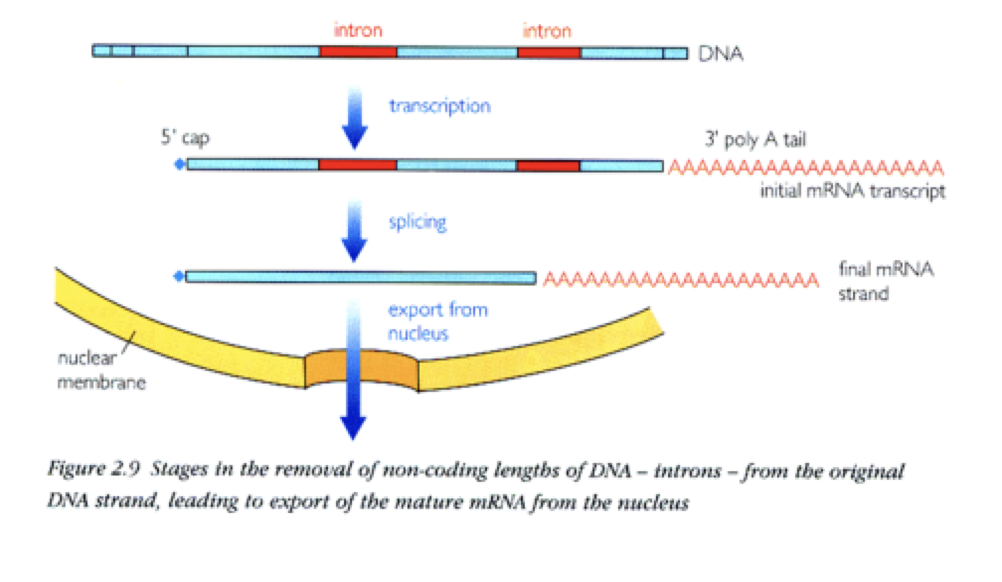
Pre-mRNA has to be modified to produce mature mRNA transcript.
Occurs in nucleus
5’ cap added (nucleotide with guanine) - about getting RNA into ribosomes
Poly A tail added at 3’ end (lots of adenine nucleotides)
Delays degradation in cytoplasm + 5’ cap helps binding to ribosomes
Splicing to remove introns (exons joined together)
RNA editing (by deletion, insertion and substitution) creates different mRNA sequences so varies polypeptide primary structure.
all of this increases range of polypeptides possible
translational control
rate of translation can be varied too
varying rate of degradation of mRNA transcript
binding inhibitory proteins to mRNA preventing binding to ribsomes
activation of initiation factors - helps mRNA get into ribosome
(both last 2 affect 5’ cap)
RNA interference (MiRNA)
post-translational control
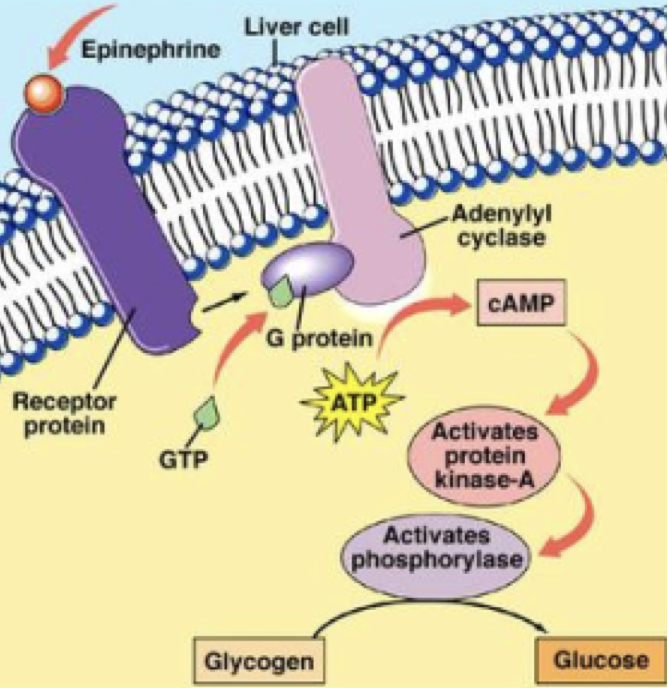
modification of protein that’s been synthesised
can add non protein groups
modifying AAs e.g. to form disulphide bridges
folding + shortening of proteins
can have modification by cAMP
role of protein kinases:
phosphorylation of enzymes often involved in activation of them (changing shape as phosphate binds)
e.g. role of cyclic AMP (2nd messenger system)
2nd messenger which may also phosphorylate proteins (CREB/cAMP response element binding) that enter nucleus and act as transcription factors