Final Exam
Assessment/Technique
Across the lifespan general
Physical appearnace, body structure, mobility, behavior, ht, wt, bmi
BMI
18 and under = underweight
25 -30 overwight
30 and above obese
Underweight can lead to malnutretions, which could be caused by eating disorders
Sound heard over the stomach: tymphany
Bariatric scale is for pts who wt more than 350 lbs
Children under 3 to get a tympanic membrane temperature gently pull the ear down and back
Apical pulse is found at the 5th intercostal
120-180 newborn pulse
60-100 adult pulse
80-140 toddler
Diastolic pressure= pressure in arteries when the heart is at rest
Pulse pressure calculation minues the systolic to the diastolic. Normal range is 30-40.
Types of assessments
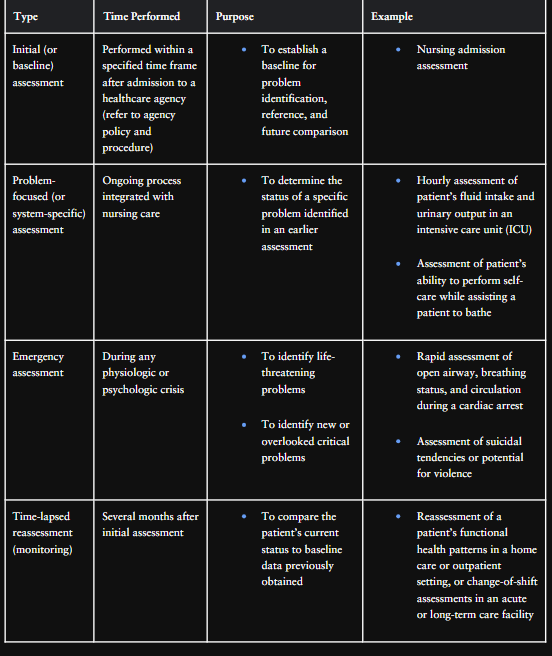
Physical assessments
Palpation: pulses, skin temp, turger
Percussion: normal percussion tones, resonant, hyperresonant, tympany, dull, flat
Ausculation: Bell vs diaphragm
Ausculation: Techniques for lungs, heart, and abdomen
Other systems: Inspection, palpation, percussion, auscultation
Abdomen: Inspection, auscultation, percussion, palpation
Precautions/hygiene
Hand hygiene
Univeral precaustion
Cleaning eqipment
Questions/pains
Histroy Taking
Numeric Rating Scale
Wong-baker FACES pain ratting scale
Visual analogue scale
Children development
Infant sitting without support: 9 months
Eriksons theory
Tolder: Autonomy vs. Shame and Doubt
Piaget. 4 y/o is in the preoperational stage
Socratives
Ability to read a number by having it traced on the skin is? Graphestesia
Paralysis of all four extremities? Quadriplegia
What reflex is when the infant sucks on an object that touches the lip? Sucking reflex
What reflex is when the infant turns the head towards the stroked cheek? Rooting reflex
What reflex is when the infant holds onto the finger of the examiner? Plantar grasp
What reflex is when the infant has an upward movement of the big toe when the sole of the foot is stroked? Babinski reflex
Syncops
Paraesthis
Dysarthria
Dysphasia
Receptive aphasia
Expressive aphsia
Romberg test
Stereognosis
Graphesthesia
Ataxia
Hemiplegia
Paraplegia
Tetraplegia
hemiparesis
Presbyopia: normal vision loss by age
Myopia- nearsightness
Hyperopia - farsighntness
Nystagmus: uncontrolled eye movement
Ptosis: Dropping of the eyelids
Epistaxis: Nosebleed
Anosmia: Loss of smell
Miosis: Pinpoint pupils
Mydriasis: Dilation of pupil is different that the other eye
Diplopia - double vision
Photophobia - Sensitivity to light
Tinnitus - ringing noise to ears
Vertigo - feeling of spining
Snellen chart
Reproduction
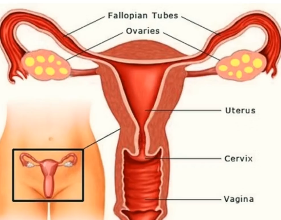
Functions of the female body
Vaginia: Intercourse, menstruations, childbirth
Cervix: Mucus production, dilates in labor
Fallopian tubes: fertilization site
Ovaries: Produce ova, estrogen, and progesterone
Hormones
FSH: Stimulates follicle development
LH: Triggers ovulation
Estrogen: Regulates cycle
Progesterone: Maintains pregnancy
Breast exam
TSE: Timing (same time each month), shower, examine (in mirror)
Up and down. Left to right
Can be done lying down or standing up
What is concerning during breast exam? Peau' d’orange (contractions/dipling?_
Menarche: Frist menstrual period
Menorrhagia: Heavy period
Dysmenorrhea: painfully period
Amenorrhea: absence of period
HRT: Increases breast cancer and blood clots
Presumptive: Missed period, urinary frequency, breast changes
Probable: Chadwick sign (bluish discoloration of cervix and vagina), Goodell sign (softened cervix), Braxton Hicks contractions, positive pregnancy test
Positive: Fetoscope, doppler, ultrasound
Neurovascular 5 p’s
Penis: Release urine and semen
Testicle: Oval glands to make sperm and produce testosterone
Scrotum: protects testicles and regulate temperature of testicles
Priapism: Prolonged painful erection that lasts four hours or more.
Smegma: A white cheese-like substance that is found between the labia in female neonates, and present at birth. It is also present in male neonates under the foreskin. This is normal.
Cryptorchidism: When a baby one or both testes are not descended into the scrotum. Palpate and can feel the absence of one or both testes in the scrotal sac. this is a birth defect.
Hydrocele:When the baby has fluid surrounding the testes within the scrotum. Scrotum size, symmetry, and palpate to confirm presence of testes. Any discoloration.
Gynecomastia: Enlargement of breast tissue in males usually caused by hormone imbalances of estrogen and testosterone.
Complemention: they are thinking about it but not making a plan
Action:
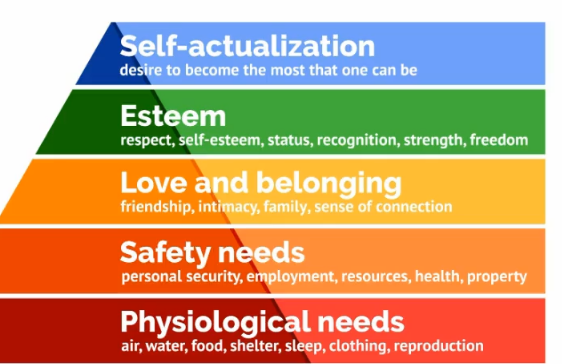
Maslow’s
Hawthorne Effect: People change their behavior due to them being aware that they are being observed.
Transtheoretical Module: The six stages a patient goes though for behavior change.
Precontemplation: not considering change.
Contemplation: Possibility of change is recognized, but there is ambivalence.
Preparation: commitment to change is made and planning begins.
Action: Steps to changes are made but not stable.
Maintenance: Change is maintained over time.
Termination: change is integrated into lifestyle.
Active immunity: The body has to developd the anitbiodies
Passive immunity: Baby gets immunity from mothers breast milk.
Antigen: Causes a specific immune response when introduced to the body
Antibody: Proteins produced by B lymphocytes in response to antigen, they bin to specific antigens to neutralize them
Pregnant ppl can’t get live vaccine such as NASAL SPRAY flu, varicella, HPV, measles.