Asexual and sexual reproduction
The Cell Cycle
Time to complete is not the same for all cells,
Interphase= time for growth and development for eukaryotic cells
Cells grow, function, and organelles duplicate
DNA is copied
The cell grows and prepares for mitosis
Not a phase of mitosis. Most cells are in interphase. a normal functioning cell
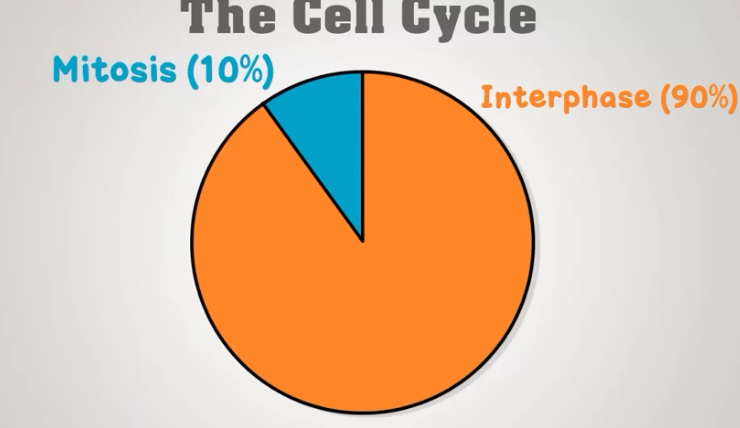
Mitosis
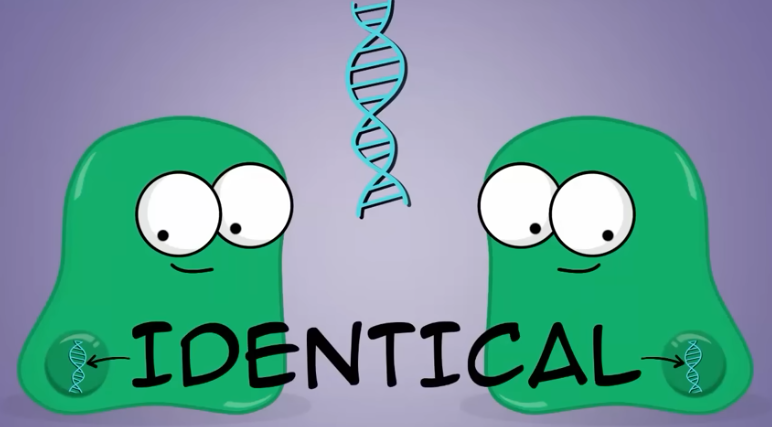
Nucleus divides to form two identical nuclei
Steps of mitosis
Prophase
Metaphase
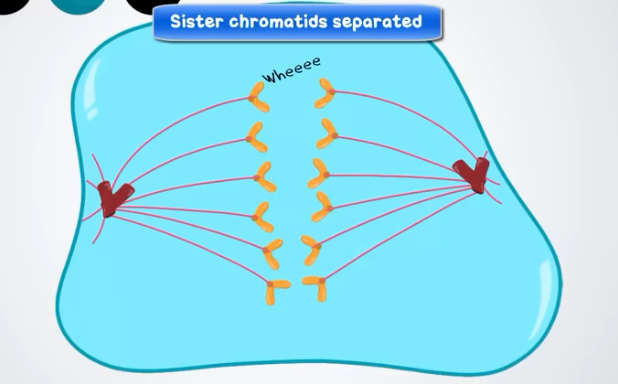
Anaphase
Telophase
What is in the nucleus
Heredity material: genetic information
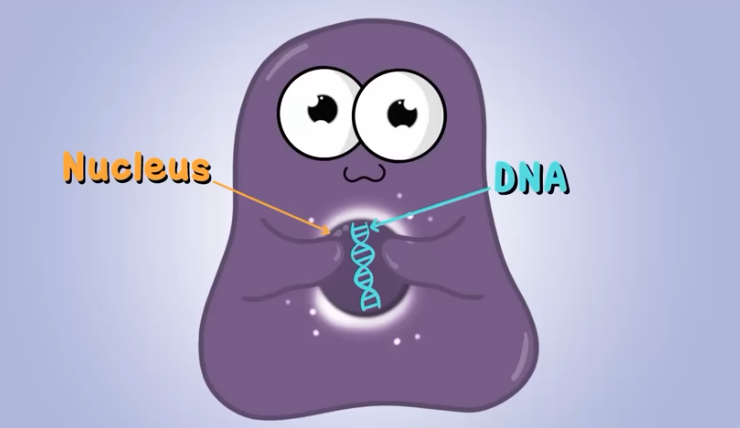
DNA: genetic material code? Instructions for all living things, double helix, twisted ladder, deoxyribonucleic acid
Chromatin: unraveled DNA “invisible” DNA during interphase (ex. extension cord)
Chromosome: Raveled DNA “visible” DNA during mitosis/cell division (ex. Coiled extension cord)
Pair of chromomatids: identical copies of chromosomes, held together by a centromere
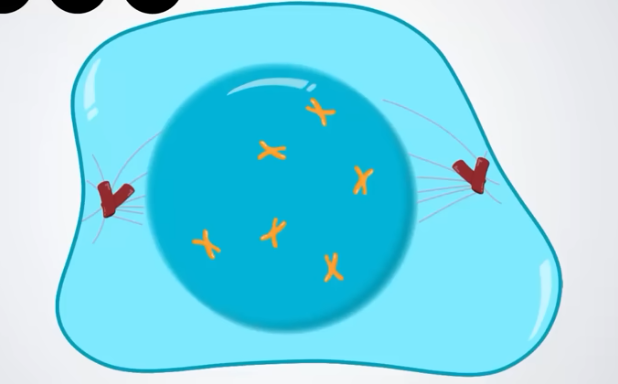
Prophase
Chromatid pairs of chromosomes are visible
The nuclear membrane breaks down
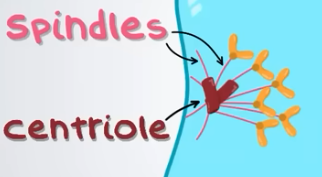
The spindle is beginning to form between centrioles
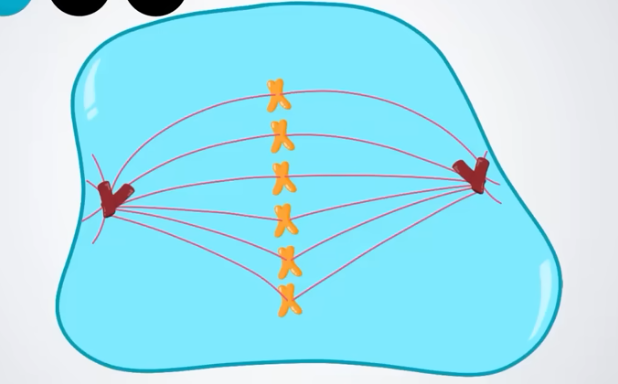
Metaphase
Pairs of chromatids line up at the center of the cell
Centromeres are attached to spindle fibers
Anaphase
Centromere divides, chromatid pairs separate, and move to opposite ends of the cell
Chromatids are now called chromosomes
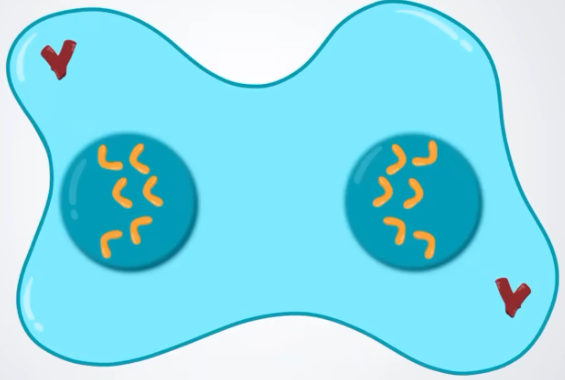
Telophase
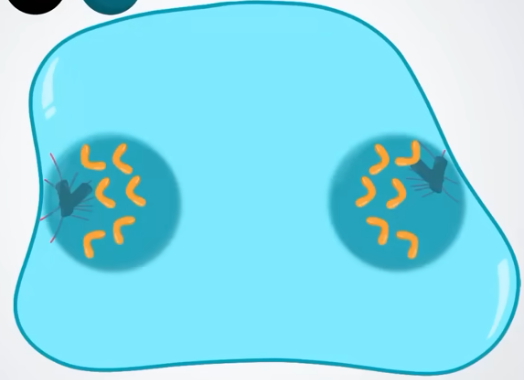
Spindle fibers disappear
Chromosomes uncoil
A new nucleus forms with the nucleolus
Cykocinesis
Division of cytoplasm and organelles
Cell membrane pinches in the middle
Asexual reproduction
A new organism is produced from one organism with identical hereditary material
Eukaryotic cells (nucleus) = cell division
budding
regeneration
Prokaryotic cells (no nucleus) = binary fission
sexual reproduction
Gametes are produced in the reproductive organs by meiosis
Contain half of the number of chromosomes found in normal body cells
Mitosis = asexual reproduction of cells
Make exact copies
Many at one time
meiosis= sexual prodcution
Make different cells ½ of chromosomes
Few at one time
diploid= cells with both members of each homologous pair (in humans, 2n=46)
haploid= cells with only one member of each homologous pair (in humans, 23)
In meiosis, the number of chromosomes in a diploid cell is reduced by half, producing a haploid