Genes and Genetic Code
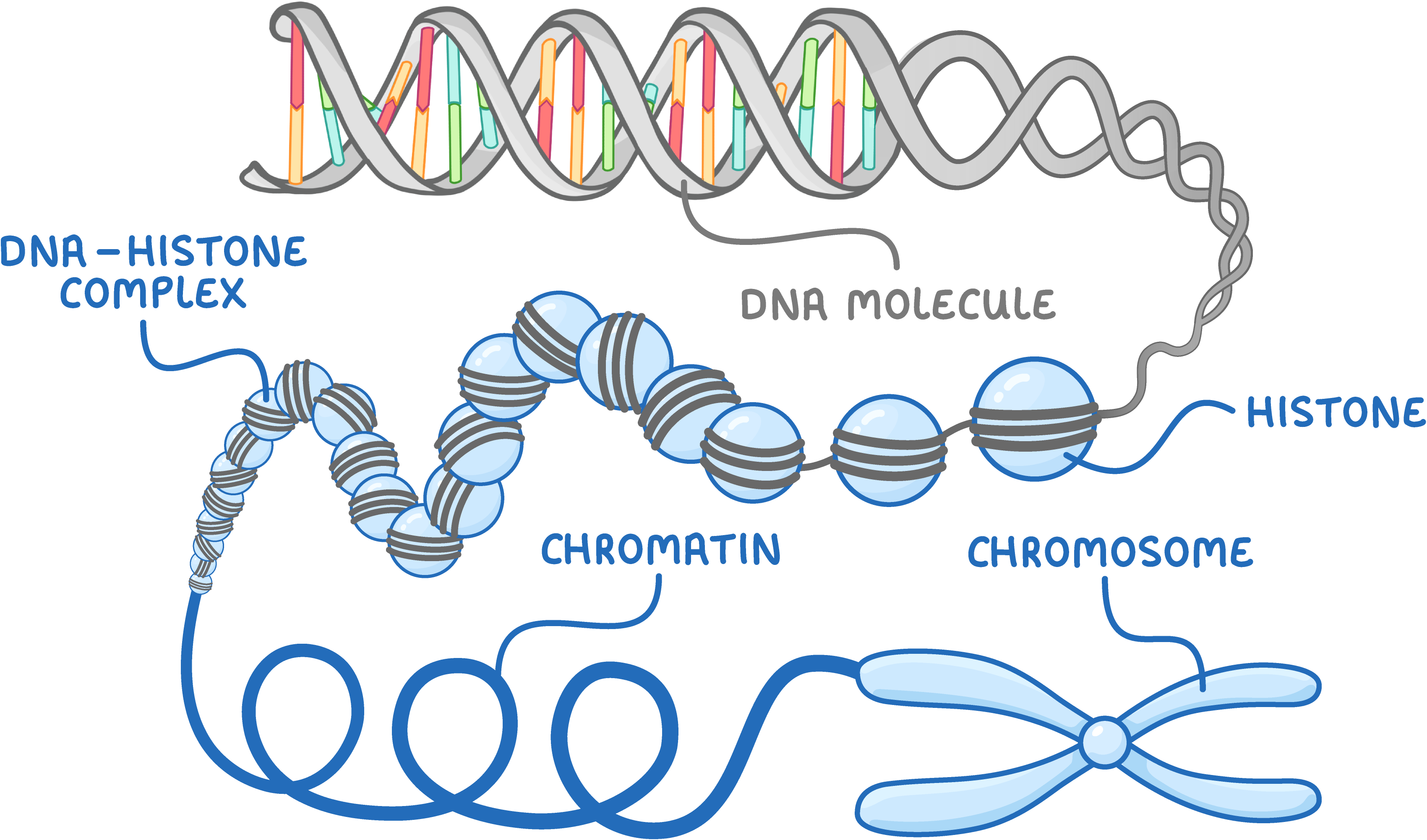
DNA is condensed into chromosomes
DNA molecules are long and need to be tightly packed to fit in the nucleus of prokaryotic cells
DNA is wound around histone proteins forming a DNA-histone complecx
These complexes form chromatin, which helps pack of DNA into chromosomes. Each chromosome contains just a single molecule of DNA
DNA in Eukaryotes and Prokaryotes
Prokaryotes
DNA stored in the cytoplasm
Shorter, circular DNA molecules
No histones
No introns
Eukaryotes
Store DNA in the nucleus
Contain long, linear DNA molecules
Contains Histones
DNA contains histones
DNA contains genes
Gene - short section of DNA that codes for a protein
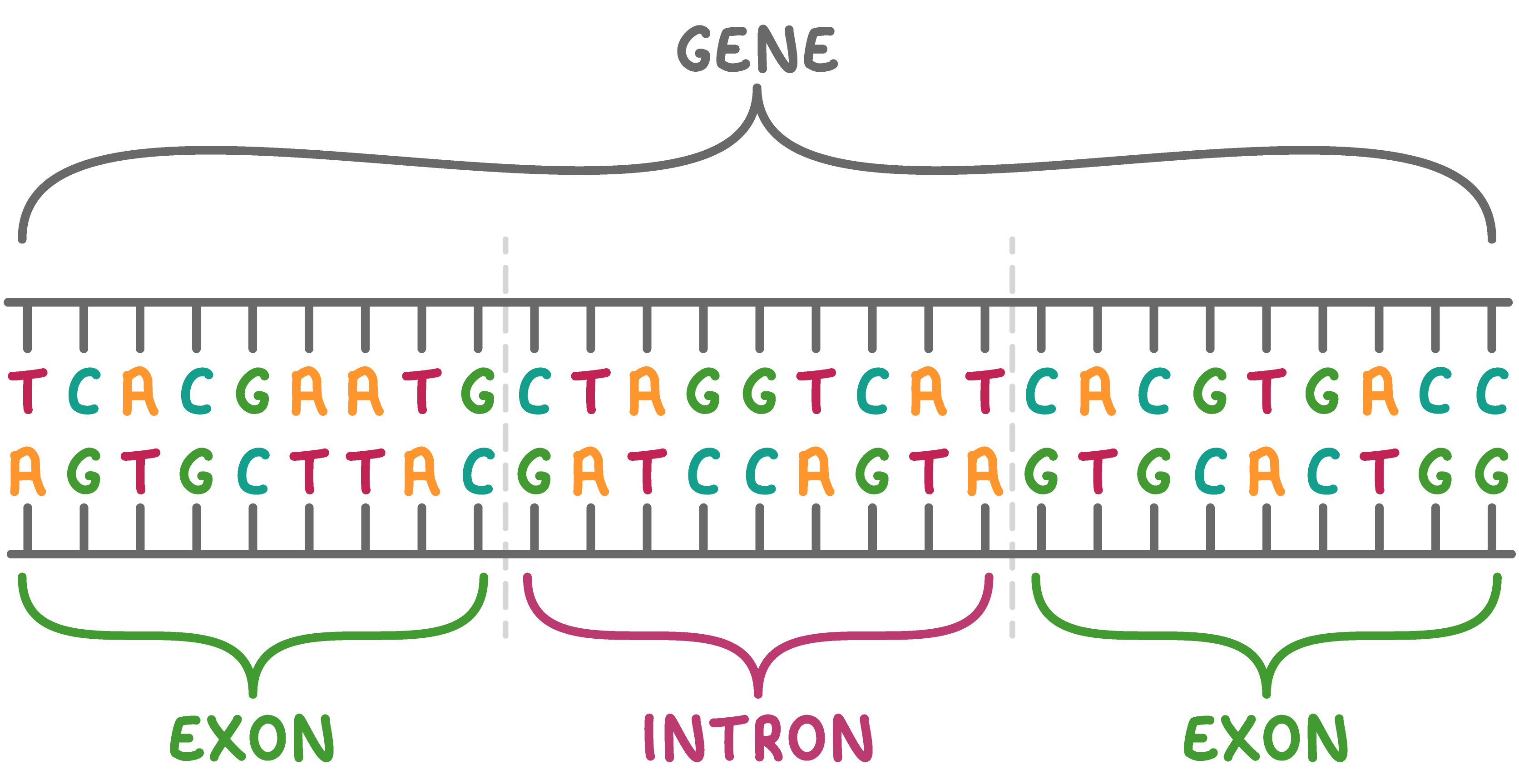
In eukaryotes, genes consist of regions known as introns and exons
Exons - Sections of DNA that code for amino acids
Introns - Sections of DNA that don’t code for amino acids
Genome - Complete set of genes within a cell
Proteome - Full range of proteins that a cell is capable of producing
Genetic code
Genetic code - Sequence of bases that code for an amino acid
Each amino acid is coded for by 3 DNA bases (triplets)
The genetic code is:
Universal - Each DNA triplets codes for the same amino acids in all organism
Non-overlapping - Each base in the DNA sequnece is only read once (CGTATC is read as CGT ATC)
Degenerate - Most amino acids are coded for by more than one triplet (e.g. ACA and ACG both code for cysteine)