populations
organisms of the same species living in an area
%%characteristics of a population:%%
geographic distribution - area where individuals live
density - # individuals per unit of area
growth rate - how # of individuals in population increases/decreases over time
population growth
how # of individuals change over time
%%factors of population size%%
number of births - birth rate +++
number of deaths - death rate ---
number of individuals that enter/leave population
- immigration - entering population +++
- emigration - leaving population ---
types of growth
exponential growth (unrealistic)
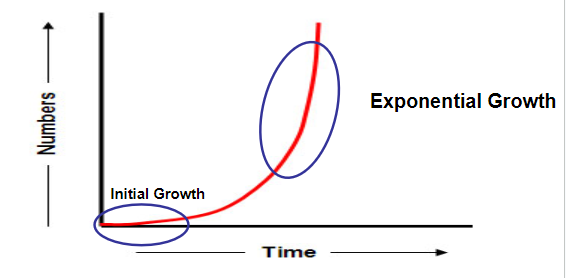
- j-shaped curve
- unlimited resources
- constant rate of reproduction
- population doubles every time
- happens under ideal conditions
logistical growth
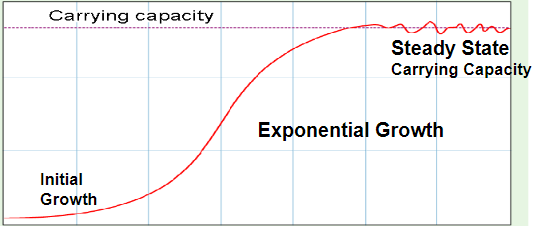
- s-shaped curve
- growth of population slows down/stops
- happens when resources become less available
carrying capacity - maximum number of indvs that the available resources can support
how many individuals can live in an area
- varies based on environments
- birth & death rate reaches equilibrium
- ecosystem has different carrying capacities for different populations
- carrying capacity changes along w/ environmental changes
limits on population growth
density dependent factors - factors that become limiting when the density of the population reaches a certain level
density independent factors - affect all populations in the same way
- ex: weather, natural disasters, seasonal cycles, human activities
competition - use same resources
predation
parasitism
disease