Thermoregulation - ectotherms and endotherms
Cell signalling
the coordination and hormonal systems at a cellular level to maintain the internal environment
One cell releases a chemical that has an effect on another (target) cell
locally = synapses
neurotransmitters at a synapse
large distances = hormones
ADH in humans
auxins in plants
Homeostasis
the maintenance of a stable equilibrium in the internal environment
receptors
detect a change in either the internal or external environment
effectors
muscles or glands that bring about a change in response to a syllabus
Negative feedback
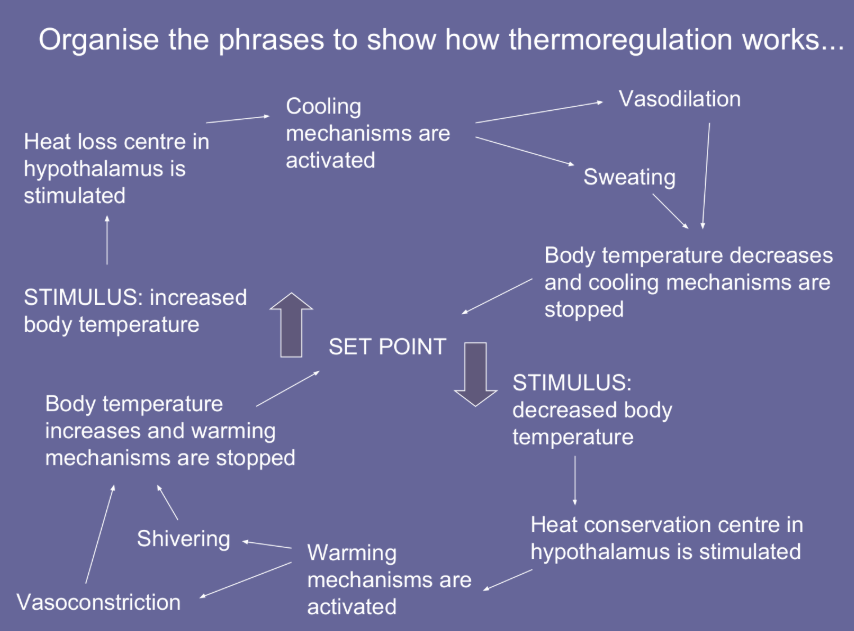
sensory receptors detect a small change in the environment and effectors return the environment to the usual conditions
Positive feedback
sensory receptors detect a small change in the environment and effectors are stimulated to increase that response
Thermoregulation
constant core body temperature helps maintain optimum enzyme activity in the body
too low and metabolism is too slow
too high and enzymes denature
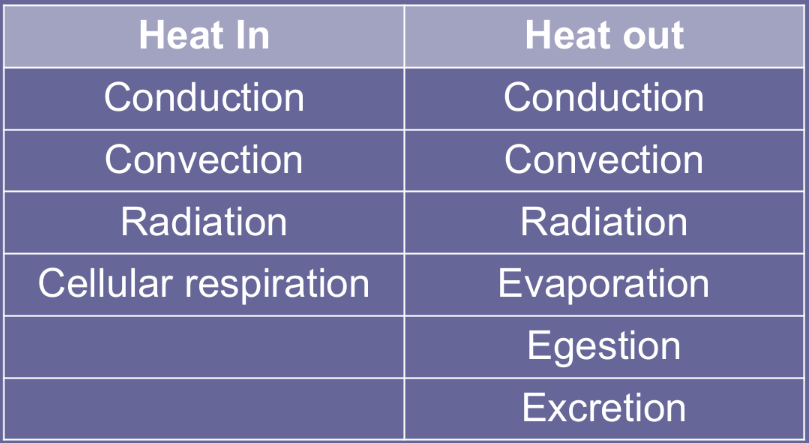
Ectotherms
all invertebrates, reptiles, fish and amphibians
cannot control their body temperature using their body metabolism
have a body temperature the same as their environment
ectotherms that live in water have a more constant body temperature
if the temperature is too low - metabolic reactions in ectotherms are too slow for them to be active
use a range of behavioural and physiological responses to control their temperature
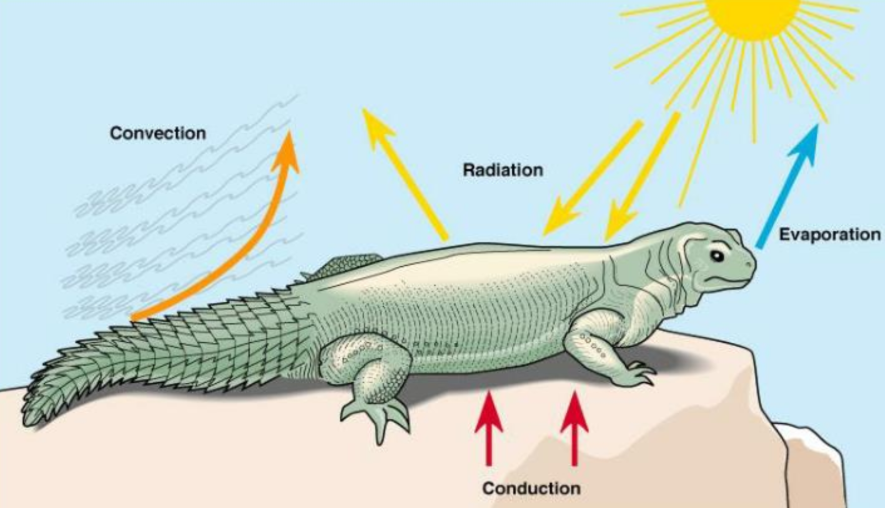
Warming responses of ectotherms
black
absorbs more radiation
sideways to sun
larger SA exposed to heat of the sun
increased HR
increases metabolic rate to produce more heat
inflates its body
increased SA to absorb radiation
lies on sand
absorbs heat directly from sand
Cooling responses of ectotherms
Deflates body
less SA to absorb heat
pale grey
absorbs less radiation
holds itself away from sand
absorbs less heat from sand
decreased HR
lower metabolic rate
opens mouth and pants
increases heat loss
Advantages and disadvantages of being ectothermic
Advantages
less food used in respiration
can survive longer without food
greater proportion of energy can be used for growth
disadvantages
less active in cooler temperatures
during winter may not be capable of activity so must have sufficient stores of energy to survive over winter
Endotherms
generate their own heat from their metabolic reactions
respiration is exothermic
the core temperature is maintained within a narrow range
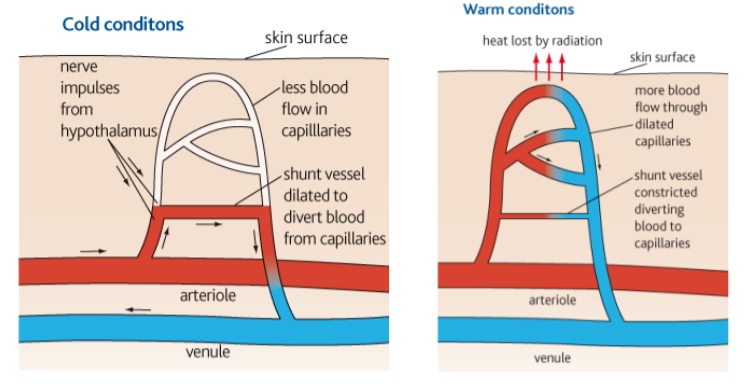
the peripheral temperature is allowed to vary
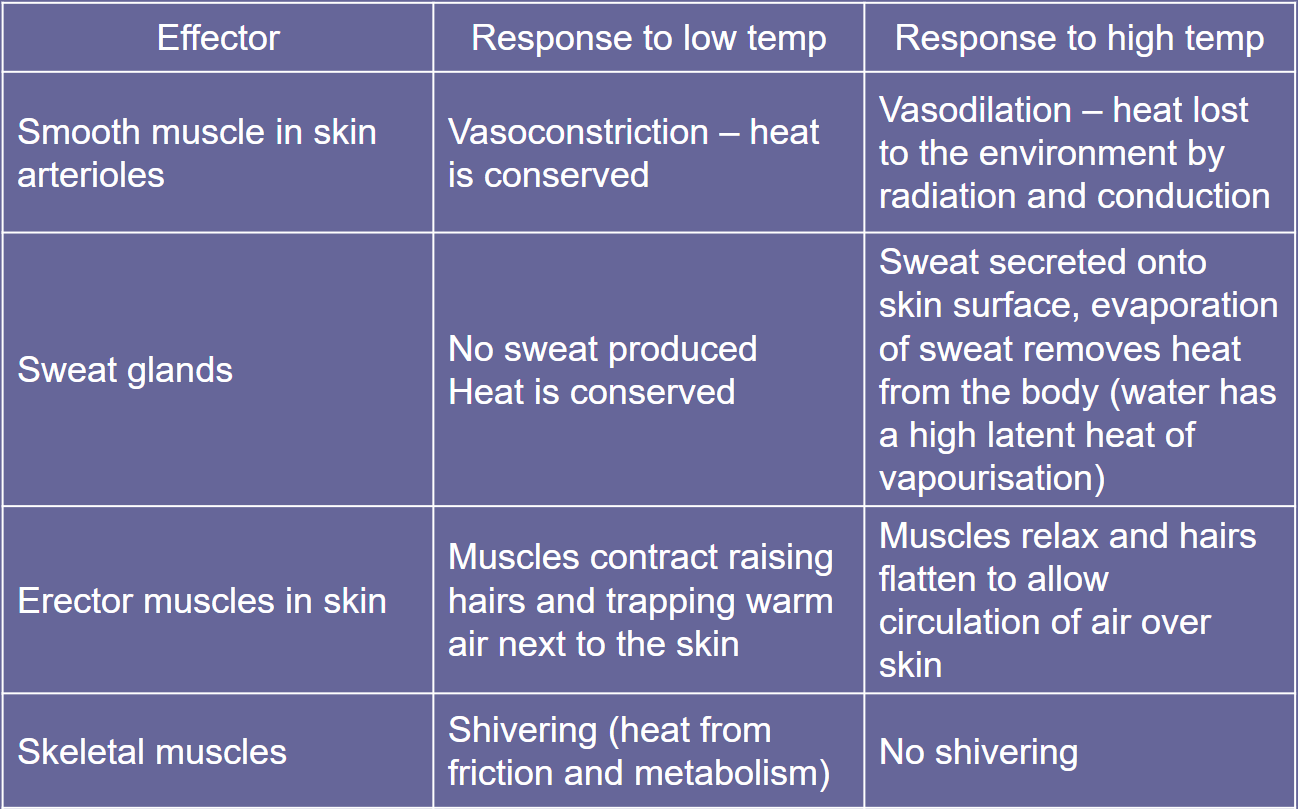
temperature is controlled by a balance between heat generated and heat lost to the environment
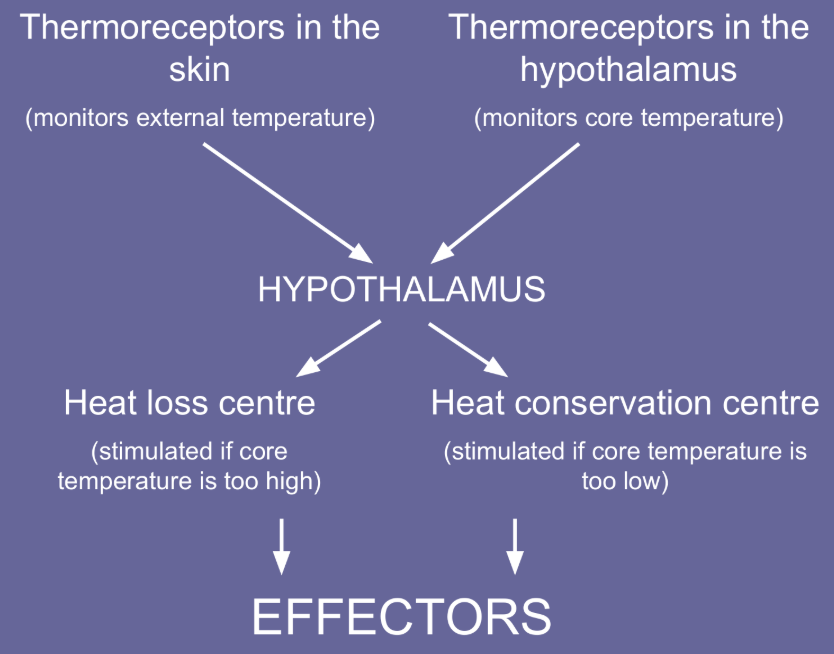
Hypothalamus
controls homeostasis
contains receptors that monitors the blood
receives impulses from other receptors
sends nerve impulses to effectors