Week 3- Tourism demand lecture 2- motivation, tourist types, and market segmentation
maslow’s hierachy theory (apply this to tourism and use examples of some needs that match in your essay):
esteem (second height on maslow’s triangle) esteems- humans are ego-driven, they want to show what they have to other ppl
Self-actualization- the more you want to, the more creative and motivated you are, rather than when you are forced. Some ppl are spontaneous
*draw triangle later
Motivation models: McIntosh et al., 1995
physical motivators- (sport, refreshment of the body, mind, health, leisure, they always want to be on their feet and out)
cultural motivators- ppl that go on holiday becaue of the culture, they wnat to see the histroic buildings and eant to see the cultural side of that country- the desire to learn abour new culture, new music, the arts and lifestyle of that culture
interpersonal motivators- meeting new ppl, escaping from their home environment, or because of spiritual reasons, they wnat to bond with new ppl or meet family and friends and bond back with them
status and prestige motivators- WRITE LATER SLIDE 5
note down slide 6
Personality+ physiological attributes: note down slide 7
Motivation:
motivation is the driving force behind all actions
it is considered to be the cause of human behavior. It is a disposition or a state of need that drives individuals toward types of action that are capable of satisfying those needs
ppl are motivated by different things
reference of this Pearce&Lee (2005) in Inkson and Minnaert (2018: 83)
motivation changes all the time
Appealing to the different generations in travel:
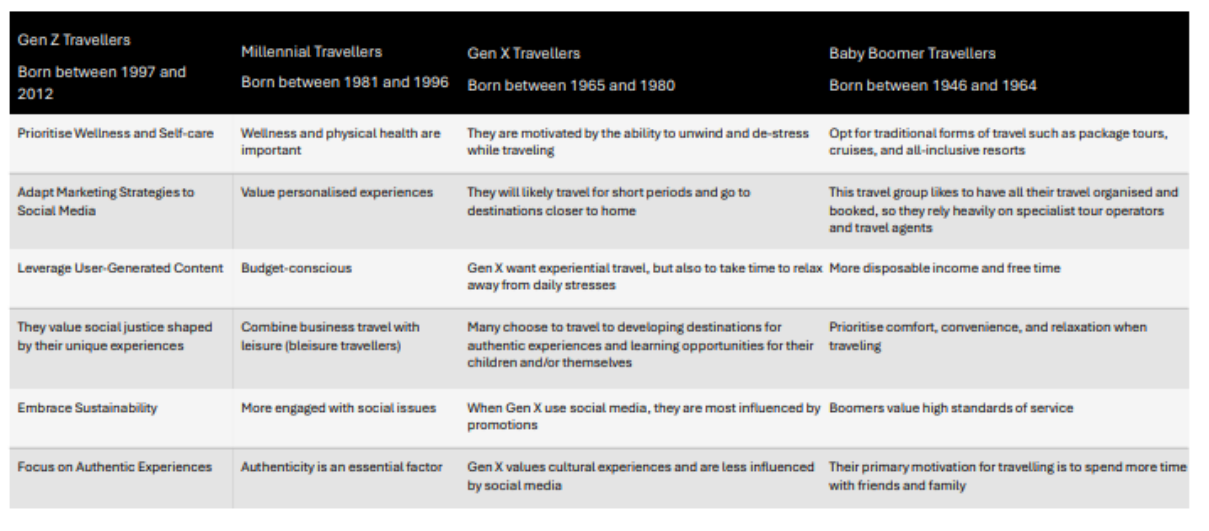
Baby boomers travellers (ppl born after the war):
some would rather spend their money on cruises instead of going into a care home
they like all their travel being organised and booked, so they heavily operate on traval egents instead of doing it all online
they prioritise comfort, convenience and relaxation when travelling
they have high standards when travelling
their motivation is travelling to spend more time with their family and friends
Gen X travellers( ppl born in the 60’s- 80’s):
they want to distress and replenish themselves when travelling
they will likely travel for short periods of time and go to destinations near home
they relax and distress from reality
when they use social media, they are most infleunvced my promotions
they are less influenced by social media and have the desire to look into cultural experiences
they want to learn for their children/ others and themselves
many choose to travel to developing countries to see the authentic experiences
Millennial travellers:
Gen z travellers: NOTE DOWN
Motivations: a combination of push and pull factors:
push factors: personal drivers that predispose a tourist to travel:
e.g. Escape, exploration, relaxation, prestige, regression, social interaction, enhancement of relations (Crompton 1979)
Pull factors: ‘Pull’ factors are the elements that attract a tourist to a specific destination in order to satisfy the push factors’
E.g. Attractions, amenities, special events…
Tourist typologies: note down
Plog’s Psychographic Tourist Types
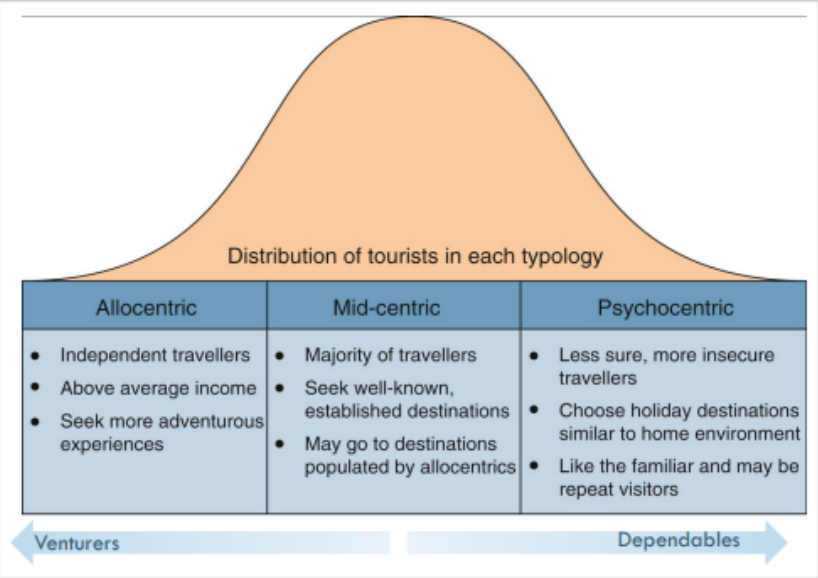
Cohen’s toruist typolgy:
the organised mass tourist- tourist bubble, everything is pre- arranged
in the indvidual mass tourist- mass tourism with some flexibility
the explorer- independent travellers, comfortable accommodation and reliable transportation
the drifter- tries to live the host community life
Market segmentaion slide note down*
Common types of market segmentation practices:
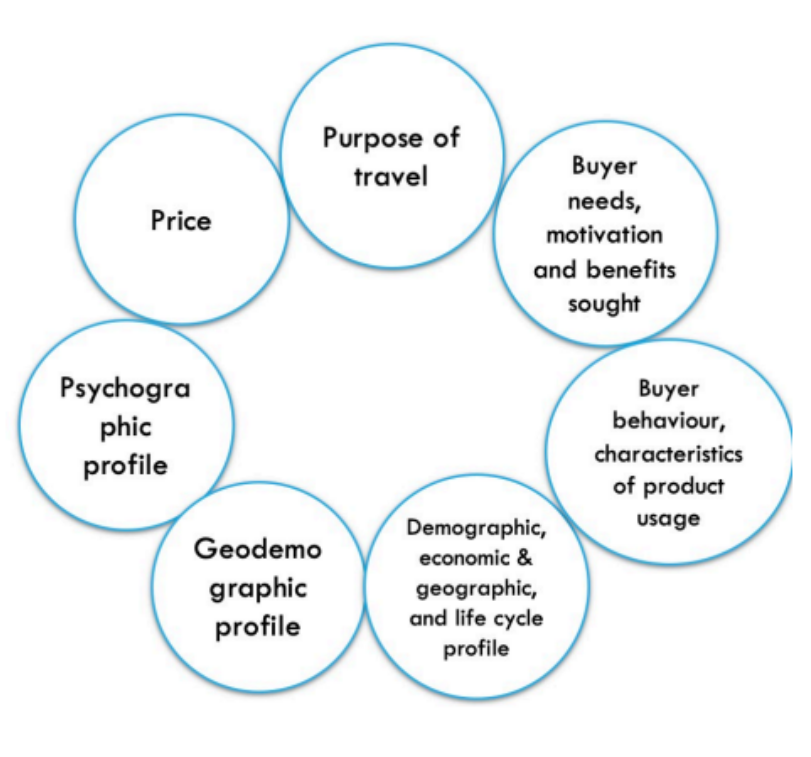
Demographic, Economic and Geographic, and Life Cycle Profiles:
Life cycles impact our behavior and travel decisions due to our:
age
sex
occupation
education
income
place of residence
Reading task:
When analyzing the travel motivations of Gen Z travelers in Vietnam, which key attributes/characteristics do you see influencing their choices?
social media
friends and family- because they give trustworthy recommendations
personal intention- driven by their own will, they do their own research
they are comfortable with the use of social media- for example Tiktok etc
the characteristics traits suggest they are dynamic and creative, therefore they go to destinations that also share dynamic and creative traits
Having read section 2.2.2 (Travel Motivation and Intention to Visit A Destination) what have you identified to be some of the key motivating factors discussed here?
push factors- escape from routine, relaxtion, knowledge seeking, socialisation., ego enhancement
pull factors- accessibility and affordability, recreational services