Photosynthesis
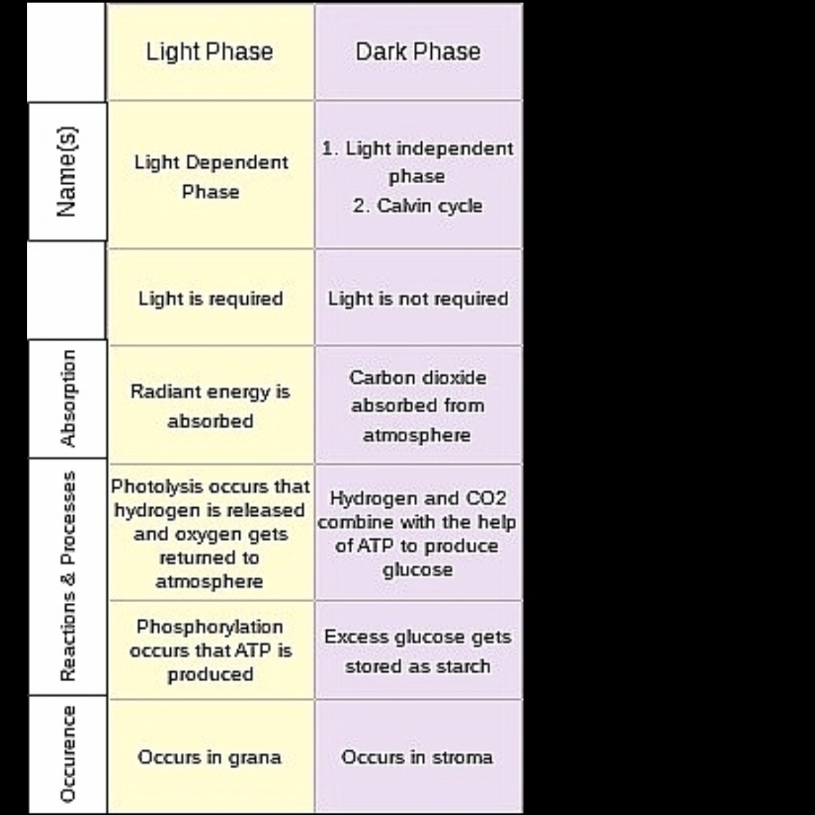
Light Phase
Radiant energy absorbed
Photolysis occurs that hydrogen is released (goes to dark phase process) and O2 gets released into atmosphere as byproduct
Phosphorylation occurs that ATP gets produced
Occurs in grana
Dark Phase
Light not required
CO2 from atmosphere absorbed and gets combined with H2 (with help of ATP) to produce glucose
Excess glucose gets stored as starch
Occurs in stroma
Importance of Photosynthesis
Balances levels of O2 and CO2 in atmosphere
Uses radiant energy to produce chemical potential energy (stored as starch) to serve as food for other organisms
Proteins and lipids are made by using the stored starch
Factors that affect the Rate of Photosynthesis
Intensity of Light
Direct relationship between light intensity and rate of photosynthesis
As light intensity increases, so does rate of photosynthesis
Photosynthesis will occur most rapidly at the optimum light intensity
If light intensity is beyond optimum amount, the rate will remain constant and the other factors will act as limiting factors
Concentration of Carbon dioxide
Direct relationship
At optimum level, photosynthesis will occur most rapidly
If above optimum amount, photosynthesis will remain constant
Why?
Dark phase cannot take place more quickly than what it does at optimum level
Temperature
As temperature increases, so does rate of photosynthesis
Once it reaches the optimum temperature, it will reach the maximum rate of photosynthesis
If it goes beyond optimum temperature the rate will decrease
Why?
The enzymes used in this process will denature at high temperatures
Availability of water
Plants cannot survive without water
Less water = less photosynthesis
Chlorophyll concentration
Directly proportional
O2 concentration
Indirectly proportional
O2 is a byproduct of photosynthesis
Greenhouse Effect Importance
Helps to keep Earth at an optimum temperature for life to occur, otherwise Earth would be too cold
An increase in carbon dioxide is enhancing the greenhouse effect and this is leading to global warming