Covalent Bonds
Creating the Lewis Structure:
Step 1: Write down the amount of valence electrons each element has.
Ex: CH4 4 + 1(4) = 8
Step 2: Decide the center element by choosing the one with the most unpaired electrons.
Ex: CH4 Carbon has 4 unpaired electrons, while hydrogen has only 1 so carbon will be in the center.
Step 3: Draw the Lewis structure, pairing off all the unpaired electrons, ensuring each atom has achieved the octet rule.
Ex: You can represent the bonds with either the lines or the dots. Notice that in both examples, each atom has achieved octet rule(each line is worth 2 electrons
Step 4: Make sure you didn’t add or subtract any electrons
Ex: This Lewis structure has 8 electrons which is the same amount we started with.
Finding the Molecular Geometry + bond angle:
Step 1: Add up the amount of bonds and lone pairs (we only consider lone pairs of the CENTER atom)
Ex: This structure for NH3 has 3 bonds and 1 lone pair of electrons.
Step 2: Find the associated geometry with the bond angle. Use this table to help you memorize.
# of bonds # of lone pairs Molecular Geometry Bond Angle (degrees) |
1 any Linear 180 |
2 0 Linear 180 |
3 0 Trigonal planar 120 |
4 0 Tetrahedral 109.5 |
3 1 Trigonal pyramidal 107 |
2 2 Bent 105 |
Ex: Using the table, we can see that the shape of this molecule is
Trigonal Pyramidal and the bond angle is 107 degrees.
Finding Polarity METHOD 1: method 2 is a little easier
Step 1: Look at the electronegativity of each element from the periodic table, following the trend below
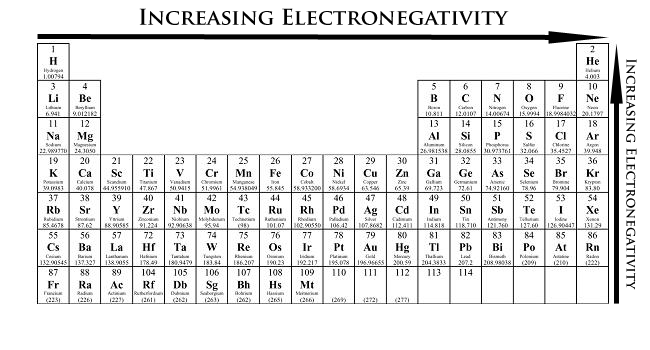
Ex: CH2Cl2
Carbon is more electronegative than Hydrogen. Chlorine is more electronegative than both of them
Step 2: Create the dipoles by going from the less electronegative element to the more electronegative element.
Ex: CH2Cl2
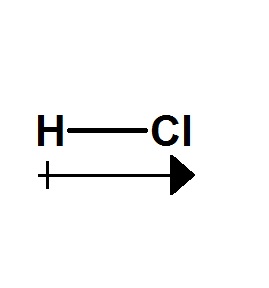
Step 3: Notice where most of the arrows point and create a new arrow to represent the entire molecule’s polarity.
Ex: this is the overall trend
of this dipole.
The molecule is POLAR
Finding Polarity: Method 2
Step 1: Look at the structure and determine if it is symmetrical or not
Ex: CH2Cl2 is NOT symmetrical. CH4 is symmetrical
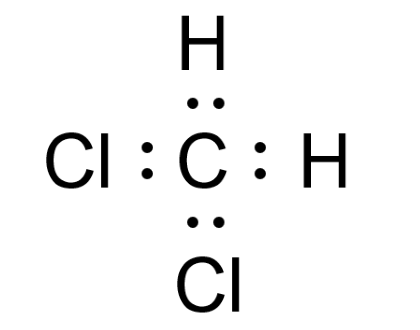
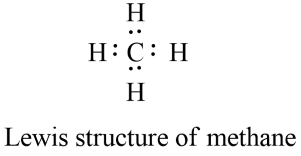
Step 2: Determine whether it is polar or nonpolar
Ex: Since CH2Cl2 is not symmetrical, it is polar Since CH4 is symmetrical, it is nonpolar