WEEK 7 CCC- 1 : LTM and Amnesia
Amnesia
HM
extreme epilepsy
had to undergo a surgery in which he lost his memory for events after the surgery
parts of his medial temporal lobe were removed - including the hippocampus
Amnesia is normally caused be damage in the temporal one or connected regions
HM had anterograde (meaning after the surgery amnesia)
he was impaired no matter what kind of memory test was given - recent occasions, recognitions, words, faces, etc.
verbal and visual STM
Digit Span (repeating numbers, tapping same blocks as interviewer)
Procedural memory
amnesiacs can learn new skills - mirror tracing (Corkin, 1968), controlling a joystick, mirror reading, etc.
Priming
degraded picture identification - Elizabeth Warrington
5 amnesia patients
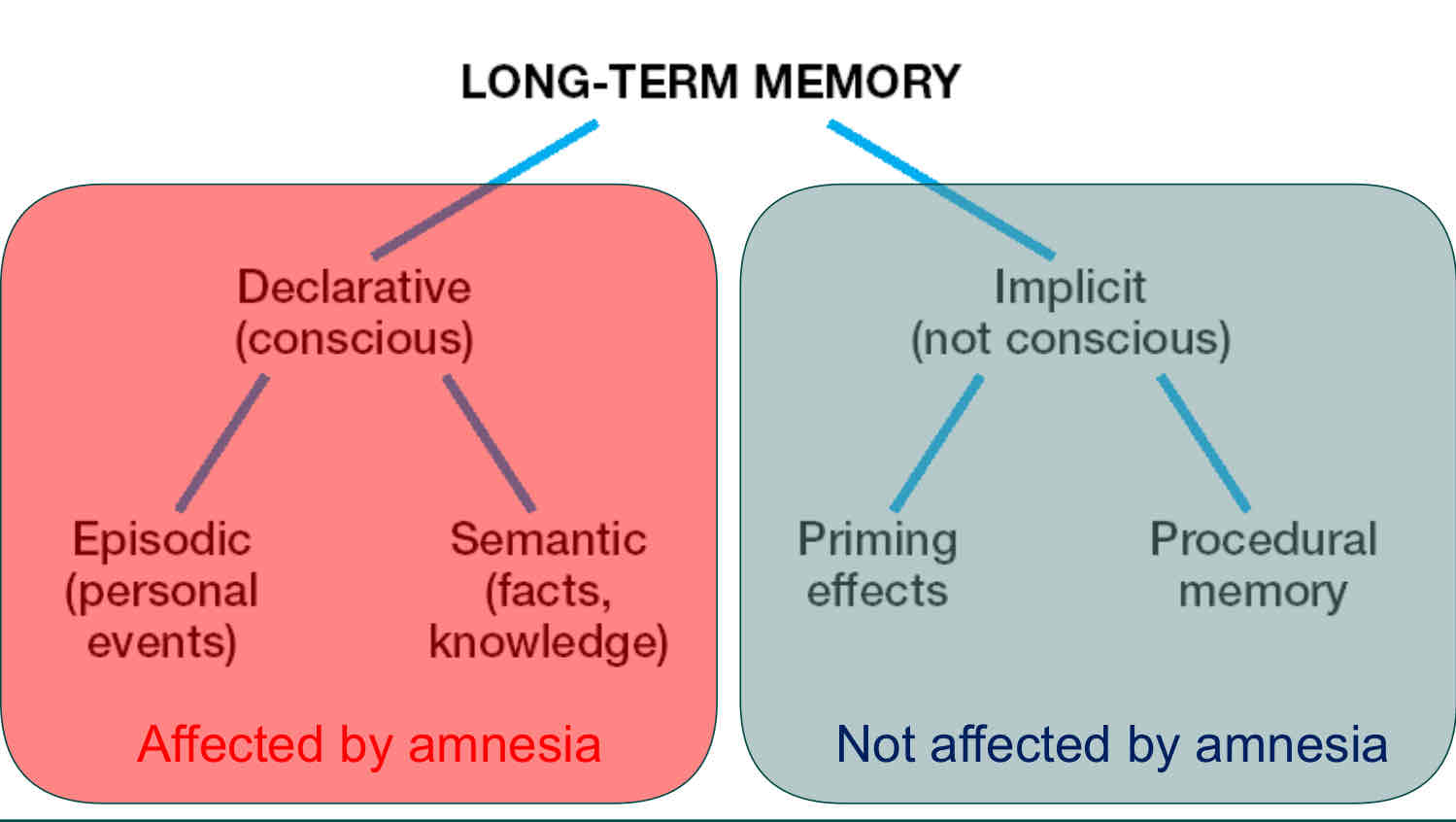
2 Types of LTM - Edsel Tulving (1972)
Episodic
memory for events that happened at a particular place and time.
impaired in amnesia
Semantic
knowledge about facts, concepts, word meanings, etc.
Memory for the past
retrograde means before brain injury
some retrograde memory loss is almost always present in amnesia
HM’s retrograde memory only had a few years
instead of retrieving memory from his hippocampus, as it was all connected before the circuit, HM is able to remember some information from the cortexes around the hippocampus as they held some information when connected with the hippocampus.
cortex → Hippocampus ← cortex
Standard Theory of Consolidation is controversial
semantic memories are likely to be consolidated
episodic memories may never be fully consolidated
retrograde amnesia for some things can last for decades
Impairments of semantic memory
semantic dementia
difficulty remembering the meaning of words or concepts
naming errors
problems nor confined to a single modality
semantic knowledge associated with lateral temporal cortex (on the left side).
LTM Processes
encoding → storage → retrieval
TEST
study lists of words and asked to made judgements about them
upper or over case letters?
does the word rhyme with plate?
does it fin in the sentence “…”?
memory improves depending on the processing used p there are different levels
Levels of Processing - Craik & Lockhart (1972)
processing can be deep or shallow
“deep encoding” - better way to learn and maintain information
reasoning for different levels is circular
2 codings
semantic (deep): “the …. had a silver engine”
phonological (shallow): “… rhymes with legal”
2 testing conditions
standard recognition
rhyming recognition
memory is better when processing matches between encoding and retrieval.
Context Dependent Memory
scuba diving ppts
learning list of words in land vs under water
remembering the list in land vs under water
better retrieval when conditions are matched
Retrieval Practice Effect
ppts tested to reread the passage after 5 min vs 2 days vs 1 week
studying and then testing yourself leads to much better retention.