subject guide notes
B1.1.1—Chemical properties of a carbon atom allowing for the formation of diverse compounds upon which life is based
carbon atoms can form 4 covalent bonds, meaning it allows for the formation of a variety of diverse molecules
carbon-carbon bonds are strong & stable - long-chained carbon compounds provide the basic structure for many molecules
longer the carbon-carbon bond is = the stronger the molecule is (cuz more covalent bonds holding it together)

carbon can bind to other carbon atoms or non-metallic elements through single or double bonds
B1.1.2—Production of macromolecules by condensation reactions that link monomers to form a polymer
in order for macromolecules to be constructed, monomers undergo dehydration synthesis/condensation reactions
1,4 glycosidic bond is a type of covalent bond formed by this
polysaccharides are formed when 2 molecules undergo a dehydration synthesis
polypeptides are also formed when 2 amino acids undergo dehydration synthesis
B1.1.3—Digestion of polymers into monomers by hydrolysis reactions
body breaks down polysaccharides in order to gain the nutrients it needs
occurs through hydrolysis reactions
B1.1.4—Form and function of monosaccharides
are classified by the number of carbon atoms they contain
examples: glucose (know how to draw), galactose, ribose (know how to draw), and fructose
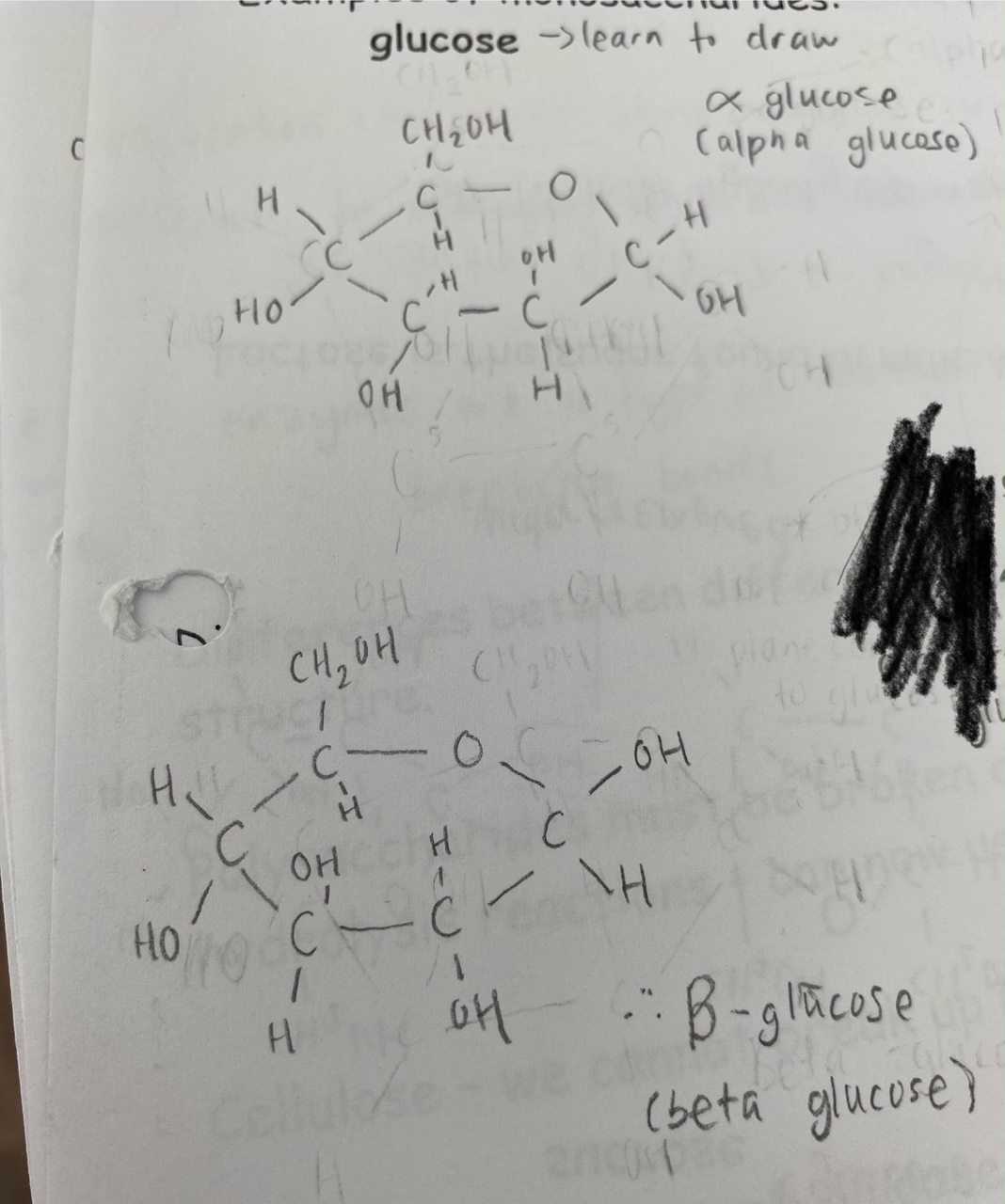
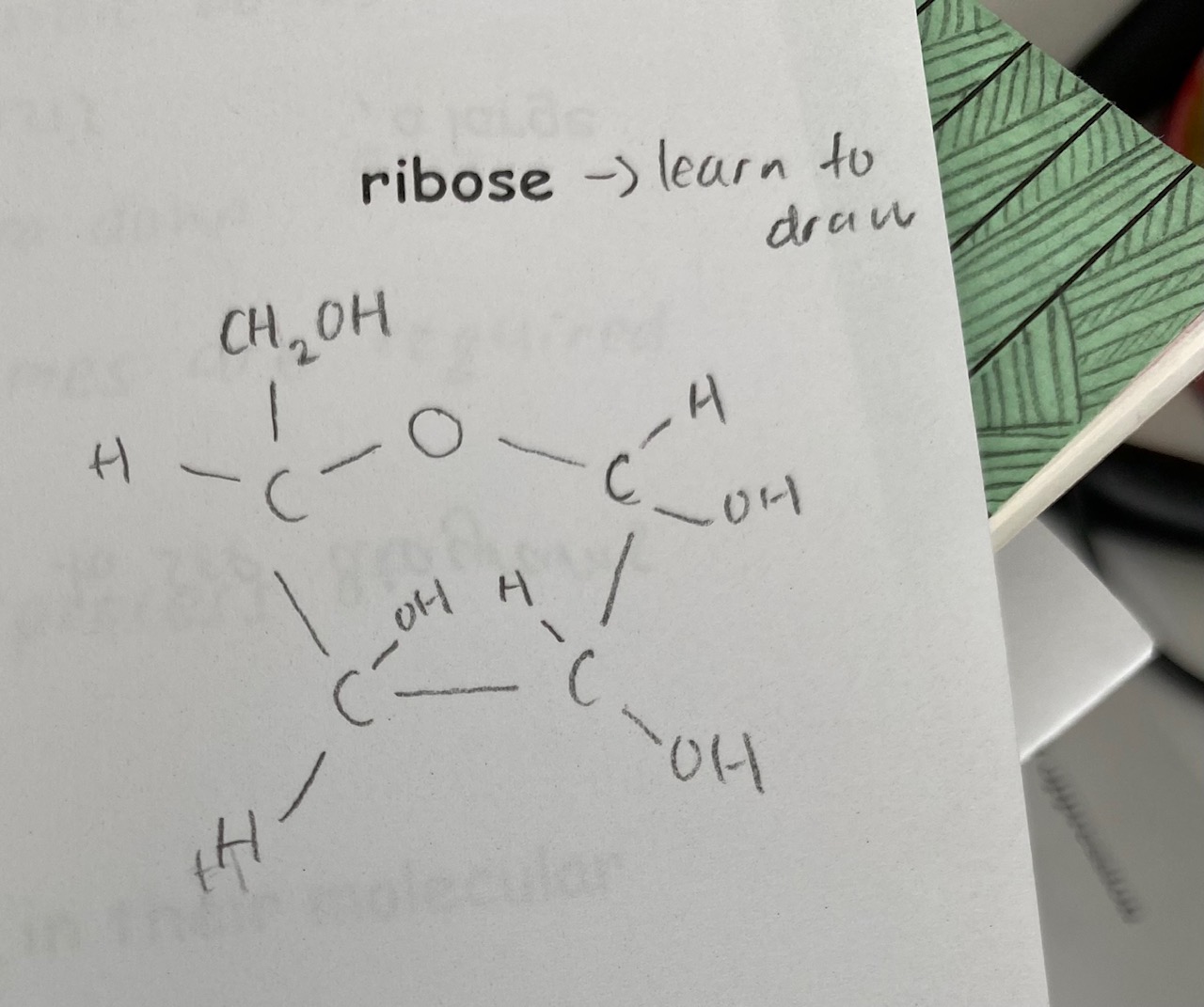
using glucose as an example
different isomers - alpha glucose & beta glucose
difference in orientation is important for the formation of polysaccharides
solubility - contains several -OH groups & the connection between O & Carbon-Hydrogen groups= polarity
important - can dissolve in water ( a polar substance) meaning it can dissolve in plasma, so it ensures that cell receives glucose for cellular respiration
stable molecule - cyclic molecule with the -OH groups located in axial regions of molecule
can be oxidised - glucose breaks down & loses electrons to oxygen, producing CO2 & H2O
energy released - used to generate ATP
B1.1.5—Polysaccharides as energy storage compounds
there are 2 types of starch in plants: amylase & amylopectin
starch is compact in structure due to coiling & branching during polymerisation
compactness = efficient storage in limited space
large molecular size = relatively insoluble = helps maintain osmotic balance
hydrolysis breaks down starch when glucose is needed
glycogen has a coiled structure due to branching pattern
allows for efficient storage & mobilisation of glucose when energy needed
composed of 1,4 glycosidic bonds & 1,6 glycosidic bonds
large molecular size = relatively insoluble = maintain osmotic balance in organisms
mainly stored in liver & muscle cells & hydrolysis reactions are used to break down glycogen in order to use the glucose for energy
B1.1.6—Structure of cellulose related to its function as a structural polysaccharide in plants
every other beta glucose molecule is inverted - allows cellulose to form a straight line
these long, unbranched chains can be grouped into bundles called microfibrils
B1.1.7—Role of glycoproteins in cell–cell recognition
can attach to specific amino acid residues in the protein or can form branched or linear chains that extend from protein’s surface
cell-cell recognition: function as marker’s on cell’s surface, allowing them to identify & interact
ex: immune cells identify foreign bodies cuz they hv different glycoproteins on their surface
receptors - allows cell to receive signals from other molecules
ex: insulin binds to glycoprotein receptors on surface of cells, triggering events that result in glucose uptake by the cell
ligands - glycoproteins bind to specific receptors on other cells to initiate signalling
structural support - contribute to structural integrity of cell
ABO blood system is based on the presence of specific glycoproteins on the RBC’s surface
these glycoproteins are called antigens - A & B antigens
the presence of these antigens decides the blood type
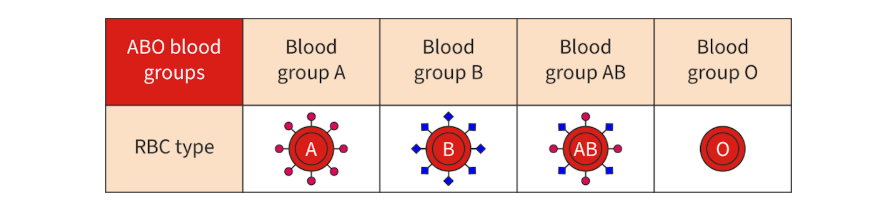
compatibility of blood types is also caused by these glycoproteins
for blood donations, if the glycoproteins in the recipient’s & donor’s blood dont match, then the immune system identifies the other glycoproteins as foreign bodies
clumping occurs, leading to organ failure or death
B1.1.8—Hydrophobic properties of lipids
are non-polar molecules that’re are often insoluble in aqueous solutions BUT can dissolve in non-polar solvents
*hydrophobic can be a misleading term - it’s not that lipids are repelled by water but rather they’re attracted more to non-polar substances
waxes - completely insoluble & hv high melting point (solid at room temp)
B1.1.9—Formation of triglycerides and phospholipids by condensation reactions
each fatty acid linked to glycerol through an ester bond (a type of condensation reaction)
*dont typically draw the entire fatty acid, but instead use R(subscript 1), R(subscript 2), etc, for each fatty acid
phospholipids consist of a glycerol attached to 2 fatty acids & a phosphate
phosphate is partly hydrophilic = phospholipid is partly hydrophobic & partly hydrophilic
is now polar
B1.1.10—Difference between saturated, monounsaturated and polyunsaturated fatty acids
classification of fatty acids based on number of double bonds in their hydrocarbon chains
saturated fatty acids - no double bonds between carbon atoms = straight linear chain
contain max amount of hydrogen atoms
forms solid at room temp cuz each carbon atom is bound to 4 atoms, meaning it can tightly pack together
allows it to store energy
unsaturated fatty acids - hv one or more double bonds = limits the amount of hydrogen
double bond causes kink in the fatty acid chain
kink causes fatty acid to be liquid at room temp, as it cant be compact
lipids with high proportion of unsaturated fatty acids are oils
can be either monounsaturated or polyunsaturated
monounsaturated fats: hv one double bond in hydrocarbon chain
liquid at room temp due to the kink
polyunsaturated fats: hv 2 or more double bonds
even harder for the fatty acid to be compact due to the kinks = liquid at room temp
there are also 2 isomers of unsaturated fatty acids: cis-fatty acids & trans-fatty acids
plants store fats & oils (primarily as unsat.fatty acids) as an energy source in their seeds
germinating seeds utilize the energy to grow until it’s capable of photosynthesis
endotherms need constant energy source to help them create heat
fats are stored in adipocytes, & can be broken down into ATP to be used to create heat
B1.1.11—Triglycerides in adipose tissues for energy storage and thermal insulation
triglycerides act as thermal insulators & help regulate body temps
ex; the blubber in whales is primarily composed of adipose tissue which contain large amounts of triglycerides. this helps insulate the whale
search google for properties of triglycerides that make them appropriate for long-term energy storage
B1.1.12—Formation of phospholipid bilayers as a consequence of the hydrophobic and hydrophilic regions
phosphate head is negatively charged & hydrophilic
the hydrocarbon chains that form the tails, are non-polar & hydrophobic
this means that phospholipids are amphipathic
this also causes the phospholipid bilayer
B1.1.13—Ability of non-polar steroids to pass through the phospholipid bilayer
steroids, such as cholesterol, are also important for the bilayer, as they provide it with flexibility & stability
steroids, such as testosterone & oestradiol, are important for signalling
are hydrophobic, allowing them to pass through the phospholipid bilayer