cellular basis of life
brief history of cells
robert hooke
coined the term “cell”
discovered cells from a cork
box-shaped structure (cell)
it is called a cell because it reminded him of a cell
antoine van leeuwenhoek
father of microbiology pioneering work in the field of microscopy
saw bacterias and protozoans
now called microorganisms
other contributors to the cell theory
matthias schleiden
concluded that all plants are made of cells (1838)
theodore schwan
concluded that all animals are made of cells (1839)
rudolf virchow
concluded that all cells came from pre-existing cells (1839)
cell theory
all living things are made up of cells
it is the basic unit of structure in an organism
new cells arise from existing cells
can be multicellular or unicellular
cells are different
prokaryotes
pro - “before”
karyon - kernel/nucleus
“before nucleus”
oldest living organisms
most numerous
has smaller and simpler structures
has a nucleoid (not bounded by a membrane)
does not have membranous organelles
does not contain histones (family of basic proteins)
eukaryotes
“true nucleus”
eu - “true”
karyon - kernel/nucleus
with nucleus bounded by a membrane
contains other membrane-bound organelles
more complex
mostly multicellular; few unicellular
similarities
DNA
ribosomes (small organelles)
cytoplasm (jell-like fluid)
cell membrane (controls the ins and out of the cells— maintains homeostasis
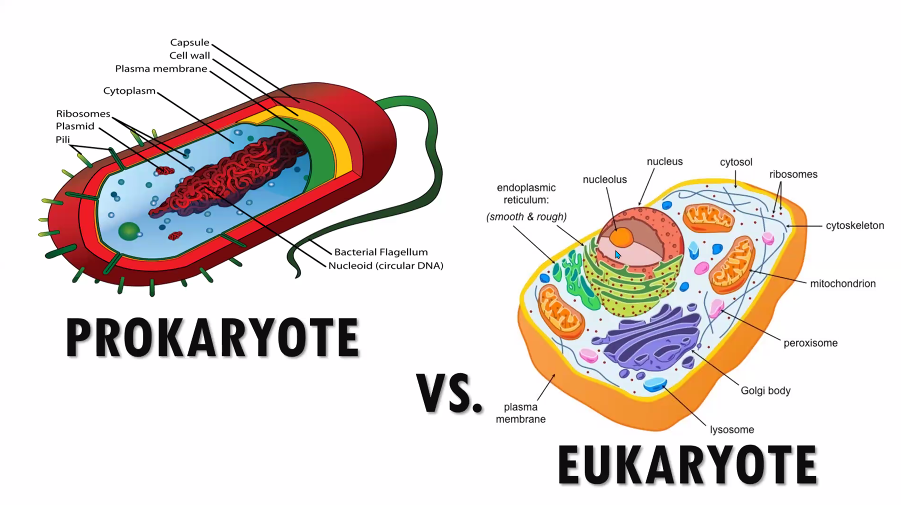 archaea (prokaryote)
extreme environments
hydrothermal vests
terrestrial hot springs
eubacteria (prokaryote)
contains dna
glam positive bacteria - retrain the crystal violet color and stain purple
glam negative bacteria - lose crystal violet and stain red
fungi (eukaryote)
multi or uni
mushrooms, yeast, rice
plantae (eukaryotes)
comprises all living plants
protista (eukaryotes)
unicellular in nature
colony of cells
greek word “protistos” - very first
animalia
heterotrophs (cannot make its own food)
parts of a cell
cell membrane a.k.a plasma membrane
not to be confused with cell wall
made of phospholipids, proteins, cholesterols
double membrane
flexible structure
cytoplasm
provides shape to the cell
fills up the cells thus enabling the organelles to remain in their position
centrosomes and centrioles
centrosomes
microtubule organizing center
the centrosomes deplicate before cell division, so they then help to organize the microtubules and the cell division process
found near the nucleus
endoplasmic reticulum (ER)
carry stuff around
system of folded tube-like structures
folds proteins
transports proteins
site of ribosomes
there are two kinds: smooth ER and rough ER
rough ER
flattened sheets
ribosomes attached
protein synthesis
reads the RNA (mRNA) sequence and translates that genetic code into a specified string of amino acids, which grow into long chains that fold to form proteins
protein
smooth ER
tubular
factory-warehouse
enzymes creates the lipids
synthesis of lipids, steroids, and carbohydrates
cell detox and stores ions
golgi apparatus
protein processing and packaging
sends product out to different parts of the cell
vesicles
phospholipid membranes
ship golgi body products
lysosome
cell digestion
enzyme sacks
cell waste > building material
nucleus
the brain of the cell
stores "DNA"
makes cell LAWS
uses DNA to make LAWS
chromatin
seen inside the nucleus
chains of molecules thaat hold the DNA of the cell
cell division > chromosomes
mitochondria
powerhouse of the cell
respiration
energy > ATP (adenosine triphosphate)
flagellum and cilia
only found in animal cell
cell appendages; composed of microtubes wrapped in an extension of plasma membrane; for locomotion
cilia
hair like structure
flagellum
whip-like structure
types of flagellar arrangement
polar / monotrichous
single flagellum at one pole
lophotrichous
tuft of flagella at one pole
amphitrichous
flagella at both poles
peritrichous
flagella all over
amphilophotrichous
tuft of flagella at both ends
PLANT CELL
cell wall
surrounds the plasma membrane
made of cellulose and lignin (very tough)
plastids
make and store needed compounds
hold chloroplasts
central vacuole
storage of water and materials
give plants its distinctive shape
reinforces the plant
supports cell structure
plant cells
have choloroplasts
have vacuoles
can absorb liquids
creates food by photosynthesis
has cell wall made of cellulose
animal cells
have no cell walls
eats other cells
cannot absorb much liquid because it has no cellulose
can move through appendages
can form a variety of shapes
have lysosomes
plant cells and animal cells
have a nucleus
eukaryotic
same size