Reverse Genetics
Tries to find out what a gene does by altering it and seeing what changes
(forward genetics starts with the trait and tries to find gene,
reverse genetics starts with gene and tries to find out what trait it’s related to)

Gene Families - link to Jordi’s lectures
The number of genes per gene family tends to increase as time goes on
Genes can duplicate due to errors in meiosis or polyploidization
—> these new genes can
Act redundantly - do the same job as the original
Be deleterious - too much expression is harmful
Be lost - Mutation happens in duplicate and drifts because it doesn’t affect the phenotype
Acquire new functions - Mutation is beneficial, both genes retained but one has a new function
Subfunctionalize - mutations happen in different domains, duplicates do different parts of the same job
If duplication happens before speciation, genes are orthologs
If duplication happens after speciation, genes are paralogs
EXPRESSION ANALYSES - when and where a gene is active?
Reverse Transcription PCR:
Reverse transcriptase makes cDNA from mRNA which can be used in PCR
(mRNA is first isolated using its polyA tails and an oligo dT primer is added to initiate transcription)
Cheap and quick but not quantitative, so can use —>
Quantitative RT-PCR (RT-qPCR):
Same principle as RT-PCR but..
Uses fluorescent dye in PCR step - the more DNA there is the higher the fluorescent signal
Computer spits out quantitative amount
Can be costly and have little spatial recognition, can’t tell where gene came from
In Situ Hybridisation:
Uses probes to show where cells are expressing a gene

RNA probe is complementary to target mRNA and is labelled with DIG UTP
They hybridise, antibodies that have alkaline phosphatase will detect the DIG
catalyses a colour change
Difficult and time consuming, hard to visualise cells but can be used in many species
In Situ Hybridisation Chain Reaction (HCR-FISH):
Amplifies signal via Hybridisation + chain reaction step
“Initiator” probe binds to mRNA, an “amplifier” probe binds to this
Amplifier probes have fluorescent tags and can bind to each other - amplifies the signal
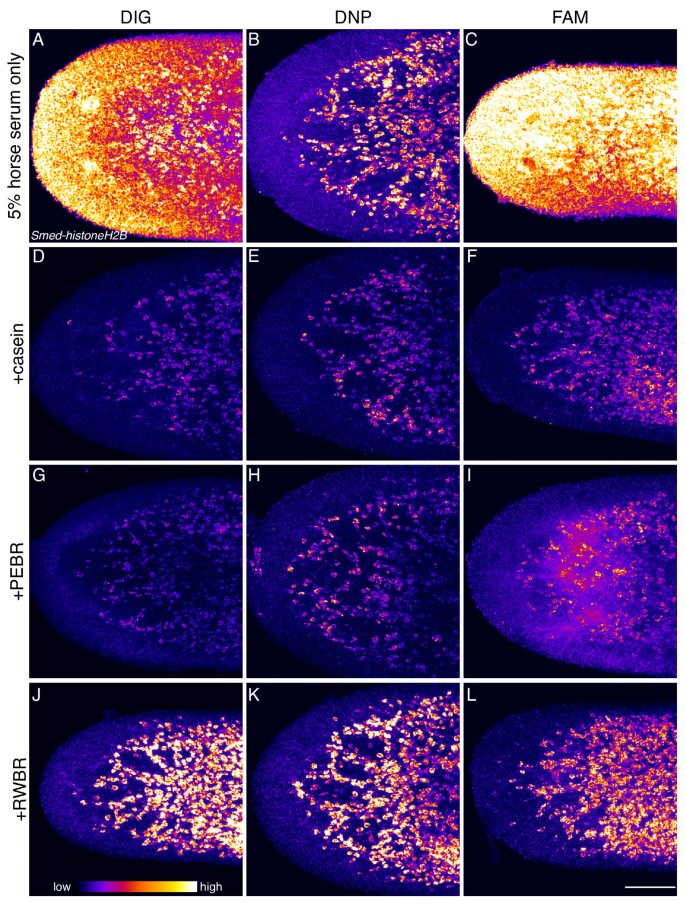
Without enzymes and allows for analyses with up to 10 probes, faster but costly
FUNCTION ANALYSES - what does the gene do?
Gene Targeting:
uses homologous recombination machinery - when template DNA is used to repair broken DNA, a faithful recombination with little mistakes
In gene targeting - homologous recombination machinery exchanges DNA sequences between a targeting vector and target gene
Alignment of homologous flanking arms allows genetic exchange so gene can be inserted

Doesn’t happen in all cells or always in the correct spot, therefore need to verify recombination has taken place
1. extract DNA and digest using restriction enzymes
2. Separate via gel electrophoresis and stain
3. Southern transfer of DNA onto membrane and fix using crosslinking
4. Hybridise with labelled probe and expose film
—> Mutants will show a band shift
Once verified, can produce chimeras and breed homozygous knockout mice who lack the gene in every cell of their body, allowing scientists to finally observe what happens when that gene is completely missing.
Gene Editing:
Scientists use non-homologous recombination techniques, which are error prone, to disrupt genes
Programmable nucleases, like CRISPR-Cas9, will cut both strands of a specific spot in DNA
This triggers DNA repair mechanisms. Proteins bind to the ends of the DNA but can add or trim nucleotides, throws off frameshift or introduces stop codon
DNA is ligased back together without needing a template strands

Works in all species tested so far, works more efficiently and faster than GM or breeding